Chicken noodle soup gets a lot more satisfying when the bowl has enough body to count as a meal, and this version does exactly that. The broth stays clear and bright, the chicken turns tender without shredding into threads, and the chickpeas add enough extra heft that you’re not hungry again an hour later. It still tastes like the soup you want when you’re craving something comforting, just with a little more staying power.
The trick is building flavor in layers instead of relying on a heavy broth or a long simmer. The vegetables go in first so they soften and sweeten the base, the chicken browns just enough to give the pot some depth, and the noodles are added near the end so they stay springy instead of bloated. Lemon at the finish matters too; it wakes up the broth and keeps the whole pot from tasting flat after the noodles and chickpeas go in.
Below, I’m walking through the parts that actually change the outcome: how to keep the broth clean but flavorful, why the chickpeas work here without making the soup taste like chickpeas, and what to do if you want to stretch this into lunches for the week.
The broth stayed clear, the noodles held their texture, and the chickpeas made it filling without turning it heavy. I had leftovers for lunch the next day and it reheated beautifully.
Save this high-protein chicken noodle soup for the nights when you want a cozy bowl that still feels substantial.
The Reason This Soup Stays Light But Still Fills You Up
A lot of chicken noodle soup gets weighed down by two things: too much simmering, or too much pasta sitting in the pot for too long. This version avoids both. The chicken cooks directly in the broth, which keeps the meat tender, and the noodles go in late enough that they keep their shape instead of turning the soup cloudy and starchy.
The chickpeas do the quiet work here. They add protein and body without changing the soup into something heavy, and they hold up better than rice or small pasta if you want leftovers. The lemon at the end is not decorative; it sharpens the broth after the starches and chicken have mellowed everything out.
What Each Ingredient Is Actually Doing in This Bowl
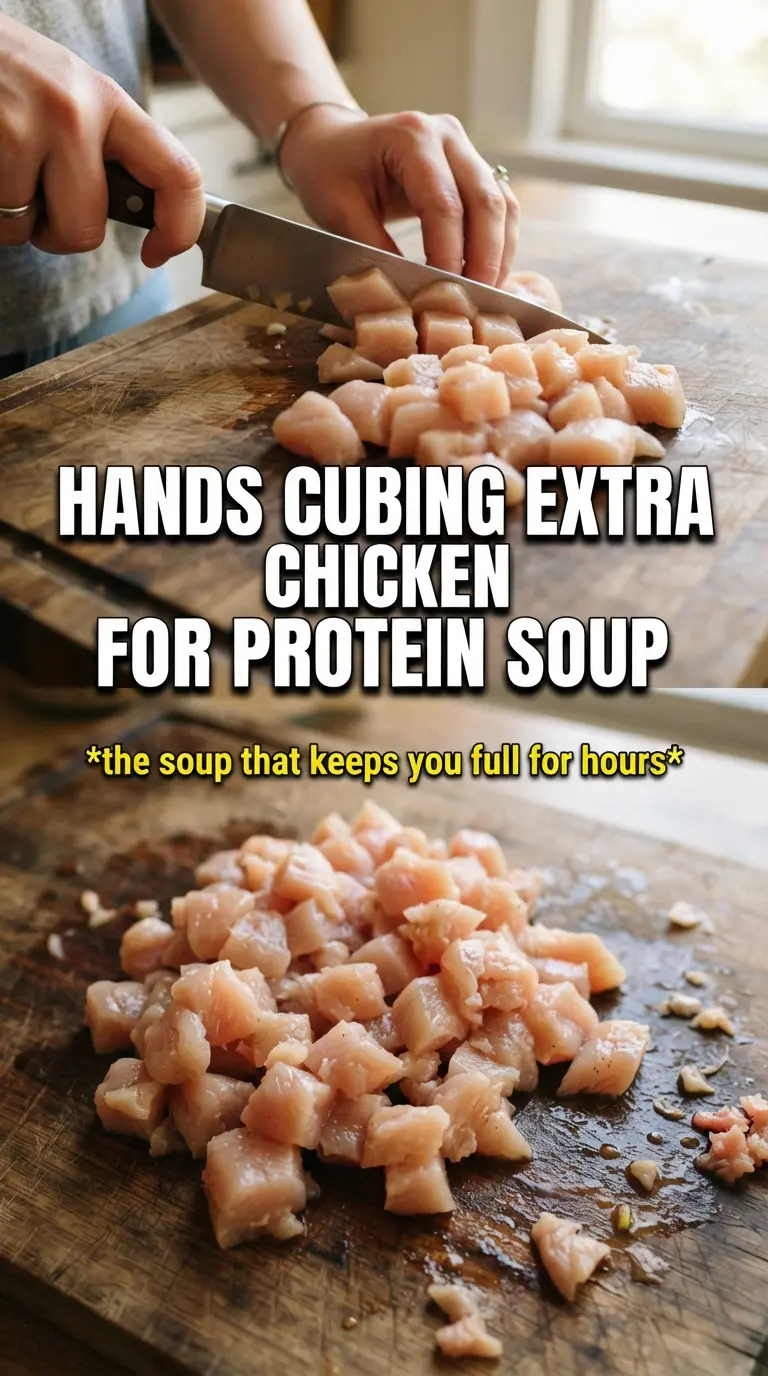
- Chicken breast — Dice it into small pieces so it cooks fast and stays tender in the broth. If you use larger chunks, the outside overcooks before the center is done. Chicken thighs work too if you want a richer soup, but they’ll make the broth slightly deeper and a little less lean.
- Chickpeas — These are the extra protein anchor. They don’t dissolve, they don’t need pre-cooking, and they keep the soup satisfying after reheating. If you swap in white beans, the texture gets creamier and a little softer, which is fine if that’s what you want.
- Egg noodles — Use a high-protein or whole wheat version if you want the bowl to feel more substantial. They absorb broth differently than standard noodles, so watch them closely in the last few minutes. If you boil them too long, they’ll keep drinking broth even after the heat’s off.
- Lemon juice — This is what keeps the soup tasting bright instead of bland. Add it at the end so the flavor stays fresh. If you skip it, the soup will still be edible, but it loses the clean finish that makes the broth taste finished.
The Part Where the Broth, Chicken, and Noodles All Stay in Balance
Softening the Vegetables First
Start with the onion, carrots, and celery in olive oil and cook them until the onion turns translucent and the edges of the vegetables lose their raw look. That first sauté gives the broth a sweeter base and keeps the soup from tasting watery. If the pot is too hot and the vegetables brown hard, lower the heat; you want soft and fragrant, not caramelized.
Giving the Chicken a Head Start
Add the garlic for just a minute, then the diced chicken. Cook it until the outside turns pale and lightly browned. You’re not trying to fully cook it here; you’re just building flavor before the broth goes in. If the pieces stick, let them sit another moment before stirring so they can release on their own.
Simmering Without Clouding the Broth
Pour in the broth with the thyme and parsley, bring it to a boil, then drop it to a steady simmer. The surface should move gently, not roll hard, or the chicken will tighten and the broth can turn murky. Fifteen minutes is enough for the chicken to finish cooking and the vegetables to soften without breaking down.
Adding the Chickpeas and Noodles at the End
The chickpeas go in with the noodles so they warm through without getting soft and chalky. Cook until the noodles are tender but still have a little bite in the center. If the pot looks too thick before the noodles are done, add a splash of broth or water; noodles absorb liquid fast, and that last stage can turn from perfect to pasty in a minute.
The Lemon Finish
Stir in the lemon juice after you take the pot off a hard boil, then season with salt and pepper. This keeps the broth bright and keeps the lemon from tasting muted by heat. Taste at the end. If the soup feels flat, it usually needs salt before it needs more herbs.
How to Adapt This for Dairy-Free, Higher-Protein, or a Different Pantry
Make It Even Higher in Protein
Use the full amount of chicken and keep the chickpeas in the pot. If you want even more staying power, add an extra half can of chickpeas or swap the noodles for a lentil pasta that holds up in broth. The soup gets thicker and heartier, though the texture shifts from classic noodle soup toward a more meal-style bowl.
Gluten-Free Version
Swap in gluten-free noodles or use rice noodles if that’s what you keep on hand. Rice noodles soften faster than egg noodles, so add them in the last few minutes and pull the pot off the heat as soon as they’re tender. The broth stays the same, but the texture will be lighter and a little less chewy.
Use Chicken Thighs Instead of Breast
Chicken thighs give you a richer, more forgiving soup because they stay juicy even if the pot simmers a little longer. Cut them into the same small pieces and cook them the same way. The tradeoff is a darker, slightly fuller broth, which some people prefer for leftover soup.
Storage and Reheating
- Refrigerator: Store in an airtight container for up to 4 days. The noodles will soften a bit as they sit, and the broth may thicken.
- Freezer: It freezes well, but the noodles will lose some texture. For the best result, freeze the soup without the noodles and cook fresh noodles when you reheat it.
- Reheating: Warm it gently on the stove over medium-low heat. If it looks too thick, add a splash of broth or water before it comes back to a simmer. Microwaving works for a bowl, but stop and stir halfway so the chicken heats evenly.
Answers to the Questions Worth Asking
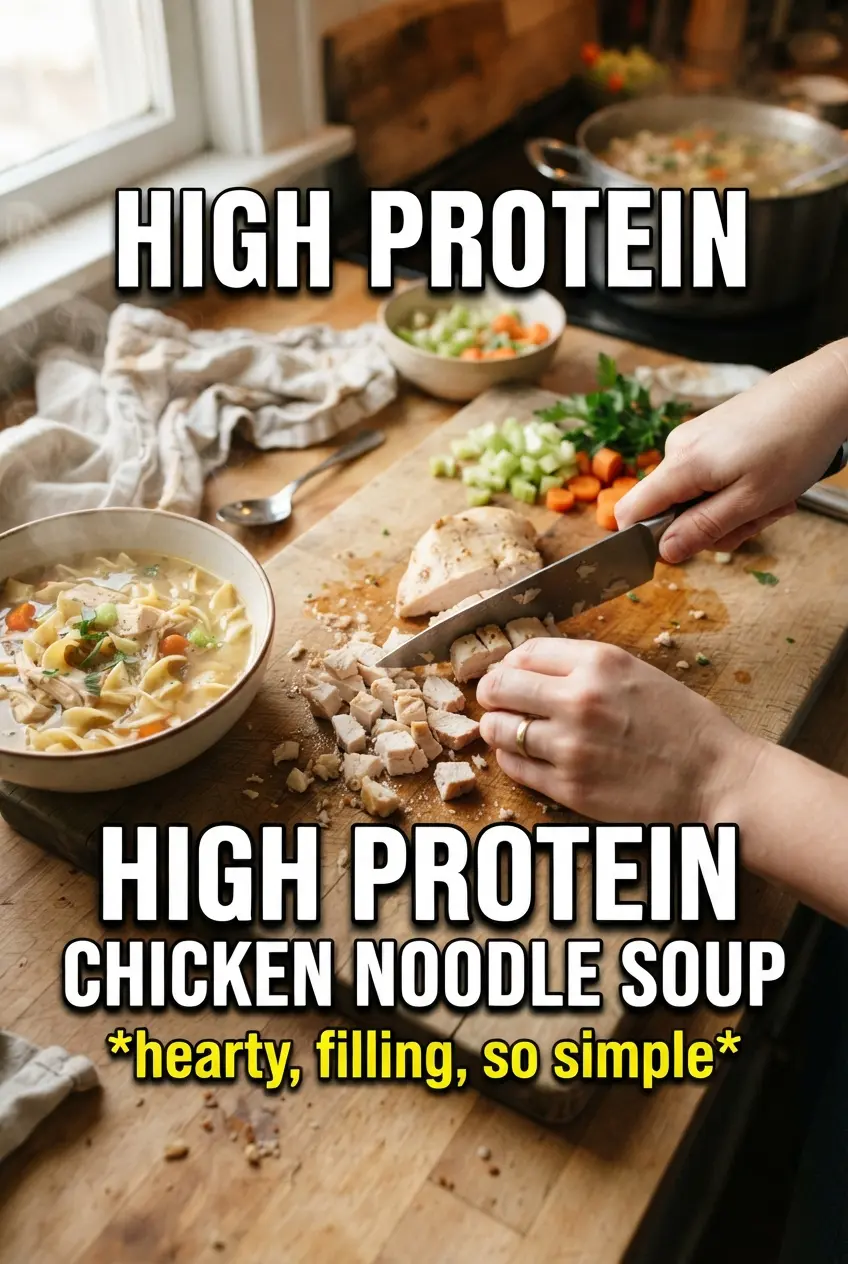
High Protein Chicken Noodle Soup
Ingredients
Equipment
Method
- Heat the olive oil in a large Dutch oven over medium heat. Add the onion, carrots, and celery and sauté for 5 minutes, stirring often, until the vegetables begin to soften and look glossy.
- Add the garlic to the pot and cook for 1 minute, stirring, until fragrant but not browned. Add the diced chicken and cook for 4 minutes, stirring occasionally, until lightly browned.
- Add the chicken broth, dried thyme, and dried parsley. Bring to a boil, then reduce to a steady simmer and cook for 15 minutes, until the flavors meld and the broth looks lightly golden.
- Stir in the chickpeas and high-protein or whole wheat egg noodles. Simmer for 6-8 minutes until the noodles are tender and the chickpeas are hot throughout.
- Stir in the lemon juice. Season with salt and pepper to taste, then garnish with fresh parsley and serve while hot.