Clear broth, tender chicken, and noodles that soak up ginger and garlic without turning heavy is what makes this soup worth keeping on repeat. It eats like comfort food, but it still tastes fresh and bright at the end of the bowl, especially with a little sesame oil and rice vinegar stirred in right before serving. The vegetables stay structured, the broth stays clean, and nothing gets mushy if you time the noodles at the end.
What makes this version work is layering the flavor instead of dumping everything in at once. Onion, carrots, and celery soften first so they build a base, then the garlic and ginger go in long enough to wake up their aroma without burning. The chicken simmers gently in the broth, which keeps it juicy enough to shred instead of drying out into stringy pieces.
Below, I’ll walk through the small timing choices that keep the broth clear, the noodles tender, and the ginger from taking over. There’s also a few simple swaps if you want to use what’s already in your kitchen.
The broth stayed clear, the ginger came through without being sharp, and the noodles were still perfect after sitting a few minutes. My husband went back for a second bowl and asked if I could make it again next week.
Save this ginger garlic chicken noodle soup for the nights when you want a clear, fragrant broth and a bowl that comes together fast.
The Secret to Keeping the Broth Clear and the Chicken Tender
A soup like this can go cloudy and overcooked fast if the pot is pushed too hard. A hard boil will tug the chicken dry and make the broth taste rough instead of rounded, so the goal is a gentle simmer once the chicken goes in. That slower cook keeps the meat juicy and gives the ginger and garlic time to infuse the broth without turning bitter.
The other place people trip up is the noodles. They should go in near the end, when the chicken is already shredded and ready to return to the pot. If they simmer too long, they’ll drink up too much broth and go past tender into soft and bloated. The soup tastes best when the noodles still have a little spring.
What Each Ingredient Is Actually Doing in This Soup

- Chicken thighs or breast — Thighs stay a little richer and more forgiving if the soup simmers a few minutes longer than planned. Breast works fine if you pull it as soon as it’s cooked through and shred it promptly. Either way, the chicken should be added in larger pieces and shredded after cooking so it stays juicy.
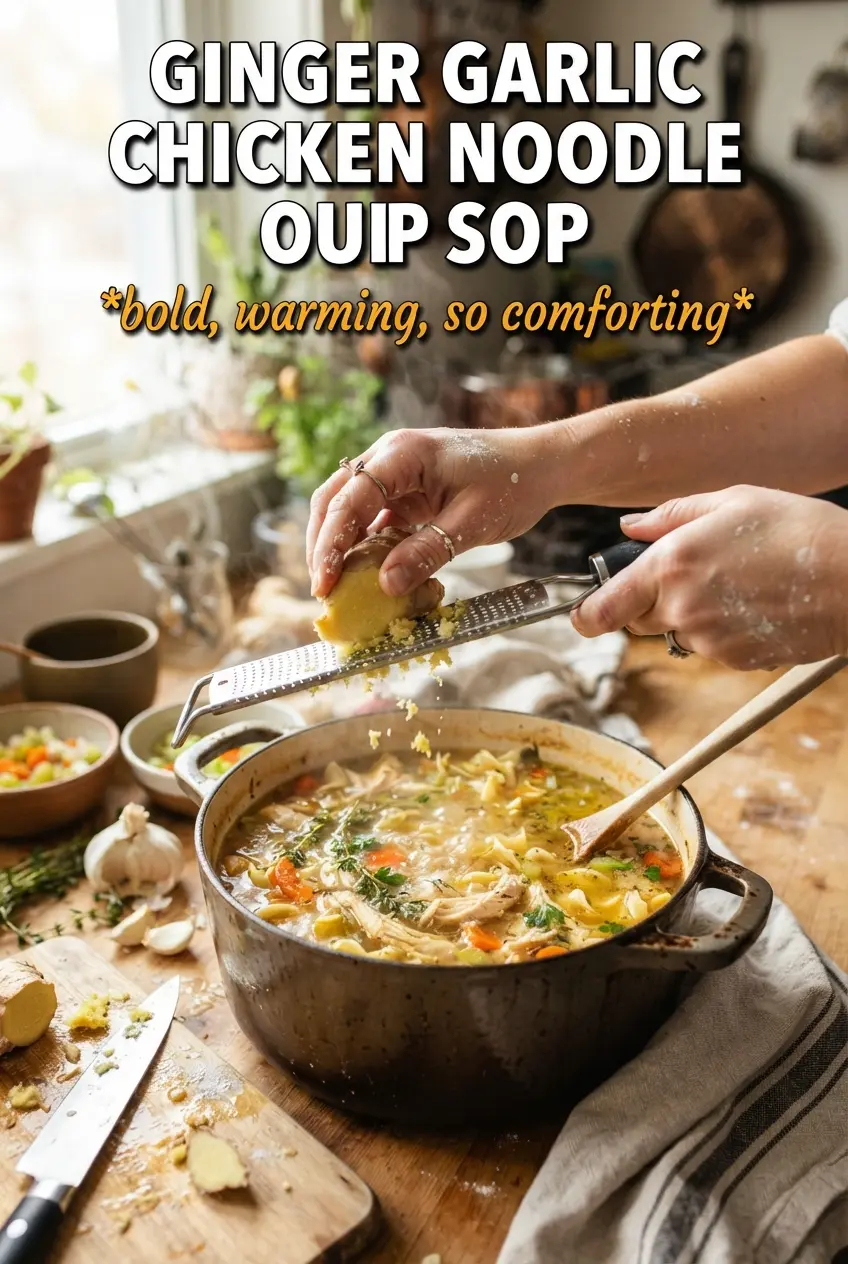
- Fresh ginger and garlic — These are the backbone of the soup, and fresh really matters here. Ground ginger or garlic powder won’t give the same bright, clean warmth. Let them cook just long enough to smell fragrant, then stop before they brown.
- Broth — Use a broth you’d actually drink on its own, because it becomes the whole body of the soup. Low-sodium broth is the safer choice so you can adjust salt at the end instead of starting with a pot that’s already too salty.
- Ramen or egg noodles — Ramen gives a softer, springier bite, while egg noodles hold up a little better if the soup sits for leftovers. If using dry noodles from a package, discard the seasoning packet and cook the noodles directly in the soup so they pick up flavor.
- Sesame oil and rice vinegar — These go in at the end for a reason. Sesame oil adds aroma more than cooking fat, and rice vinegar sharpens the broth just enough to keep it from tasting flat. If you add either too early, the flavor gets muted.
Building the Soup in the Right Order
Softening the Vegetables First
Start with the onion, carrots, and celery in hot oil and cook them until the onion looks glossy and the edges of the vegetables just begin to soften. You’re not trying to brown them hard here. If the pot is crowded or the heat is too low, they’ll steam instead of soften, and the base will taste thin. Stir once or twice and keep the heat steady.
Waking Up the Ginger and Garlic
Add the garlic and ginger after the vegetables have started to relax. Two minutes is enough for their aroma to bloom; any longer and garlic can turn bitter. The pan should smell warm and pungent, not sharp or scorched. If you see the garlic browning fast, lower the heat right away.
Simmering the Chicken Gently
Pour in the broth, soy sauce, and chicken, then bring the pot to a boil only long enough to get it started. After that, drop it to a gentle simmer. You want the chicken to cook through without bobbing aggressively in the broth. When it’s done, it should shred cleanly with a fork and look opaque all the way through.
Finishing With Noodles and the Bright Notes
Take the chicken out, shred it, and return it to the pot before the noodles go in. Cook the noodles just until tender, then stir in the sesame oil and rice vinegar off the heat or over very low heat. That last step keeps the sesame oil fragrant and the vinegar clean-tasting. Taste at the end and adjust with salt and pepper only after the noodles have had a chance to season the broth.
How to Adapt This for What You Have on Hand
Make It Gluten-Free
Use gluten-free noodles and swap the soy sauce for tamari or coconut aminos. Tamari keeps the broth closest to the original taste, while coconut aminos are a little sweeter and lighter. The texture of the soup stays the same as long as you don’t overcook the noodles.
Use Thighs for a Richer Bowl
Chicken thighs give you a fuller-tasting broth and stay tender even if the soup simmers a little long. They’re my pick when I know leftovers are likely, because the meat doesn’t dry out as fast as breast. The soup feels a little heartier without needing extra ingredients.
Add More Vegetables Without Losing the Balance
Mushrooms, baby spinach, or bok choy fit in well here. Add firmer vegetables with the carrots and celery, and tuck leafy greens in at the very end so they just wilt. If you overload the pot, the broth starts tasting diluted, so keep the add-ins modest.
Storage and Reheating
- Refrigerator: Store for up to 4 days. The noodles will keep soaking up broth, so it may thicken a bit.
- Freezer: Freeze the soup without the noodles for the best texture. Add freshly cooked noodles after reheating for the cleanest result.
- Reheating: Warm gently on the stove over medium-low heat until steaming. If the soup was stored with noodles, add a splash of broth or water before reheating so the pot doesn’t turn into a thick tangle of noodles and vegetables.
Answers to the Questions Worth Asking
Ginger Garlic Chicken Noodle Soup
Ingredients
Equipment
Method
- Heat 1 tablespoon sesame oil in a large pot over medium-high heat, until shimmering. Add onion, carrots, and celery and sauté for 4 minutes, stirring often, until beginning to soften and smell sweet.
- Add garlic and grated ginger and cook for 2 minutes until very fragrant, stirring constantly to prevent browning. Keep the heat steady so the aromatics release quickly.
- Pour in chicken broth and add soy sauce, then add the chicken to the pot. Bring to a boil, then reduce to a simmer and cook for 20 minutes until the chicken is cooked through and the liquid looks gently bubbling.
- Remove the chicken from the pot and shred it, then return the shredded chicken to the broth. Stir to distribute evenly so every bowl has chicken in each spoonful.
- Add ramen noodles or egg noodles to the pot and simmer for 3-5 minutes until tender. Watch the noodles closely so they don’t overcook and turn soft.
- Stir in the remaining sesame oil and rice vinegar, then season with salt and pepper to taste. Taste the broth and adjust before serving, aiming for balanced savory and bright notes.
- Ladle the soup into bowls and top with green onions, cilantro, and sesame seeds. Serve immediately while the broth is hot and glossy.