Chicken noodle soup earns its place in the rotation when the broth tastes full, the noodles stay tender, and the vegetables still have enough bite to keep each spoonful interesting. This version gets there fast without tasting rushed. The broth picks up a little sweetness from the onion and carrots, the chicken goes in at the end so it stays juicy, and a squeeze of lemon wakes up the whole pot without making it taste sharp.
The trick is keeping the soup moving in the right order. The vegetables soften first so they can flavor the broth, the noodles cook directly in the pot so they soak up that flavor, and the chicken is added once everything else is already done. That’s how you get a soup that tastes rounded and homemade in 30 minutes instead of a thin broth with floating bits.
You’ll also find a few practical notes below on noodle timing, the best chicken to use, and how to keep leftovers from turning the pasta mushy. If you’ve ever wanted a weeknight soup that still tastes like it simmered longer than it did, this is the one to keep close.
The broth had such a good homemade taste, and the egg noodles were perfectly tender without getting mushy. I used rotisserie chicken and it still tasted like I’d cooked it all afternoon.
Save this 30-minute chicken noodle soup for the nights when you need a fast broth, tender noodles, and rotisserie chicken comfort in one pot.
The Reason This Soup Still Tastes Slow-Cooked
The biggest mistake in quick chicken noodle soup is trying to hurry the broth by cranking the heat and dumping everything in at once. That gives you weak flavor, overcooked noodles, and chicken that tastes boiled out. This version works because the vegetables soften first in butter, which gives the broth a built-in savory base before the liquid even goes in.
The other piece that matters is noodle timing. Egg noodles should go into fully boiling broth and cook just until tender, because they keep softening after the heat is off. If you cook them too long up front, they go from springy to bloated fast. Adding the chicken after the noodles are nearly done keeps the meat from drying out while the soup finishes.
What Each Ingredient Is Doing in This Soup
- Cooked chicken — Rotisserie chicken is the fastest option and works beautifully here because it brings seasoning along with convenience. Leftover roasted chicken is just as good. Shred it into bite-size pieces so it warms through quickly without turning stringy.
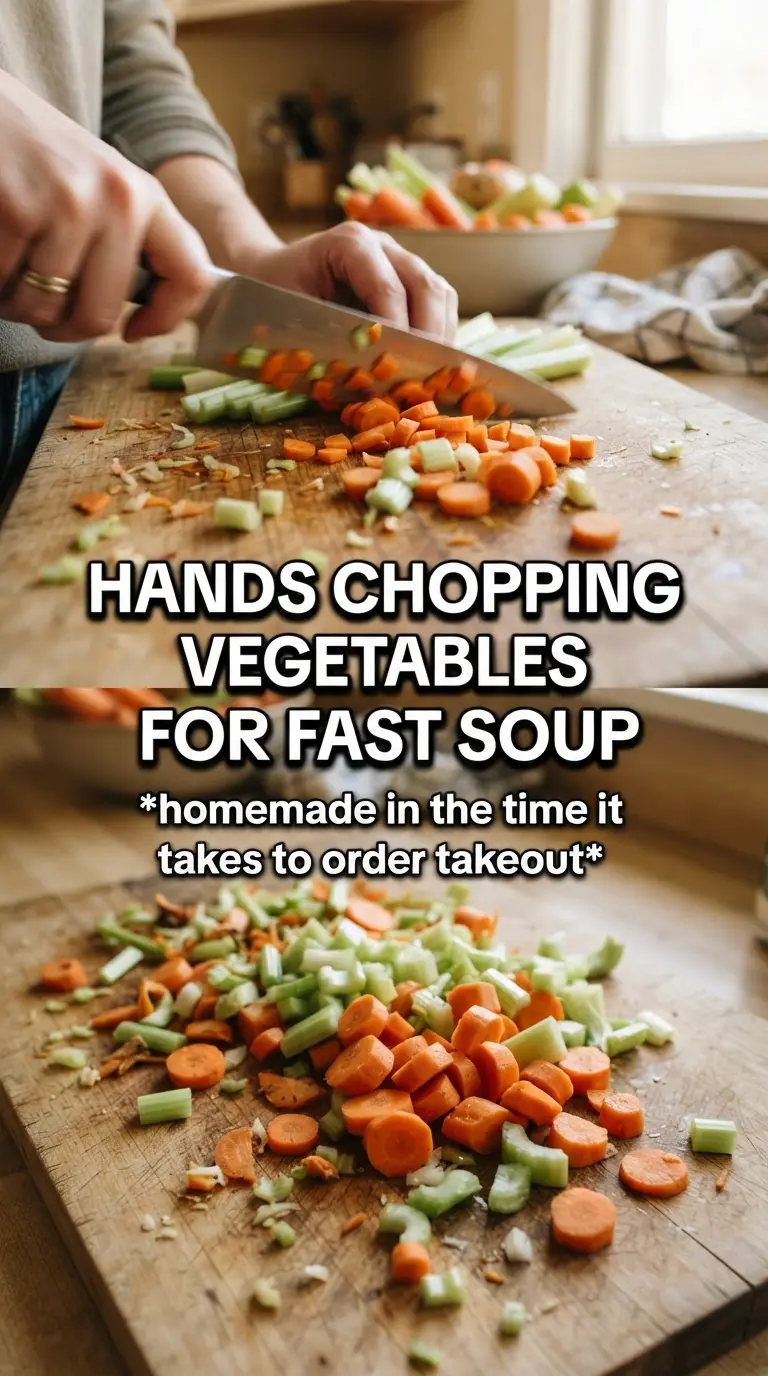
- Carrots, celery, and onion — This is the soup’s backbone. Cut them fairly small so they soften in the short cooking time and flavor the broth instead of staying raw in the center. If your celery is thick, slice it a little thinner than the carrots so everything finishes together.
- Chicken broth — This is where quality matters. A broth you actually like tasting plain will make the soup taste full and clean; a thin or overly salty broth will stay thin or salty after everything else is added. If yours is low-sodium, that’s ideal because you can season the finished soup yourself.
- Egg noodles — They give the soup its classic body and they cook fast. Standard egg noodles work best because they hold their shape without needing extra simmer time. If you substitute another pasta, choose a small shape and watch it closely so it doesn’t overcook.
- Lemon juice — This is the quiet ingredient that keeps the soup from tasting flat. It doesn’t make the soup lemony; it just sharpens the broth enough to bring the chicken and vegetables into focus. Add it at the end so the flavor stays bright.
- Butter — Butter gives the vegetables a rounder flavor than oil alone and helps the base taste a little richer in a short cooking window. If you need dairy-free, use olive oil, but you’ll lose a bit of that classic soup roundness.
The 20 Minutes That Matter Most
Softening the Vegetables First
Melt the butter over medium-high heat, then add the onion, carrots, and celery. You want the onions turning translucent and the carrots starting to lose their raw edge, not browning hard on the bottom. Four minutes is enough if your vegetables are cut small. If the pot starts to dry out or scorch, lower the heat a touch; browned vegetable bits will make the broth taste bitter instead of savory.
Building the Broth
Stir in the garlic for just a minute, then pour in the broth and add the thyme, parsley, and garlic powder. Garlic burns fast, so don’t leave it alone in the hot pot. Once the broth goes in, scrape the bottom well to lift up any cooked-on flavor. Bring it to a real boil before the noodles go in so they start cooking immediately and don’t sink into a lukewarm pot.
Cooking the Noodles at the Right Pace
Add the egg noodles and cook until they’re just tender, usually 6 to 8 minutes depending on the brand. Stir a few times so they don’t stick together or settle into one clump at the bottom. Pull them the second they’re cooked through but still a little springy. If they turn soft in the pot, they’ll be mushy by the time you eat the bowl.
Finishing With Chicken and Lemon
Stir in the shredded chicken and let it warm through for 2 to 3 minutes. It only needs enough time to heat, not enough time to simmer itself dry. Finish with lemon juice, then taste and season with salt and pepper until the broth tastes lively. Fresh parsley on top gives the bowl a clean finish and a little color that makes the whole thing look brighter.
How to Adapt This for Different Kitchens and Appetites
Make It Dairy-Free
Swap the butter for olive oil or avocado oil. The soup will still be comforting and savory, but it loses a little of the round, buttery finish that helps the vegetables taste richer. The rest of the method stays the same.
Make It Gluten-Free
Use a gluten-free egg noodle or another small gluten-free pasta that holds up in broth. Cook it gently and check early, because many gluten-free pastas go soft fast. If you know you’ll have leftovers, keep the pasta separate and add it to each bowl when serving.
Use Turkey Instead of Chicken
Leftover turkey works exactly the same way, which makes this a strong post-holiday soup. The flavor will be a little deeper and less familiar than chicken noodle soup, but the lemon and parsley keep it bright. Shred the turkey finely so it warms through quickly.
Storage and Reheating
- Refrigerator: Keep for up to 4 days. The noodles will keep soaking up broth, so expect the soup to thicken as it sits.
- Freezer: It freezes best without the noodles. Freeze the broth, vegetables, and chicken in an airtight container, then cook fresh noodles when you reheat. Frozen noodles turn soft and swollen.
- Reheating: Warm gently over medium-low heat until steaming. If the broth has thickened in the fridge, add a splash of water or broth to loosen it. Don’t boil it hard again or the chicken will dry out and the noodles will break apart.
Answers to the Questions Worth Asking
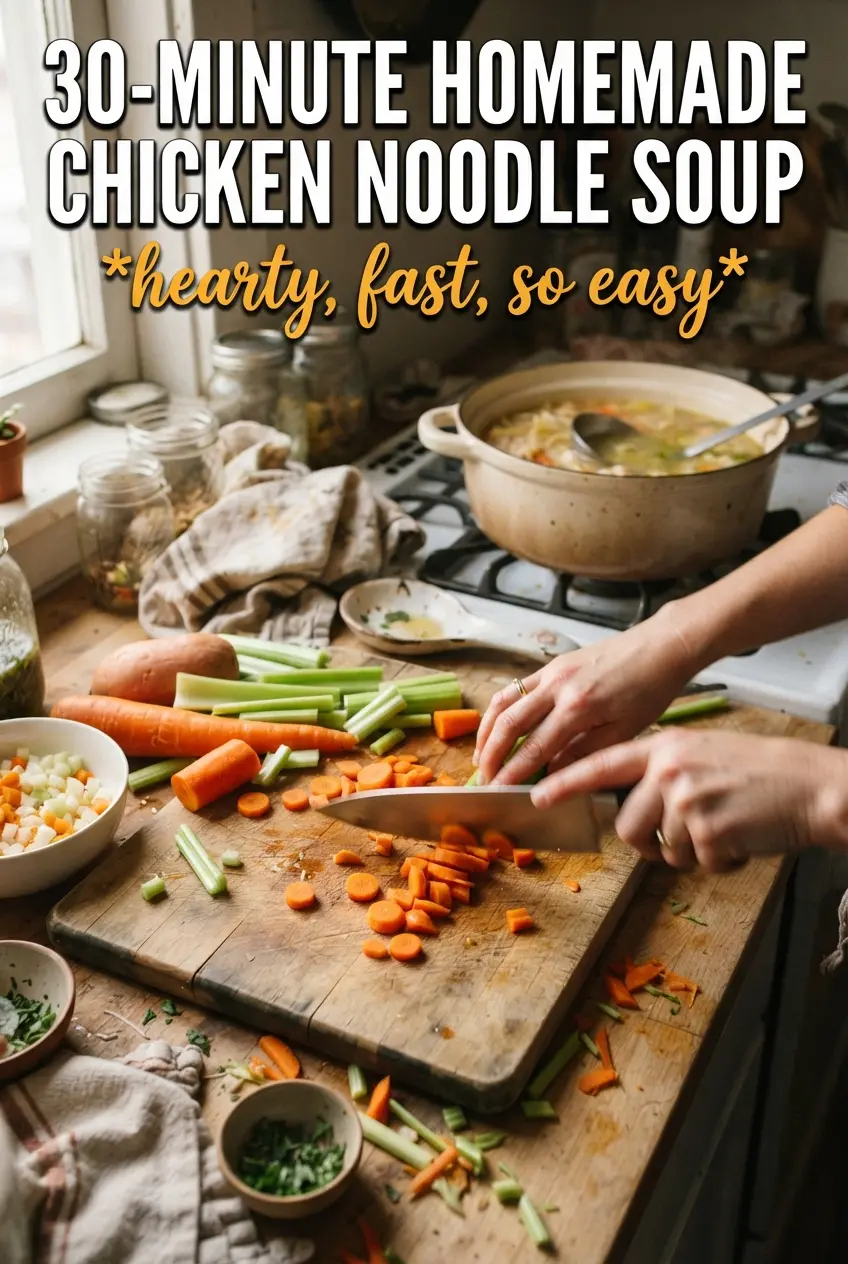
30-Minute Homemade Chicken Noodle Soup
Ingredients
Equipment
Method
- Melt the butter in a large pot over medium-high heat, then add the onion, carrots, and celery and sauté for 4 minutes, stirring until glossy and starting to soften.
- Add the garlic and cook for 1 minute, stirring constantly until fragrant.
- Pour in the chicken broth and add the thyme, dried parsley, and garlic powder, then stir to combine.
- Bring the soup to a boil over medium-high heat.
- Add the egg noodles and cook for 6-8 minutes until tender, keeping the liquid at a steady simmer.
- Add the shredded chicken and simmer for 2-3 minutes until heated through.
- Squeeze in the lemon juice, then season generously with salt and pepper to taste.
- Garnish with fresh parsley and serve hot.