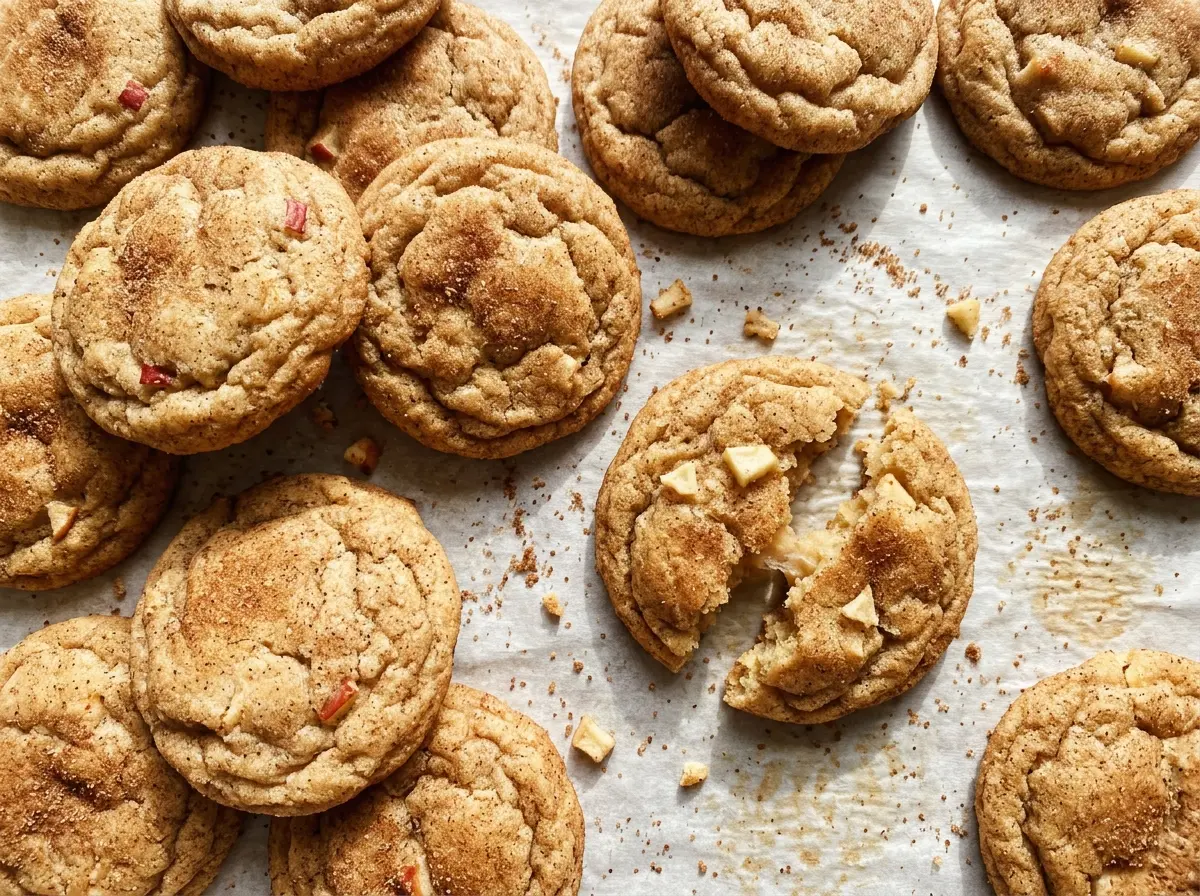
When the cinnamon-sugar tops crack in the oven and the edges turn set, the centers still look a little soft. That’s the moment to take these Apple Snickerdoodles out. They’ll finish setting on the hot baking sheet, with chewy bits of dried apple tucked into the middle and a light tang from the classic snickerdoodle dough.
I use dried apple rings rather than fresh apple, which keeps the dough from taking on extra moisture and gives each cookie a concentrated apple bite. Chopping the rings finely helps them distribute through the dough instead of making each scoop lopsided. A short chill firms the butter back up, so the dough is easier to roll and coat in cinnamon sugar. The cookies come out with crackled tops, soft centers, and just enough apple in each bite.
Kitchen Note
Let the baking sheet cool completely before the next batch goes on. Dough placed on a warm pan starts softening before it reaches the oven, and the cookies can spread more than the first batch.
Save these Apple Snickerdoodles for a bake when you want cinnamon-sugar crackle with chewy bites of dried apple.
Why cream of tartar belongs in a cinnamon cookie
Cream of tartar is what gives a snickerdoodle its familiar faint tang; it isn’t just a stand-in for another leavener. Here it works alongside baking soda, while the cinnamon-sugar coating brings the warm, sweet contrast. That balance is what makes these taste like snickerdoodles with apple, rather than plain sugar cookies with fruit mixed in.
There’s a practical reason to keep both leaveners in the bowl. Baking soda on its own won’t recreate the same flavor, and baking powder isn’t a direct replacement for the cream of tartar. Baking powder already contains an acid and a base, so swapping it into this combination changes both the leavening and the cookie’s characteristic tang. Keep the two ingredients as a pair and whisk them evenly into the flour so there aren’t concentrated pockets in the dough.
The coating has a job beyond adding cinnamon flavor, too. Rolling each portion before baking gives the crackled tops their sweet, spiced shell. If the coating looks patchy before the cookies go into the oven, roll the dough balls again in the cinnamon sugar until the surface is covered.
What the butter, leaveners, and dried apple each bring

- Butter — Use softened butter, not melted, so it can trap air as it’s beaten with the sugar. A fresh, standard unsalted butter works well; there’s no need for a specialty brand. If salted butter is what you have, leave out the added salt in the dough.
- Granulated sugar — The sugar creamed into the butter helps give the cookies their tender structure, while the portion mixed with cinnamon makes the crisp, fragrant outside. Keep the coating sugar separate from the dough sugar so both parts do their own job.
- Eggs and vanilla — Room-temperature eggs blend more smoothly into creamed butter than cold eggs straight from the refrigerator. Pure vanilla is lovely, but a standard vanilla extract is perfectly suitable here; measure it carefully so it supports the apple rather than taking over.
- Flour — All-purpose flour gives these cookies enough structure to hold the chopped fruit while staying soft in the middle. Spoon it into the measuring cup and level it off rather than packing it down; too much flour makes the dough stiff and the baked cookies dry.
- Cream of tartar and baking soda — These pantry staples are worth using together as listed. Cream of tartar brings the subtle tang, and baking soda helps the cookies rise and spread. Check that both are fresh, especially if they’ve been sitting open in the pantry.
- Dried apple rings — Choose unsweetened rings so the dough’s sweetness stays balanced, then chop them finely for an even mix in every cookie. Sticky, sweetened fruit can clump together and make the apple pieces harder to distribute.
- Cinnamon — Ground cinnamon is the defining note in the coating, so use one that smells fragrant when you open the jar. If the aroma has faded, the coating will taste flat even when you measure it correctly.
From fluffy butter to crackled cinnamon tops
Cream the butter and sugar until airy
Beat the softened butter with the portion of sugar for the dough on medium speed for 2 to 3 minutes. The mixture should look paler and fluffy, not like a dense paste. Scrape down the bowl if butter is clinging to the sides, then beat in the eggs one at a time and mix in the vanilla. Adding the eggs individually helps them blend into the butter instead of leaving the mixture slick or separated.
Fold in the apples and chill the dough
Whisk the flour, cream of tartar, baking soda, and salt together in a separate bowl before adding them to the butter mixture. Mix on low only until the last dry streaks disappear; continued mixing can make the cookies tougher. Fold in the finely chopped dried apples, cover the bowl, and refrigerate the dough for 30 minutes. The dough should feel firmer and easier to handle after chilling.
Coat evenly and leave room to spread
Stir the reserved sugar and cinnamon together in a small bowl, breaking up any little clumps of cinnamon. Scoop the dough into 1 1/2-tablespoon portions, roll each portion into a ball, and turn it in the coating until covered. Arrange the balls about 2 inches apart on a parchment-lined 18×13-inch rimmed baking sheet. Crowding them makes it harder for the edges to bake evenly as the cookies spread.
Pull the cookies while the centers still look soft
Heat the oven to 375°F and bake one batch at a time for 9 to 11 minutes. Look for set edges and crackled tops; the centers should still appear slightly soft when you take the pan out. Let the cookies sit on the baking sheet for 5 minutes before transferring them to a wire rack, since they’re delicate while hot. They’ll finish setting as they cool.
Two smart ways to adapt these apple snickerdoodles
Use dried pear for a softer fruit note
Swap in finely chopped unsweetened dried pear rings for the dried apple, keeping the same volume. Pear is milder and a little more floral, so the cinnamon stands out more. Chop it finely just as you would the apple so the pieces don’t pull the dough into uneven clumps.
Make them gluten-free with a cup-for-cup blend
Replace the all-purpose flour with a measure-for-measure gluten-free baking blend that contains xanthan gum. The cookies keep their cinnamon coating and apple bites, though the centers may have a slightly different tenderness depending on the blend. Chill the dough before shaping so it’s firm enough to roll.
Storage and Reheating
- Refrigerator: Store in an airtight container for up to 1 week; refrigeration can make the cookies firmer, so room temperature is better for their soft centers.
- Freezer: Freeze fully cooled cookies in an airtight freezer-safe container for up to 2 months. Separate layers with parchment so the cinnamon coating doesn’t rub off.
- Reheating: Let frozen cookies thaw at room temperature, or microwave an individual cookie briefly just until warm. Avoid a long microwave stint, which can make the edges tough.
Questions that come up while baking apple snickerdoodles
Apple Snickerdoodles
Ingredients
Equipment
Method
- In a large bowl, beat the butter and 1 1/2 cups of the granulated sugar with an electric mixer on medium speed until light and fluffy, 2 to 3 minutes.
- Beat in the eggs one at a time, then mix in the vanilla extract.
- In a medium bowl, whisk together the flour, cream of tartar, baking soda, and salt.
- Add the flour mixture to the butter mixture and mix on low just until no dry streaks remain.
- Fold in the chopped dried apples, cover the bowl, and refrigerate the dough for 30 minutes.
- In a small bowl, stir together the remaining 1/4 cup granulated sugar and the cinnamon.
- Heat the oven to 375°F and line an 18x13-inch rimmed baking sheet with parchment paper.
- Scoop the dough into 1 1/2-tablespoon portions, roll each into a ball, coat in the cinnamon-sugar, and arrange the balls about 2 inches apart on the baking sheet.
- Bake one batch at a time for 9 to 11 minutes, until the edges are set and the tops are crackled while the centers still look slightly soft.
- Cool the cookies on the baking sheet for 5 minutes, then transfer them to a wire rack to cool.
- Let the baking sheet cool before baking the next batch.