The salmon can look ready at the edges while the thickest part still needs a little time. I check the center instead of guessing from the color, then let the fillet rest before breaking it into pieces. That gives this healthy salmon salad a warm, tender topping without turning the greens into an afterthought.
The dressing is intentionally simple: olive oil, lemon, Dijon, and a touch of honey. Tossing it with the vegetables before adding the salmon coats the leaves and keeps the flakes in big, distinct pieces. Between the creamy avocado, crisp cucumber, and juicy tomatoes, every forkful has a different texture, but nothing competes with the salmon.
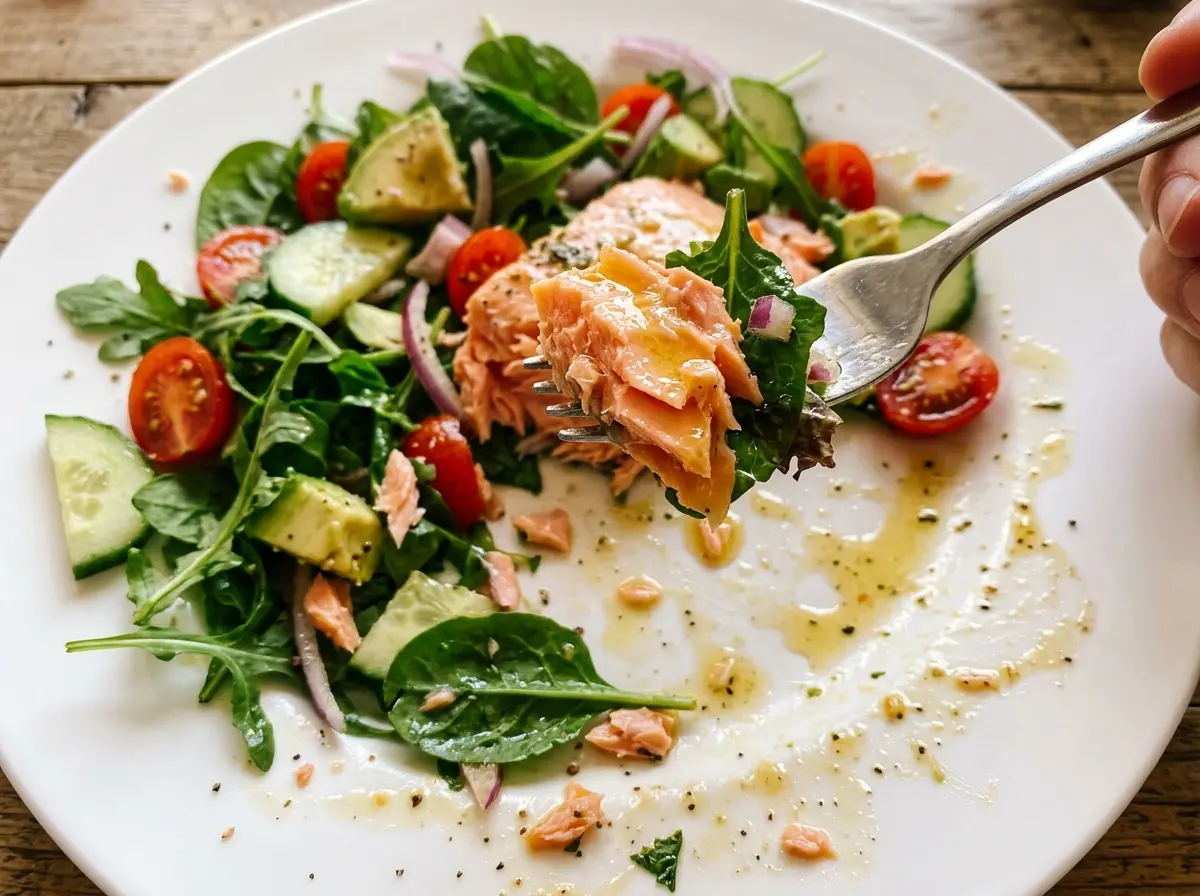
Kitchen Note
Give the salmon its full five-minute rest before flaking. If you rush that pause, the fish breaks into little crumbs instead of the broad, tender pieces that sit nicely on top of the salad.
Save this healthy salmon salad for a lunch with flaky fish, creamy avocado, and a bright lemon-Dijon dressing.
Why the Salmon Goes on After the Greens Are Dressed
It’s easy to pour the dressing over the whole bowl at once, but the order here makes a noticeable difference. Toss the spinach or mixed greens and vegetables first, then add the salmon on top. The leaves get an even, light coating, while the salmon stays in flakes instead of breaking apart as you toss.
That matters because the salad has ingredients with very different textures. Cucumber and tomatoes add moisture, avocado is soft, and the salmon is at its best when you can pick up a substantial piece with your fork. Mixing everything together aggressively can squash the avocado and scatter the salmon through the bowl. A gentle toss before the fish goes on gives you dressed greens underneath and clear, generous pieces of salmon above.
Serve it soon after tossing. The dressing is enough to bring the ingredients together without hiding the clean, fresh taste of the vegetables or the salmon.
What Each Ingredient Brings to This Salmon Salad
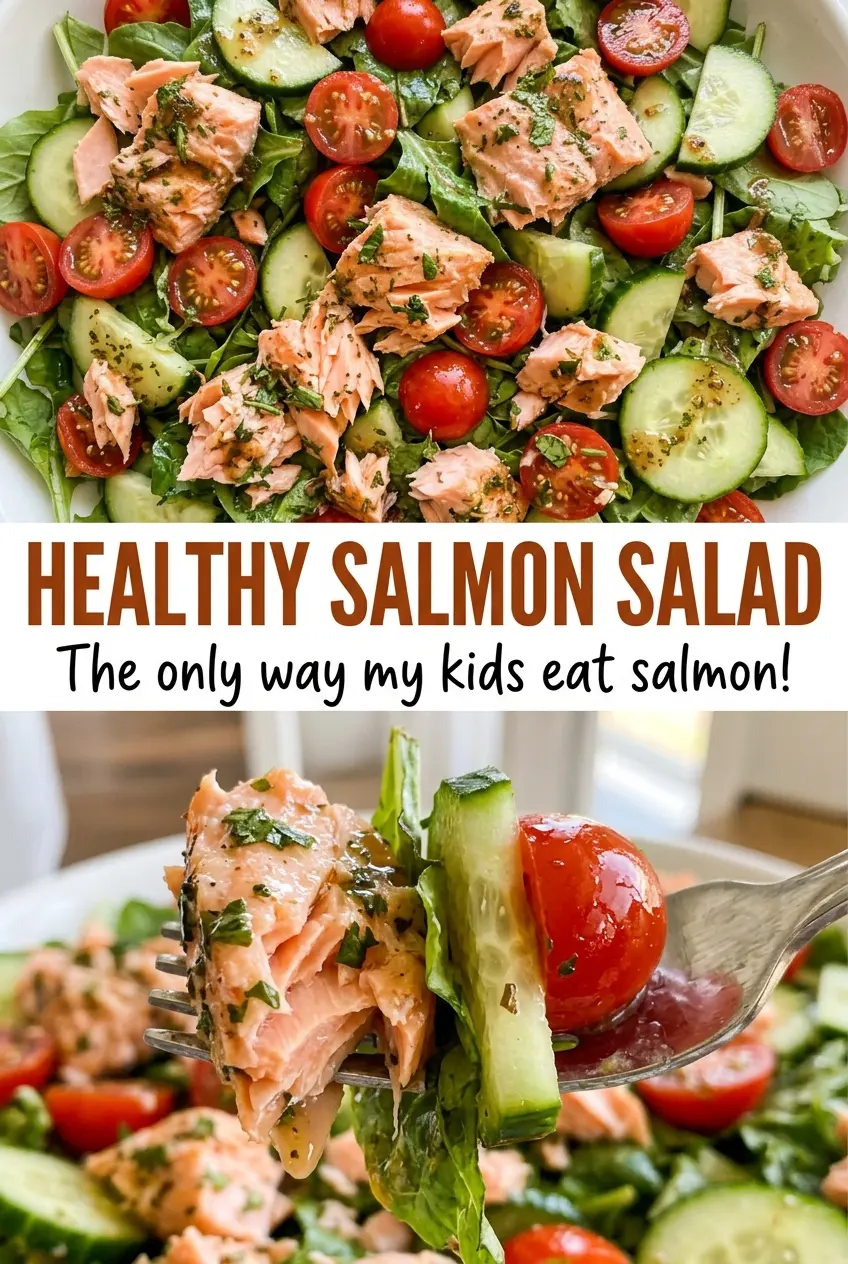
- Skinless salmon — A single fillet bakes evenly and is easy to flake over the salad. Choose a fresh-looking fillet that’s evenly thick when you can; the thinner end will cook sooner, so check the thickest part for doneness. There isn’t another protein in the ingredient list that will give the salad the same tender, rich flakes.
- Extra-virgin olive oil — This gives the lemon dressing its body and carries its flavor across the greens. A decent everyday bottle is fine; there’s no need to use a special finishing oil since the dressing is whisked with the other ingredients.
- Fresh lemon juice, Dijon mustard, and honey — Lemon keeps the dressing bright, Dijon helps the oil and juice stay together, and honey rounds off the sharp edge. Freshly squeezed lemon gives a cleaner taste than bottled juice. Keep the mustard and honey in the mix; leaving either out changes the balance and texture of the dressing.
- Baby spinach or mixed greens — Either works as the leafy base, so choose the one you like or already have. Spinach gives a familiar, mild bed for the salmon; mixed greens bring a variety of leaves. Use greens that are fresh and dry so the dressing clings rather than slipping off.
- Cherry tomatoes and cucumber — The tomatoes bring juicy sweetness, while cucumber adds a cool crunch. Halving the tomatoes helps them sit easily among the leaves, and chopping the cucumber makes it easier to get a little of everything in each bite.
- Avocado and red onion — Diced avocado adds a creamy contrast to the crisp vegetables. Thinly sliced red onion spreads its sharper flavor through the bowl without overwhelming any one bite; thick pieces can taste more pungent.
From a Tender Fillet to a Salad That Stays Fresh
Heat the Oven and Line the Pan
Heat the oven to 400°F and line a rimmed baking sheet with parchment paper. The rim keeps any juices on the pan, and the parchment makes cleanup easier. Have the baking sheet ready before you season the fish, so the salmon can go straight into the oven.
Bake Until the Thickest Part Reaches Temperature
Set the skinless salmon on the lined pan and season it with kosher salt and black pepper. Bake for 10–15 minutes, checking the thickest part with a thermometer; it needs to reach 145°F. The time varies with the shape and thickness of the fillet, so use the temperature rather than relying on the clock alone.
Rest the Fish, Then Flake It
Take the salmon out and let it rest for 5 minutes before using a fork to break it into large pieces. The resting time gives the fish a chance to settle after baking, so it’s easier to handle without falling apart as soon as you touch it. If the center still hasn’t reached the target temperature, return it to the oven and check again.
Whisk the Dressing and Finish the Bowl
Whisk the olive oil, fresh lemon juice, Dijon mustard, and honey together in a small bowl until combined. Arrange the greens, halved tomatoes, chopped cucumber, diced avocado, and thinly sliced red onion in a large salad bowl. Pour on the dressing and toss gently to coat, then arrange the salmon over the top and serve.
Simple Ways to Adjust the Greens, Dressing, and Onion
Choose spinach for a milder base
Use baby spinach instead of mixed greens when you want a soft, mild backdrop for the salmon. The salad keeps its fresh, leafy character, but the greens won’t bring the same variety of leaf shapes and flavors.
Leave out the honey for a sharper dressing
For a lower-sugar version, omit the honey and whisk the remaining dressing ingredients together. The lemon and Dijon come through more directly, so expect a tangier finish rather than the gently rounded taste of the original.
Skip the red onion for a gentler bowl
Leave out the red onion if you prefer the salad without its peppery bite. You’ll lose that sharp contrast, but the lemon dressing, cucumber, and creamy avocado still give the greens plenty of character.
Storage and Reheating
- Refrigerator: Keep cooked salmon in an airtight container for 3 to 4 days. Store it apart from the undressed greens; dressed greens soften, and cut avocado browns.
- Freezer: Freeze the cooked salmon by itself in an airtight freezer-safe container for up to 2 to 3 months for best quality. The assembled salad, especially the greens, cucumber, and avocado, won’t thaw well.
- Reheating: Warm only the salmon in short microwave bursts until it reaches 165°F, then add it to fresh salad ingredients. Long heating dries the fish out, and the greens and dressing shouldn’t be microwaved.
Questions That Come Up When Making Healthy Salmon Salad
Healthy Salmon Salad
Ingredients
Equipment
Method
- Heat the oven to 400°F and line a rimmed baking sheet with parchment paper.
- Place the salmon on the baking sheet and season it with the salt and pepper.
- Bake for 10–15 minutes, until the thickest part reaches 145°F.
- Let the salmon rest for 5 minutes.
- Flake the salmon into large pieces with a fork.
- Whisk the olive oil, lemon juice, Dijon mustard, and honey in a small bowl until combined.
- Arrange the spinach, tomatoes, cucumber, avocado, and red onion in a large salad bowl.
- Pour the dressing over the salad and toss gently to coat.
- Top with the flaked salmon and serve.