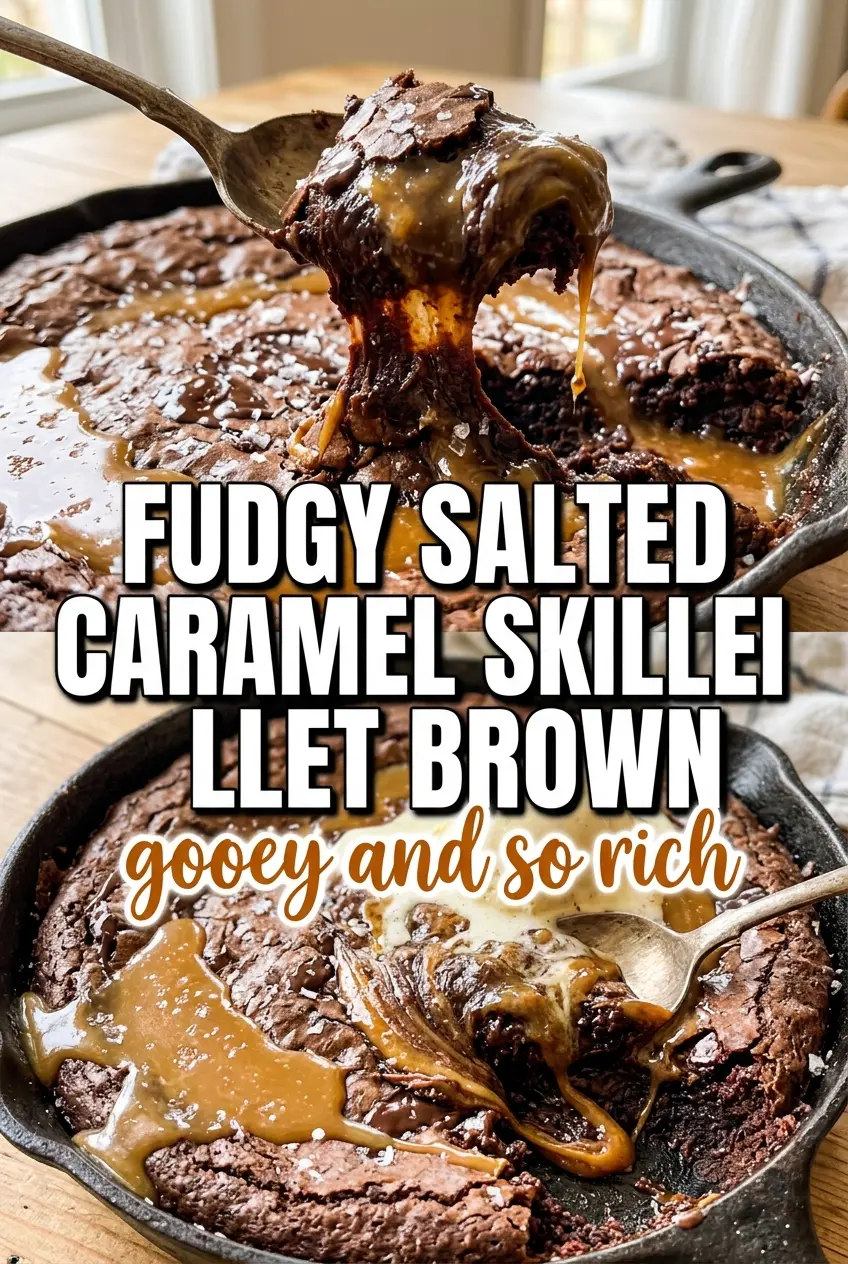
Fudgy, glossy, and just a little bit dramatic, this skillet brownie comes out with crisp edges, a dense chocolate center, and ribbons of salted caramel that melt into every bite. Baking it in a skillet gives you the best part of a brownie pan in every slice: those caramelized edges around the outside and a soft, almost truffle-like middle that stays tender when you serve it warm.
The trick is keeping the batter simple and not overworking it. Once the flour and cocoa go in, stop as soon as the streaks disappear; beating it smooth turns a fudgy brownie into something cakier. The caramel goes in twice for a reason — one layer swirled into the batter so it bakes in, and one more added at the end so you get that sticky, spoonable finish instead of a sauce that disappears into the crumb.
Below, I’ve included the timing cue that matters most, plus a few smart swaps if you want to change the chocolate intensity or make this in a different pan.
The caramel stayed in little ribbons instead of sinking, and the center baked up fudgy while the edges got that crisp brownie crust. We ate half the skillet warm with ice cream and the rest the next day.
Love the gooey caramel ribbons and crisp-edged skillet brownie? Save this one for the night you want warm chocolate and salt in every bite.
The Secret to a Fudgy Skillet Brownie Is Stopping Before It Looks Done
Brownies fool people because the middle should not look fully baked when you pull them out. That’s especially true in a skillet, where the hot cast iron keeps cooking the edges long after the pan leaves the oven. If you wait until the center looks set all the way through, you’ll land on dry and crumbly instead of dense and fudgy.
The other thing that changes the texture is how the batter is mixed. Melted butter gives you that shiny, crackly top, but only if the eggs are whisked in until the mixture looks smooth and slightly thickened. After that, the flour and cocoa only need a few folds. The moment the batter loses its dry streaks, stop stirring.
That pause at the right minute is what keeps this from tasting like a chocolate cake baked in a skillet.
What the Cocoa, Caramel, and Skillet Each Bring to the Pan

- Unsalted butter — Melted butter is what gives the brownie that dense, glossy crumb. You can use salted butter in a pinch, but cut back on the added salt so the caramel topping still tastes balanced.
- Granulated sugar — This does more than sweeten. It helps create the thin shiny top that cracks when you slice into the brownie, and it keeps the center soft instead of bread-like.
- Eggs — The eggs are the structure here. They set the brownie without making it fluffy, which is why whisking them into the warm butter-sugar mixture until smooth matters.
- Unsweetened cocoa powder — Cocoa brings the deep chocolate flavor without extra fat or sugar. If you swap in Dutch-process cocoa, the brownie tastes a touch smoother and darker, but regular cocoa works beautifully.
- Salted caramel sauce — This is the payoff ingredient, so use one that tastes good straight from the spoon. A thicker sauce swirls better and stays visible in the baked brownie instead of disappearing into the batter.
- Flaky sea salt — The final pinch wakes up the chocolate and keeps the caramel from tasting flat. Don’t use fine table salt on top; it melts in too fast and loses the contrast.
How to Swirl the Caramel Without Losing It in the Batter
Build the Batter First
Whisk the melted butter and sugar until the mixture looks glossy and a little grainy around the edges, then whisk in the eggs and vanilla until the batter loosens and turns smooth. That glossy stage matters because it helps form the crackly top people expect from a brownie. If the mixture looks separated, keep whisking for another few seconds before adding the dry ingredients.
Fold, Don’t Beat
Add the flour, cocoa, and salt all at once, then fold just until the last dry streak disappears. Overmixing pushes too much air into the batter and starts to make the crumb cakey. A few small lumps are better than an overworked batter.
Swirl and Bake at the Right Moment
Spread the batter in the greased skillet, drizzle on the first half of the caramel, and drag a knife through it in broad figure-eight motions. Don’t over-swirl or the caramel disappears into the chocolate. Bake until the edges are set and the center still looks slightly soft and underdone in the middle; that center firms up as it cools, and pulling it too late is the fastest way to lose the fudgy texture.
Finish While It’s Warm
Drizzle the remaining caramel over the top as soon as the skillet comes out of the oven, then shower it with flaky salt. The heat from the brownie loosens the caramel just enough to make it pool into shiny ribbons. Serve it warm if you want the full gooey effect, especially with ice cream.
What to Change When You Want a Different Kind of Chocolate Dessert
Dairy-Free Version
Swap the butter for a dairy-free baking stick that melts cleanly and use a dairy-free caramel sauce. The texture stays close to the original because the recipe leans more on eggs and sugar than on butter flavor, but the caramel you choose matters here since it carries most of the finish.
Gluten-Free Swap
Use a cup-for-cup gluten-free flour blend in place of the all-purpose flour. The brownie stays fudgy, but don’t chase an ultra-thick batter with extra flour, or the texture turns dry. Let the baked brownie cool for at least 15 minutes so the crumb can set before slicing.
Extra-Intense Chocolate
Replace 1 tablespoon of the cocoa powder with Dutch-process cocoa for a deeper, darker flavor. If you do that, keep the caramel amount the same; the salt and sweetness help the more intense chocolate taste fuller instead of bitter.
Storage and Reheating
- Refrigerator: Store covered for up to 4 days. The brownie firms up in the fridge, but the texture stays fudgy.
- Freezer: Freeze slices tightly wrapped for up to 2 months. The caramel softens a little after thawing, which is fine for this dessert.
- Reheating: Warm individual slices in the microwave for 15 to 20 seconds or set the skillet in a low oven until just heated through. Too much heat dries out the edges and makes the caramel stiff instead of gooey.
Questions I Get Asked About This Recipe
Fudgy Salted Caramel Skillet Brownie
Ingredients
Equipment
Method
- Preheat the oven to 350°F and grease a 9-inch oven-safe skillet.
- Whisk together the melted butter and sugar until combined, then whisk in the eggs and vanilla until smooth.
- Fold in the all-purpose flour, cocoa powder, and salt until just combined.
- Pour the batter into the prepared skillet and smooth the top.
- Drizzle 1/4 cup of the salted caramel sauce over the batter and swirl gently with a knife.
- Bake for 25–28 minutes at 350°F, until the edges are set but the center is still slightly fudgy.
- Drizzle with the remaining salted caramel sauce before serving warm.
- Sprinkle flaky sea salt on top right before serving.