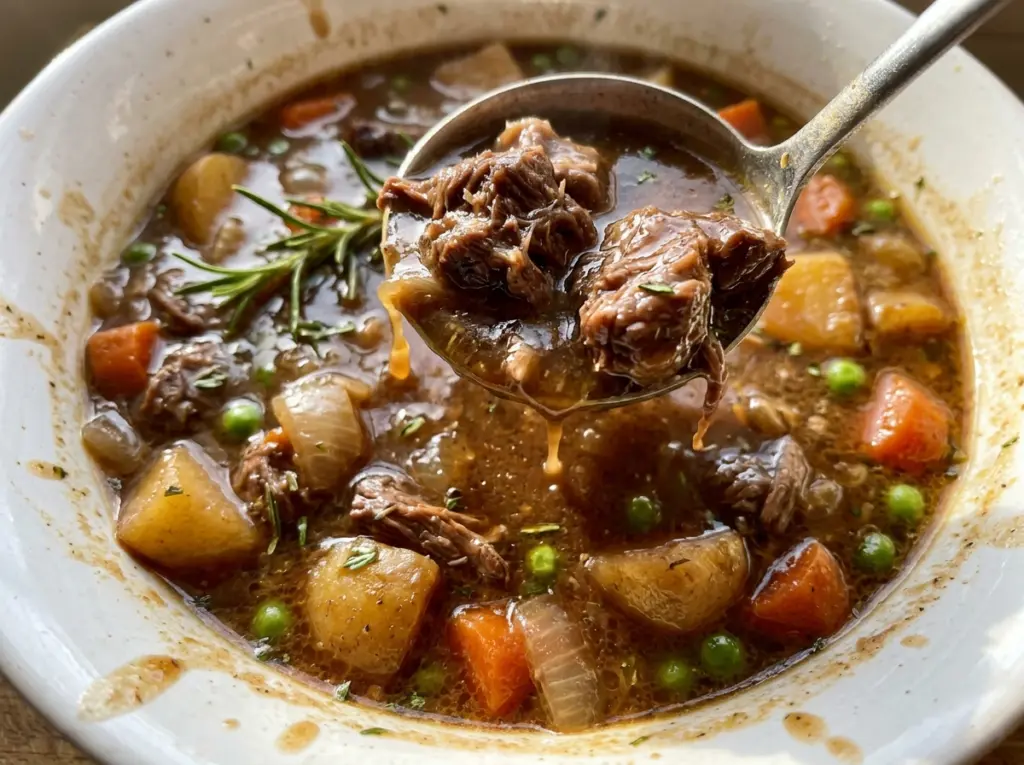

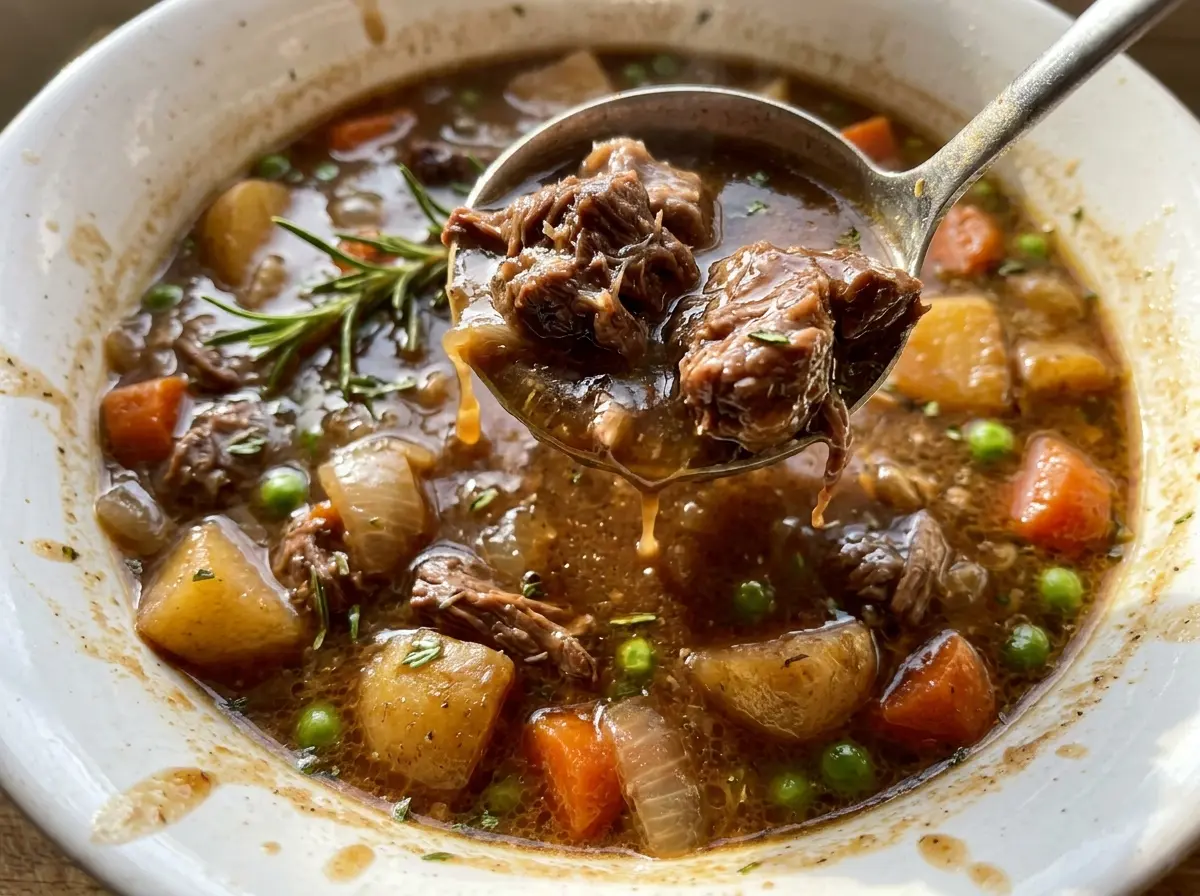
The first pieces of beef should sizzle as they hit the Dutch oven, then slowly turn brown instead of steaming in their own juices. I brown this Ina Garten beef stew in three batches, and that little bit of patience gives the finished broth a deeper, more savory taste. It’s a cozy, full-pot supper built from tender beef, chunky vegetables, and a red-wine broth that’s rich without being heavy.
The timing is split for a reason: the beef gets a head start in the oven, then the carrots, potatoes, and onion join for the final stretch. They have enough time to soften without spending the whole bake in the pot. By the time the frozen peas go in, the beef should yield easily to a fork and the vegetables should still hold their shape in the bowl.
Kitchen Note
Give the stew its full 10-minute rest before serving. The bubbling settles, and it’s easier to ladle out the tender beef and vegetables without breaking them up.
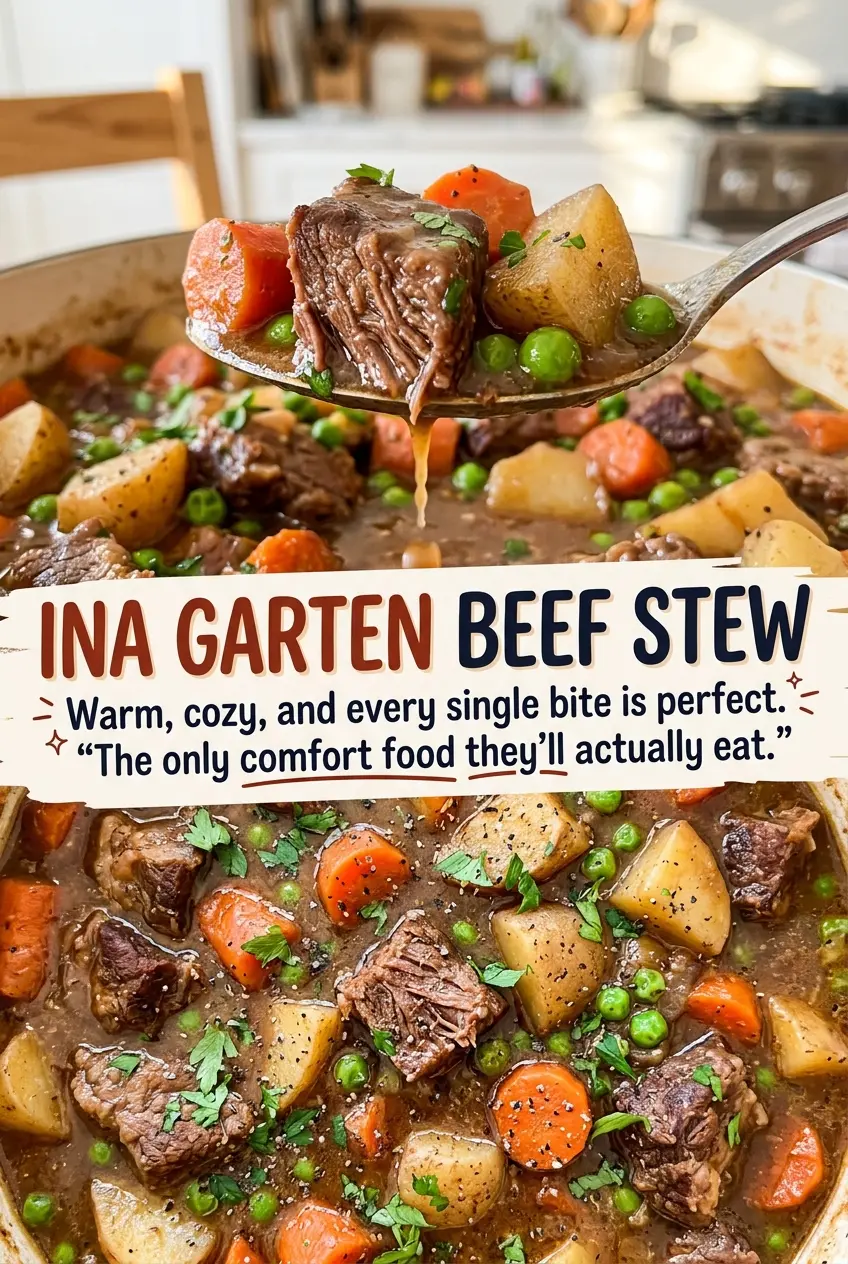
Save this Ina Garten beef stew for a slow-baked dinner with fork-tender beef and a red-wine broth.
Why the Wine Goes Into the Beef Pot Before the Broth
Once the beef is browned, the bottom of the Dutch oven will have dark bits stuck to it. Those aren’t burnt scraps to discard; they’re concentrated flavor left behind by the meat. Pouring in the wine while the pot is hot loosens them, and scraping the bottom brings them into the liquid instead of leaving them behind.
Let the wine simmer for three minutes before adding the broth and the rest of the seasonings. That brief simmer gives the wine a chance to cook down a little, while the tomato paste and beef broth turn the pan juices into the base for the long bake. If you skip the scraping, the broth loses some of the browned, beefy depth that makes this stew taste as though it has been cooking all day.
Keep the heat at a steady simmer rather than letting the liquid boil hard. A covered Dutch oven then holds that gentle heat in the oven, giving the chuck time to become tender without reducing the broth too aggressively.
What the Beef, Flour, and Wine Each Bring to the Pot
- Beef chuck — Chuck is suited to a long, covered bake because its connective tissue softens as it cooks, leaving the cubes tender and giving the broth a beefier body. Cut the meat into even 1 1/2-inch pieces so they cook at a similar pace. For the closest result, stick with chuck rather than a lean cut.
- All-purpose flour — The flour coats the seasoned beef before it browns, helping the surface take on color and adding body to the cooking liquid. Shake off excess so loose flour doesn’t scorch in the oil. For a gluten-free version, a 1:1 gluten-free all-purpose flour blend can replace it in the same amount; the broth may have a slightly different texture.
- Dry red wine — Choose a dry red wine, not a sweet one, so the broth stays savory. A wine you’d be comfortable drinking is a sensible choice, but there’s no need for an expensive bottle because it’s simmered and baked with the beef.
- Beef broth, tomato paste, and aromatics — Broth gives the stew its savory liquid, while tomato paste adds concentrated depth. Mince the garlic so it disperses through the pot, and use the dried thyme and bay leaves for a steady herbal background. Remove the bay leaves before serving.
- Carrots, Yukon Gold potatoes, and onion — Their substantial cuts suit the long oven cook. Peel the carrots and cut the vegetables to the specified sizes; small pieces soften sooner and are more likely to lose their shape before the beef is fork-tender.
- Frozen peas — Frozen peas go in at the very end, so they warm through without taking the full oven time. Keep them frozen until that last addition; there’s no need to thaw them first.
The Stovetop-to-Oven Sequence That Builds the Stew
Coat the Beef and Brown It in Batches
Heat the oven to 300°F, then pat the beef dry before seasoning it with kosher salt and freshly ground black pepper. Toss the cubes with flour and shake off the extra coating. Heat the olive oil in a 6-quart Dutch oven over medium-high heat, and brown the beef in three batches, turning to color all sides; plan on about eight minutes per batch. Move each batch to a plate rather than piling everything into the pot at once.
Scrape the Pot and Build the Broth
Pour the dry red wine into the Dutch oven and scrape along the bottom to loosen the browned bits. Let it simmer for three minutes, then stir in the beef broth, tomato paste, minced garlic, dried thyme, and bay leaves. Return the beef and any juices on the plate to the pot. Bring the liquid to a simmer before covering, so the oven starts with the stew already gently bubbling.
Give the Beef Its Head Start
Cover the Dutch oven and bake for 1 1/2 hours. Keep the lid on during this first stretch; it traps moisture while the chuck begins to soften. Don’t expect the beef to be fork-tender yet, since the vegetables still need their own time in the oven. The liquid should remain around the beef rather than cooking away.
Add the Vegetables, Then Finish with Peas
Stir in the carrots, Yukon Gold potatoes, and onion, cover the pot again, and bake for 45 to 60 minutes. Check for fork-tender beef and vegetables at the end of that window; the potato pieces should yield without crumbling apart. Stir in the frozen peas, cover, and cook for five minutes until they’re heated through. Remove the bay leaves and let the pot rest before serving.
Two Practical Ways to Adapt This Beef Stew
Make It Gluten-Free
Replace the all-purpose flour with the same amount of a 1:1 gluten-free all-purpose flour blend when coating the beef. The stew keeps its beef-and-vegetable character, though the broth’s body may be a little less silky depending on the blend.
Leave Out the Peas
For a more straightforward beef-and-root-vegetable stew, omit the peas and finish after removing the bay leaves. You’ll lose their sweet pop of color and flavor, but the beef, carrots, potatoes, and onion still make a complete pot.
Storage and Reheating
- Refrigerator: Refrigerate within 2 hours in shallow, covered containers and use within 3 to 4 days. The broth will thicken as it chills, and the potatoes will soften slightly.
- Freezer: Freeze in airtight, freezer-safe containers for up to 2 to 3 months. The stew freezes well, though the potatoes may be softer after thawing; thaw it in the refrigerator.
- Reheating: Warm it gently in a covered saucepan over medium-low heat, stirring carefully, until it reaches 165°F. Avoid a hard boil, which can break up the potatoes and beef.
Questions That Come Up While Making This Beef Stew
Ina Garten Beef Stew
Ingredients
Equipment
Method
- Heat the oven to 300°F.
- Pat the beef dry.
- Season the beef with the salt and pepper.
- Toss the beef with the flour to coat, shaking off excess.
- Heat the olive oil in a 6-quart Dutch oven over medium-high heat.
- Brown the beef in 3 batches, turning to brown all sides, about 8 minutes per batch.
- Transfer the beef to a plate.
- Pour the wine into the Dutch oven and scrape up the browned bits.
- Simmer for 3 minutes.
- Stir in the beef broth, tomato paste, garlic, thyme, and bay leaves.
- Return the beef and any accumulated juices to the pot.
- Bring the liquid to a simmer.
- Cover the pot and bake for 1 1/2 hours.
- Stir in the carrots, potatoes, and onion.
- Cover and bake for 45 to 60 minutes, until the beef and vegetables are fork-tender.
- Stir in the peas.
- Cover and cook for 5 minutes until heated through.
- Remove the bay leaves.
- Let the stew rest for 10 minutes before serving.