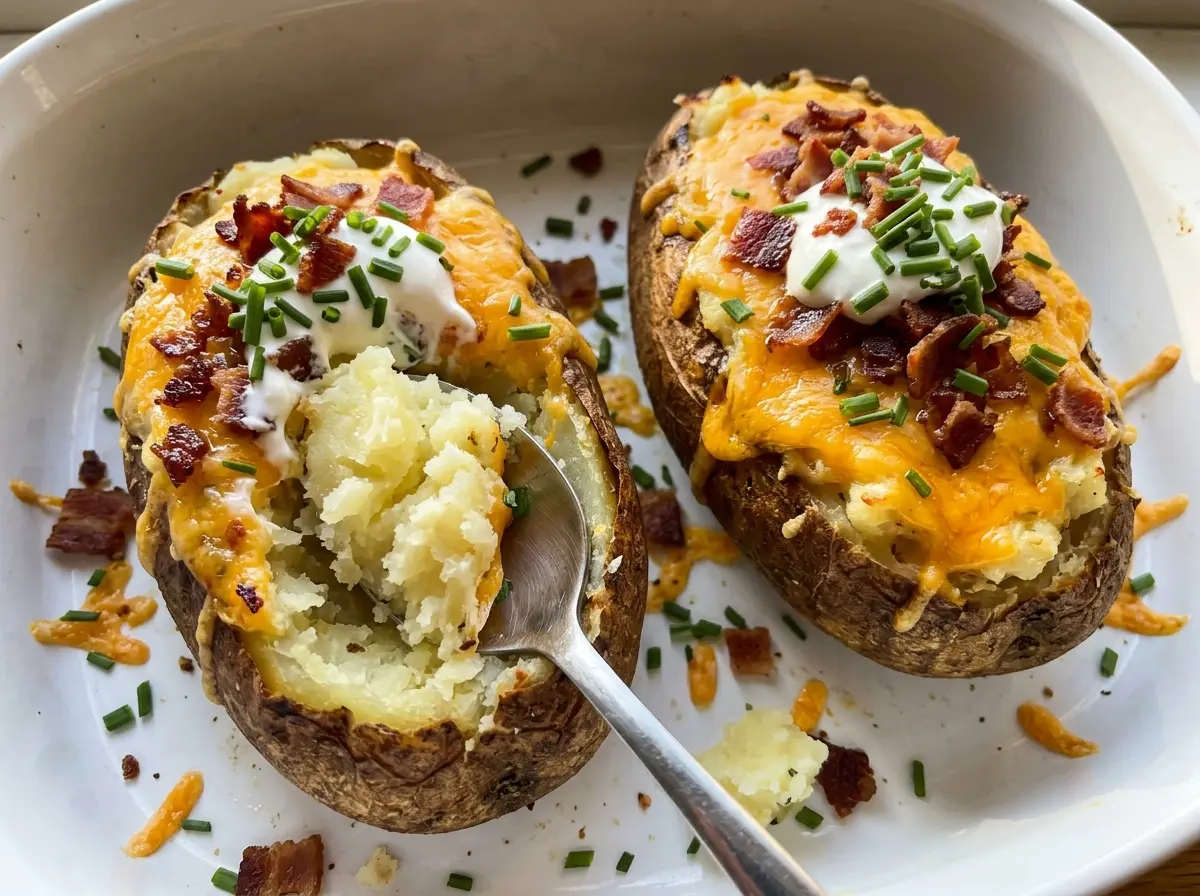
When you cut into a russet straight from the oven, the steam escapes before you’ve even reached the filling. I let the potatoes cool just enough to handle, scoop out the centers, then mash them with butter, sour cream, and milk. That second bake turns those simple baked potatoes into sturdy shells filled with soft, savory potato and a layer of melted cheddar.
Using large russets gives you enough potato flesh for a generous filling and shells that can hold it. I keep the potato skins intact, leave some cheddar for the tops, and bake the halves until they’re hot throughout. The scallions bring a fresh, savory bite to the creamy filling, while sharp cheddar keeps the cheese flavor present in every forkful. These twice baked potatoes come out tender in the middle, with a melted-cheese finish.
Kitchen Note
Scoop gently and stop while there’s still a sturdy layer of potato against the skin. Leaving a 1/4-inch-thick shell gives the filling a solid cradle instead of a fragile potato boat.
Save these twice baked potatoes for a cozy dinner side: creamy scallion filling tucked into russet shells under melted sharp cheddar.
Why the First Bake Has to Finish Before You Scoop
The second trip through the oven is for heating the filling and melting the cheese, not for cooking a firm potato center. If the russets are still underdone when they come out of the first bake, the flesh is harder to scoop and mash, and the filled halves may still feel dense after their shorter return to the oven. A knife should slide easily into the center before you take them out.
That first bake also gives the potato flesh time to soften evenly from skin to center. Russets vary a little in size even when they’re all large, so use the knife test alongside the 50-to-60-minute window rather than judging by the outside alone. Once the centers are tender, the butter, sour cream, and milk can blend into the potato without leaving firm pieces behind. Then the final bake can do its job: warm the filling through and melt the cheddar on top.
What Russets, Sour Cream, and Sharp Cheddar Each Bring

- Russet potatoes — Their dry, starchy flesh mashes into a light filling, and their thick skins make practical shells. Choose potatoes close in size so they bake at a similar pace; ordinary grocery-store russets work well.
- Olive oil — A thin coating goes over the scrubbed, dry skins before baking. A basic olive oil is fine here; its job is to coat the potato, not to carry the flavor of the filling.
- Butter — Softened butter blends into the warm potato flesh more easily than a cold, firm piece. Unsalted butter lets the listed kosher salt season the filling without the salt level being harder to control.
- Sour cream — It brings tang and a creamy texture that plain milk alone won’t provide. A standard tub from the grocery store is suitable; keep it refrigerated until you’re ready to mash the filling.
- Milk — Milk loosens the potato mixture so it can be spooned back into the shells. It works alongside the sour cream rather than replacing its tang, so I keep both in the filling.
- Sharp cheddar — Sharp cheddar gives the filling and topping a more pronounced cheese flavor than mild cheddar. A block you shred yourself melts smoothly, while packaged shredded sharp cheddar is convenient and still works.
- Scallions — Thin slices distribute through the mashed potato and add a mild onion flavor. Slice them finely so they’re easy to scoop up with the creamy filling.
- Kosher salt and black pepper — These season the potato mixture itself, not just the cheese on top. Stir them in with the other filling ingredients so the seasoning is spread through the whole batch.
From Tender Russets to Hot, Cheesy Centers
Bake the Potatoes Until the Centers Give Easily
Heat the oven to 400°F. Scrub the russets, pat them dry, prick each one several times with a fork, and rub the skins with olive oil. Set them on a rimmed baking sheet and bake for 50 to 60 minutes. They’re ready when a knife slides easily into the centers; if it meets resistance, give them more time.
Cool, Split, and Scoop
Let the potatoes cool until they’re easy to handle, about 10 minutes, then slice each one lengthwise. Scoop the flesh into a bowl, keeping the shells intact and about 1/4 inch thick. Work around the potato rather than digging hard into one spot, which helps avoid breaking through the skin. Set the empty shells back on the baking sheet.
Mash the Filling Until Combined
Add the softened butter, sour cream, milk, half of the cheddar, sliced scallions, kosher salt, and black pepper to the potato flesh. Mash until the mixture is combined and the seasonings and scallions are spread through it. You want a cohesive, spoonable filling, not a separate layer of dairy sitting at the bottom of the bowl. If a few small potato pieces remain, that’s fine.
Fill the Shells and Melt the Cheddar
Spoon the mixture back into the potato shells, then top with the remaining cheddar. Bake on the rimmed baking sheet for 15 to 20 minutes, until the filling is hot throughout and the cheese has melted. Look for melted cheese across the tops and heat reaching the middle of the filling, not just the exposed edges. Let the halves stand for 5 minutes before serving.
Small Changes to the Cheddar and Scallion Balance
Make the cheddar topping more prominent
Keep the total cheddar the same, but shift some of the cheese from the filling to the tops. The filling will taste a little less cheesy, while the melted layer on each half will be more noticeable.
Let more scallion flavor sit near the top
Reserve some of the thinly sliced scallions instead of mixing every slice into the potato. Scatter the reserved scallions over the filled shells before adding the cheddar, so they bake beneath the cheese and give the top half of each bite a little more onion flavor.
Keep the ingredient list for a gluten-free table
The ingredients listed here contain no wheat, barley, or rye, so the potatoes don’t need a flour or breadcrumb swap. For someone with celiac disease, use ingredients and kitchen tools that haven’t been exposed to gluten.
Storage and Reheating
- Refrigerator: Refrigerate leftovers within 2 hours and keep them covered for 3 to 4 days. The skins soften as the potatoes sit.
- Freezer: Freeze cooled halves in an airtight container for up to 1 month for best quality. Thaw overnight in the refrigerator; the filling may be a little grainier after freezing.
- Reheating: Warm in a 350°F oven until the center reaches 165°F. Reheating until only the cheese looks hot can leave the middle cool, so check the center of a potato half.
Questions That Come Up When the Potatoes Go Back in the Oven
Twice Baked Potatoes
Ingredients
Equipment
Method
- Preheat the oven to 400°F.
- Scrub the potatoes and pat them dry.
- Prick each potato several times with a fork.
- Rub the potatoes with the olive oil.
- Place the potatoes on a rimmed baking sheet and bake for 50 to 60 minutes, until a knife slides easily into the centers.
- Let the potatoes cool until they are easy to handle, about 10 minutes.
- Slice each potato in half lengthwise.
- Scoop the flesh into a bowl, leaving a 1/4-inch-thick shell.
- Mash the potato flesh with the butter, sour cream, milk, 1/2 cup of the cheddar, scallions, salt, and pepper until combined.
- Spoon the filling into the shells.
- Top with the remaining 1/2 cup cheddar.
- Bake on the baking sheet for 15 to 20 minutes, until hot throughout and the cheese is melted.
- Let stand for 5 minutes before serving.


