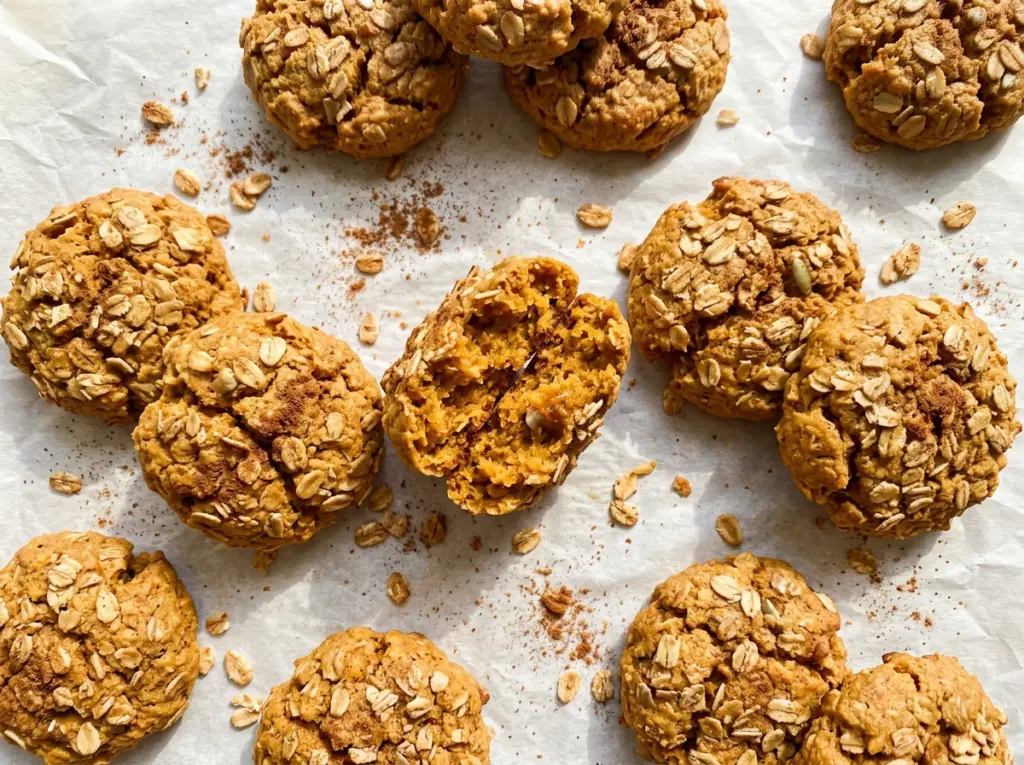

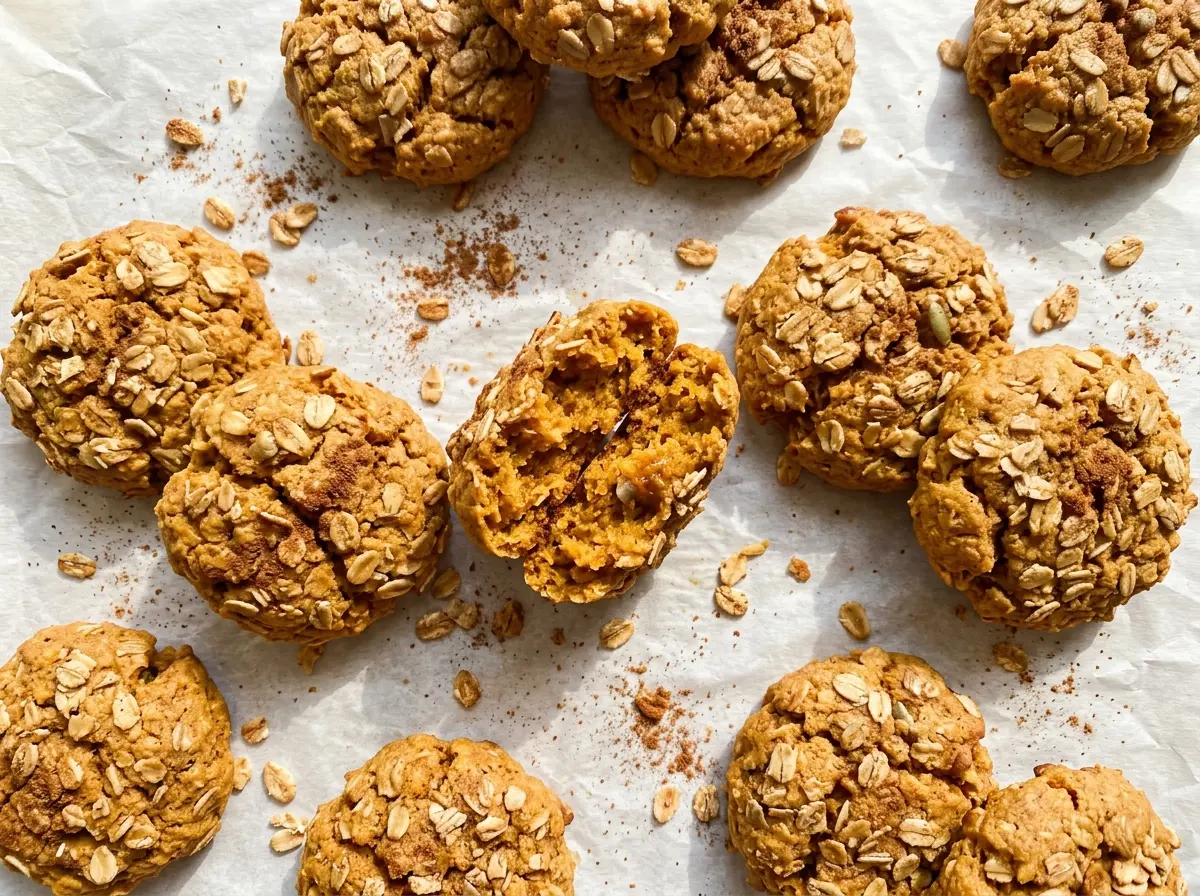
The dough for these cookies stays thick on the spoon instead of flowing into a thin puddle, which is exactly what I want from a breakfast bake. Cinnamon sweet potato breakfast cookies have a soft, oat-forward texture, with the sweet potato keeping the centers tender and the edges lightly browned. They’re gently sweet rather than dessert-sweet, so they work just as well with a cup of coffee as they do packed for a quick morning bite.
I stir the mashed sweet potato with the almond butter and other wet ingredients first, then fold in the oats and flour. That gives the mixture an even base before the oats go in, and the finished cookies hold their shape when portioned. Flattening each scoop before baking also means the centers set without waiting for the cookies to spread on their own. The cinnamon aroma and little raisin pockets make these feel like a proper cookie, even though the dough starts with sweet potato.
Kitchen Note
Give the mixed dough its full 5-minute rest before you scoop. The oats take up some of the moisture during that pause, and the portions are easier to shape without the mixture feeling loose.
Save these cinnamon sweet potato breakfast cookies for a morning when you want soft oat cookies with cinnamon and raisin in every bite.
Why These Breakfast Cookies Need to Be Flattened Before They Bake
These aren’t butter cookies that spread outward as the fat melts. The dough is thick and full of oats, and the mashed sweet potato gives it a moist, soft structure; if you leave the portions in rounded scoops, the centers stay much thicker than the edges. Shaping the dough before it goes into the oven is what gives each cookie a more even bake.
Think of the half-inch thickness as a helpful target, not a reason to press hard enough to make a thin wafer. Keep the cookies substantial, but flatten the tops so there isn’t a tall mound in the middle. Leave space between portions on the baking sheet, too. They don’t need room to spread dramatically, but spacing makes it easier for hot air to circulate and for the edges to brown. Once you understand that this dough needs to be shaped rather than left to spread, the cookies come out much more consistent from one portion to the next.
What Sweet Potato and Almond Butter Contribute to the Texture
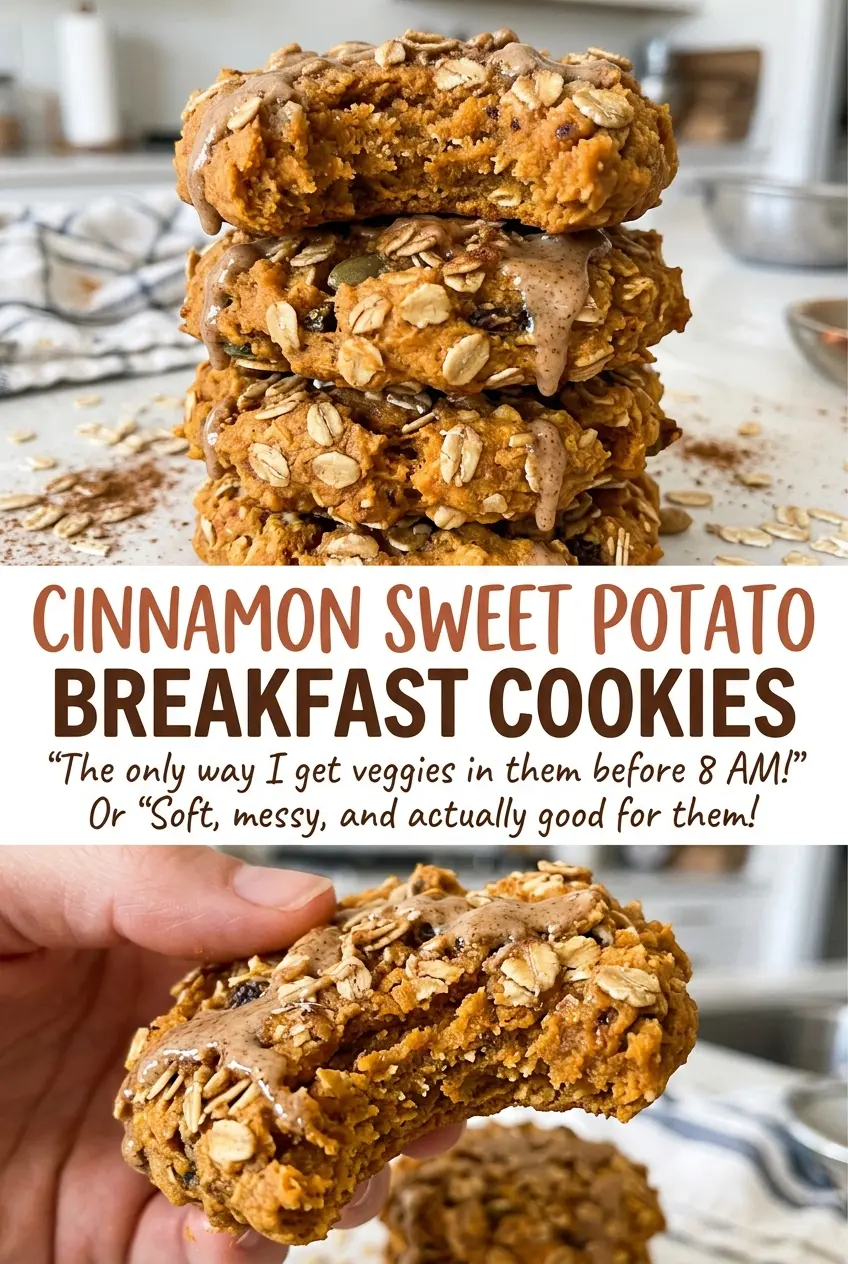
- Cooked mashed sweet potato — It supplies moisture and a mellow sweetness, while helping the interior stay tender. Use a smooth mash and let it cool before mixing; a watery mash can make the dough harder to portion. Plain cooked sweet potato is what you want, not a sweetened pie filling.
- Creamy almond butter — Smooth almond butter blends into the wet mixture and adds body, while crunchy varieties leave larger bits and make the texture less even. A fresh jar that stirs smoothly is more useful here than a premium brand; avoid a layer of separated oil in the portion you scoop.
- Pure maple syrup — Maple gives the cookies sweetness and helps keep the mixture moist. Use pure maple syrup rather than pancake syrup, whose thicker, sweeter consistency and added ingredients can change the result.
- Large egg — The egg helps bind the oats and flour into portions that hold together after baking. Keep it at the size listed; an extra-large egg adds moisture that this dough doesn’t need.
- Old-fashioned rolled oats — Their broad flakes give the cookies their hearty, distinct oat texture. This is a good place to use a standard pantry brand; the larger flakes matter more than choosing a specialty oat.
- All-purpose flour — Flour gives the oat-heavy dough another bit of structure so the cookies aren’t just loose clusters. For a gluten-free batch, use a measure-for-measure gluten-free baking flour; the texture may be a little more delicate.
- Ground cinnamon and baking powder — Cinnamon brings the recognizable warm spice, while baking powder gives the cookies a little lift. Fresh cinnamon smells noticeably stronger when you open the jar, but any baking powder that’s within date is fine.
- Raisins — They add small, sweet, chewy pockets to a dough that isn’t heavily sweetened. If yours are unusually dry, the finished cookies will have firmer bits; soft raisins give the most tender contrast.
Mixing and Baking for Evenly Set Centers
Get the Oven and Wet Mixture Ready
Heat the oven to 350°F and line a large baking sheet with parchment paper. In a large bowl, stir the cooled mashed sweet potato, creamy almond butter, maple syrup, egg, and vanilla extract until the mixture looks smooth and even. Break up any visible sweet potato lumps as you stir so the wet base doesn’t have pockets of mash. A smooth base makes it easier to distribute the dry ingredients evenly.
Fold in the Oats and Let the Dough Rest
Add the old-fashioned rolled oats, all-purpose flour, cinnamon, baking powder, salt, and raisins to the bowl. Stir until the dry ingredients are evenly mixed through and no floury patches remain. The finished dough should look thick and scoopable, rather than pourable. Let it stand for 5 minutes before portioning.
Portion and Flatten the Cookies
Scoop 12 portions, about 1/4 cup each, onto the prepared baking sheet, spacing them apart. Flatten each portion to about 1/2 inch thick so the middle isn’t left in a tall mound. Try to keep the portions close in size; uneven cookies won’t finish at the same time. The dough is sturdy enough to shape directly on the parchment.
Bake Until the Edges Color
Bake for 18–22 minutes, until the edges are lightly browned and the centers are set. The edges give you the clearest color cue, while the middle should look set rather than wet. Leave the cookies on the baking sheet for 10 minutes after baking, then transfer them to a wire rack to cool completely. Moving them before that short pan rest can make the soft cookies harder to handle.
Simple Swaps for Different Pantries and Preferences
Make the Batch Gluten-Free
Use a measure-for-measure gluten-free baking flour in place of the all-purpose flour, and choose certified gluten-free rolled oats. The cookies may be a touch more delicate, so let them complete their cooling on the baking sheet and rack before packing them.
Use Sunflower Seed Butter for a Nut-Free Version
Replace the creamy almond butter with the same amount of creamy sunflower seed butter. It keeps the dough’s binding texture, with a more earthy, toasted taste than almond butter. Choose a smooth variety so it stirs into the sweet potato without leaving seed pieces throughout the cookies.
Trade Raisins for Dried Cranberries
Use the same amount of dried cranberries instead of raisins for a tart pop and a less familiar, brighter fruit flavor. If the cranberries are large, chop them into raisin-size pieces so they’re spread through the dough rather than concentrated in a few bites.
Storage and Reheating
- Refrigerator: Once completely cool, store the cookies in an airtight container in the refrigerator within 2 hours of baking and eat them within 4 days. They soften a little as they sit.
- Freezer: Freeze completely cooled cookies in an airtight container, with parchment between layers, for up to 2 months. Thaw in the refrigerator or at room temperature.
- Reheating: Warm an individual cookie in the microwave for about 10 seconds if you’d like it warm. Longer heating can make the sweet potato center gummy, so use a short burst.
Questions That Come Up When Baking These Sweet Potato Cookies
Cinnamon Sweet Potato Breakfast Cookies
Ingredients
Equipment
Method
- Heat the oven to 350°F.
- Line a large baking sheet with parchment paper.
- In a large bowl, stir together the mashed sweet potato, almond butter, maple syrup, egg, and vanilla until smooth.
- Add the oats, flour, cinnamon, baking powder, salt, and raisins, and stir until evenly combined.
- Let the mixture rest for 5 minutes.
- Scoop 12 portions, about 1/4 cup each, onto the prepared baking sheet, spacing them apart.
- Flatten each portion to about 1/2 inch thick.
- Bake for 18–22 minutes, until the edges are lightly browned and the centers are set.
- Cool the cookies on the baking sheet for 10 minutes.
- Transfer them to a wire rack to cool completely.