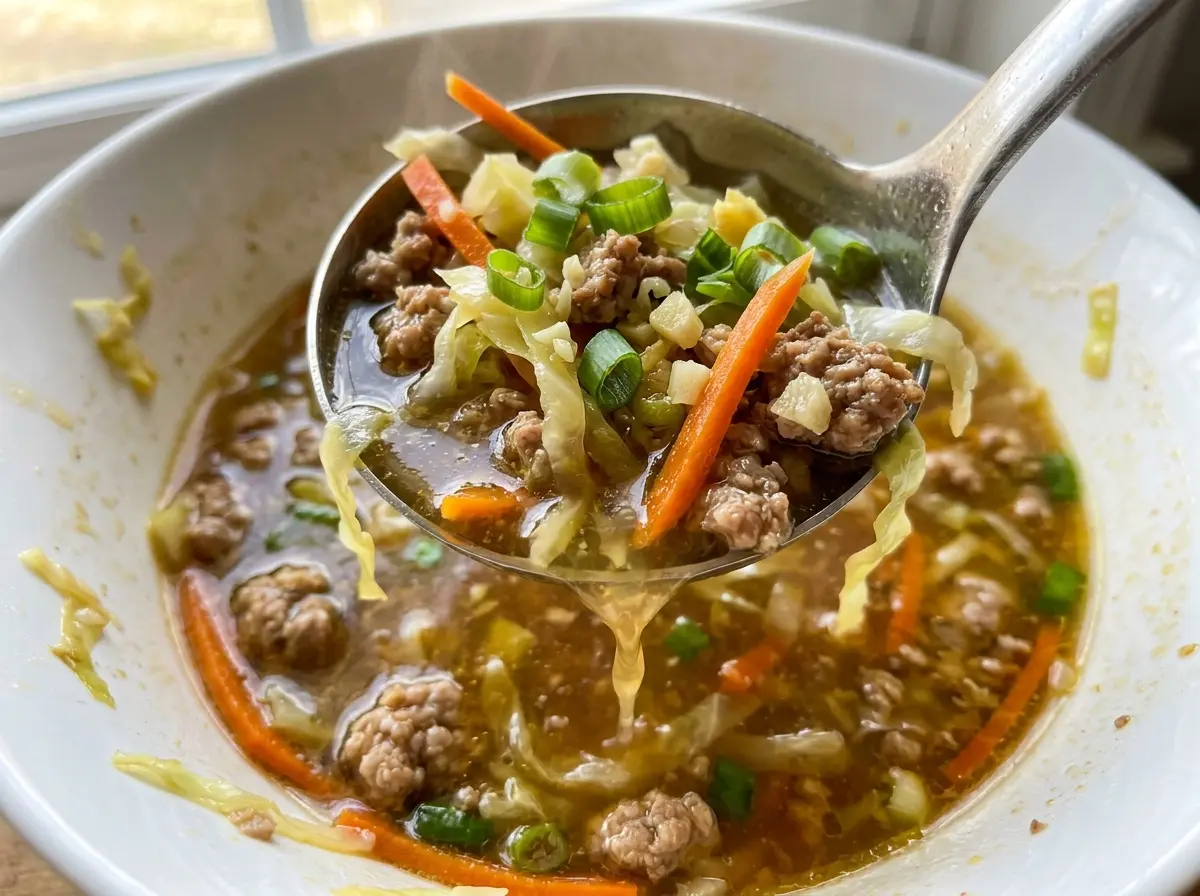
As the pork browns with the onion, the pot starts to smell like the savory center of an egg roll before there’s any broth in it. That’s the moment I know this Egg Roll Soup is getting its depth from the base, not from a long simmer. The browned pork gives each bowl substance, while the carrots and cabbage keep it from feeling heavy.
I add the garlic and fresh ginger after the pork has browned, then give them just half a minute in the pot before the broth goes in. The cabbage waits until the broth has simmered, so it cooks through without disappearing into the soup. A finish of rice vinegar and toasted sesame oil brings the broth into focus, with green onion on top and plenty of tender cabbage in every bowl.
Kitchen Note
Take the pot off the heat before stirring in the rice vinegar and toasted sesame oil. They’re the finishing notes, and adding them off the burner keeps their bright, toasty character from getting lost in a boil.
Save this Egg Roll Soup for a cozy bowl with browned pork, tender cabbage, and a bright sesame-ginger broth.
Why Egg Roll Soup Should Stay Brothy, Not Thick
This soup isn’t trying to turn egg roll filling into a dense stew. Its appeal is the contrast between a loose, savory broth and generous bites of pork, carrot, and cabbage. With eight cups of broth in the pot, there’s room for the vegetables to move around and for the ginger, soy, and vinegar to season the whole bowl without coating everything in a thick sauce.
It’s tempting to reduce the broth until it tastes more concentrated, but that changes the balance: the pork and vegetables can start to feel crowded, and the soup loses the light, spoonable quality that makes it work. I keep the broth as it is and rely on the browned pork and aromatics for depth. If you’re thinking of adding flour or cornstarch, skip it; the clear broth is part of what makes this taste like an egg roll in soup form rather than a different dish.
The Broth and Soy Sauce Set the Seasoning Before the Cabbage Goes In

- Ground pork — Pork gives the broth a savory, full-bodied base, and the browned bits bring more flavor than simply simmering raw meat in the liquid. Standard ground pork is a good fit here; a leaner grind will make the soup feel less rich.
- Low-sodium chicken broth and soy sauce — Using low-sodium versions of both gives you more room to taste the finished broth without the salt taking over. A good-quality broth matters because it makes up most of the liquid, but there’s no need for an expensive specialty stock.
- Fresh ginger and garlic — Freshly grated ginger has a lively, fragrant bite that dried ginger won’t quite reproduce, and freshly minced garlic gives the base its savory edge. Grate the ginger finely so it disperses through the broth rather than leaving large fibrous pieces.
- Green cabbage and carrots — Thinly sliced cabbage cooks evenly and gives the bowl its familiar egg-roll character. Slice the carrots thinly, too, so they soften during the short simmer; thick coins may still be firm when the cabbage is ready.
- Rice vinegar and toasted sesame oil — Rice vinegar adds a clean tart note, while toasted sesame oil brings a warm, nutty aroma. Toasted sesame oil is a finishing oil, not a neutral cooking oil, so save it for the end rather than using it to brown the pork.
- Yellow onion and green onions — Yellow onion softens into the savory base, while green onion stays fresh and crisp as a topping. White onion can replace yellow onion if that’s what you have, though its flavor will be a little sharper.
Build the Broth in Stages, Then Give the Cabbage a Short Simmer
Brown the Pork with the Onion
Heat the neutral oil in a 6-quart Dutch oven or soup pot over medium-high heat, then add the ground pork, diced onion, and black pepper. Break the pork into small pieces as it cooks so you get browned edges throughout instead of a few large clumps. Cook for about 8 minutes, until the pork is browned and reaches 160°F. If the meat is still pale, keep cooking until it has browned and reached that temperature.
Wake Up the Garlic and Ginger
Stir the minced garlic and grated fresh ginger into the browned pork and onion. Let them cook for 30 seconds, stirring so they perfume the oil and meat without sitting in one spot. Add the thinly sliced carrots, chicken broth, and low-sodium soy sauce. Scrape the bottom of the pot as you stir to loosen any browned bits into the broth.
Simmer the Carrots in the Seasoned Broth
Bring the pot to a boil, then lower the heat until the liquid holds a steady simmer. Cook for 5 minutes so the carrots begin to soften and the broth takes on the flavor of the pork and aromatics. Keep it at a gentle simmer rather than a hard boil; a rolling boil isn’t needed for this short cooking stage. The broth should remain clear and loose.
Finish with Cabbage and the Off-Heat Seasoning
Stir in the thinly sliced cabbage and simmer for about 5 minutes, until it’s tender but still has a little bite. If it still feels tough, give it a little more time and check again rather than turning up the heat. Remove the pot from the heat, stir in the rice vinegar and toasted sesame oil, then ladle into bowls. Finish each serving with thinly sliced green onions.
Easy Changes for a Different Bowl of Egg Roll Soup
Make It Gluten-Free with Tamari
Replace the soy sauce with the same amount of low-sodium gluten-free tamari, and use chicken broth labeled gluten-free. Tamari keeps the savory, fermented character of the broth; the final soup should taste very close to the original.
Use Ground Turkey for a Leaner Soup
Swap the ground pork for an equal amount of ground turkey. The broth will be lighter and less rich, but the ginger, garlic, and soy sauce still give it plenty of savory character. Cook the turkey until browned and it reaches 165°F.
Swap in Napa Cabbage
Use thinly sliced napa cabbage in place of the green cabbage for a more delicate, tender finish. Since its leaves soften quickly, check the soup as it simmers and stop when they’re tender; the finished bowl will be softer and less crisp than the green-cabbage version.
Storage and Reheating
- Refrigerator: Store in a covered container for 3 to 4 days. The cabbage will soften as it sits in the broth.
- Freezer: Freeze in airtight portions for up to 2 to 3 months. The soup freezes well, though the cabbage will be softer after thawing.
- Reheating: Warm the amount you’ll eat in a saucepan over medium heat until it reaches 165°F. Avoid a prolonged hard boil, which can make the cabbage limp.
Questions That Come Up When Making Egg Roll Soup
Egg Roll Soup
Ingredients
Equipment
Method
- Heat the neutral oil in a 6-quart Dutch oven or soup pot over medium-high heat, then add the ground pork, diced yellow onion, and black pepper. Cook, breaking up the pork, until browned and it reaches 160°F, about 8 minutes.
- Stir in the minced garlic and grated fresh ginger and cook for 30 seconds.
- Add the thinly sliced carrots, low-sodium chicken broth, and low-sodium soy sauce.
- Bring the soup to a boil.
- Reduce the heat to maintain a simmer, and cook for 5 minutes.
- Stir in the thinly sliced green cabbage and simmer until it is tender but still has a little bite, about 5 minutes.
- Remove the pot from the heat.
- Stir in the rice vinegar and toasted sesame oil.
- Ladle into bowls and top with the thinly sliced green onions.