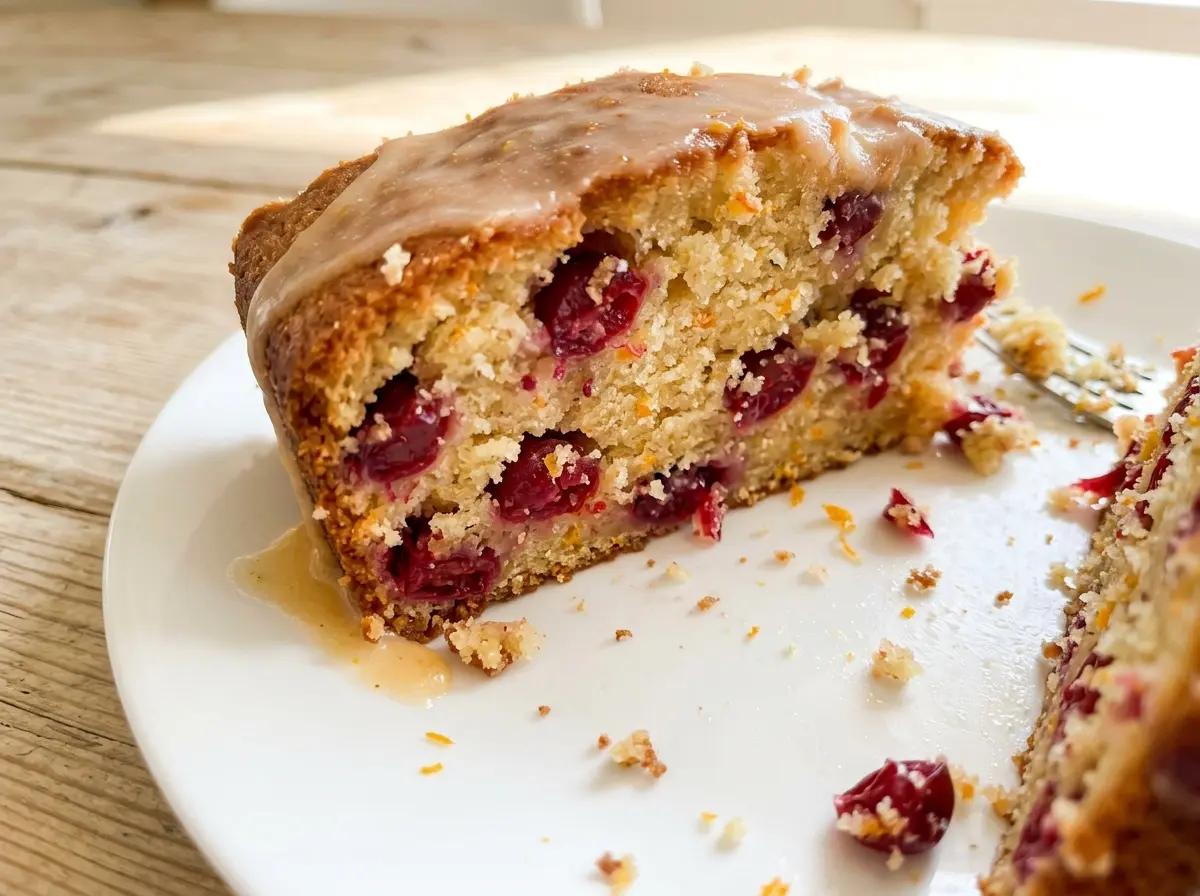
When the chopped cranberries tumble into the batter, their sharp, bright smell cuts right through the sweet orange. I like that contrast in this Cranberry Orange Cake: tender, buttery crumb around tart little pockets of fruit, with finely grated zest carrying the citrus through every slice.
The batter gets its softness from sour cream and orange juice, added in turns with the flour instead of all at once. That order keeps the mixture manageable and helps it stay tender; mix only until the last streaks of flour disappear. The finished cake comes out golden, with a few moist crumbs on the tester and cranberries peeking through the crumb.
Let it cool completely before slicing. The orange comes through cleanly, and each forkful has just enough cranberry bite.
Kitchen Note
A toothpick can look wet if it lands in a cranberry, even when the cake is baked through. Test the center between berries, where a few moist crumbs are the cue to pull the pan from the oven.
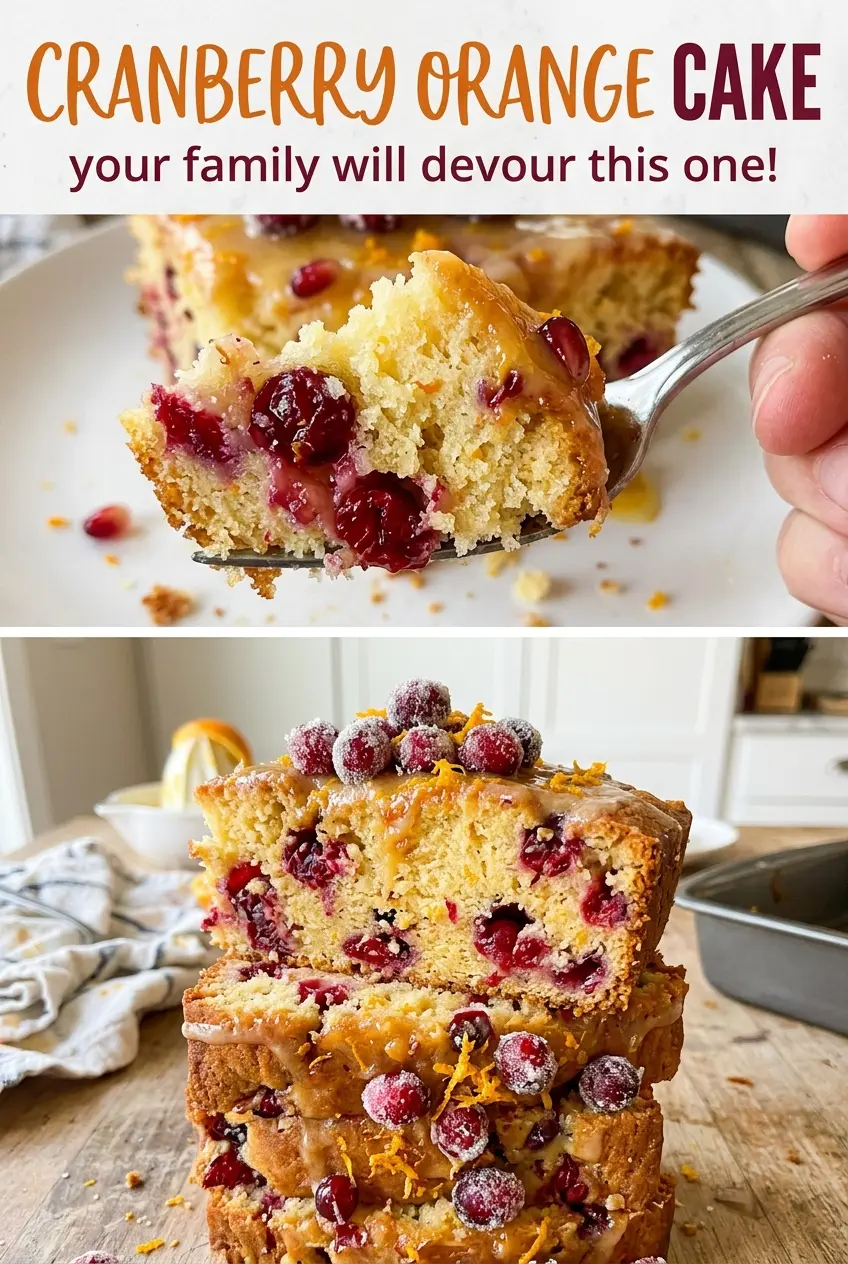
Save Cranberry Orange Cake for a tender, sour-cream crumb dotted with tart cranberries and bright orange zest.
Why the Flour Goes In First and Last in This Cranberry Cake
It may seem fussy to divide the flour and sour cream mixtures, but that sequence gives you better control over the batter. Adding all the liquid at once can loosen the creamed butter mixture abruptly; adding all the flour at once makes it easier to overwork the batter while trying to smooth it out. Neither is helpful in a cake meant to have a delicate crumb.
Instead, the dry mixture goes in three additions, with the sour cream and orange juice in two additions between them. Starting and finishing with flour keeps the batter cohesive as you mix. Use low speed, and stop when the ingredients are just combined. A few seconds of restraint matters more here than chasing a perfectly glossy, ultra-smooth batter.
The cranberries are folded in after the flour is mixed, so they don’t get crushed by the mixer. That keeps their tart flavor in distinct bites rather than blending it into the orange-scented cake.
How Sour Cream, Orange, and Cranberries Shape the Crumb
- All-purpose flour — It gives the cake its structure, while the baking powder and baking soda help it rise. Measure carefully and mix only until combined; extra flour or prolonged mixing can leave the crumb heavy.
- Unsalted butter and granulated sugar — Softened butter creams with the sugar to build air into the batter. Unsalted butter also lets the salt stay controlled. The butter should be soft enough to beat smoothly, not melted or greasy.
- Eggs — They bind the batter and help it set. Room-temperature eggs blend more easily into the creamed butter, and adding them one at a time keeps the mixture from becoming lumpy.
- Orange zest and orange juice — The finely grated zest brings fragrant citrus oils, while the juice adds orange flavor and liquid to the batter. Grate only the colorful outer peel; the white pith underneath tastes bitter. Use orange juice with a clean, bright taste.
- Sour cream — Its acidity and richness help make the crumb tender and moist. Bring it to room temperature so it combines evenly with the juice and mixes into the batter without chilly lumps.
- Cranberries — Fresh or frozen berries both work. Coarsely chopping them spreads the tart fruit through the cake without turning it into a purée; if you choose frozen berries, keep them frozen rather than thawing first.
Mixing and Baking the Cake Without a Dense Crumb
Prepare the Pan and Dry Mixture
Heat the oven to 350°F and position a rack in the center. Coat a 9-inch round cake pan with cooking spray, including the sides. Whisk the flour, baking powder, baking soda, and salt together in a medium bowl until the leaveners look evenly distributed.
Cream the Butter and Build the Base
Beat the softened butter and sugar with an electric mixer on medium speed for about 3 minutes, until light and fluffy. Scrape the bowl if butter or sugar clings to the sides, so it gets incorporated rather than left behind. Beat in the eggs one at a time, then mix in the orange zest. The mixture should look creamy before you start adding the dry ingredients.
Alternate the Flour and Sour Cream Mixtures
Stir the sour cream and orange juice together in a small bowl. Add the flour mixture to the butter mixture in three additions, alternating with the sour cream mixture in two additions; begin and end with flour. Keep the mixer on low and stop as soon as the batter comes together. Overmixing at this point develops more gluten and can make the cake tough.
Fold in the Fruit and Bake
Fold the chopped cranberries into the batter, then spread it evenly in the prepared pan. Bake for 35–42 minutes, until the top is golden and a toothpick inserted in the center away from a cranberry comes out with a few moist crumbs. Let the cake cool in the pan for 15 minutes, loosen the edges, and turn it out onto a wire rack. Cool completely before cutting so the crumb has time to set.
Fresh or Frozen Cranberries: Choose Your Cake
Fresh Cranberries for Distinct Tart Pockets
Choose fresh berries when they’re available and you want the fruit to stand out in clear, tart bites. Coarsely chop them before folding into the batter; the cake keeps the same orange-scented base and bake method.
Frozen Cranberries for an Anytime Bake
Frozen cranberries make this cake possible outside fresh-cranberry season. Chop them while frozen and fold them straight into the batter; thawing first releases extra moisture and makes the berries harder to handle.
Storage and Reheating
- Refrigerator: Keep the cooled cake covered in an airtight container for up to 4 days. The crumb firms when chilled, so let a slice come to room temperature before serving.
- Freezer: Freeze individual slices or portions, wrapped airtight, for up to 2 months. Thaw in the refrigerator or on the counter while still wrapped to keep the cake from drying out.
- Reheating: This cake is best at room temperature, so it doesn’t need reheating. If you’d like a warm slice, microwave it briefly in 10-second bursts; longer heating can dry the crumb.
Questions That Come Up Before the First Slice
Cranberry Orange Cake
Ingredients
Equipment
Method
- Heat the oven to 350°F and position a rack in the center.
- Coat a 9-inch round cake pan with cooking spray.
- Whisk the flour, baking powder, baking soda, and salt together in a medium bowl.
- Beat the butter and sugar with an electric mixer on medium speed until light and fluffy, about 3 minutes.
- Beat in the eggs one at a time.
- Mix in the orange zest.
- Stir the sour cream and orange juice together in a small bowl.
- Add the flour mixture to the butter mixture in three additions, alternating with the sour cream mixture in two additions; mix on low just until combined, beginning and ending with the flour mixture.
- Fold in the cranberries.
- Spread the batter evenly in the prepared pan.
- Bake for 35–42 minutes, until golden and a toothpick inserted in the center away from a cranberry comes out with a few moist crumbs.
- Cool the cake in the pan for 15 minutes.
- Loosen the edges and turn the cake out onto a wire rack.
- Cool completely.