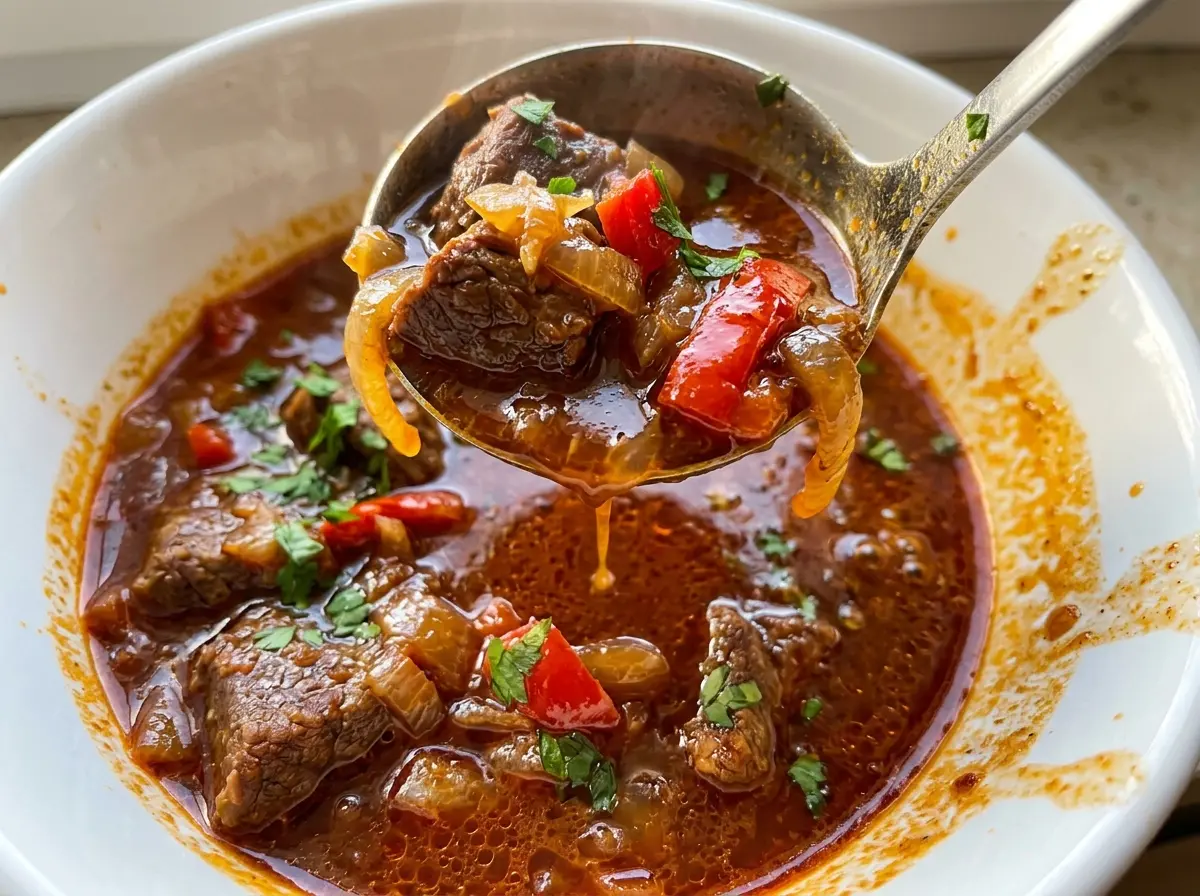
When the sliced onions first hit the pot, it looks like far too many for the beef. They soften down as they cook, though, and that generous amount is what gives Classic German Goulash its rich, oniony base without needing flour or a separate thickener. The paprika turns the pot a deep red, while the beef slowly becomes tender enough to pull apart with a fork.
I brown the chuck in batches, then let the onions cook until soft and lightly golden before the long, quiet simmer. That order builds flavor in the same Dutch oven, so the browned bits from the beef end up in the sauce instead of being left behind. A little red wine vinegar stirred in at the end lifts the slow-cooked richness, and the finished goulash is hearty, savory, and full of tender beef.
Kitchen Note
Keep the browned beef’s plate juices. They go back into the pot with the meat and carry all that concentrated flavor into the braise, so don’t pour them off.
Save Classic German Goulash for a slow-simmered dinner with tender beef, paprika, and a deeply savory onion base.
Why Two Pounds of Onions Belong in This Pot
The onion-to-beef ratio can look surprising before the onions have had time to cook. They start out taking up a lot of space, then soften and settle as they lose moisture. During the covered simmer, they cook down further and help give the cooking liquid body. That’s why this goulash doesn’t need a flour-based gravy or a separate roux.
Give the onions their full cooking time before adding the liquids. Soft, lightly golden onions have a sweeter, rounder flavor than onions that are merely warmed through, and they make a better foundation for the paprika and beef. Keep stirring often so they soften evenly instead of catching on the bottom of the pot. They don’t need to be deeply browned; the target is softened and lightly golden.
This balance also explains why the finished dish is a slow braise rather than a quick beef stew. The onions, broth, and wine have time to come together while the chuck turns tender. If the sauce looks loose when you first uncover the pot, remember that it has no flour in it; the softened onions supply its natural body.
What the Beef, Paprika, and Onions Bring to German Goulash
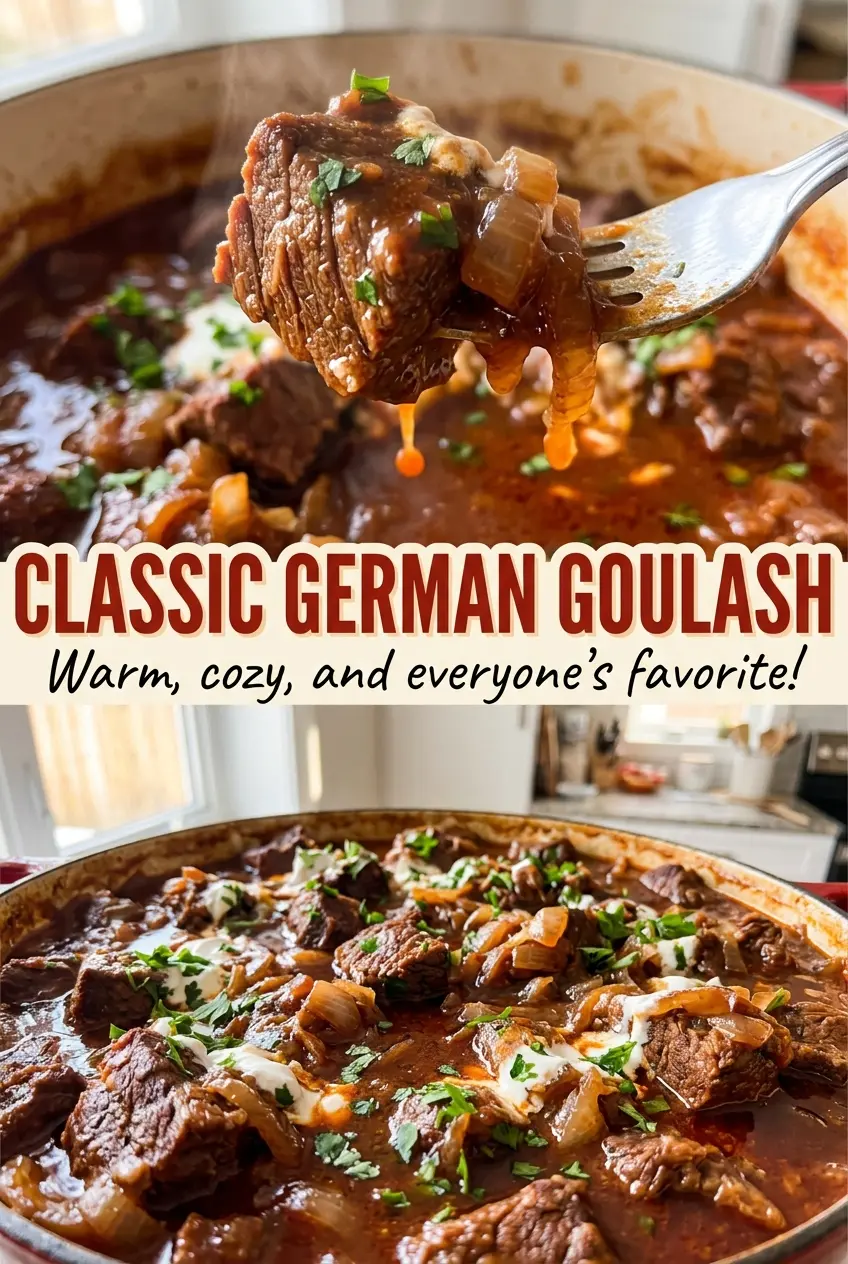
- Beef chuck — Chuck has enough connective tissue to become succulent during a long, gentle braise. Cut it into even cubes so the pieces cook at a similar pace; very lean beef won’t give you the same tender, rich result.
- Yellow onions — Their quantity is intentional: they soften into the body of the sauce. Slice them thinly so they cook evenly. Yellow onions are the best fit here; a sweeter onion will make the finished sauce taste sweeter, too.
- Sweet paprika — This is the main seasoning and gives the goulash its characteristic color and mild pepper flavor. Fresh paprika tastes more vivid than a jar that has been open for ages. Smoked paprika would change the dish toward a smoky flavor rather than standing in unnoticed.
- Dry red wine — Wine adds depth and acidity as it deglazes the browned pot. If you need to leave it out, replace it with the same amount of beef broth; the stew will be less wine-forward, but the broth and finishing vinegar still give it savory balance.
- Caraway and marjoram — Caraway brings a warm, distinctive note, while dried marjoram rounds out the paprika. Keep both if you want the classic seasoning; if you’re out of marjoram, dried oregano can fill in, though its flavor is a little more assertive.
- Red wine vinegar — Stirring it in after cooking gives the rich braise a brighter finish. It’s worth keeping rather than substituting another vinegar, since a sharper or sweeter one can shift the balance.
Building the Braise Without Losing the Browned Flavor
Brown the Chuck in Uncrowded Batches
Pat the beef dry, season it with the salt and pepper, and heat the oil in a 6-quart Dutch oven over medium-high heat. Brown one-third of the beef on all sides, then transfer it to a plate and repeat with the remaining beef in two batches, using the remaining oil. If the pot is crowded, the meat will steam rather than brown, so give each batch room against the hot surface. You’re looking for browned patches on the outside, not cooked-through beef.
Soften the Onions Before Adding the Spices
Add the thinly sliced onions and cook over medium heat, stirring often, until they’re softened and lightly golden; this takes 10 to 12 minutes. They’ll shrink noticeably as they cook, so don’t worry if the pot looks full at first. Stir along the bottom and edges where onions can catch. Once they’re soft, add the garlic and tomato paste and cook for 1 minute.
Coat the Aromatics, Then Deglaze
Stir the sweet paprika, caraway, and marjoram into the onion mixture so the spices are spread through the pot. Pour in the red wine and scrape up the browned bits from the bottom; those bits dissolve into the liquid as you scrape. Add the beef broth and bay leaves, then return the browned beef to the pot. Keep the heat controlled as the mixture comes up to a gentle simmer rather than letting it boil hard.
Braise Until Fork-Tender and Brighten the Finish
Cover the Dutch oven and cook over low heat for 2 to 2 1/2 hours, stirring occasionally. The surface should simmer gently, with small, occasional bubbles rather than a rolling boil. Check the beef with a fork: it should be tender enough to yield easily. Remove the bay leaves, stir in the red wine vinegar, and let the goulash rest off the heat for 10 minutes before serving.
Simple Changes for a Different Pantry or Table
Make It Without Red Wine
Replace the red wine with an equal amount of beef broth. You’ll lose some of the wine’s depth, but the beef and onion base will still be savory, and the red wine vinegar added at the end keeps the finish from tasting flat.
Choose a Milder Paprika Presence
Use 2 tablespoons of sweet paprika instead of 3 for a gentler pepper flavor and a less intensely red sauce. The goulash will still have its familiar onion-and-paprika character, just with the beef and caraway coming through more clearly.
Keep It Gluten-Free
Choose beef broth specifically labeled gluten-free. There’s no flour in this goulash, so that broth swap keeps the same braising method and hearty texture while making the ingredient choice work for a gluten-free table.
Storage and Reheating
- Refrigerator: Store in a covered container for 3 to 4 days. The sauce may thicken as it chills.
- Freezer: Freeze cooled goulash in an airtight container for up to 3 months. Thaw it in the refrigerator before reheating; the beef may be a little softer after freezing.
- Reheating: Warm it gently in a covered saucepan, stirring occasionally, until it reaches 165°F. If the sauce has thickened, loosen it with a splash of beef broth; high heat can make the beef break apart before the center is hot.
Questions That Come Up When Making German Goulash
Classic German Goulash
Ingredients
Equipment
Method
- Pat the beef dry.
- Season the beef with the salt and pepper.
- Heat 1 tablespoon of the oil in a 6-quart Dutch oven over medium-high heat.
- Brown one-third of the beef on all sides, then transfer it to a plate.
- Repeat with the remaining oil and beef in two batches.
- Add the onions to the pot and cook over medium heat, stirring often, until softened and lightly golden, 10 to 12 minutes.
- Stir in the garlic and tomato paste and cook for 1 minute.
- Stir in the paprika, caraway, and marjoram.
- Pour in the wine.
- Scrape up the browned bits from the pot.
- Add the broth, bay leaves, and browned beef with any accumulated juices.
- Bring the mixture to a gentle simmer.
- Cover and cook over low heat until the beef is fork-tender, 2 to 2 1/2 hours, stirring occasionally.
- Remove the bay leaves.
- Stir in the vinegar.
- Let the goulash rest off the heat for 10 minutes before serving.