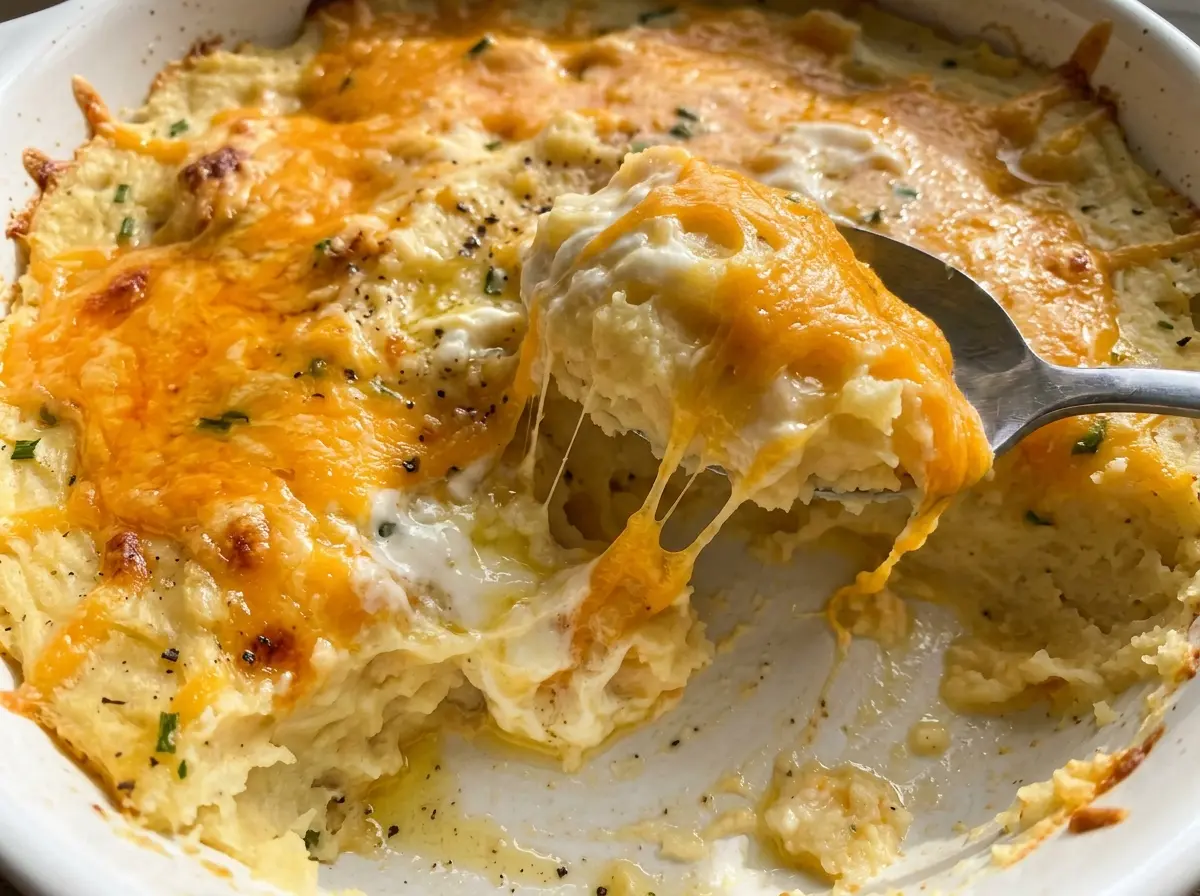
The first thing I watch when I drain the potatoes is how much water is still clinging to them. Too much turns a baked mash loose before it even reaches the oven, and the cheddar on top can’t fix that. These sour cream cheddar baked mashed potatoes start with russets, which mash into a soft, fluffy base that holds up well under a layer of bubbling cheese.
I mash the potatoes with butter and warm milk before stirring in the sour cream and cheddar. That order matters: get the potatoes smooth while they’re still plain, then fold in the creamy, tangy additions. It’s a comforting, make-ahead-friendly shape for mashed potatoes without turning them into a complicated casserole. The oven warms everything through and melts the cheese at the edges, while the center stays soft.
After a short rest, the potatoes are easy to scoop and the cheesy top settles into place. Each bite is buttery, tangy from the sour cream, and rich with sharp cheddar.
Kitchen Note
Let the baked potatoes rest for the full 10 minutes before serving. That brief pause helps the hot, soft mash settle, so scoops hold together instead of sliding apart on the plate.
Save these sour cream cheddar baked mashed potatoes for a cozy side dish with fluffy russets and a bubbling cheddar top.
Why Wet Potatoes Make Baked Mash Loose
Russets give you the right starting texture, but how well you drain them makes a real difference. Potatoes hold water after boiling, especially in the crevices of those 1 1/2-inch pieces. If that cooking water follows them back into the pot, the mash can turn slack once the sour cream and cheese are stirred through. A casserole dish gives excess moisture nowhere to go, so it’s worth taking the draining step seriously.
Drain the potatoes well, then return them to the pot before adding butter and warm milk. The goal is a smooth mash that feels creamy but doesn’t look wet or soupy. Don’t try to solve a watery texture by adding more cheddar; the cheese adds richness, but it won’t remove moisture. Keeping the mash balanced before it goes into the baking dish gives the oven a simple job: heat it through and melt the cheddar topping.
There’s also a reason to cut the potatoes into evenly sized pieces. Similar-sized pieces cook at a similar pace, so you’re less likely to have a mix of firm chunks and potatoes that have started to break down in the pot. Test with a fork rather than relying only on the clock; the pieces should be tender enough to mash smoothly.
Russets, Sour Cream, and Cheddar: What Each Brings

- Russet potatoes — Their starchy texture mashes up light and fluffy, which is a good match for a casserole finished in the oven. Peel them and cut them into even 1 1/2-inch pieces so they cook at a steady pace. Waxy potatoes tend to make a denser mash, so russets are the better fit for this soft, smooth result.
- Unsalted butter — Butter gives the potatoes richness and helps them feel silky rather than dry. It’s divided between greasing the baking dish and mixing into the mash, so keep those portions separate as you prep. Softened butter blends easily into the hot potatoes.
- Warm whole milk — Warm milk keeps the potatoes from cooling as you mash them and helps the butter incorporate. Whole milk gives the mash a fuller texture than a lower-fat milk would. Heat it until warm, not boiling; the recipe only needs it warmed before it goes into the pot.
- Sour cream — This brings a gentle tang that keeps the buttery potatoes from tasting one-note. Stir it in after mashing so you can get the potatoes smooth first. Its thick, creamy texture is part of what makes this version different from plain mashed potatoes.
- Sharp cheddar — The sharpness stands up to the sour cream and buttery mash, while the portion on top melts into a savory finish. Shredded cheese is easy to distribute through the potatoes; freshly shredded cheddar tends to melt more evenly than many packaged shreds. Divide it before you start mixing so the topping portion doesn’t disappear into the bowl.
- Black pepper and kosher salt — Salt seasons both the cooking water and the finished mash, while black pepper adds a little warmth. Keep the two salt portions separate: some goes into the water, and the rest seasons the potatoes after mashing.
From Fork-Tender Potatoes to a Bubbling Cheddar Top
Get the Dish Ready Before the Potatoes
Heat the oven to 375°F and grease a 9×13-inch baking dish with 1 tablespoon of the softened butter. Having the dish ready means you can transfer the mash as soon as it’s mixed, while it’s still warm. Set aside the remaining butter and keep the cheddar portions distinct. That little bit of prep prevents a last-minute scramble when the potatoes are ready.
Simmer the Russets Until a Fork Slides In
Put the peeled, cut potatoes in a large pot, cover them with 3 quarts of water, and add 2 teaspoons of the kosher salt. Bring the water to a boil, then reduce the heat and simmer for 15–20 minutes. Check a few pieces with a fork; it should pass through easily, without a firm center. If a piece still resists, give the potatoes more time rather than trying to mash them while they’re undercooked.
Mash Smooth, Then Fold in the Tangy Cheese
Drain the potatoes well and return them to the pot. Add the remaining 4 tablespoons of butter and the warm milk, then mash until smooth. Stir in the sour cream, 1 1/2 cups of the cheddar, the remaining 1 teaspoon of salt, and the black pepper. Mix just until everything is evenly combined; you want creamy potatoes with cheddar throughout, not a bowl of unmelted cheese clumps.
Bake Until the Edges Bubble
Spread the mash in the prepared baking dish and sprinkle the remaining 1/2 cup of cheddar evenly over the top. Bake for 20–25 minutes, until heated through and the cheese is melted and bubbling at the edges. The center should be hot, while the edges show the clearest bubbling cue. Let the potatoes rest for 10 minutes before serving so the soft mash settles into scoopable portions.
Two Ways to Change the Cheese-to-Potato Balance
Put all the cheddar on top
For a more pronounced cheesy layer, skip stirring cheddar into the mash and scatter all 2 cups over the surface instead. The potato base will taste less cheesy inside, while the top will have a thicker blanket of melted sharp cheddar. Keep the total amount the same so the dish still has a balanced potato-to-cheese ratio.
Keep the cheddar in the mash
For an even, cheesy texture from the first scoop to the last, stir all 2 cups of cheddar into the potatoes and leave the top bare. You’ll lose the melted cheddar cap, but the cheese flavor will be distributed through every serving. This version works well when you want the mash to look simple in the dish.
Storage and Reheating
- Refrigerator: Refrigerate leftovers in a covered container for up to 3–4 days. The mash firms as it chills, and the cheese topping won’t stay freshly melted.
- Freezer: Freeze in an airtight container for up to 1 month. The potatoes remain usable, though sour cream can make the texture a little less smooth after thawing; thaw overnight in the refrigerator.
- Reheating: Warm individual portions covered in the microwave, stirring once if practical, until hot throughout; reheat a larger portion covered in an oven-safe dish. Heat leftovers to 165°F. Avoid prolonged uncovered heating, which can dry the potato surface before the middle is hot.
Questions That Come Up While Making These Baked Potatoes
Sour Cream Cheddar Baked Mashed Potatoes
Ingredients
Equipment
Method
- Heat the oven to 375°F.
- Grease a 9x13-inch baking dish with 1 tablespoon of the butter.
- Put the potatoes in a large pot, cover with the water, and add 2 teaspoons of the salt.
- Bring to a boil, then reduce the heat and simmer for 15–20 minutes, until fork-tender.
- Drain the potatoes well and return them to the pot.
- Add the remaining 4 tablespoons butter and the warm milk, then mash until smooth.
- Stir in the sour cream, 1 1/2 cups of the cheddar, the remaining 1 teaspoon salt, and the black pepper.
- Spread the potatoes in the prepared dish and sprinkle with the remaining 1/2 cup cheddar.
- Bake for 20–25 minutes, until heated through and the cheese is melted and bubbling at the edges.
- Let the potatoes rest for 10 minutes before serving.