The salmon should come out of the oven moist and just cooked through, not waiting under a blanket of sauce that’s still on the stove. Keeping those two parts separate gives me time to make the lemon butter cream sauce gently while the fish rests, so neither one gets pushed past its best texture.
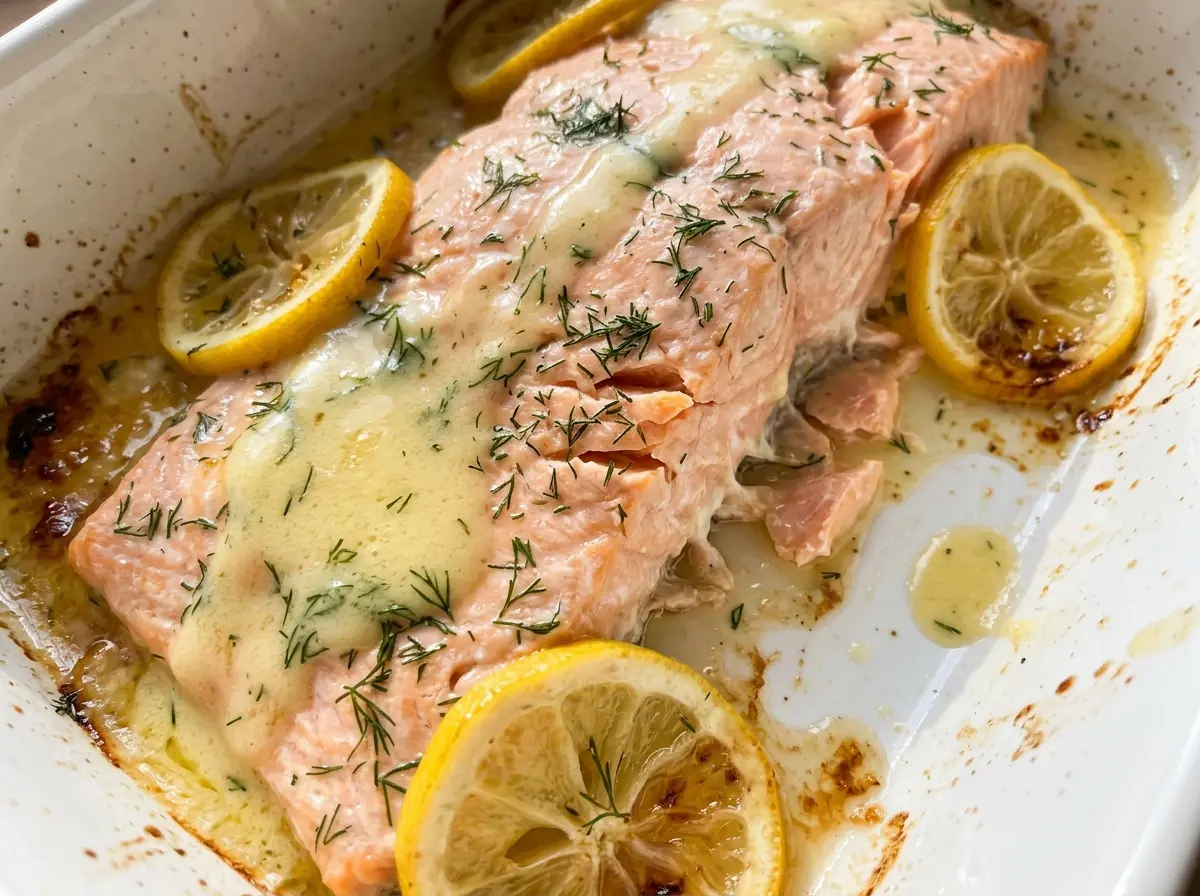
For this baked salmon with lemon butter cream sauce, each fillet gets a simple coating of olive oil, salt, and pepper before it goes onto a lined baking sheet. The sauce starts with softened shallot, then cream simmers until it thickens enough to cling to a spoon. Lemon and the last of the butter go in after the pan comes off the heat, giving the sauce its bright, smooth finish.
The result is tender salmon with a rich sauce that tastes buttery without burying the lemon. It’s a straightforward dinner, but the order of those last sauce steps makes a difference.
Kitchen Note
I take the saucepan off the heat before whisking in the lemon and remaining butter. The residual warmth melts the butter as I whisk, so the finished sauce stays smooth without another round of simmering.
Save this baked salmon with lemon butter cream sauce for a dinner with tender fillets and a bright, silky spoon-over sauce.
Why the Lemon Cream Sauce Goes on After the Salmon Bakes
Cream and lemon are a lovely pairing, but they behave better when the lemon doesn’t spend time cooking in the cream. Simmering the cream first gives it a chance to reduce slightly and turn silky. Adding the lemon juice and zest at the end keeps their fresh, sharp flavor clear instead of muted by prolonged heat.
Keeping the sauce in its own saucepan also gives you control over both parts of dinner. Salmon fillets don’t all cook at exactly the same pace, even when they’re similar in size, so the fish can come out as soon as it reaches the right doneness. Meanwhile, the sauce can finish gently on the stovetop. Let the salmon rest while you whisk in the lemon and butter, then spoon the sauce over the fillets right before serving. That short pause helps prevent the fish from overcooking while you finish the sauce, and keeps the sauce from baking onto the surface of the salmon.
This separation is useful for serving, too: you can spoon on just enough sauce to coat each piece and keep the rest nearby. The salmon stays the focus, with the lemon cream adding richness and acidity in each bite.
What Heavy Cream and Fresh Lemon Bring to This Sauce

- Salmon fillets — Fillets about one inch thick cook in the time given here and leave room for a moist center. Fresh or previously frozen salmon both work; choose pieces with an even thickness so one end isn’t finished long before the other. There’s no need to pay extra for a particular salmon variety for this simple preparation.
- Heavy cream — Its higher fat content helps the sauce simmer and thicken into a coating consistency, then stand up to the lemon juice. Half-and-half is thinner and more likely to produce a loose sauce, so heavy cream is the dependable choice. Standard grocery-store heavy cream works well; it doesn’t need to be a specialty brand.
- Fresh lemon — The zest brings fragrant citrus oils, while the juice adds the sharp acidity that balances the cream and butter. A whole fresh lemon gives you both. Bottled juice can add sourness, but it won’t replace the aroma of finely grated fresh zest.
- Shallot — Finely minced shallot softens into the butter and gives the sauce a mild savory base without the bite of raw onion. If you can’t find shallot, use finely minced yellow onion; the result will taste a little more assertive. Give it time to soften before adding the cream.
- Unsalted butter — Dividing the butter matters: the first part cooks the shallot, and the second is whisked in at the end for a smooth, rounded finish. Unsalted butter lets the measured kosher salt season the salmon without making the sauce unexpectedly salty. The regular grocery-store option is fine.
- Olive oil and black pepper — A thin brush of olive oil helps the seasoning cling to the salmon, and black pepper adds a restrained savory note. Use an everyday olive oil rather than a prized finishing oil; the salmon’s seasoning is simple and the sauce supplies most of the richness.
From a Dry Salmon Surface to a Smooth Lemon Butter Sauce
Season the Fillets Before They Hit the Oven
Heat the oven to 400°F and line a rimmed baking sheet with parchment paper or foil. Pat the salmon dry, set it skin-side down, then brush it with olive oil and season with kosher salt and black pepper. Drying the surface first keeps excess moisture from diluting the seasoning. Keep the fillets in a single layer with a little space between them.
Bake Until the Thickest Part Is Done
Bake the fillets for 12–15 minutes, checking the thickest part of each one with an instant-read thermometer. They’re ready when that center reaches 145°F; thinner areas will finish sooner, so use the thickest point to judge doneness. If the fillets vary in thickness, check each one rather than assuming they’ll all come out together. Remove the salmon from the oven and let it rest while you make the sauce.
Soften the Shallot and Simmer the Cream
Melt 2 tablespoons of butter in a small saucepan over medium heat. Stir in the finely minced shallot and cook for 2–3 minutes, until softened; keep it moving so it softens without catching on the bottom. Add the heavy cream and bring it to a gentle simmer, stirring occasionally. Cook for 4–6 minutes, until slightly thickened and able to coat the back of a spoon.
Finish Off the Heat and Spoon Over
Take the saucepan off the burner before whisking in the lemon zest, lemon juice, and remaining butter. Whisk until the butter has melted and the sauce looks smooth, with no streaks of separated fat. Taste a little with a bite of salmon before spooning it over the fillets; the sauce should taste creamy first, with lemon brightening the finish. Serve while the sauce is warm.
Two Easy Ways to Change the Lemon Butter Sauce
Swap the lemon for lime
Use finely grated lime zest and fresh lime juice in place of the lemon, keeping the same amounts. The sauce stays creamy, but the citrus turns a little sharper and more floral. Add the lime off the heat just as you would the lemon.
Make a dairy-free coconut version
For a dairy-free sauce, replace the butter with olive oil and the heavy cream with unsweetened full-fat canned coconut milk. Keep the same quantities and follow the same order, adding the lemon off the heat. The sauce will be less buttery, with a light coconut note, but it still makes a creamy topping for salmon.
Storage and Reheating
- Refrigerator: Store leftover salmon and sauce in airtight containers in the refrigerator for up to 3 days. The salmon will be less tender after chilling, and the sauce may thicken.
- Freezer: The cooked salmon can be frozen in an airtight, freezer-safe container for up to 2 months, though its texture will soften after thawing. The cream sauce is best not frozen because it can separate.
- Reheating: Warm salmon covered in a 275°F oven just until heated through, and reheat the sauce separately in a small saucepan over low heat, whisking gently. Avoid boiling the sauce or heating the fish for too long; both can turn dry or lose their smooth texture. Reheat leftovers to 165°F.
Questions That Come Up When Making This Salmon
Baked Salmon with Lemon Butter Cream Sauce
Ingredients
Equipment
Method
- Heat the oven to 400°F.
- Line a rimmed baking sheet with parchment paper or foil.
- Pat the salmon dry.
- Set the salmon skin-side down on the baking sheet.
- Brush the salmon with olive oil.
- Season with kosher salt and black pepper.
- Bake for 12–15 minutes, until the thickest part of each fillet reaches 145°F.
- Remove the salmon from the oven and let rest while you make the sauce.
- Melt 2 tablespoons of the butter in a small saucepan over medium heat.
- Add the shallot and cook for 2–3 minutes, stirring, until softened.
- Stir in the heavy cream and bring to a gentle simmer.
- Cook for 4–6 minutes, stirring occasionally, until slightly thickened and able to coat the back of a spoon.
- Remove the saucepan from the heat.
- Whisk in the lemon zest, lemon juice, and remaining 2 tablespoons butter until smooth.
- Spoon the sauce over the salmon and serve.