The shells are always the fussiest part: one egg peels cleanly, and the next seems to take half its white with it. A good ice-water bath helps, but the timing before it matters just as much. For these spicy deviled eggs, I let the covered eggs finish cooking off the heat, then cool them before peeling. The yolks stay tender enough to mash into a smooth, creamy filling.
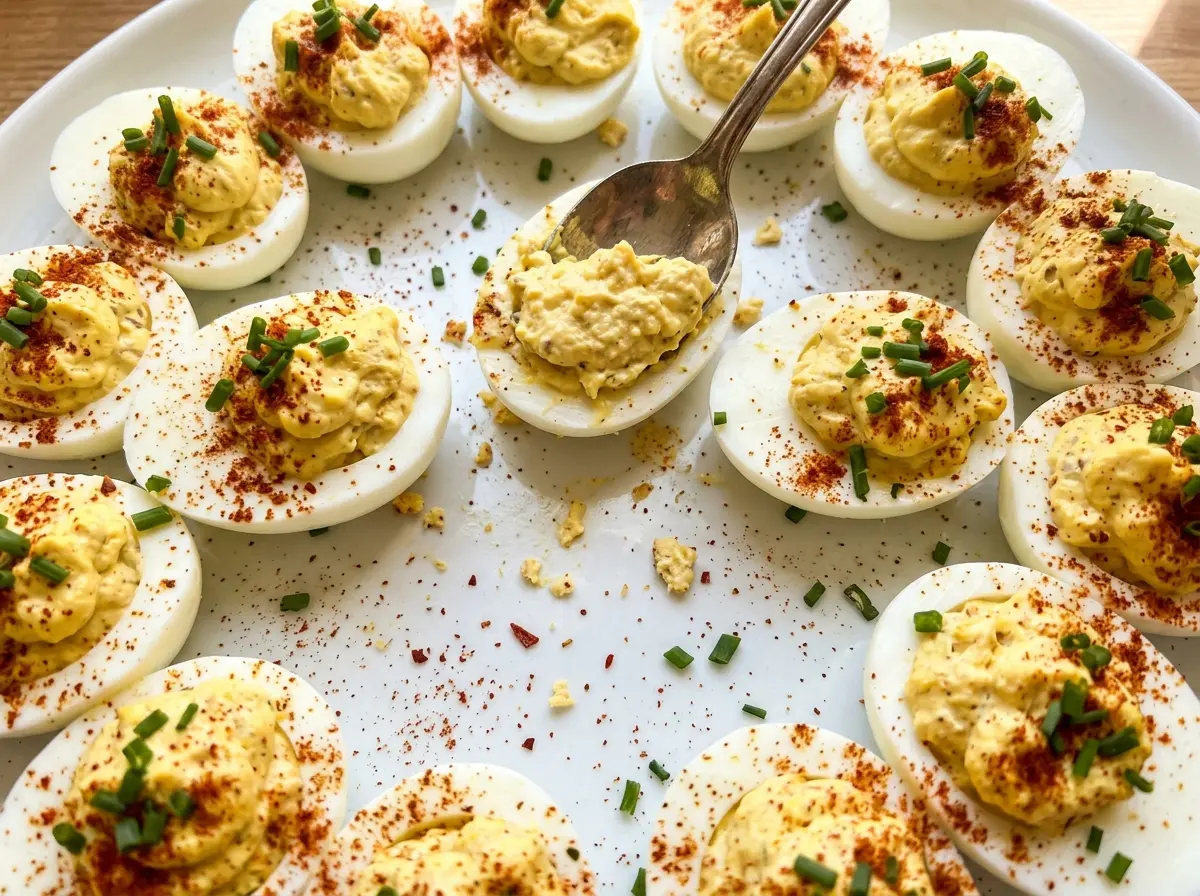
The heat comes from two ingredients, not one. Dijon and hot sauce bring tang along with their bite, while cayenne gives the filling a slower, drier warmth. I mash everything until the yolks look silky, then spoon or pipe it into the whites and finish with paprika. After a short rest in the refrigerator, each bite is cool, creamy, and pleasantly spicy without burying the flavor of the egg.
Kitchen Note
Mash until you don’t see dry, crumbly yolk before filling the whites. If you plan to pipe the mixture, any lumps will catch at the opening; a smooth filling gives you a clean swirl, while a spoon is an easy, tidy option too.
Save these spicy deviled eggs for a party spread or a make-ahead snack, with cool, creamy filling and a gentle cayenne kick.
Why These Eggs Finish Cooking After the Water Comes Off the Heat
A hard boil isn’t the goal for the full cooking time. Once the water reaches a full boil, the pan comes off the burner, and the eggs finish in the covered hot water. That gentler finish gives the yolks time to set without keeping them at a fierce boil, which can leave the whites tougher and the yolks dry around the edges.
The ice bath has a job beyond making the eggs easier to handle. It quickly cools them after their time in the hot water, limiting carryover cooking and making the shells more manageable to peel. The five-minute chill is short but useful: the eggs are cool enough to work with, and the whites hold their shape when you halve them. Skipping that cooling step can make peeling a hot, slippery chore and leave the yolks warmer than you want for a cold filling.
Keep the order straight: cold water first, a full boil, a covered rest off the heat, then ice water. This approach is especially handy when you’re making a small batch, because the saucepan and the covered rest do the work without needing a separate timer for a simmer.
What the Eggs, Mustard, and Two Kinds of Heat Bring to the Filling

- Large eggs — The size matters because the cooking and standing time are built around large eggs. A smooth shell isn’t a sign of freshness, and shell color doesn’t change the flavor; choose large eggs that are intact and easy to arrange in one layer in the saucepan.
- Mayonnaise — Mayo gives mashed yolks their creamy texture and helps the filling hold together. A full-fat mayonnaise gives the most familiar, rich result; there isn’t a like-for-like replacement among the other ingredients here, so keep it if you want the classic filling.
- Dijon mustard — Dijon adds a sharp, tangy note that keeps the yolks from tasting flat. Its flavor is more assertive than plain mustard, so switching to a milder mustard would change the balance; if you don’t have Dijon, leaving it out will make the filling less tangy.
- Hot sauce and cayenne — Hot sauce brings liquid and a bright, vinegary kind of heat, while cayenne adds direct pepper warmth without making the mixture wetter. The two have different jobs, so reducing one gives a different result from reducing both. Hot sauce varies by brand, so choose one whose taste you enjoy on its own.
- Paprika — A light sprinkle gives the finished eggs their familiar red finish and a mild pepper note. Keep it for the final garnish rather than mixing it into the filling; the color stays distinct against the pale yolk mixture.
From a Covered Pan to Neatly Filled Egg Whites
Start the eggs in cold water
Set the large eggs in a single layer in a 3-quart saucepan and cover them with cold water by 1 inch. Starting cold lets the water and eggs heat together rather than dropping cold eggs into already boiling water. Keep the pan at high heat until the water reaches a full boil. If the eggs are crowded or stacked, they won’t sit in the single layer this method uses.
Let the covered pan do the finishing
As soon as the water reaches a full boil, turn off the heat and cover the pan. Let the eggs stand for 12 minutes without lifting the lid. The water should stay covered around them while they finish cooking; don’t keep the burner on, because this stage relies on the retained heat in the pan.
Cool, peel, and separate the halves
Transfer the eggs to a bowl of ice water for 5 minutes. Once they’re cool enough to handle, peel them, halve each egg lengthwise, and lift the yolks into a medium bowl. Arrange the whites on a serving plate as you go, with the cut sides facing up so each one is ready to fill.
Mash the filling until creamy
Add the mayonnaise, Dijon, hot sauce, cayenne, fine salt, and black pepper to the yolks. Mash and stir until the mixture looks smooth rather than sandy or lumpy. If you can still see dry yolk pieces, keep working them against the side of the bowl; large clumps won’t spread evenly through the whites.
Fill, garnish, and chill
Spoon the filling into the egg white halves, or pipe it in if you’d like a more even finish. Sprinkle paprika over the tops after filling, so the garnish stays visible. Cover the plate and refrigerate the eggs for at least 20 minutes before serving. The filling firms as it chills, making the halves easier to pick up.
Three Small Changes That Give These Deviled Eggs a Different Feel
Milder heat, same tang
Leave out the cayenne and keep the hot sauce, Dijon, and other filling ingredients unchanged. The eggs will still have the hot sauce’s bright edge, but lose the extra dry warmth from the cayenne.
A more mustard-forward batch
For a sharper, less hot filling, use less hot sauce and let the Dijon stand out; keep the cayenne for a little warmth. The mixture will have less liquid, so mash it thoroughly and expect a firmer texture when you spoon it into the whites.
Turn the filling into a chopped egg salad
For a more casual format, chop the cooked whites and stir them into the finished yolk mixture instead of filling the halves. You keep the same creamy, spicy flavor, but the result is a spoonable egg salad rather than a platter of individual bites.
Make-Ahead and Serving
- Refrigerator: Keep the eggs covered and refrigerated; use them within 3 to 4 days. The whites soften a little as they sit, so they’re at their best soon after chilling.
- Freezer: Don’t freeze assembled deviled eggs. The whites become watery and rubbery after thawing, and the creamy filling loses its smooth texture.
- Serving: Keep the platter refrigerated until it’s time to eat, and don’t leave the eggs at room temperature for more than 2 hours. There’s no reheating step for this cold appetizer.
Questions That Come Up When Making Spicy Deviled Eggs
Spicy Deviled Eggs
Ingredients
Equipment
Method
- Place the eggs in a 3-quart saucepan in a single layer and cover with cold water by 1 inch.
- Bring the water to a full boil over high heat.
- Turn off the heat and cover the pan.
- Let the eggs stand for 12 minutes.
- Transfer the eggs to a bowl of ice water for 5 minutes.
- Peel and halve the eggs lengthwise, then place the yolks in a medium bowl and arrange the whites on a serving plate.
- Mash the yolks with the mayonnaise, Dijon mustard, hot sauce, cayenne pepper, fine salt, and black pepper until smooth.
- Spoon or pipe the filling into the egg white halves, then sprinkle with paprika.
- Cover and refrigerate for at least 20 minutes before serving.


