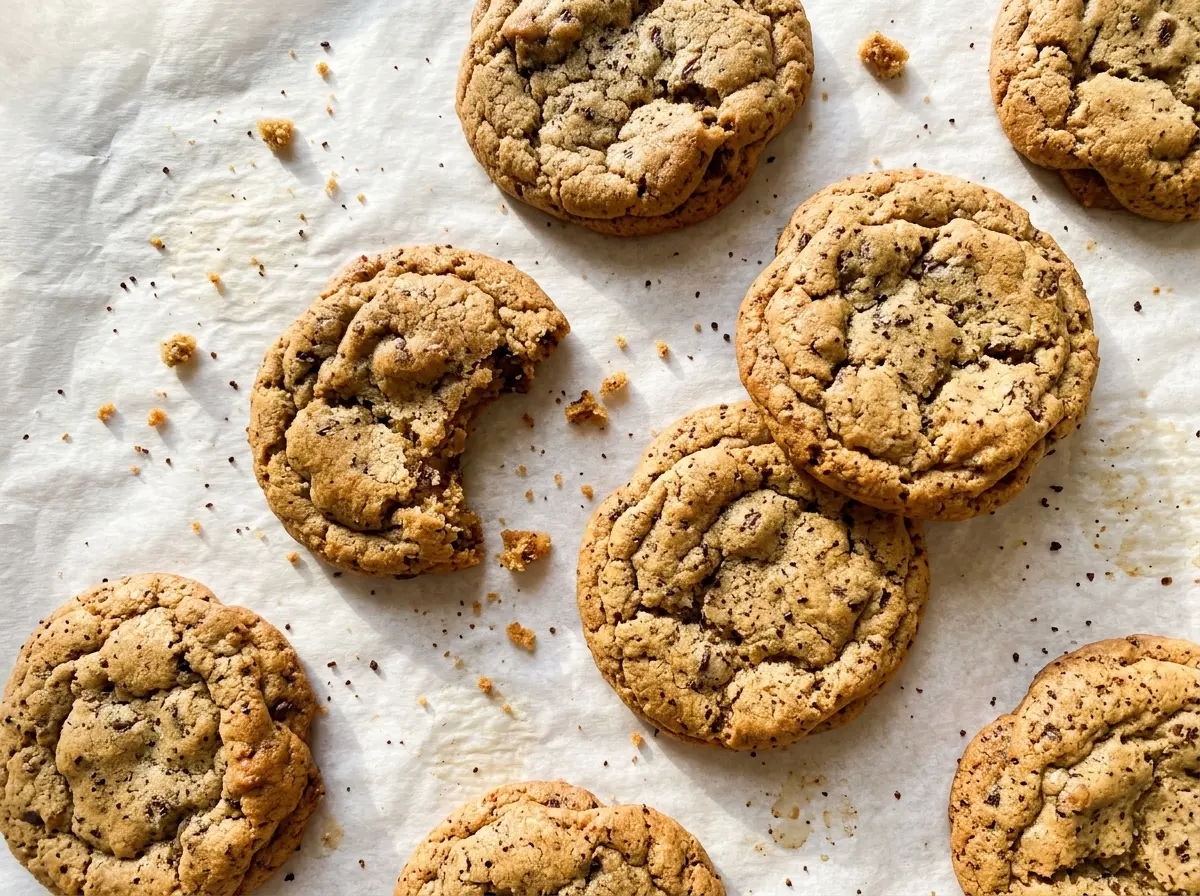
When the timer goes off, the edges of these cookies look ready before the centers do. That soft middle can make you wonder whether they need another minute, but leaving them in until the tops look firm is how a chewy cookie turns dry. These coffee cookies are meant to come out while the centers still look a little soft.
I like the balance here: brown sugar brings a tender chew, granulated sugar keeps the edges from feeling heavy, and instant espresso powder gives the dough a clear coffee flavor without adding liquid. The dough gets a short rest in the refrigerator before it goes into the oven, which makes it easier to portion and keeps the cookies from spreading too quickly. The result is a neat little cookie with a lightly browned edge and a soft, coffee-scented center.
Kitchen Note
Give the cookies their full five minutes on the baking sheet before you move them. They’re delicate straight from the oven, and that brief rest lets them firm up without losing their soft centers.
Save these Chewy Coffee Cookies for a coffee break treat, with soft centers and a mellow espresso flavor.
Why These Cookies Need Two Kinds of Sugar
Using both brown and granulated sugar gives the dough two jobs to do. Packed light brown sugar adds moisture and helps the centers stay chewy, while granulated sugar encourages the edges to set with a little more definition. Using only one kind changes that balance, even though the dough may still bake into cookies.
The way you cream them with softened butter matters, too. Beat the butter and sugars until creamy, not until the mixture is pale and fluffy; about two minutes on medium speed is enough. If you keep beating well past that point, you work more air into the dough, which can make the baked texture less compact than the chewy middle you want. Once the egg and vanilla go in, scrape down the bowl so the mixture comes together evenly. Then stop mixing the moment the flour disappears. A few seconds of restraint here gives you a tender cookie instead of a firm, bready one.
What the Coffee and Flour Are Doing in the Dough

- Instant espresso powder — This dissolves into the dough as it mixes, giving the cookies coffee flavor without watering down the batter. Choose a powder that smells fragrant when you open it; an old, flat jar won’t bring much aroma. Instant coffee granules can work in its place in the same measure, though the coffee note will usually be less pronounced.
- All-purpose flour — Flour gives the cookies their structure, so measuring it accurately makes a noticeable difference. Spoon it into the measuring cup and level the top rather than packing it in; too much flour makes the dough stiff and the cookies less chewy. A standard all-purpose flour is fine here; there’s no need for a specialty brand.
- Light brown sugar and granulated sugar — The brown sugar contributes moisture and a gentle molasses note, while the white sugar keeps the cookie from becoming too soft throughout. Pack the brown sugar into its measuring cup so the amount is consistent. The granulated sugar doesn’t need any special treatment.
- Unsalted butter — Softened butter should give slightly when pressed but still hold its shape. If it’s melted, the dough starts out with a different texture and can spread more quickly. A regular grocery-store butter works well; use it softened, not warm or oily.
- Large egg and vanilla extract — The egg binds the dough and adds moisture, so use a large one for the intended balance. Vanilla rounds out the espresso; a basic pure or imitation vanilla extract is fine. Let the egg lose its refrigerator chill while you gather the other ingredients so it blends readily with the creamed butter.
- Baking soda — This helps the cookies rise and spread as they bake. Check that yours is fresh if it has been open for a long time; old baking soda can leave cookies dense. Whisk it thoroughly with the flour so it doesn’t collect in one bitter-tasting spot.
Mixing and Baking for Chewy, Not Cakey, Cookies
Whisk the dry ingredients evenly
In a medium bowl, whisk the flour, espresso powder, baking soda, and kosher salt until the color looks uniform. This distributes the small amounts of espresso and leavener through the flour before they reach the wet ingredients. Break up any visible clumps with the whisk. Set the bowl aside while you cream the butter and sugars.
Cream the butter and sugars, then add the egg
Beat the softened butter with both sugars in a large bowl using an electric mixer on medium speed for about two minutes, until creamy. Beat in the egg and vanilla until combined, scraping down the bowl as needed so no butter stays stuck along the sides. If the mixture looks a little uneven just after the egg goes in, keep mixing until it comes together. Don’t rush past the scrape-down; unevenly mixed dough can bake inconsistently.
Mix gently and chill the covered dough
Add the flour mixture and mix on low only until no dry streaks remain. Stop as soon as the dough looks uniform; prolonged mixing after the flour is added can make cookies tougher. Cover the bowl and refrigerate the dough for 30 minutes. This gives the dough time to firm up before scooping, so it’s easier to portion neatly.
Scoop, bake, and cool in two stages
Heat the oven to 350°F and line a large baking sheet with parchment paper. Scoop the dough into 1 1/2-tablespoon portions, spacing them about 2 inches apart; bake in batches if needed. Bake one sheet at a time for 10 to 12 minutes, until the edges are set and lightly browned while the centers still look soft. Rest the cookies on the baking sheet for five minutes, then transfer them to a wire rack to cool.
Easy Ways to Adapt the Coffee Cookie Dough
Use dark brown sugar for a deeper note
Swap the light brown sugar for the same amount of packed dark brown sugar. Its stronger molasses flavor gives the cookies a deeper, less delicate sweetness and keeps the center tender.
Make them gluten-free with a baking blend
Replace the all-purpose flour with a cup-for-cup gluten-free flour blend formulated for baking, ideally one that includes xanthan gum. Keep the other ingredients and method the same; the finished cookies may be a little more delicate and less chewy than the wheat-flour version.
Double the batch for a cookie tin
Double every ingredient to make twice as much dough, then keep the same portion size and bake in batches. The oven time stays the same for each sheet, and baking one sheet at a time keeps the cookies on an even schedule.
Storage and Reheating
- Room temperature: Once fully cool, store the cookies in an airtight container for up to 4 days. They may soften a little as they sit.
- Freezer: Freeze fully cooled cookies in an airtight freezer-safe container for up to 2 months. Thaw at room temperature before serving.
- Reheating: Warm one cookie in the microwave for 5 to 8 seconds if you’d like it slightly warm. Longer heating can make the edges tough as the cookie cools.
Questions That Come Up With These Coffee Cookies
Chewy Coffee Cookies
Ingredients
Equipment
Method
- Whisk the flour, espresso powder, baking soda, and salt together in a medium bowl.
- Beat the butter, brown sugar, and granulated sugar in a large bowl with an electric mixer on medium speed until creamy, about 2 minutes.
- Beat in the egg and vanilla until combined, scraping down the bowl as needed.
- Add the flour mixture and mix on low just until no dry streaks remain.
- Cover the dough and refrigerate for 30 minutes.
- Heat the oven to 350°F.
- Line a large baking sheet with parchment paper.
- Scoop the dough into 1 1/2-tablespoon portions and arrange them about 2 inches apart on the prepared baking sheet, baking in batches as needed.
- Bake one sheet at a time for 10 to 12 minutes, until the edges are set and lightly browned while the centers still look soft.
- Let the cookies rest on the baking sheet for 5 minutes.
- Transfer the cookies to a wire rack to cool.