The biggest surprise with this casserole happens before the marshmallows ever hit the oven: the sweet potatoes need time to roast until a knife slips into the largest one without resistance. I used to rush that part, then end up fighting stubborn pieces while mashing. Now I let the potatoes turn soft all the way through, and the filling comes together without extra liquid or a lumpy texture.
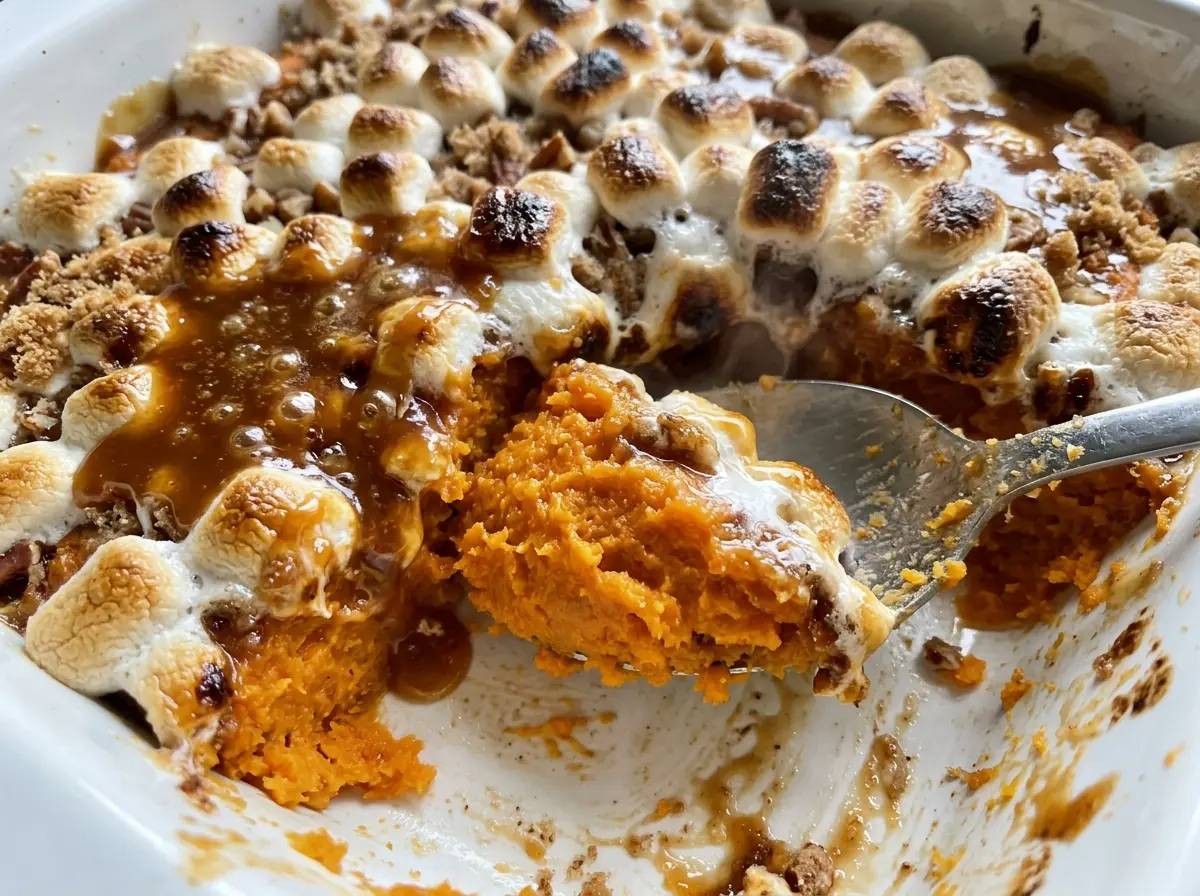
For this Marshmallow Caramel Sweet Potato Casserole, I bake the filling until it’s set before adding the caramel and marshmallows. That order gives the sweet potato layer time to cook through without leaving the topping in the oven long enough to scorch. The caramel brings a deep, bittersweet note against the soft, gently sweet potatoes, while the marshmallows puff and turn golden at the edges.
Kitchen Note
Let the mashed sweet potatoes cool for the full 10 minutes before stirring in the beaten eggs. That pause keeps the eggs from scrambling in the warm mixture and helps the filling bake up evenly.
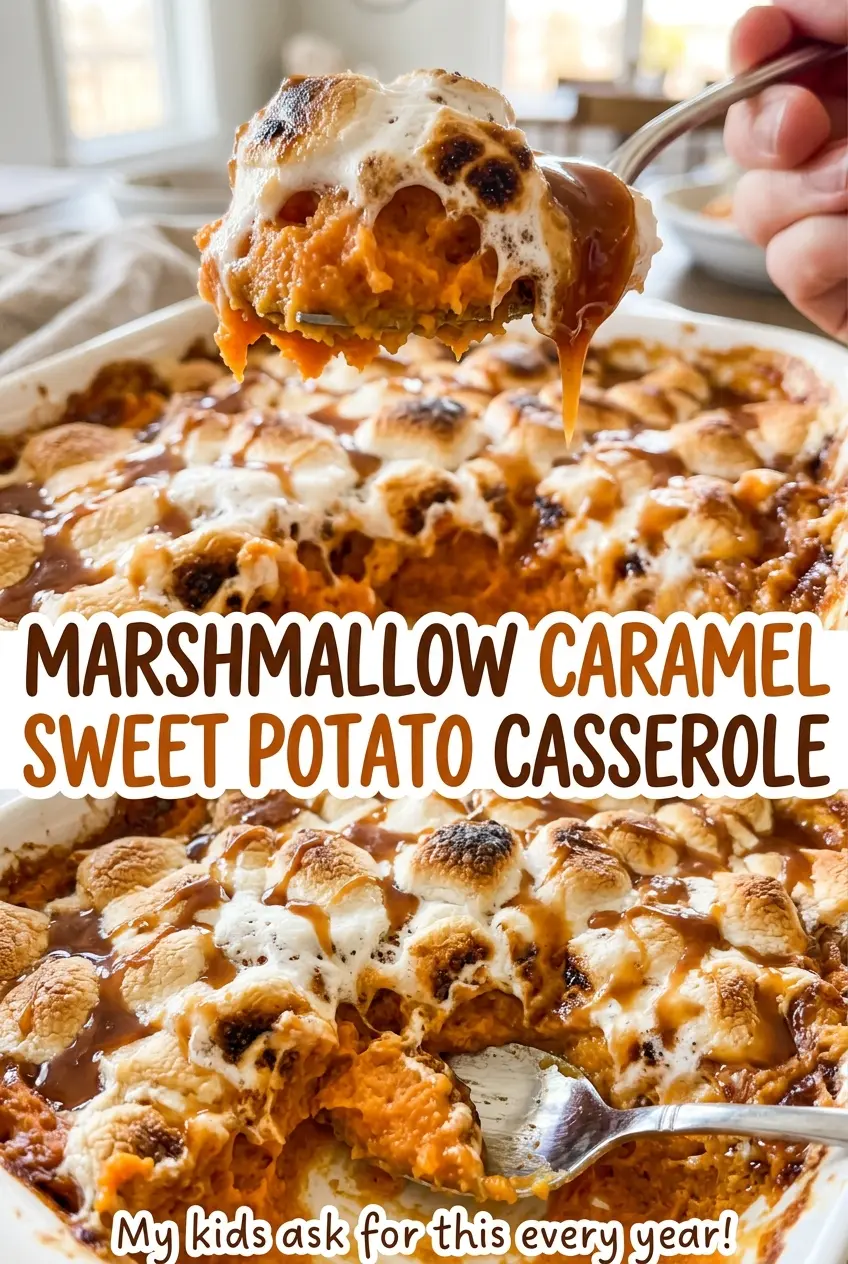
Save this Marshmallow Caramel Sweet Potato Casserole for its silky sweet potato base, deep caramel, and puffed golden marshmallows.
Why the Marshmallows Go on Only After the Casserole Sets
It’s easy to think of the topping as the final flourish, but the timing changes how the whole casserole bakes. The sweet potato filling needs 30 to 35 minutes at 350°F to set in the center. Mini marshmallows need only a few minutes to puff and turn golden. Putting them on at the beginning would leave them exposed to the full bake, long after they’ve reached the texture you want.
Instead, I bake the filling on its own and check that the center is set and has reached 160°F. Then I pour warm caramel over the hot casserole and scatter on the marshmallows. Their short return to the oven gives them a toasted top while the caramel stays soft enough to coat the surface. The contrast is the point: a firm, spoonable base, a glossy layer of caramel, and marshmallows that are browned outside but still soft underneath.
That separate finish also makes the final few minutes easier to judge. Watch the marshmallows rather than waiting for a timer alone; once they’re puffed and golden, pull the dish and let it rest before serving.
What Roasting Does for the Sweet Potato Base
- Sweet potatoes — Roasting the scrubbed potatoes whole gives them time to soften inside their skins without adding cooking water to the filling. Choose potatoes that are similar in size so they’re more likely to finish together; the largest one is the doneness check. Canned sweet potatoes aren’t a direct substitute here because their moisture and texture differ from freshly roasted potatoes.
- Butter and brown sugar — Melted unsalted butter adds richness, and packed light brown sugar brings a mild molasses note to the mash. Fresh brown sugar is easier to mix in smoothly than a dry, hardened lump. The caramel supplies a stronger cooked-sugar flavor later, so the filling’s sweetness stays rounded rather than tasting like straight sugar.
- Whole milk and eggs — Milk loosens the mash enough to spread, while the eggs help the filling set into a cohesive casserole. Lightly beat the eggs before adding them so they distribute without overworking the potato mixture. Whole milk gives the filling more body than a thinner milk would.
- Vanilla and kosher salt — Vanilla softens the edges of the caramel and brown sugar, while salt keeps the sweet filling from tasting flat. Measure the kosher salt rather than adding it by feel; salt crystals vary in size, and too much can take over the gentle potato flavor.
- Granulated sugar, water, and heavy cream — The sugar and water cook into the caramel; the cream turns that hot syrup into a pourable sauce. Heavy cream’s fat helps make a smooth, rich topping, so it’s the ingredient I wouldn’t trade for a thinner dairy option. Warm it before adding so the temperature shock is less abrupt.
- Mini marshmallows — Their small size lets the top brown quickly and evenly during the short finish. A fresh bag gives the softest, puffiest result; marshmallows that have dried out won’t toast as evenly.
From Soft-Roasted Potatoes to a Golden Marshmallow Top
Roast Until the Largest Potato Gives Easily
Heat the oven to 400°F and arrange the scrubbed sweet potatoes on a rimmed half-sheet pan. Bake for 50 to 65 minutes, checking the largest potato with a knife; it should slide easily into the center. If the knife meets a firm spot, give the potatoes more time rather than trying to mash them undercooked. Let them cool until they’re easy to handle, about 15 to 20 minutes.
Build a Smooth, Even Filling
Lower the oven to 350°F, coat a 9×13-inch baking dish with nonstick cooking spray, and peel the potatoes into a large bowl. Mash them, then mix in the melted butter, brown sugar, milk, vanilla, and salt. Once the mixture has cooled for 10 minutes, stir in the lightly beaten eggs and spread the filling evenly in the dish. Uneven mounds bake at different rates, so smooth the top into a level layer.
Bake Until the Center Sets
Bake the filling at 350°F for 30 to 35 minutes. Check the center rather than judging only by the edges: it should be set and reach 160°F. If the perimeter looks done but the middle still moves loosely, give it more time. The casserole needs this bake before the caramel and marshmallows go on.
Cook the Caramel to Deep Amber
While the casserole bakes, warm the heavy cream in a microwave-safe measuring cup for 30 to 45 seconds, until warm but not boiling. In a small, heavy-bottomed saucepan, combine the granulated sugar and water and bring them to a boil over medium heat. Cook without stirring for 6 to 9 minutes, gently swirling the pan as needed, until the syrup is deep amber. Remove it from the heat and slowly whisk in the warm cream; return the pan to low heat and whisk for 1 to 2 minutes, until smooth.
Finish with Caramel and Marshmallows
Pour the warm caramel evenly over the hot casserole, then scatter the mini marshmallows across the top. Bake for 5 to 8 minutes, watching for puffed marshmallows with golden patches. They can go from toasted to too dark quickly, so use their color as your cue. Rest the casserole for 10 minutes before serving so the layers settle and the caramel isn’t scorching hot.
Small Changes That Keep the Casserole in Balance
Keep the Mash Slightly Rustic
For a more textured base, stop mashing while a few small, soft pieces remain instead of working the potatoes until completely smooth. The casserole will still hold together, but each serving will have a more homemade, uneven bite. Don’t leave large firm chunks; they’ll stand out against the soft topping.
Make the Potato Prep Ahead
Roast and peel the sweet potatoes ahead, then refrigerate them in a covered container and mash them when you’re ready to assemble the filling. This breaks up the work without changing the caramel or marshmallow finish. Starting with chilled potatoes means the filling may need a little more time to cool after mixing before you add the eggs.
Storage and Reheating
- Refrigerator: Refrigerate leftovers within 2 hours in a covered container and use within 3 to 4 days. The marshmallow topping softens after chilling, but the sweet potato layer keeps its spoonable texture.
- Freezer: I don’t recommend freezing the finished casserole; the marshmallows turn sticky as they thaw, and the caramel can lose its smooth texture.
- Reheating: Reheat individual portions in the microwave in short bursts until hot throughout. Avoid heating a whole dish uncovered; the marshmallows can toughen before the center warms.
Questions That Come Up While Making This Casserole
Marshmallow Caramel Sweet Potato Casserole
Ingredients
Equipment
Method
- Heat the oven to 400°F and arrange the sweet potatoes on a rimmed half-sheet pan.
- Bake for 50-65 minutes, until a knife slides easily into the center of the largest potato.
- Let the potatoes cool until easy to handle, about 15-20 minutes.
- Reduce the oven to 350°F and grease a 9x13-inch baking dish with nonstick cooking spray.
- Peel the potatoes into a large bowl.
- Mash the potatoes, then mix in the melted unsalted butter, packed light brown sugar, whole milk, vanilla extract, and kosher salt.
- Let the mixture cool for 10 minutes, then stir in the lightly beaten eggs.
- Spread the filling evenly in the prepared dish.
- Bake at 350°F for 30-35 minutes, until the center is set and reaches 160°F.
- While the casserole bakes, warm the heavy cream in a microwave-safe measuring cup for 30-45 seconds, until warm but not boiling.
- Combine the granulated sugar and water in a small, heavy-bottomed saucepan and bring to a boil over medium heat.
- Cook without stirring for 6-9 minutes, gently swirling the pan as needed, until the syrup is deep amber.
- Remove the pan from the heat and slowly whisk in the warm cream.
- Return it to low heat and whisk for 1-2 minutes, until smooth.
- Pour the warm caramel evenly over the hot casserole.
- Scatter the mini marshmallows over the top.
- Bake for 5-8 minutes, until the marshmallows are puffed and golden.
- Rest for 10 minutes before serving.