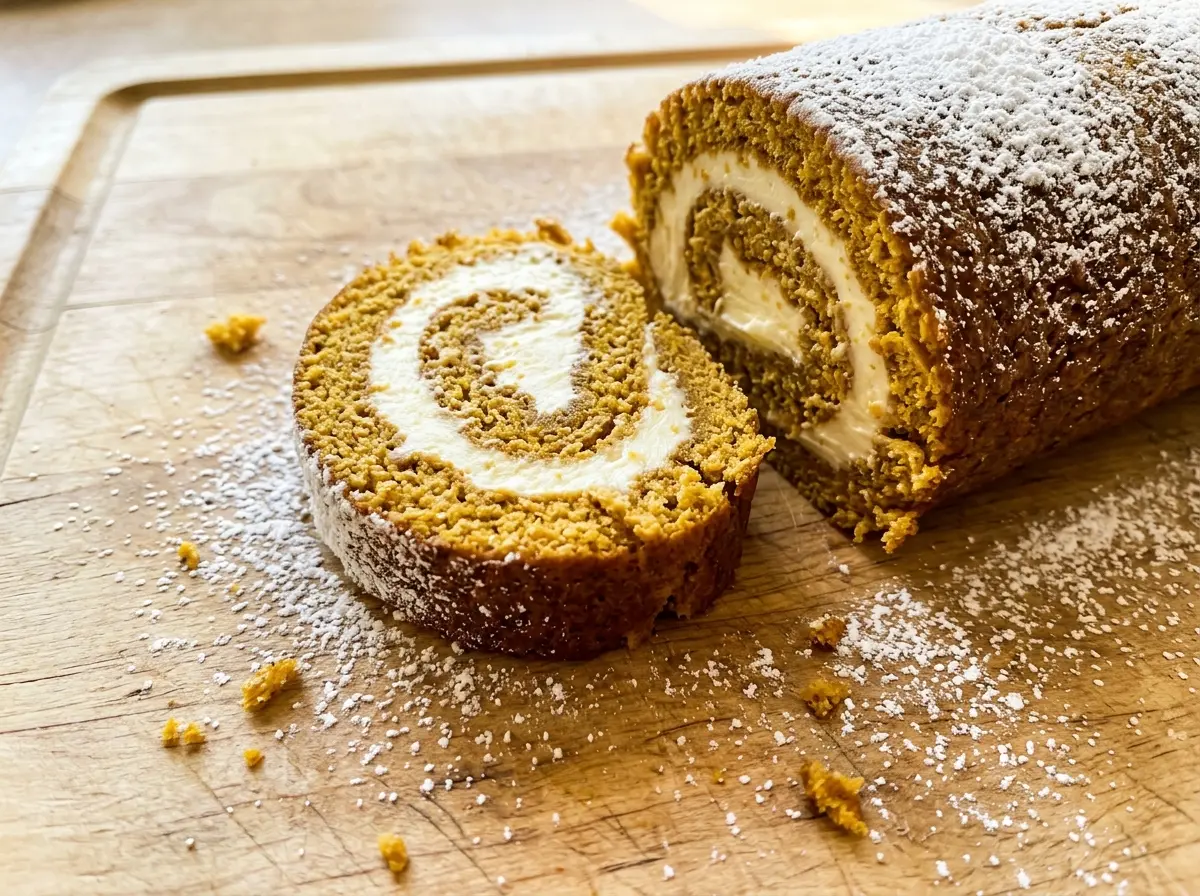
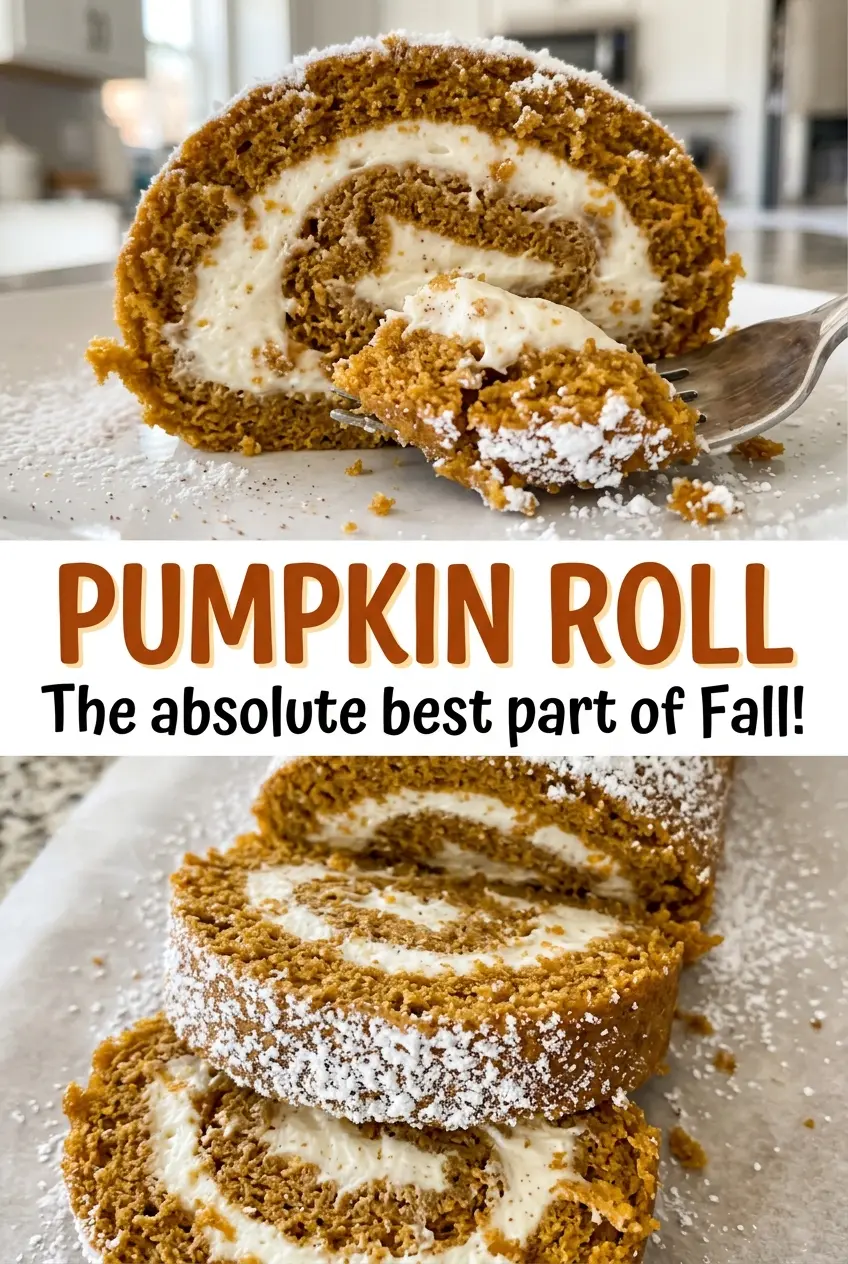
The first slice tells you whether the spiral has held: a soft pumpkin cake wrapped around a smooth cream cheese center, with the swirl showing all the way through. Pumpkin Roll looks like a project, but the batter comes together quickly and the rolling technique is manageable once you know when to do it. I like how the cake stays tender while the filling brings a cool, tangy contrast.
This version gets its lift from eggs beaten with sugar until thick and pale, then gently folded with the dry ingredients. That gives the thin cake enough structure to roll without turning heavy. Canned pumpkin puree keeps the pumpkin flavor steady; pumpkin pie filling is a different product and doesn’t belong in this batter. The result is a neat spiral with a delicate cake and creamy center.
Kitchen Note
Give the eggs and sugar the full five minutes on high. The mixture should look thick and pale, not just foamy; that extra volume helps the cake stay light enough to roll.
Save this Pumpkin Roll for its tender cinnamon cake, creamy filling, and clean spiral slices.
Why the Pumpkin Cake Must Be Rolled Before It Cools
A thin cake loses flexibility as it cools. If it sits flat on the counter first, asking it to bend around the filling later can split the surface, especially along the outside curve. Rolling the cake while it is still hot gives it a shape to cool into, so the later unroll-and-fill step is much gentler. The towel moves with the cake and keeps the warm layers from sticking to each other.
There are two moments worth protecting. First, invert the cake as soon as it leaves the oven and peel away the parchment while it is warm. Then roll it from a short end with the towel tucked inside, without squeezing hard enough to compress the sponge. Let it rest seam-side down until it has cooled completely. That first roll is only a shaping step; once the cake is cool, it opens more easily for filling and can be rolled back into a tidy spiral.
If a small crack appears, don’t pull the cake apart trying to hide it. Keep the roll supported, spread the filling evenly, and let the chilled spiral settle before slicing. The filling helps hold the shape, and a clean slice often looks more polished than trying to force a cracked edge flat.
What the Pumpkin, Eggs, and Cream Cheese Each Bring
- All-purpose flour — It gives the sponge enough framework to hold its roll. An ordinary grocery-store flour works well here; a whole-wheat swap would make this thin cake heavier and less flexible. For a gluten-free version, use a cup-for-cup baking blend in place of the flour, as described below.
- Eggs and granulated sugar — Beaten together, they provide much of the cake’s light structure, so large eggs and careful mixing matter more than buying a premium brand. There isn’t a dependable egg-free swap for this particular sponge; replacing the eggs would change both its lift and its ability to roll.
- Canned pumpkin puree — Choose plain puree, not pumpkin pie filling, which is already sweetened and spiced. A smooth canned puree is consistent and convenient; the label matters more than the price. It supplies pumpkin flavor and moisture, so changing to a wetter puree can make the cake harder to handle.
- Baking soda and cinnamon — Fresh baking soda helps the cake rise, while ground cinnamon gives the pumpkin a warm, familiar note. Use the cinnamon you have, but replace an old, stale container if it has lost its aroma. Pumpkin pie spice can stand in for the cinnamon in the same amount for a broader spice blend.
- Cream cheese and unsalted butter — These make the filling tangy, rich, and smooth when softened before beating. Standard full-fat cream cheese gives the firmest, easiest-to-spread result; reduced-fat cream cheese tends to make a softer filling. If you only have salted butter, omit the salt from the cake mixture.
- Powdered sugar and vanilla — Powdered sugar sweetens the filling and helps it spread without a gritty texture, while vanilla rounds out the cream cheese. The inexpensive versions work; sift powdered sugar if it has packed into hard lumps. Granulated sugar is not a direct swap here because it won’t dissolve into the filling the same way.
Build the Sponge, Shape the Roll, Then Fill It
Prepare the pan and dry mixture
Heat the oven to 375°F. Coat a 10×15-inch jelly-roll pan with nonstick cooking spray, line it with parchment, then grease the parchment too; that second coating helps the thin cake release cleanly. Whisk the flour, baking soda, cinnamon, and salt together in a medium bowl so the leavener is distributed throughout. Set the bowl aside before you start beating the eggs.
Whip the eggs and fold the batter gently
Beat the eggs and granulated sugar with an electric mixer on high for 5 minutes, until thick and pale, then beat in the pumpkin puree. Add the flour mixture by folding it in just until no dry streaks remain. Scraping and stirring hard after the flour disappears knocks out some of the air you just built, so stop as soon as the batter looks even. Spread it in the prepared pan in an even layer, reaching the corners without pressing it down.
Bake and roll the cake while warm
Bake for 13 to 15 minutes, until the top springs back when lightly touched. While it bakes, lay a clean kitchen towel on the counter and dust it evenly with 1/4 cup powdered sugar. Invert the hot cake onto the towel and peel off the parchment, then roll the cake and towel together from a short end. Set it seam-side down and let it cool for 1 hour; rolling tightly enough to hold its shape is helpful, but pressing hard can flatten the sponge.
Spread the filling and chill the spiral
Beat the softened cream cheese and butter until smooth, then beat in the vanilla and the remaining 1 cup powdered sugar until creamy. Unroll the cooled cake carefully and spread the filling evenly over the surface, leaving a 1/2-inch border so it has room to move as you reroll. Roll the cake back up without the towel, wrap it in plastic wrap, and chill seam-side down for at least 1 hour. Keep the filling smooth rather than piling it on near the edge, where it can squeeze out as the cake closes.
Three Practical Ways to Adapt This Pumpkin Roll
Make a gluten-free sponge
Replace the all-purpose flour with the same volume of a cup-for-cup gluten-free baking blend made for cakes. The sponge may be a little more delicate, so spread it evenly and handle the warm roll gently; the cream cheese filling stays the same.
Use pumpkin pie spice in the cake
Swap the ground cinnamon for the same amount of pumpkin pie spice. The filling stays vanilla-forward, while the cake gets a more layered spice flavor. Use the spice blend in the dry mixture so it disperses evenly.
Make the filling less sweet
Use 3/4 cup powdered sugar in the filling instead of the full cup. The cream cheese flavor will come through more clearly, and the filling will be a little softer, so spread it gently and keep the cake well chilled before slicing.
Storing, Freezing, and Serving
- Refrigerator: Keep the wrapped roll refrigerated for up to 3 days. The cake will firm up as it chills, and the filling will hold its shape.
- Freezer: It freezes well. Wrap the whole roll or individual slices tightly, then freeze for up to 1 month for best quality; thaw overnight in the refrigerator.
- Serving: Serve chilled or let the slices sit briefly so the filling softens slightly. This is a cream cheese-filled dessert, so don’t leave it out on the counter for an extended stretch.
Questions That Come Up When Making Pumpkin Roll
Pumpkin Roll
Ingredients
Equipment
Method
- Heat the oven to 375°F.
- Grease a 10x15-inch jelly-roll pan with cooking spray, line it with parchment paper, and grease the parchment.
- Whisk the flour, baking soda, cinnamon, and salt in a medium bowl.
- Beat the eggs and granulated sugar with an electric mixer on high speed for 5 minutes, until thick and pale.
- Beat in the pumpkin puree.
- Fold the flour mixture into the egg mixture just until no dry streaks remain.
- Spread the batter evenly in the prepared pan.
- Bake for 13 to 15 minutes, until the top springs back when lightly touched.
- While the cake bakes, lay a clean kitchen towel on the counter and dust it evenly with 1/4 cup powdered sugar.
- Invert the hot cake onto the towel and peel off the parchment.
- Roll the cake and towel together from a short end, then cool seam-side down for 1 hour.
- Beat the cream cheese and butter until smooth.
- Beat in the vanilla and remaining 1 cup powdered sugar until creamy.
- Unroll the cooled cake.
- Spread the filling evenly over the cake, leaving a 1/2-inch border.
- Reroll the cake without the towel and wrap it in plastic wrap.
- Chill seam-side down for at least 1 hour, then unwrap and slice to serve.