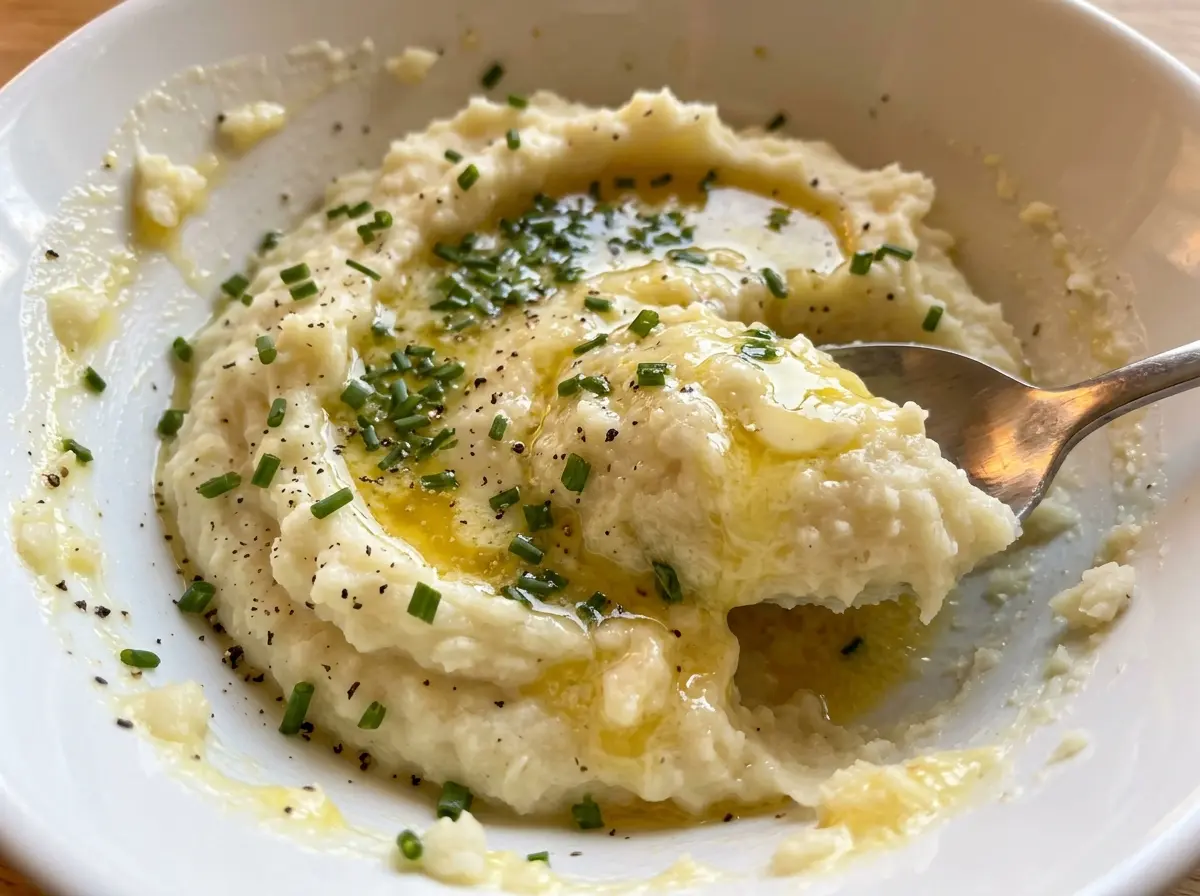
As potatoes and parsnips simmer together, the parsnips give off a gentle sweetness that’s a little different from a pot of potatoes alone. I like that first hint: it tells me the mash will have more character without losing the familiar, buttery feel I want from a side dish. These mashed parsnips and potatoes are smooth and creamy, with enough parsnip to notice in every bite.
The balance matters more than any special equipment. Yukon Gold potatoes make up twice the weight of the parsnips, so the potatoes keep the mash soft and substantial while the parsnips bring a sweet, earthy edge. I cut both vegetables into matching pieces so they cook at the same pace, then add the warm milk gradually. The finished mash is creamy, not loose, and its pale golden color looks lovely in the serving bowl.
Kitchen Note
After draining, return the vegetables to the pot over low heat for a minute or two. Stir gently until the surface no longer looks wet; that quick pause helps the mash turn creamy instead of watery.
Save these mashed parsnips and potatoes for a cozy side dish with a creamy texture and a gentle, sweet parsnip flavor.
Why the Parsnips Don’t Take Over the Potatoes
Parsnips have a sweeter, more distinctive taste than potatoes, and a mash made with equal amounts of each can lean heavily toward that root-vegetable flavor. Here, the two-to-one potato-to-parsnip balance keeps the bowl recognizable as mashed potatoes while giving each serving a gentle parsnip note. It’s a useful ratio if you’re introducing parsnips to someone who likes classic mashed potatoes but isn’t looking for a dramatic change.
The balance also helps the texture. Yukon Gold potatoes mash into a creamy base, while parsnips add their own slightly more substantial feel. Both vegetables cook in the same pot, but matching their cut size matters: large chunks take longer to soften, and smaller pieces can break down before the larger ones are ready. When the pieces are evenly cut and tender all the way through, they mash together without leaving firm bits behind. The result has enough body to sit neatly on a plate, with the parsnips present but not overpowering.
What the Yukon Golds, Parsnips, and Warm Milk Bring to the Mash

- Yukon Gold potatoes — Their naturally creamy texture gives the mash a smooth, rich base. They’re a dependable choice, and there’s no need to hunt down a specialty brand. Russets work in the same weight if that’s what you have; expect a fluffier, less buttery-tasting mash and add the milk gradually, since russets can absorb it differently.
- Parsnips — Choose firm parsnips without soft or shriveled spots; their sweet, earthy flavor is what makes this more than a standard potato mash. Carrots are the closest easy swap by weight, though they’ll make the mash sweeter and more orange, with less of the parsnip’s earthy taste.
- Unsalted butter — Butter rounds out the roots and gives the mash its familiar richness. A standard grocery-store butter works well here. Mild olive oil can stand in at the same amount, but the result will taste less buttery and have a lighter, more savory finish.
- Whole milk — Its fat helps the mash turn creamy without diluting the vegetables’ flavor. Use 2% milk in the same amount for a slightly less rich result; whichever you choose, warming it first makes it easier to incorporate without cooling the pot.
- Black pepper — It brings a quiet savory note against the parsnips’ sweetness. White pepper can replace it in the same amount if you’d rather not see dark flecks, though its flavor is a little different.
From a Cold Pot of Water to Creamy, Not Loose, Mash
Start the Vegetables in Cold, Salted Water
Put the peeled, 1-inch pieces of potatoes and parsnips in a 5- to 6-quart pot. Cover them with cold water by 1 inch and add 1 tablespoon of the kosher salt. Starting them together in cold water gives the vegetables time to heat through evenly; don’t start with boiling water, which can soften the outside faster than the centers.
Simmer Until a Fork Slides In Easily
Bring the pot to a boil over high heat, then reduce the heat and simmer for 15 to 20 minutes. Check a few pieces with a fork rather than relying on the clock alone. They should be easily pierced, including the larger pieces; if the centers still feel firm, give them more time before draining.
Let the Pot Evaporate Excess Moisture
Drain the vegetables well, return them to the pot, and set it over low heat for 1 to 2 minutes. Stir gently so the pieces don’t stick or break apart before you mash them. Water left clinging to the vegetables can thin the finished mash, so give the pot that short moment on the burner before adding anything else.
Warm the Milk and Mash in Stages
Warm the milk in a microwave-safe measuring cup for 30 to 45 seconds, until it’s warm but not boiling. Add the butter to the vegetables and mash until they’re mostly smooth, then work in the warm milk gradually. Stop when the mixture turns creamy; adding all the milk at once makes it harder to judge the texture as you go.
Season the Finished Mash
Stir in the remaining 1/2 teaspoon kosher salt and the black pepper. Taste a spoonful while it’s warm, when the butter and pepper are easiest to notice. Serve the mash warm, while it’s soft and creamy.
Three Ways to Change the Parsnip-Potato Balance
Make It Dairy-Free
Use unsweetened, unflavored oat milk in place of the whole milk and dairy-free butter in place of the unsalted butter, keeping the same amounts. The mash will still be creamy, though it won’t have quite the same buttery richness as the version made with dairy.
Give the Butter a Toasty Edge
Brown the unsalted butter in a small saucepan until it smells nutty and has golden-brown flecks, then add it to the vegetables before mashing. Keep a close eye on it near the end; browned butter adds a deeper, toasted flavor that suits the parsnips, but butter can go from golden to burnt quickly.
Make the Parsnip Flavor Bolder
Use equal weights of potatoes and parsnips instead of the usual two-to-one balance. The parsnip flavor will be more pronounced and the mash a little less like classic mashed potatoes, while the same butter-and-milk finish keeps it creamy.
Storage and Reheating
- Refrigerator: Refrigerate leftovers in a covered container within 2 hours and use within 3 to 4 days. The mash will firm up as it chills.
- Freezer: Freeze in airtight portions for up to 1 month. Thaw overnight in the refrigerator; the texture may be a little less silky after thawing.
- Reheating: Warm in a saucepan over low heat, stirring often, and add a splash of milk if it seems stiff. Heat leftovers to 165°F; high heat can scorch the bottom before the center is hot.
Questions I Get About Mashed Parsnips and Potatoes
Mashed Parsnips and Potatoes
Ingredients
Method
- Place the potatoes and parsnips in a 5- to 6-quart pot and cover with cold water by 1 inch. Add 1 tablespoon of the salt.
- Bring to a boil over high heat, then reduce the heat and simmer for 15 to 20 minutes, until the vegetables are easily pierced with a fork.
- Drain well and return the vegetables to the pot. Set over low heat for 1 to 2 minutes, stirring gently to evaporate excess moisture.
- Warm the milk in a microwave-safe measuring cup in the microwave for 30 to 45 seconds, until warm but not boiling.
- Add the butter to the vegetables and mash until mostly smooth.
- Gradually mash in the warm milk until the mixture is creamy.
- Stir in the remaining 1/2 teaspoon salt and the black pepper.
- Serve warm.