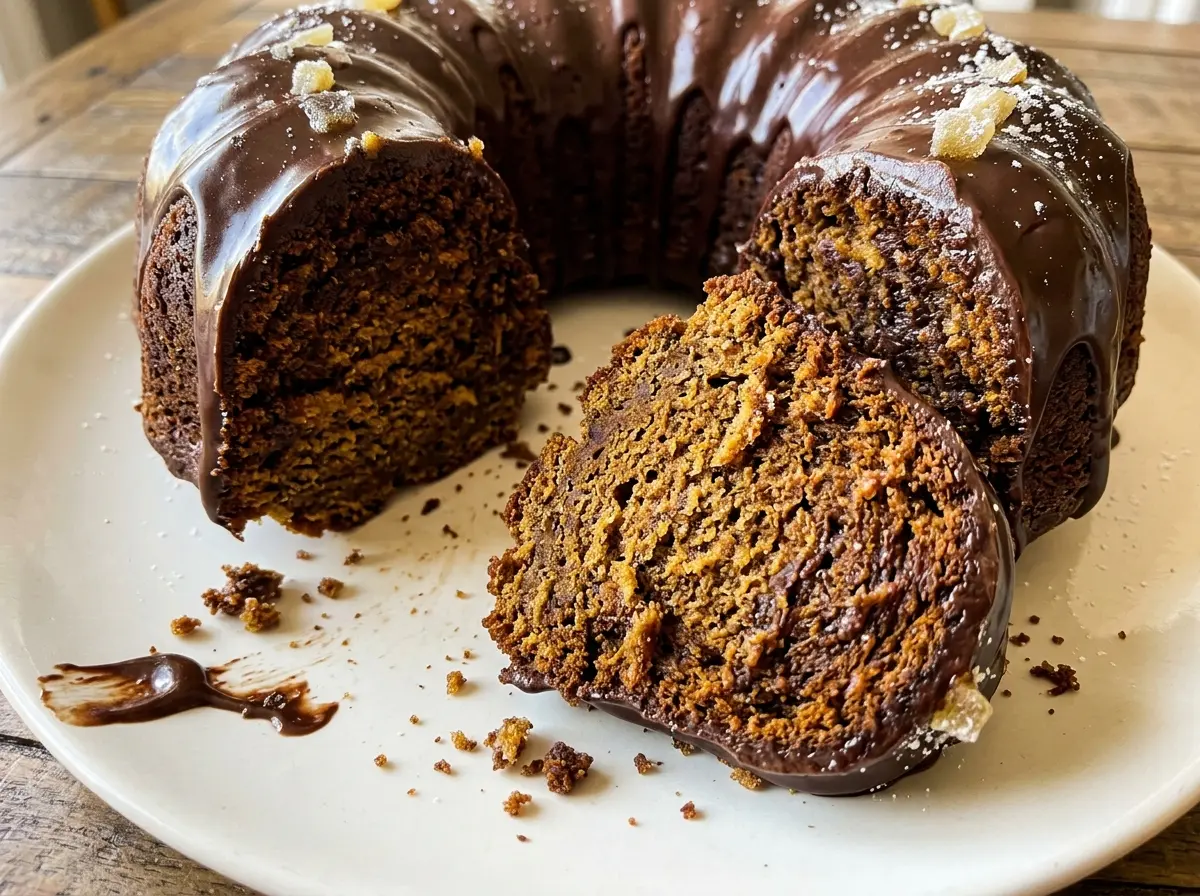
When the Bundt pan comes out, the kitchen smells like cocoa, ginger, and molasses, and the ridged cake already looks like a wreath before the decorations go on. I like how this Gingerbread Chocolate Bundt Wreath Cake lands between classic gingerbread and a chocolate cake: warm molasses and spice meet a deep cocoa crumb. The sugared cranberries add a bright, tart note against all that richness.
The wreath shape gives the finish a place to shine without hiding the cake itself. A drizzle of semisweet chocolate follows the curves, while the ruby cranberries and rosemary make the top look festive and considered. Each slice brings the same contrast: dark, gently spiced cake with a glossy chocolate finish and a little sparkle from the berries.
Kitchen Note
Pat the cranberries completely dry before they go into the syrup, or extra water can thin the coating. After their syrup bath, let them dry until tacky before rolling them in sugar; that sticky surface is what helps the sparkling sugar cling.
Save this Gingerbread Chocolate Bundt Wreath Cake for its dark cocoa crumb, warm gingerbread spices, and sugared cranberry wreath.
Why Coffee Deepens the Chocolate Without Making This a Mocha Cake
The coffee here works in the background. Strong brewed coffee gives the cocoa a rounder, more pronounced chocolate taste, but it doesn’t turn the cake into a coffee-flavored dessert. That distinction matters in a gingerbread cake: the cocoa can hold its own beside molasses and warm spices instead of fading into the background.
Use strong coffee and let it cool before mixing it with the buttermilk. Adding it with the flour mixture in alternating additions helps the batter come together evenly, so you get the lift from the baking soda and baking powder without beating the finished batter longer than needed. The result is a tender crumb with a clear chocolate note, followed by ginger and cinnamon. The coffee doesn’t need to be fancy; a familiar, full-bodied brew is enough.
What Molasses, Buttermilk, and the Spice Blend Each Bring
- Unsulfured molasses and dark brown sugar — Together they give the cake its deep, rounded gingerbread character and help keep the crumb moist. Pack the brown sugar firmly, and use unsulfured molasses for the intended flavor; blackstrap is much more intense and can make the cake taste bitter.
- Unsweetened cocoa and semisweet chocolate — The cocoa seasons the cake itself, while the chopped chocolate makes a smooth, bittersweet glaze. A standard unsweetened cocoa powder works well here, so there’s no need for a specialty brand. Bittersweet chocolate can replace semisweet in the glaze if you prefer a darker, less sweet finish.
- Buttermilk — Its tang balances the molasses, and its acidity works with the baking soda. Plain cultured kefir is the closest practical substitute; use it in the same volume, knowing the cake may taste a little less tangy.
- Butter and eggs — Softened butter creams properly with the sugar, and room-temperature eggs blend into that mixture more smoothly than cold ones. Ordinary unsalted butter is a good choice; there’s no need to seek out a specialty brand.
- Ginger, cinnamon, and cloves — These ground spices give the cake its gingerbread character without overwhelming the cocoa. Their aroma matters more than an expensive label, so replace any jars that smell faint or dusty when you open them.
Building the Batter, Baking the Cake, and Finishing the Wreath
Coat the Pan and Whisk the Dry Ingredients
Heat the oven to 350°F and thoroughly coat a 10- to 12-cup Bundt pan with baking spray with flour, including the center tube and all the grooves. Whisk the flour, cocoa, baking soda, baking powder, salt, ginger, cinnamon, and cloves together in a medium bowl. Break up any cocoa lumps with the whisk so you don’t find dry pockets in the finished cake. Set the bowl aside while you cream the butter and sugar.
Cream the Butter, Sugar, and Eggs
Beat the softened butter and packed dark brown sugar on medium speed until the mixture looks light and fluffy, about 3 minutes. Add the eggs one at a time, beating after each, then beat in the molasses until combined. If the butter is too cold, it won’t cream smoothly; give it time to soften rather than trying to beat hard lumps into submission. Stir the buttermilk and cooled coffee together in a measuring cup.
Alternate the Flour and Buttermilk Mixtures
Add the flour mixture in three additions and the buttermilk mixture in two, beginning and ending with the flour. Mix on low just until each addition disappears, scraping the bowl if flour is clinging to the sides. Don’t keep beating once the batter is combined, since extra mixing can make a Bundt cake firm instead of tender. Scrape the batter into the prepared pan and smooth it into an even layer.
Bake Until the Cake Begins to Pull Away
Bake for 45 to 55 minutes, until a toothpick inserted into the thickest part comes out with a few moist crumbs and the cake begins to pull away from the pan. A completely clean toothpick can be a sign you’ve baked past the ideal point, so check for those crumbs as the cake approaches the end of its baking time. Cool the cake in the pan for 15 minutes, then invert it onto a wire rack. Let it cool completely before adding the glaze.
Sugar the Cranberries and Drizzle the Chocolate
Rinse the cranberries and pat them completely dry. Simmer the water with half of the sugar, stirring until it dissolves, then take the pan off the heat and let the syrup cool for 10 minutes. Toss the berries in the syrup, lift them with a slotted spoon onto a wire rack set over a rimmed baking sheet, and let them dry for 1 hour; roll them in the remaining sugar and dry for 30 minutes more. For the glaze, pour steaming cream with small bubbles at the edge over finely chopped chocolate, wait 2 minutes, stir smooth, then cool it for 5 to 10 minutes until thickened but pourable; drizzle over the cooled cake and arrange the cranberries and rosemary while the glaze is tacky.
Three Ways to Adapt This Gingerbread Bundt
Make It Gluten-Free With a Cup-for-Cup Blend
Replace the all-purpose flour with a one-to-one gluten-free baking blend that contains xanthan gum. The crumb may be a little more delicate, so handle the cake gently when you invert it and wait until it’s completely cool before glazing.
Keep the Chocolate Bold With Decaf Coffee
Use strong brewed decaf in place of the regular coffee, and cool it before mixing it with the buttermilk. You’ll keep the coffee’s cocoa-deepening effect while reducing the caffeine in each slice.
Serve a Simpler Chocolate-Ginger Bundt
Leave off the sugared cranberries and rosemary and keep the chocolate glaze. The cake has a cleaner, less tart finish and is quicker to dress, while the cocoa and gingerbread spices still come through clearly.
Storage and Reheating
- Refrigerator: Store covered for up to 4 days. The sugared cranberries may lose some of their crisp sparkle as they sit.
- Freezer: Freeze the fully cooled cake before glazing or decorating. Wrap it tightly and freeze for up to 2 months; thaw it overnight in the refrigerator, then glaze and garnish.
- Reheating: This cake is best served at room temperature, so let chilled slices stand for 20 to 30 minutes. Avoid microwaving decorated slices, which softens the glaze and makes the cranberry coating wet.
Questions About This Gingerbread Chocolate Bundt Cake
Gingerbread Chocolate Bundt Wreath Cake
Ingredients
Equipment
Method
- Heat the oven to 350°F.
- Thoroughly coat a 10- to 12-cup Bundt pan with baking spray with flour.
- In a medium bowl, whisk together the flour, cocoa powder, baking soda, baking powder, salt, ginger, cinnamon, and cloves.
- In a large bowl, beat the butter and brown sugar with a mixer on medium speed until light and fluffy, about 3 minutes.
- Beat in the eggs one at a time.
- Beat in the molasses until combined.
- Stir together the buttermilk and cooled coffee in a measuring cup.
- Add the flour mixture to the butter mixture in three additions, alternating with the buttermilk mixture in two additions; mix on low just until combined, beginning and ending with the flour mixture.
- Scrape the batter into the prepared pan.
- Bake for 45 to 55 minutes, until a toothpick inserted into the thickest part comes out with a few moist crumbs and the cake begins to pull away from the pan.
- Cool the cake in the pan for 15 minutes.
- Invert the cake onto a wire rack and cool completely.
- Rinse the cranberries and pat them completely dry.
- Combine the water and 1/2 cup of the sugar in a small saucepan.
- Bring the mixture to a simmer, stirring until the sugar dissolves.
- Remove the syrup from the heat and cool for 10 minutes.
- Toss the cranberries in the syrup.
- Transfer them with a slotted spoon to a wire rack set over a rimmed baking sheet.
- Let the cranberries dry for 1 hour, until tacky.
- Roll the cranberries in the remaining 1/2 cup sugar.
- Return them to the rack to dry for 30 minutes.
- Put the chopped chocolate in a heatproof bowl.
- Heat the cream in a small saucepan over medium heat until steaming and small bubbles form at the edge, about 3 minutes.
- Pour the cream over the chocolate.
- Let the mixture stand for 2 minutes.
- Stir until smooth.
- Let the glaze cool for 5 to 10 minutes, until thickened but still pourable.
- Drizzle the glaze over the cooled cake.
- Arrange the sugared cranberries and rosemary sprigs around the top while the glaze is still tacky.