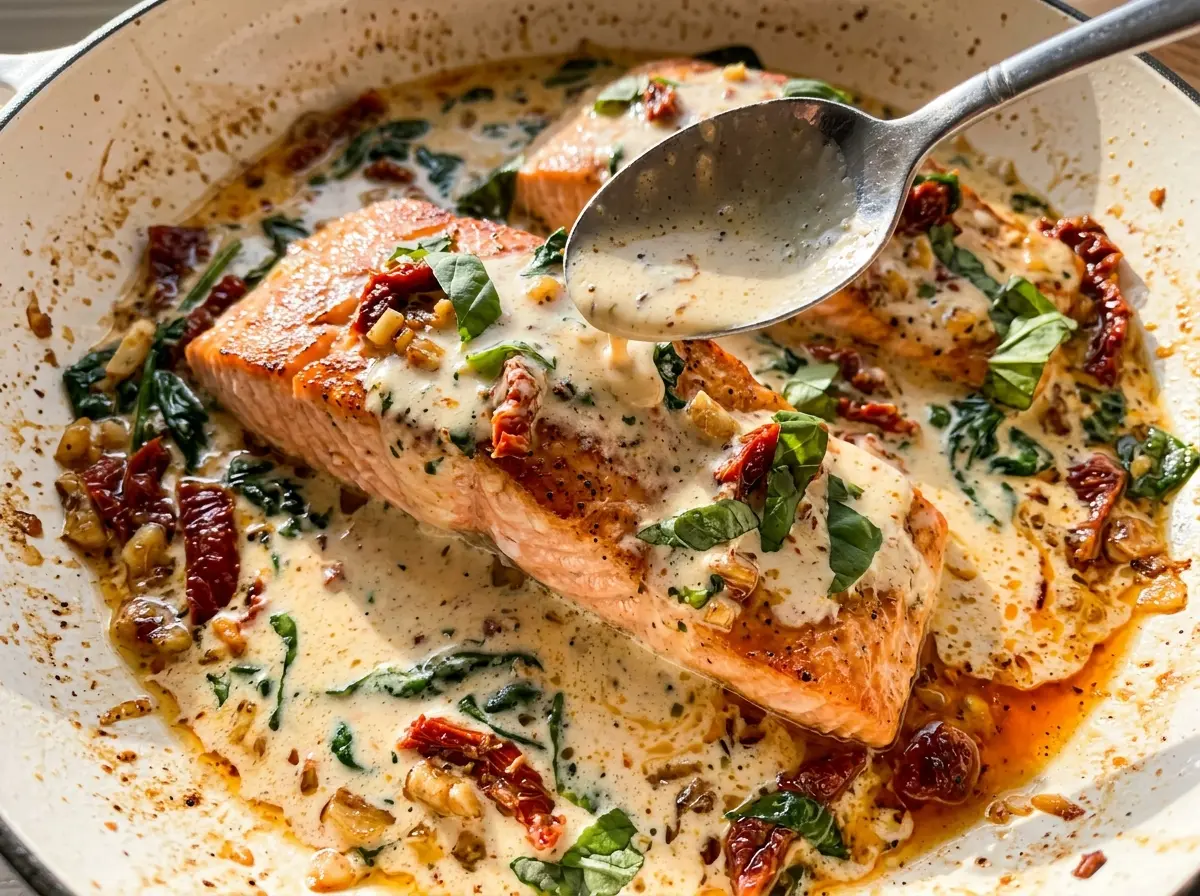
The salmon hits the hot skillet with a quiet sizzle, and the first thing I watch is the edge: it should turn opaque as the fish cooks, without the fillet drying out before the center is ready. Marry Me Salmon brings that seared fish together with a creamy sauce built in the same pan, so dinner feels special without asking you to manage a long list of steps.
I like this method because the salmon cooks first, then waits on a plate while the sauce comes together. Garlic gets a brief turn in butter, flour gives the broth and cream enough body to cling to the fish, and sun-dried tomatoes add a concentrated tang. A little red pepper keeps the richness from feeling heavy. The finished salmon is tender under a spoonful of Parmesan cream and bright tomato.
Kitchen Note
Let the sauce become slightly thickened before stirring in the Parmesan. It will gain a little more body as the cheese melts, so waiting for a very thick sauce first can leave it heavier than you want.
Save Marry Me Salmon for a night when creamy Parmesan sauce and tender seared salmon sound just right.
Why This Sauce Thickens Before the Parmesan Goes In
A creamy skillet sauce can turn thin and slide right off the salmon if it relies on cheese alone for body. Here, flour cooks briefly in the garlic butter before the broth and cream go in. That short cook gives the sauce a base that can thicken as it simmers, rather than asking the Parmesan to do all the work.
Whisk the liquids in gradually, not all at once. The flour disperses more evenly that way, which means fewer little lumps in the finished sauce. The sun-dried tomatoes and seasonings go in after the liquid, so they simmer in the creamy base while it thickens. Parmesan comes last, once the sauce has had a few minutes to settle into a lightly coating consistency. That order is what gives you a sauce that clings to the salmon instead of pooling thinly around it.
Why the Salmon, Tomatoes, and Parmesan Need Different Choices
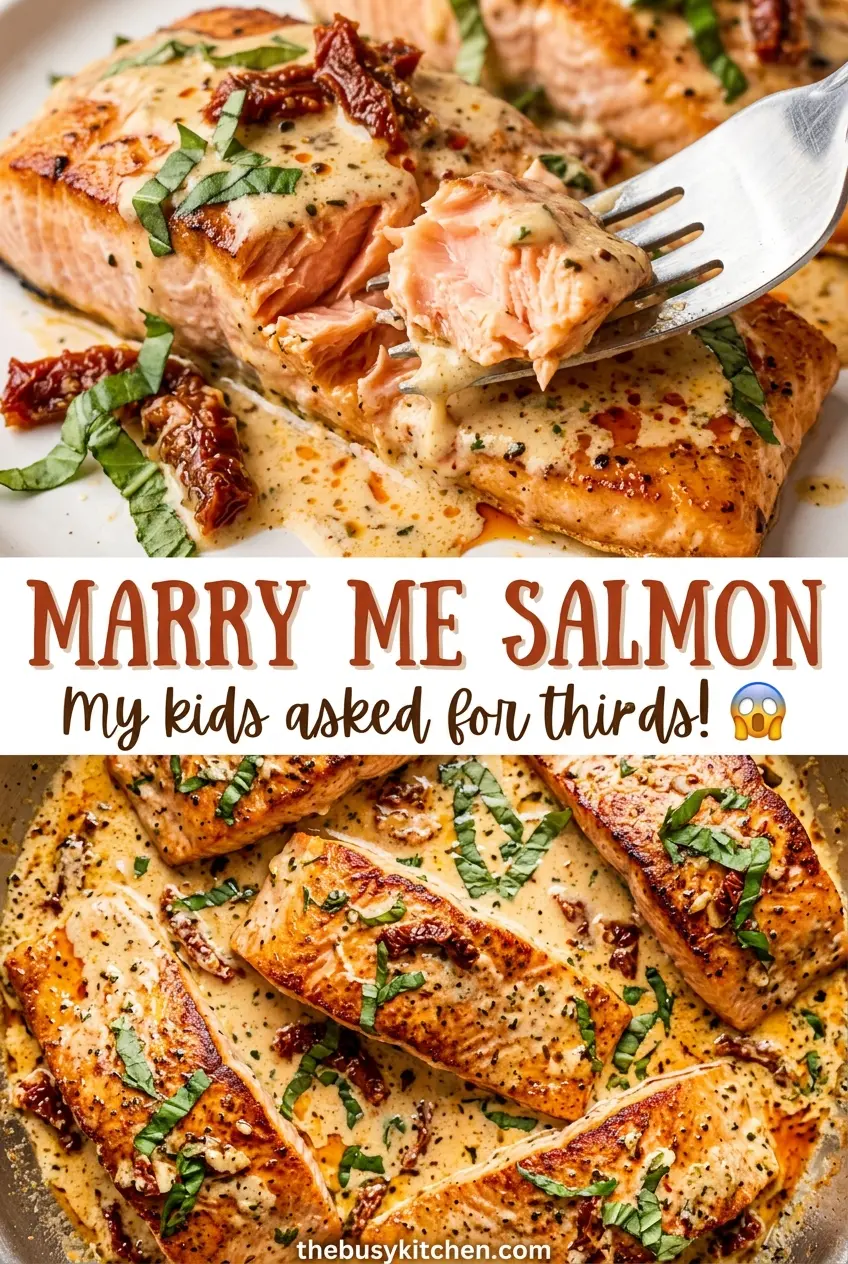
- Salmon fillets — Fillets about an inch thick cook at a useful pace: the outside can sear while the middle stays tender. Choose even-sized pieces so they finish close together. Fresh or thawed fillets both work; pat them dry before seasoning so excess surface moisture doesn’t interfere with browning.
- Sun-dried tomatoes packed in oil — They bring a concentrated sweet-tart flavor and a soft, chewy bite that suits the cream sauce. Drain them before chopping so extra oil doesn’t make the sauce greasy. The oil-packed kind is convenient here; dry-packed tomatoes need soaking before they’re tender enough for this sauce.
- Heavy cream — Its fat gives the sauce a rich, smooth texture and helps it simmer without becoming watery. Milk isn’t an even swap: it makes a thinner sauce and is more likely to split during simmering. Save the cream for this dish rather than trying to compensate with extra flour.
- Finely grated Parmesan — Fine shreds melt quickly and evenly into the warm sauce. A block grated just before cooking gives the smoothest result, though finely grated packaged Parmesan is a practical option. Coarse shreds take longer to melt and can leave the sauce less uniform.
- Italian seasoning and red pepper flakes — Together they season the sauce without covering up the salmon or tomato. Dried Italian seasoning is a good pantry choice, and the flakes add a gentle heat. If you prefer a mild sauce, leave out the flakes rather than changing the seasoning blend.
How to Sear the Salmon and Build a Smooth Skillet Sauce
Dry the Fillets, Then Sear Until Just Cooked
Pat the salmon dry and season both sides with kosher salt and black pepper. Heat olive oil in a 12-inch skillet over medium-high until it shimmers, then add the fillets, skin-side down if they’re skin-on. Cook for 4–5 minutes, flip, and cook for another 2–4 minutes, checking the thickest part with an instant-read thermometer. Transfer the salmon to a plate when it reaches 145°F; don’t rely on the clock alone if your fillets differ in thickness.
Cook the Garlic and Flour Before Adding Liquid
Reduce the heat to medium and melt the butter in the same skillet. Stir in the minced garlic and cook for 30 seconds, just until fragrant; garlic can turn bitter if it browns. Add the flour and cook for 1 minute, stirring so it blends with the butter. Keep the heat moderate, since scorching the flour at this stage can give the sauce an unpleasant toasted taste.
Simmer the Sauce, Then Warm the Salmon Through
Gradually whisk in the chicken broth and heavy cream until the flour mixture looks smooth. Stir in the chopped sun-dried tomatoes, Italian seasoning, and red pepper flakes, then simmer for 3–4 minutes, stirring, until slightly thickened. Stir in the Parmesan until it melts, then return the salmon to the skillet and spoon sauce over the fillets. Warm everything for 1–2 minutes and serve while the sauce is silky.
Easy Ways to Adapt Marry Me Salmon Without Losing the Sauce
Make It Gluten-Free
Replace the all-purpose flour with the same amount of a cup-for-cup gluten-free flour blend designed for thickening. Cook it in the butter as you would the regular flour, then whisk in the liquids gradually. The sauce may feel a touch less silky, but it will still thicken and cling to the salmon.
Trade the Tomatoes for Roasted Red Peppers
Use an equal amount of drained, chopped jarred roasted red peppers in place of the sun-dried tomatoes. The sauce will be milder and sweeter, without the same concentrated tang or chewy tomato pieces. Drain them well so their packing liquid doesn’t thin the cream.
Keep the Sauce Mild
Leave out the red pepper flakes for a gentler, more purely creamy tomato sauce. The Italian seasoning and Parmesan still give it plenty of savory character, but you won’t get the little flicker of heat at the end.
Storage and Reheating
- Refrigerator: Store leftovers in a covered container for up to 3–4 days. The sauce will thicken as it chills, and the salmon will be firmer the next day.
- Freezer: Freeze portions in an airtight container for up to 2–3 months for best quality. Cream sauces can separate after freezing, and the salmon’s texture will be softer once thawed; thaw overnight in the refrigerator.
- Reheating: Warm gently in a covered skillet over low heat, loosening the sauce with a small splash of chicken broth if needed. Reheat leftovers to 165°F; high heat can make the salmon dry and cause the sauce to separate.
Questions That Come Up When Cooking Marry Me Salmon
Marry Me Salmon
Ingredients
Equipment
Method
- Pat the salmon dry and season both sides with the salt and pepper.
- Heat the olive oil in a 12-inch skillet over medium-high heat until shimmering.
- Add the salmon, skin-side down if using skin-on fillets, and cook for 4–5 minutes.
- Flip the salmon and cook for 2–4 minutes, until the thickest part reaches 145°F; transfer to a plate.
- Reduce the heat to medium and melt the butter in the same skillet.
- Add the garlic and cook for 30 seconds.
- Stir in the flour and cook for 1 minute.
- Gradually whisk in the chicken broth and heavy cream.
- Stir in the sun-dried tomatoes, Italian seasoning, and red pepper flakes.
- Simmer for 3–4 minutes, stirring, until slightly thickened.
- Stir in the Parmesan until melted.
- Return the salmon to the skillet and spoon the sauce over it.
- Warm for 1–2 minutes, then serve.