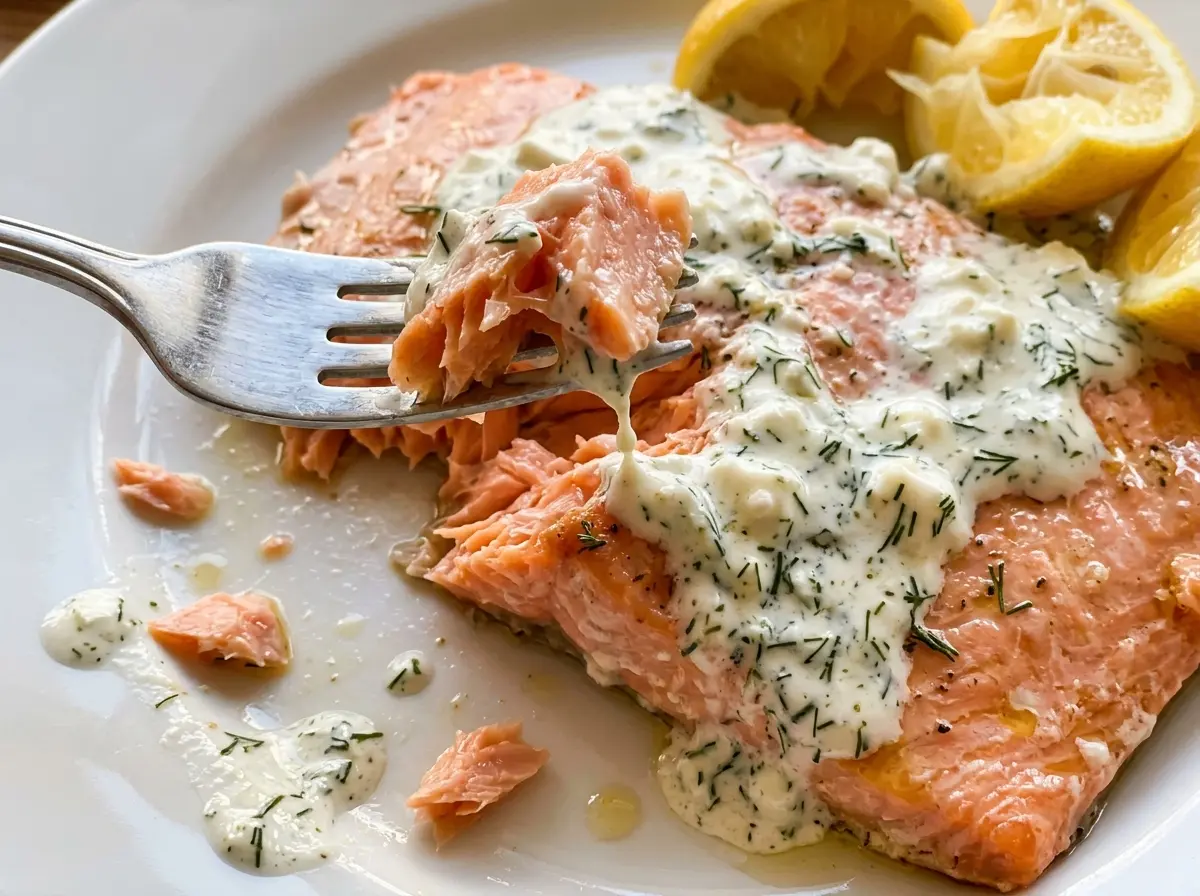
As the baking sheet comes out, the salmon should be opaque around the edges while the thickest part still flakes easily with a fork. I check that thickest part rather than guessing from color alone, then let the fillets rest before serving. Salmon with Feta Dill Sauce pairs rich, tender fish with a cool sauce that’s tangy from Greek yogurt and lemon, with feta adding a salty bite.
I stir the sauce together while the oven heats, so there’s no last-minute chopping once the salmon is ready. Keeping the sauce separate from the oven is part of what makes the combination work: the dill and lemon stay fresh-tasting, and the yogurt keeps its thick, creamy texture. The result is a simple baked salmon dinner with a bright, savory spoonful alongside every forkful.
Kitchen Note
A few feta flecks in the sauce are a good thing. I stir just until everything is combined instead of chasing a perfectly smooth texture; those little salty crumbles give each bite more character.
Save Salmon with Feta Dill Sauce for a weeknight dinner that pairs tender baked fish with a cool, tangy feta sauce.
Why the Feta Dill Sauce Goes on After Baking
The sauce and salmon do better when they’re treated as two separate parts of the plate. Greek yogurt brings a cool, tangy contrast to warm salmon, while dill and lemon keep that richness from feeling heavy. If you spread the yogurt mixture over the fish before it goes in the oven, the sauce is heated along with it, and its fresh, cool character is lost.
Mixing the sauce in its own bowl also gives you control over how much goes with each serving. Some bites can have a generous spoonful; others can have just a little. That balance matters because feta is salty and salmon is naturally rich. Serve the sauce alongside the fish or spoon it over the fillets at the table, rather than baking it on top. The fish gets a clean, savory finish from its simple seasoning, and the sauce brings the sharper, creamy note where you want it.
This approach is especially useful if the salmon finishes toward the early end of its baking window. The sauce is already ready, so you can take the fish out, let it rest, and serve without trying to stir a dressing while watching the oven.
What Makes the Salmon and Feta Sauce Work Together

- Skin-on salmon — The skin helps protect the flesh as it bakes and makes the fillets easier to handle on the parchment. Choose evenly thick pieces so they cook at a similar pace; the skin doesn’t need to be crisp for this method.
- Plain Greek yogurt — Its thick consistency gives the sauce enough body to sit beside the fish instead of running across the plate. Regular yogurt is thinner and won’t give the same creamy result, so use plain Greek yogurt here.
- Feta cheese — Feta contributes the sauce’s salty, tangy bite. A block crumbled just before mixing tends to be softer than dry pre-crumbled feta, though either form works.
- Fresh dill — Fresh dill gives the sauce its clean, grassy aroma. Since it’s stirred in without cooking, dried dill won’t taste quite the same; fresh is the better choice for this version.
- Lemon juice — Lemon lifts the richness of the yogurt and feta. Fresh juice tastes especially bright, but bottled lemon juice is fine if that’s what you have.
- Garlic and olive oil — A small fresh garlic clove adds a savory edge to the sauce, while olive oil helps coat the salmon before seasoning. A standard olive oil is all you need; save a more expensive finishing oil for a dish where its flavor won’t be baked.
How to Bake the Salmon Without Guessing at Doneness
Stir the Feta Dill Sauce Together
In a small bowl, stir the Greek yogurt, crumbled feta, chopped fresh dill, lemon juice, and finely grated garlic until combined. The sauce should look creamy with feta pieces throughout, not whipped smooth. If the garlic is grated finely, it disperses through the yogurt instead of landing in one strong bite. Set the bowl aside while you prepare the fish.
Heat the Oven and Line the Pan
Heat the oven to 400°F and line a rimmed baking sheet with parchment paper. The rim catches any liquid released as the salmon bakes, and the parchment helps keep the skin from sticking. Let the oven finish heating before the pan goes in so the fillets start baking at the intended temperature. Arrange the lined sheet where it’s easy to reach before handling the fish.
Season Skin-Side Down
Arrange the salmon fillets skin-side down on the prepared baking sheet. Brush the tops with olive oil, then season with kosher salt and black pepper. Keep the pieces in a single layer with space around them; crowding can make the fish cook less evenly. The skin stays against the parchment, and the seasoned flesh faces up.
Check the Thickest Part
Bake for 12 to 15 minutes, then check the thickest part of a fillet. It should reach 145°F and flake easily with a fork. The thinner edges will look opaque first, so don’t use those as your only cue. If the center hasn’t reached temperature, return the pan to the oven and check again rather than relying on the clock alone.
Rest and Serve with the Sauce
Rest the salmon for 3 minutes after it comes out of the oven. That brief pause gives the fillets time to settle before you lift them from the parchment. Serve with the feta dill sauce, either alongside or spooned over the top. Keep the sauce out of the oven so it stays cool and creamy against the warm fish.
Two Simple Ways to Change the Sauce’s Texture
Keep the Feta in Bigger Crumbles
For a more pronounced salty bite, crumble the feta into larger pieces and stir gently into the yogurt mixture. The sauce will be less uniform, with distinct pockets of feta alongside the dill and lemon.
Make the Sauce More Evenly Blended
For a more cohesive texture, press the crumbled feta against the side of the bowl as you stir it into the yogurt. The flavor stays the same, but the finished sauce spreads more evenly over each salmon fillet.
Storage and Reheating
- Refrigerator: Store the salmon and sauce separately in airtight containers for up to 3 days. The chilled fish will firm up, while the sauce stays thick.
- Freezer: The cooked salmon freezes best without the sauce. Seal it in a freezer-safe container for up to 2 months for best quality; the yogurt and feta sauce may separate and turn grainy after freezing.
- Reheating: Warm the salmon covered in the microwave at reduced power in short bursts, until it reaches 165°F. High heat can dry the fish quickly, so avoid reheating it for a long stretch without checking.
Questions That Come Up When Baking Salmon with Feta Dill Sauce
Salmon with Feta Dill Sauce
Ingredients
Equipment
Method
- Stir the Greek yogurt, feta, dill, lemon juice, and garlic together in a small bowl until combined.
- Heat the oven to 400°F.
- Line a rimmed baking sheet with parchment paper.
- Arrange the salmon skin-side down on the baking sheet, brush with olive oil, and season with salt and pepper.
- Bake for 12 to 15 minutes, until the thickest part reaches 145°F and the fish flakes easily with a fork.
- Rest the salmon for 3 minutes.
- Serve the salmon with the feta dill sauce.