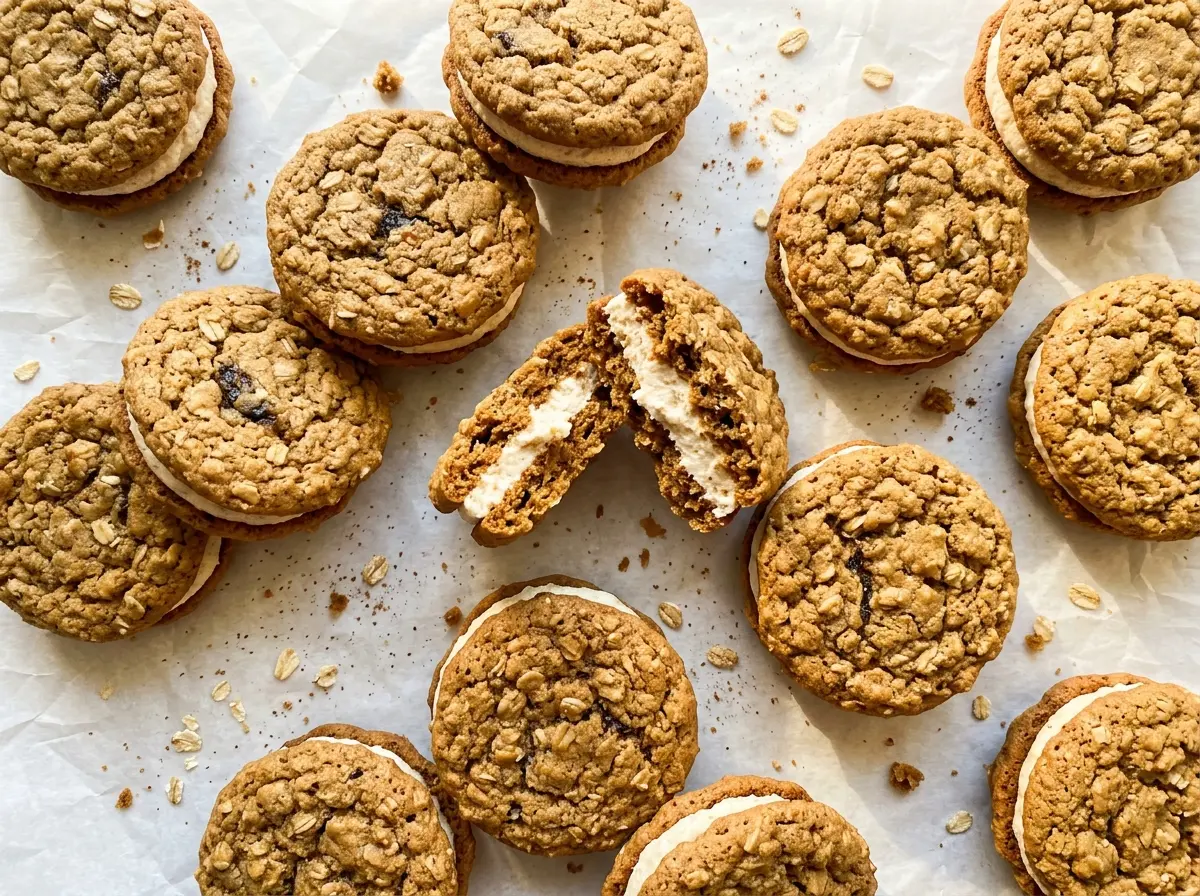
The smell of ginger and cinnamon comes up as soon as the butter, brown sugar, and molasses are beaten together. Then the oats go in, and the dough turns into something sturdy enough to hold a generous marshmallow-creme middle without losing its soft, chewy bite. These gingerbread oatmeal cream pies taste warmly spiced, but the sweetness stays rounded rather than sharp.
I like the contrast in every bite: a tender cookie with visible oats, then a smooth, fluffy filling that makes the two cookies feel like one treat. Unsulphured molasses gives the cookies their familiar gingerbread depth, while the old-fashioned oats bring more chew than a plain soft cookie. Once assembled, the pies are neat enough to pack and still feel like a proper homemade cookie.
Kitchen Note
The butter should be soft enough to take a light fingerprint, but it shouldn’t look shiny or melted. If it’s greasy, it won’t beat up fluffy with the brown sugar, and the cookies can spread more than you want.
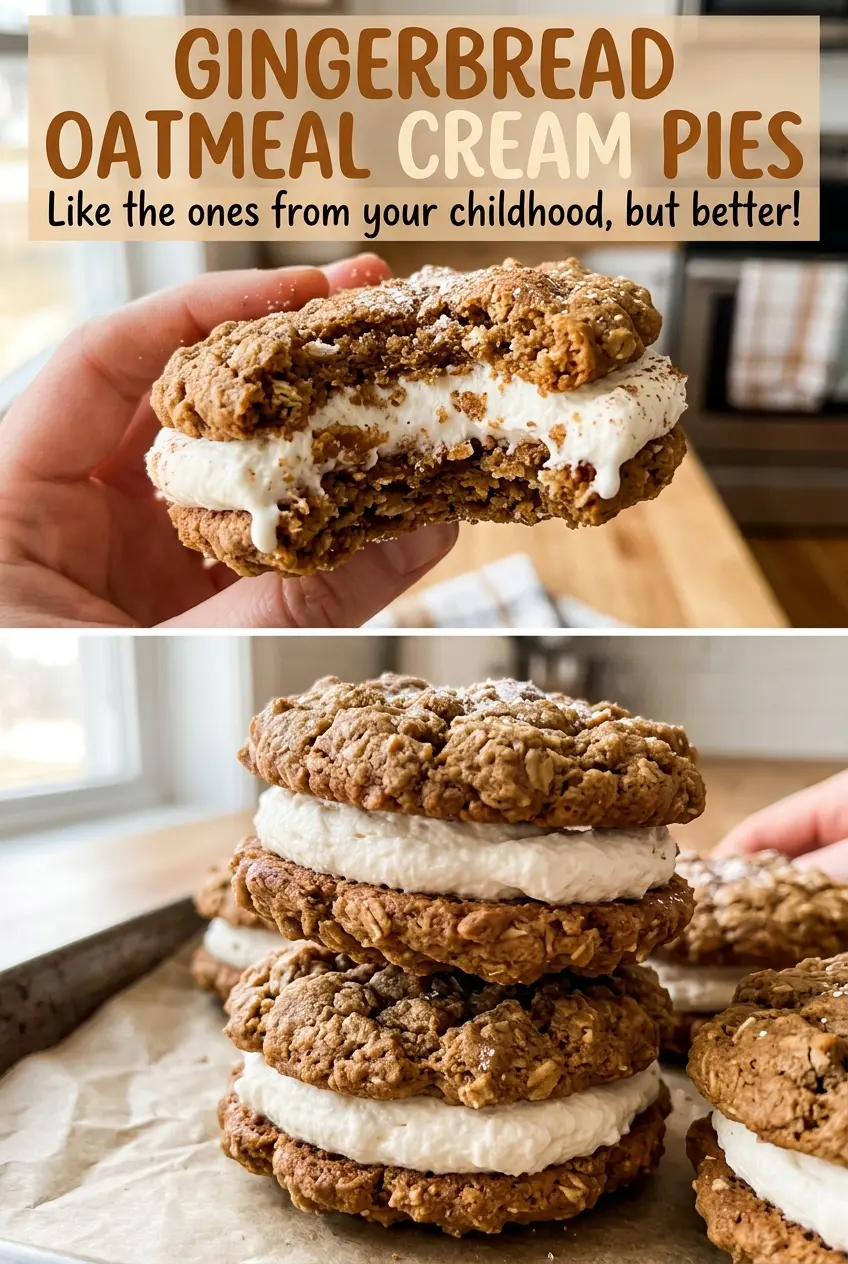
Save these Gingerbread Oatmeal Cream Pies for a chewy, warmly spiced cookie with a fluffy marshmallow-creme center.
Why This Molasses Oat Dough Needs Its Covered 30-Minute Chill
Oatmeal cookie dough can go from pleasantly chewy to thin and dry when it spreads too quickly. Here, chilling gives the butter time to firm back up after mixing, so the scoops hold their shape better in the oven. The oats also sit in the damp dough while it rests, instead of meeting the heat before they’ve had a chance to absorb some moisture.
Cover the bowl before it goes into the refrigerator. An uncovered surface can dry out, leaving little firm bits in dough that should scoop evenly. The wait is short, but it makes portioning much less messy and helps the cookies bake into substantial rounds that are easy to pair as sandwiches. Don’t shorten the chill just because the dough looks thick already; the consistency of the mixed dough doesn’t tell you how it will spread once warm.
This balance matters especially in a sandwich cookie. Thin, crisp edges can crack when you press the top cookie onto the filling, while a cookie with too much spread leaves a flatter, less chewy bite. A covered rest gives this oat-heavy dough a better chance of baking into cookies with enough body to hold the filling.
Why Old-Fashioned Oats and Unsulphured Molasses Matter Here
- Unsulphured molasses — It brings the deep, mellow sweetness that makes these taste like gingerbread. Choose the regular unsulphured kind; blackstrap is much more bitter and intense for this dough, and there’s no simple one-for-one swap that gives the same result.
- Old-fashioned rolled oats — Their larger flakes give the cookies their hearty chew and texture. Quick oats absorb moisture differently and make a more compact cookie, so stick with rolled oats for the texture here. A basic store brand is fine; freshness matters more than a premium label.
- Ground ginger, cinnamon, and cloves — Together they give the molasses a warm spice backbone, with ginger leading and cloves adding a deeper note. If your spices have been open for a long time and smell faint, the baked cookies will taste muted; fresh, fragrant jars make a noticeable difference.
- Unsalted butter and light brown sugar — Butter gives the cookie dough its rich base, and brown sugar contributes moisture along with its caramel-like sweetness. Softened butter should still hold its shape; it doesn’t need to be a specialty brand to cream well.
- All-purpose flour and baking soda — Flour gives the oatmeal dough structure, while baking soda helps it rise and spread in the oven. Standard all-purpose flour is the right choice for the intended texture; a self-rising flour isn’t a direct substitute because it includes leavening and salt.
- Vegetable shortening and marshmallow creme — Shortening helps the filling stay fluffy and hold its shape between the cookies, while marshmallow creme gives it that soft, stretchy sweetness. Use a fresh jar of creme so it beats smoothly; the shortening doesn’t need to be a premium brand.
From Molasses Dough to Marshmallow-Creme Centers
Beat the Butter Base Until Fluffy
Heat the oven to 350°F and line two rimmed baking sheets with parchment paper. Beat the softened butter and packed light brown sugar in a large bowl with an electric mixer on medium speed for about 2 minutes, until the mixture looks fluffy. Beat in the molasses, egg, and vanilla until combined. Scrape the bowl if a streak of butter or molasses is clinging to the sides, so the dough doesn’t end up uneven.
Mix the Oats In, Then Chill the Dough
Whisk the flour, baking soda, ginger, cinnamon, cloves, and salt in a medium bowl, then stir in the oats. Add the dry mixture to the butter mixture and mix on low just until no dry streaks remain; overmixing can make the cookies tougher. Cover the dough and refrigerate it for 30 minutes. It should be firm enough to portion neatly when it comes out.
Bake Until the Edges Set
Scoop the dough into 24 portions of about 1 1/2 tablespoons each, placing 12 on each prepared sheet with about 2 inches between them. Bake both sheets for 10–12 minutes, switching their rack positions and rotating them front to back halfway through. The edges should look set while the centers still look slightly soft; don’t wait for the centers to look completely firm in the oven. Cool the cookies on the baking sheets for 5 minutes, then transfer them to a wire rack to cool completely.
Make the Filling and Sandwich the Cookies
Beat the shortening and powdered sugar in a medium bowl on low speed until combined, then beat in the marshmallow creme until the filling is smooth and fluffy. Spread about 1 tablespoon of filling on the flat side of 12 completely cooled cookies. Top each with one of the remaining cookies, flat sides against the filling. Let the assembled pies stand for 15 minutes so the filling can set before you move or pack them.
Three Ways to Adjust These Gingerbread Oatmeal Cream Pies
A deeper brown-sugar note
Use dark brown sugar in place of the light brown sugar, keeping the same amount. It adds a more pronounced molasses-like depth and makes the gingerbread notes taste a little darker, while the cookies stay chewy.
A gluten-free batch
Replace the all-purpose flour with the same amount of a measure-for-measure gluten-free baking blend, and use certified gluten-free rolled oats. The cookies may be a little more delicate, so let them cool fully on the baking sheets before transferring them to a rack.
A butter-based filling
Swap the shortening for the same amount of softened unsalted butter. The filling tastes richer and more buttery, but it will be softer and less stable at room temperature than the shortening version; refrigerate the assembled pies to help it hold.
Storage and Reheating
- Refrigerator: Store the assembled pies in an airtight container for up to 5 days. The cookies soften a little, and the filling firms when cold.
- Freezer: Freeze the pies in a single layer until firm, then pack them in an airtight container with parchment between layers for up to 2 months. Thaw while covered at room temperature.
- Reheating: These are best brought back to room temperature, not heated. Microwaving a filled pie can make the marshmallow creme runny and push it out between the cookies.
Questions I Get About These Gingerbread Oatmeal Cream Pies
Gingerbread Oatmeal Cream Pies
Ingredients
Equipment
Method
- Heat the oven to 350°F.
- Line two rimmed baking sheets with parchment paper.
- Beat the softened butter and packed light brown sugar in a large bowl with an electric mixer on medium speed until fluffy, about 2 minutes.
- Beat in the molasses, egg, and vanilla until combined.
- Whisk the flour, baking soda, ginger, cinnamon, cloves, and salt in a medium bowl.
- Stir the oats into the flour mixture.
- Add the dry ingredients to the butter mixture and mix on low just until no dry streaks remain.
- Cover and refrigerate the dough for 30 minutes.
- Scoop the dough into 24 portions of about 1 1/2 tablespoons each and place 12 on each baking sheet, spaced about 2 inches apart.
- Bake both sheets for 10–12 minutes, switching their rack positions and rotating them front to back halfway through, until the edges are set and the centers look slightly soft.
- Cool the cookies on the baking sheets for 5 minutes.
- Transfer the cookies to a wire rack and cool completely.
- Beat the shortening and powdered sugar in a medium bowl on low speed until combined.
- Beat in the marshmallow creme until smooth and fluffy.
- Spread about 1 tablespoon of filling on the flat side of 12 cookies.
- Top with the remaining cookies, flat sides against the filling.
- Let the pies stand for 15 minutes to set.


