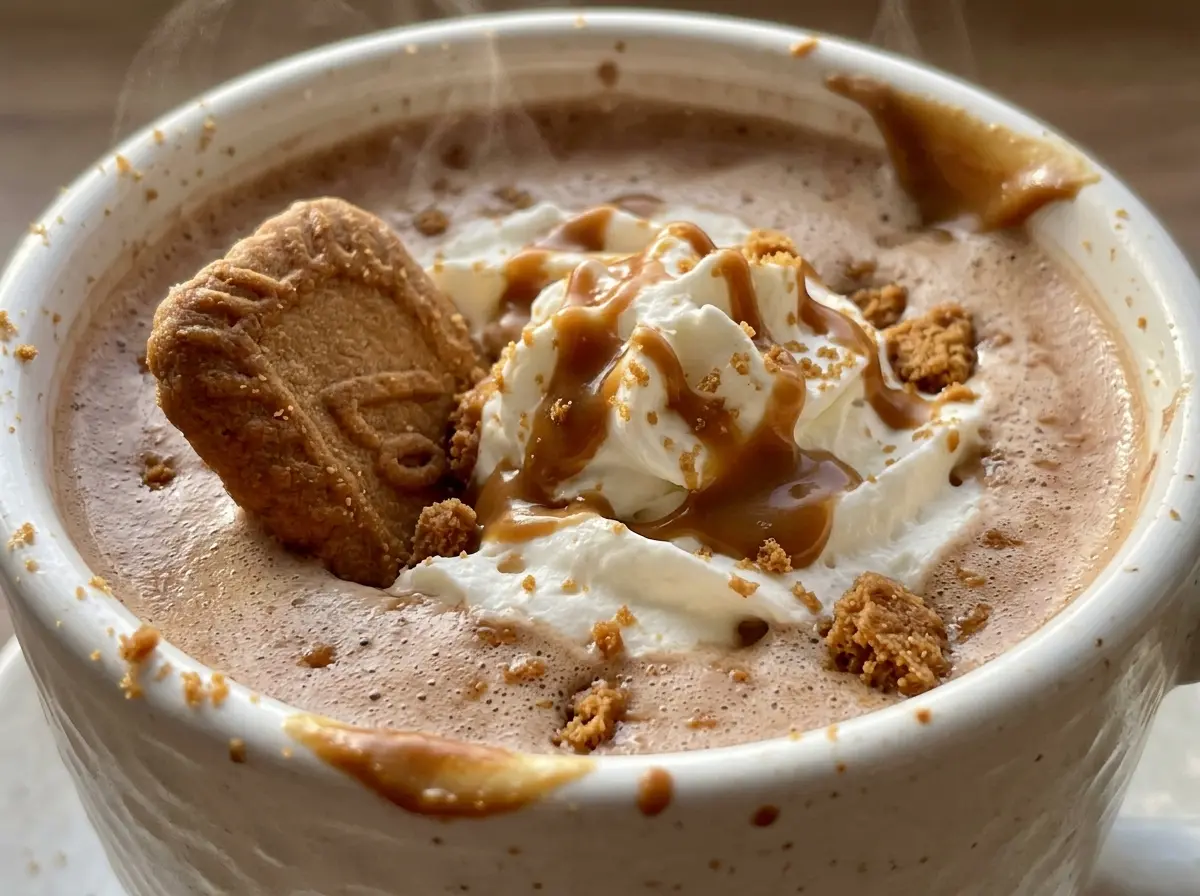
The milk starts steaming before the chocolate has even hit the pan, and that’s the moment to slow down. I used to crank the heat to hurry things along; it only made the milk threaten to boil before the Biscoff and chocolate had melted smoothly. Now I keep the heat gentle and let these cups of Biscoff hot chocolate come together at their own pace.
The balance is what makes this drink work: cookie butter brings its sweet, spiced flavor, while semisweet chocolate and unsweetened cocoa keep the cup tasting like hot chocolate instead of melted candy. I finely chop the chocolate so it can melt quickly, and whisk everything together over low heat until the surface looks even and glossy. A little vanilla stirred in off the heat rounds out each warm, chocolatey sip.
Kitchen Note
Finely chop the semisweet chocolate before it goes into the pan. Small pieces melt during the low-heat whisking, so you won’t be tempted to turn up the burner when a larger chunk takes its time.
Save this Biscoff hot chocolate for a cozy mug with cookie-butter sweetness and a deep semisweet chocolate finish.
Why This Cup Needs Both Cocoa Powder and Melted Chocolate
Cookie butter is rich and sweet, so relying on melted chocolate alone can leave the drink tasting heavy. Unsweetened cocoa brings concentrated chocolate flavor without adding more sugar. Semisweet chocolate contributes a rounder taste and a fuller texture as it melts into the milk. Together, they keep the Biscoff recognizable while making the drink taste like hot chocolate first.
The salt has a quiet job here, too. It sharpens the contrast between the sweet cookie butter and the darker chocolate, rather than making the drink taste salty. I wouldn’t skip either kind of chocolate: leaving out the cocoa softens the chocolate flavor, while leaving out the chopped chocolate makes the drink less rich. The combination is what gives each mug its balanced, creamy finish.
What Each Ingredient Adds to a Biscoff Hot Chocolate

- Biscoff cookie butter — Smooth cookie butter blends into the warm milk and gives the drink its distinctive spiced, caramel-like taste. Use a fresh, well-stirred jar so the spread is easy to whisk in; another smooth speculoos cookie butter can stand in, though its sweetness and spice may vary.
- Semisweet chocolate — This adds richness and a mellow chocolate backbone. A good-quality baking bar is easy to chop finely, but standard semisweet chocolate works well; bittersweet chocolate is a useful swap if you prefer a more intense, less sweet cup.
- Unsweetened cocoa powder — Cocoa deepens the chocolate taste without making the drink sweeter. Regular unsweetened cocoa is a reliable choice, and Dutch-process cocoa can be used in the same amount for a smoother, darker note.
- Whole milk — Its fat gives the hot chocolate a rounded, creamy feel. For a dairy-free version, unsweetened oat milk is a practical replacement, though the drink will be a little less rich; the full adaptation is below.
- Vanilla and kosher salt — Vanilla softens the sharper chocolate notes, while salt keeps the sweetness in check. Add the vanilla after taking the pan off the heat so its aroma stays noticeable; kosher salt dissolves easily as you whisk.
How to Melt the Cookie Butter Without Scorching the Milk
Warm the Milk Until Steam Appears
Pour the whole milk into a 3-quart saucepan and set it over medium heat. It should take 4 to 6 minutes to become steaming, with small bubbles gathering around the edges. Keep an eye on the surface rather than waiting for a full boil; boiling milk can scorch on the bottom and makes the next step harder to control. If the edges bubble vigorously, lower the heat.
Whisk Until the Chocolate Mixture Turns Smooth
Reduce the heat to low, then whisk in the Biscoff, finely chopped chocolate, cocoa powder, and salt. Keep the whisk moving across the bottom and around the sides of the pan so the cookie butter and cocoa don’t settle in one spot. The mixture should become smooth as the chocolate melts, which takes 2 to 3 minutes. If you still see chocolate pieces or streaks of cookie butter, continue whisking over low heat until they disappear.
Stir in Vanilla Off the Heat
Once the mixture is melted and even, remove the saucepan from the heat. Stir in the vanilla until it’s incorporated, then serve the hot chocolate while it’s warm. Don’t add the vanilla while the pan is still over the burner; stirring it in off the heat keeps its fragrance from fading as the drink finishes. Give the mixture one last stir before pouring if it has been sitting in the pan.
Two Useful Ways to Adapt Your Biscoff Hot Chocolate
Make It Dairy-Free With Oat Milk
Replace the whole milk with unsweetened oat milk and use dairy-free semisweet chocolate. Whisk the mixture over low heat just as you would with dairy milk; the finished drink will be smooth and cookie-spiced, with a lighter body than the original.
Choose Bittersweet Chocolate for a Darker Mug
Use the same weight of bittersweet chocolate in place of semisweet. The chocolate flavor will come through more strongly and the drink will taste less sweet, while the Biscoff still brings its familiar spiced-cookie character.
Storage and Reheating
- Refrigerator: Store leftovers in a covered container for 3 to 4 days. The drink may thicken or separate as it chills; that’s normal for a milk-based hot chocolate.
- Freezer: I don’t recommend freezing it. The milk and chocolate can separate as they thaw, leaving a grainy texture.
- Reheating: Warm it gently in a saucepan over low heat, whisking until smooth. Don’t let it boil, which can scorch the milk and make the texture less pleasant.
Questions That Come Up When Making Biscoff Hot Chocolate
Biscoff Hot Chocolate
Ingredients
Equipment
Method
- In a 3-quart saucepan over medium heat, warm the milk until steaming and small bubbles form around the edges, 4 to 6 minutes; do not let it boil.
- Reduce the heat to low.
- Whisk in the Biscoff, chocolate, cocoa powder, and salt until melted and smooth, 2 to 3 minutes.
- Remove the saucepan from the heat.
- Stir in the vanilla.
- Serve hot.