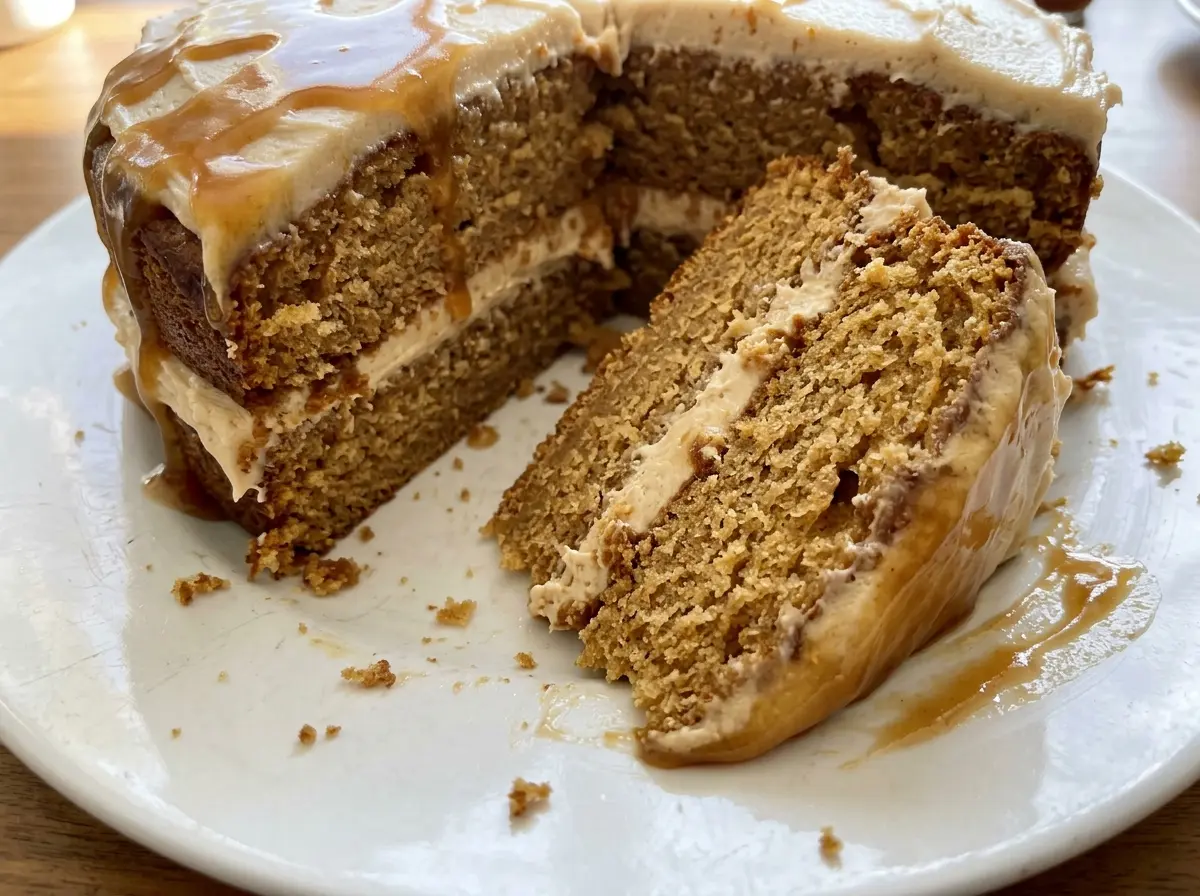
The first thing I notice when this cake comes out of the oven is the maple smell: warm and mellow, not sugary in the way a frosted cake can be. The top should look set, while a toothpick in the center comes out with a few moist crumbs. That’s the cue I trust for Maple Cake, because waiting for a completely dry toothpick can leave the crumb drier than it needs to be.
This is a simple pan cake, but the batter has more going on than a basic butter cake. Pure maple syrup brings both sweetness and liquid, while sour cream gives the crumb tenderness and a little tang. I like that the maple flavor comes through without needing a glaze or frosting. Each square tastes rich but still light enough to serve after a meal, with a soft, close crumb and a delicate golden top.
Kitchen Note
Let the cake cool in the pan for at least 20 minutes before slicing. It’s soft while warm, and that short rest helps the squares come out without tearing.
Save this Maple Cake for a soft, tender slice with pure maple flavor and a golden top.
Maple Syrup Makes This Batter Wetter Than a Plain Butter Cake
Pure maple syrup isn’t just a flavoring here; it’s also a liquid sweetener. That extra moisture changes how the batter behaves compared with a cake sweetened only with granulated sugar. Brown sugar adds a little molasses depth, but it can’t provide the same maple character or liquid balance. The sour cream helps the cake stay tender rather than turning dense, and its acidity works alongside the baking soda.
That balance is why the batter comes together in alternating additions instead of getting all the liquid at once. The flour mixture gives the wet ingredients something to bind with, and beginning and ending with flour helps keep the mixture cohesive as you combine it. Maple syrup varies in intensity by grade and brand, so the maple note may taste a little more subtle or pronounced from one bottle to another. The cake is meant to be gently maple-forward, not as sweet or strongly flavored as a frosted layer cake.
What the Maple, Sour Cream, and Brown Sugar Each Bring
- Pure maple syrup — Use real maple syrup for its distinctive woodsy sweetness; pancake syrup won’t give the same flavor. A darker, more robust pure syrup brings a deeper maple note, while a lighter one tastes more delicate.
- Sour cream — Its fat and acidity keep the cake soft and support the baking soda. Full-fat sour cream gives the most reliable tender texture; plain full-fat Greek yogurt works as a measure-for-measure substitute, though its tang can be more noticeable.
- Unsalted butter — Softened butter creams smoothly with the brown sugar and helps build the cake’s fine crumb. Let it soften until it gives slightly when pressed, but don’t use melted butter; melted butter won’t trap air the same way.
- Light brown sugar — It contributes moisture and a mild molasses note that rounds out the maple. Dark brown sugar is a workable swap if you want a deeper, less delicate caramel flavor.
- Eggs — Room-temperature eggs blend more evenly into the creamed butter than cold ones. They help bind the batter and give the cake structure as it bakes.
- All-purpose flour and leaveners — All-purpose flour gives the cake enough structure to hold its soft crumb. Baking powder and baking soda work together here; measure them carefully rather than increasing either one for extra lift.
- Vanilla extract — Vanilla rounds out the maple and brown sugar without taking over. Pure or imitation vanilla both work in this baked cake, so use what you keep on hand.
Build a Smooth Batter Before It Goes Into the Pan
Prepare the pan and dry ingredients
Heat the oven to 350°F and coat a 9×13-inch baking pan with nonstick cooking spray. Whisk the flour, baking powder, baking soda, and fine salt in a medium bowl until the leaveners are evenly distributed. Breaking up any small flour or baking soda clumps now helps avoid pockets in the baked cake. Set the bowl aside while you cream the butter and sugar.
Cream the butter, sugar, and eggs
Beat the softened butter and packed light brown sugar in a large bowl with an electric mixer on medium speed for about 2 minutes. The mixture should look lighter and fluffy, not greasy or melted. Beat in the eggs one at a time, scraping down the bowl as needed so no butter mixture stays stuck to the sides. Adding them separately gives each egg time to blend in before the next goes in.
Alternate the flour and maple mixtures
Whisk the maple syrup, sour cream, and vanilla together in a separate bowl. Add that mixture and the flour mixture to the butter mixture in alternating additions, beginning and ending with the flour. Mix on low speed just until combined; stop when no dry flour remains rather than beating for a perfectly smooth batter. A few small irregularities are less of a problem than overmixing, which can make a cake tough.
Bake until the center gives the right cue
Spread the batter evenly in the prepared pan and bake for 30 to 35 minutes. The center should be set enough that a toothpick inserted there comes out with a few moist crumbs, not wet batter. Start checking near the shorter end of the baking range, since ovens vary. Cool the cake in its pan for at least 20 minutes before slicing.
Easy Swaps for a Different Maple Cake
Make It Gluten-Free with a 1-to-1 Baking Blend
Replace the all-purpose flour with a gluten-free 1-to-1 baking flour designed to replace wheat flour in cakes. The maple and sour cream still carry the flavor, but the crumb may be a little more delicate, so let the cake cool fully before cutting neat squares.
Use Dark Brown Sugar for a Deeper Finish
Swap the light brown sugar for the same amount of dark brown sugar. Its stronger molasses character makes the cake taste a little richer and less purely maple-forward, without changing the mixing method.
Storage and Reheating
- Refrigerator: Keep the cake covered in an airtight container for up to 5 days. The crumb firms up when chilled, so let a piece come to room temperature before serving.
- Freezer: It freezes well. Wrap individual pieces tightly and freeze in a sealed container for up to 2 months; thaw a piece overnight in the refrigerator or at room temperature.
- Reheating: The cake is best at room temperature, but you can warm a slice in the microwave for about 10 seconds. Avoid long bursts, which can dry out the edges before the center warms.
Questions That Come Up When Baking Maple Cake
Maple Cake
Ingredients
Equipment
Method
- Heat the oven to 350°F.
- Coat a 9x13-inch baking pan with nonstick cooking spray.
- Whisk the flour, baking powder, baking soda, and fine salt together in a medium bowl.
- Beat the softened butter and packed light brown sugar in a large bowl with an electric mixer on medium speed until light and fluffy, about 2 minutes.
- Beat in the eggs one at a time, scraping down the bowl as needed.
- Whisk the maple syrup, sour cream, and vanilla extract together in a separate bowl.
- Add the flour mixture and maple mixture to the butter mixture in alternating additions, beginning and ending with the flour, and mix on low just until combined.
- Spread the batter evenly in the prepared pan.
- Bake for 30 to 35 minutes, until a toothpick inserted in the center comes out with a few moist crumbs.
- Cool the cake in the pan for at least 20 minutes before slicing.


