The milk should be steaming before it comes off the stove, but it needs a few minutes to cool before the yeast goes in. That little pause sets the dough up for its first rise, and it’s one of the details that makes these Pioneer Woman Cinnamon Rolls tender instead of heavy. Once the yeast is foamy, the dough starts out soft and loose, then gets easier to handle after a rest in the refrigerator.
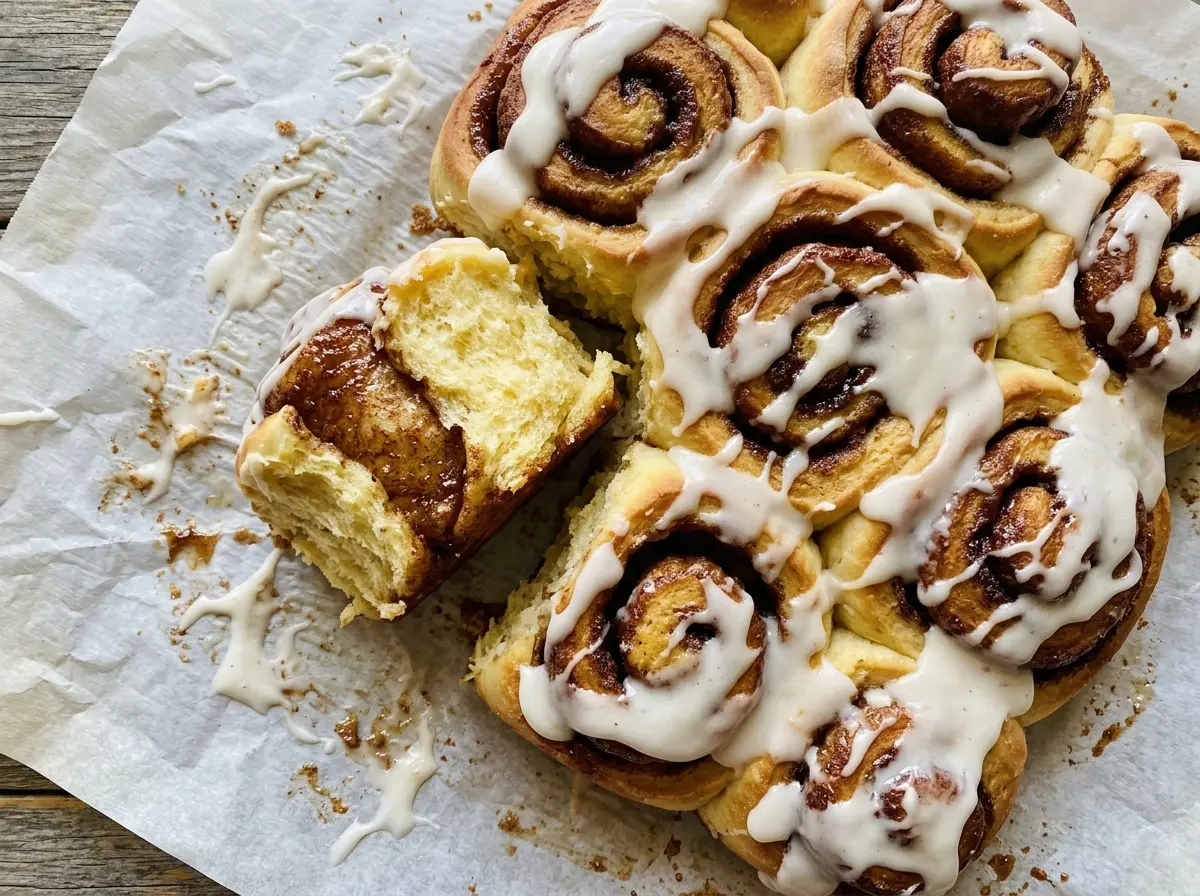
I like how the dough can chill for an hour or wait overnight, which gives you room to spread the work out. The filling is simple: melted butter, sugar, and cinnamon rolled into two neat logs, then sliced into 24 spirals. A coffee-and-maple icing goes on while the rolls are still warm, settling into the swirls without disappearing completely into the pan. Each bite is soft in the middle with a buttery cinnamon ribbon and a smooth, lightly coffee-scented finish.
Kitchen Note
I wait until the milk cools to 105 to 110°F before sprinkling on the yeast. Hotter milk can hurt the yeast, so I use a thermometer rather than guessing by touch.
Save these Pioneer Woman Cinnamon Rolls for a morning when you want soft spirals, cinnamon-sugar filling, and coffee-maple icing.
Why This Dough Gets Its Leaveners After the First Rise
The dough comes together in two stages, and that order changes how it handles. First, the milk mixture gets stirred with four cups of flour and left to rise until doubled. At this point it’s a soft, sticky dough, not something you need to knead into a firm ball. The final flour, baking powder, baking soda, and salt go in after that first rise.
That second addition gives the dough more body for rolling while keeping the early mixture soft enough to rise. The yeast does the work during the first rise; the baking powder and baking soda are part of the final dough and help it lift as the shaped rolls puff and bake. Adding everything at the start would skip the method this dough is built around. After the leaveners are mixed in, the refrigerator rest firms the dough enough to roll into even rectangles without wrestling with a sticky mass.
It’s a helpful distinction if you’re used to cinnamon roll doughs that are kneaded and shaped right away. Here, patience does more for easy shaping than extra flour does. Stick to the flour division and let the chill do its job.
What Makes the Filling and Icing Taste Like These Rolls
- Whole milk and vegetable oil — Whole milk gives the dough richness, while the oil keeps it soft. Use whole milk for the texture this dough is designed around; the vegetable oil is a neutral choice, so there’s no need to seek out a specialty brand.
- All-purpose flour — Its moderate protein level keeps the rolls tender and makes the dough manageable after chilling. Spoon and level the flour if you tend to pack it into the measuring cup; too much flour can make the dough stiff before it reaches the rolling stage.
- Granulated sugar, butter, and cinnamon — The sugar melts into the butter as the rolls bake, making the filling moist rather than dry and sandy. Unsalted butter gives you control over the seasoning, and ground cinnamon is the defining spice here; use a fresh jar if yours has been sitting open for years.
- Active dry yeast — The yeast creates the first rise, so check that it foams after standing in the cooled milk mixture. If it stays flat, the dough won’t get the lift it needs.
- Confectioners’ sugar, heavy cream, coffee, and maple extract — Confectioners’ sugar makes a smooth icing, cream gives it body, and strong brewed coffee keeps the sweetness from being one-note. Maple extract brings the distinctive finish; a good-quality extract matters more here than an expensive bag of sugar.
From Soft Dough to Warm, Iced Spirals
Warm the Milk and Wake Up the Yeast
Heat the milk, vegetable oil, and the dough’s portion of sugar in a 3-quart saucepan over medium heat until steaming, then take the pan off the heat. Let the mixture cool to 105 to 110°F before pouring it into a 6-quart bowl and sprinkling the active dry yeast over the top. Give it 5 minutes to turn foamy; a flat surface is a warning that the yeast may not be active. Stir in four cups of flour until no dry pockets remain, cover the bowl, and let the dough rise at room temperature for 1 hour, until doubled.
Finish the Dough and Let It Chill
Stir the remaining flour, baking powder, baking soda, and salt into the risen dough until incorporated. Cover it and refrigerate for at least 1 hour, or up to overnight. The dough should feel cooler and firmer when you bring it out, though it’ll still be soft. A brief chill makes the next stage much easier to manage.
Roll, Fill, and Slice Each Log
Lightly coat two 9×13-inch baking pans with nonstick cooking spray. Divide the chilled dough in half, and roll each piece on a surface dusted with the flour set aside for shaping into a 16×12-inch rectangle. Brush each rectangle with its share of melted butter, then sprinkle with its portion of sugar and cinnamon. Roll tightly from a 16-inch side so the filling follows the spiral instead of falling out in a loose layer.
Give the Rolls Their Final Rise
Cut each log into 12 slices and set 12 rolls cut side up in each prepared pan. Cover the pans and let the rolls rise for 30 to 45 minutes, until puffy and nearly touching; a cool kitchen may put them toward the longer end of that window. Preheat the oven to 375°F while the rolls rise. This final puff is the cue to bake, not a reason to wait for them to double again.
Bake Until the Centers Set, Then Ice
Bake for 20 to 25 minutes, swapping the pans between racks halfway through. Look for golden tops and centers that are set, rather than judging by the edge rolls alone. While they bake, whisk the confectioners’ sugar, heavy cream, brewed coffee, and maple extract until smooth, then whisk in the reserved melted butter. Let the rolls cool in their pans for 5 minutes before drizzling with icing, then let them stand for 10 minutes before serving.
Two Practical Ways to Adapt the Batch
Make a Half Batch of 12 Rolls
Halve every ingredient and use one 9×13-inch pan. Roll the dough into one 16×12-inch rectangle, fill and roll it as usual, then cut it into 12 slices. The rolls keep the same size and shape; you’ll just have one pan instead of two.
Make a Dairy-Free Batch
Replace the whole milk with unsweetened oat milk, the butter with unsalted plant-based butter, and the heavy cream with a dairy-free heavy cream alternative, using each replacement one-for-one. Choose products made for baking, since thin beverage-style creamers can leave the icing loose. The rolls will have a slightly different richness, but the yeast dough and cinnamon filling still work.
Storage and Reheating
- Refrigerator: Refrigerate the iced rolls in an airtight container within 2 hours and enjoy them within 4 days. The icing firms up and the rolls gradually lose some softness.
- Freezer: Freeze cooled, uniced rolls individually wrapped and then sealed in a freezer-safe container for up to 2 months. Thaw in the refrigerator and add freshly made icing after warming; the icing is best made fresh rather than frozen.
- Reheating: Warm an individual roll in the microwave in short bursts, about 10 seconds at a time, until just warm. Long microwave bursts can melt the icing and make the center tough.
Questions About Pioneer Woman Cinnamon Rolls
Pioneer Woman Cinnamon Rolls
Ingredients
Equipment
Method
- In a 3-quart saucepan, heat the milk, oil, and 1/2 cup of the sugar over medium heat until steaming.
- Remove from the heat and cool to 105 to 110°F.
- Pour the mixture into a 6-quart bowl and sprinkle the yeast over the top. Let stand for 5 minutes until foamy.
- Stir in 4 cups flour until no dry pockets remain, cover, and let rise at room temperature for 1 hour until doubled.
- Stir in the remaining 1/2 cup flour, baking powder, baking soda, and salt until incorporated.
- Cover and refrigerate for at least 1 hour or up to overnight.
- Lightly coat two 9x13-inch baking pans with cooking spray.
- Divide the chilled dough in half and, on a surface dusted with the 1/4 cup flour, roll each half into a 16x12-inch rectangle.
- Brush each rectangle with 1/2 cup melted butter, keeping the reserved 2 tablespoons for the icing.
- Sprinkle each with 1/2 cup sugar and 1 1/2 teaspoons cinnamon.
- Roll each rectangle tightly from a 16-inch side.
- Cut each log into 12 slices and arrange 12 rolls cut side up in each pan.
- Cover and let rise for 30 to 45 minutes until puffy and nearly touching. Preheat the oven to 375°F while they rise.
- Bake for 20 to 25 minutes, swapping the pans between racks halfway through, until the tops are golden and the centers are set.
- Whisk the confectioners' sugar, heavy cream, coffee, and maple extract until smooth.
- Whisk in the reserved 2 tablespoons melted butter.
- Let the rolls cool in the pans for 5 minutes.
- Drizzle with icing and let stand for 10 minutes before serving.