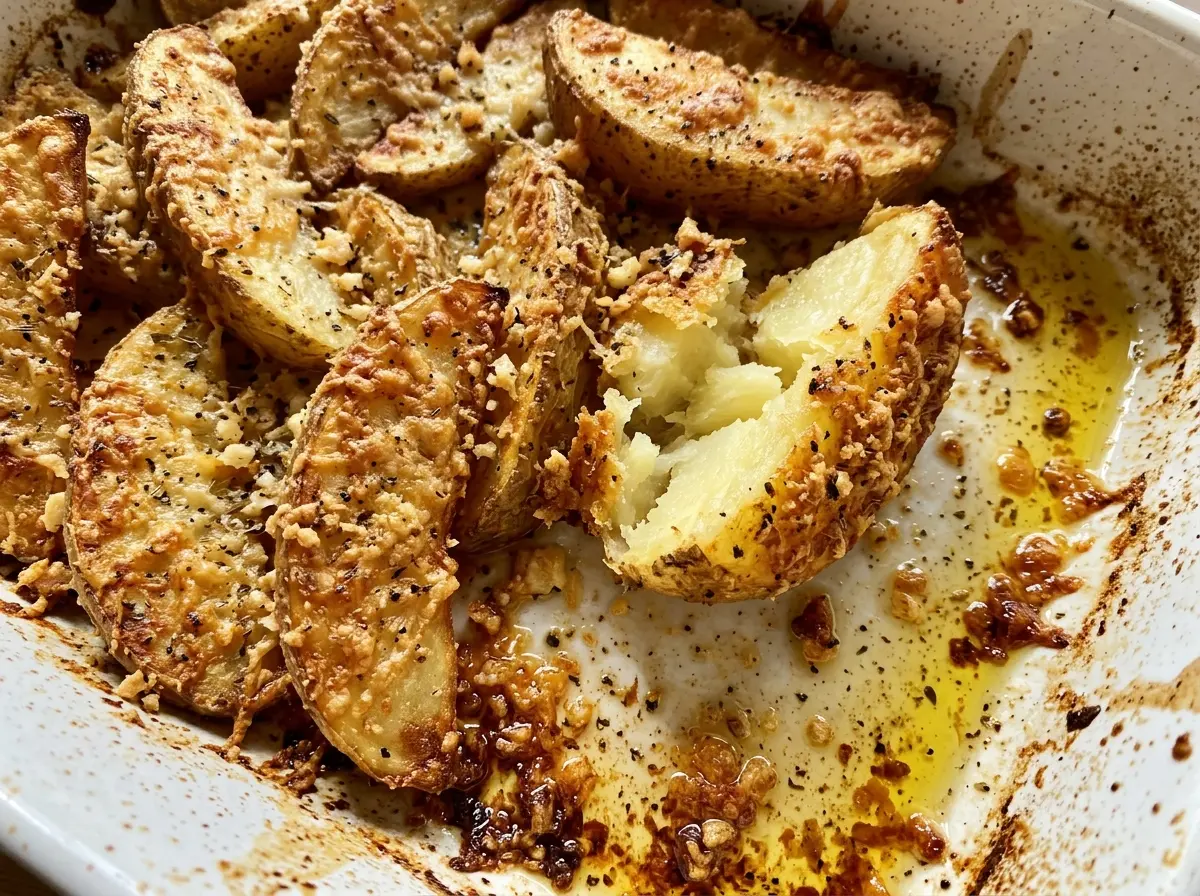
The Parmesan starts turning golden at the edges before the potatoes are ready, and that’s when this pan gets hard to leave alone. I learned to wait for the potatoes to become fork-tender before pulling them out; a browned crust is only half the point. These Parmesan baked potatoes come out with soft, buttery centers and a savory layer that clings to the cut sides.
What makes the crust work is its position: the Parmesan mixture goes on the bottom of the pan, and the potatoes sit directly on top, cut side down. That puts the flat surfaces in contact with the butter and cheese while the potatoes roast. Small Yukon Golds fit this setup especially well, and their creamy texture suits the rich, browned coating. Serve them straight from the pan while the edges are still crisp and the centers are hot.
Kitchen Note
Give the potatoes the full five-minute rest in the pan before lifting them. Loosen each edge with a spatula first; rushing that small pause is how you leave the best part of the crust behind.
Save these Parmesan baked potatoes for their golden cheese crust and creamy Yukon Gold centers.
Why the Parmesan Belongs Under the Potatoes, Not on Top
A sprinkle of cheese over the potatoes sounds like the obvious move, but it gives you a different result. Here, the Parmesan sits underneath, pressed between the buttered metal pan and the cut faces of the potatoes. As the pan heats, the cheese browns in that direct contact zone instead of simply melting over the rounded potato skins.
The cut-side-down arrangement matters, too. Each flat face rests against the Parmesan mixture, so the crust forms where the potato can pick it up. If the halves are tipped onto their curved sides or crowded together, less of that cut surface touches the cheese. Keep them in one layer, with the cut sides flat against the pan. The 9×13-inch metal pan gives the potatoes room to sit this way, and metal helps the bottom crust brown.
There’s no need to flip the potatoes partway through baking. Leaving them in place protects that contact and lets the Parmesan become a single browned layer. When the crust is golden and a fork slides into the potatoes easily, both parts are ready together.
Why Fine Parmesan and Small Yukon Golds Matter Here

- Parmesan — Finely grated cheese spreads into a more even layer than thick shreds or shaved pieces, so the crust browns across the pan instead of in scattered clumps. A grocery-store finely grated Parmesan works; you don’t need a specialty cheese. If you grate it yourself, use the fine side of a grater.
- Small Yukon Gold potatoes — Their creamy, fairly firm flesh holds its shape through roasting, and small halves are manageable in a single layer. Choose firm potatoes without soft spots. Larger potatoes can be cut into smaller, similarly sized pieces, but their different size may change how quickly they become tender.
- Unsalted butter — Melted butter carries the cheese and seasonings against the pan and brings a rich browned taste. Basic supermarket butter is fine here. Unsalted butter also lets the measured kosher salt stay in control; salted butter varies in saltiness.
- Olive oil — Tossing the potatoes in oil coats their surfaces before they go into the pan. A standard everyday olive oil is a good fit; a delicate, expensive oil won’t add much once the potatoes roast.
- Garlic powder and paprika — Both season the cheese layer without adding moisture. Garlic powder distributes evenly; fresh garlic is not a direct replacement and may scorch during the long bake. If you’re out of paprika, leaving it out works, though the crust loses some of its warm color and flavor.
How to Get the Parmesan Crust and Tender Centers at the Same Time
Coat the Bottom of the Metal Pan
Heat the oven to 425°F, then pour the melted butter into a 9×13-inch metal baking pan and spread it over the bottom. The butter should cover the surface rather than sit in one deep puddle. Even coverage gives the Parmesan mixture a chance to brown across the pan. Have the pan ready before adding the seasonings so the butter is still melted.
Make an Even Cheese Layer and Set the Potatoes Flat
Sprinkle the finely grated Parmesan, garlic powder, paprika, kosher salt, and black pepper evenly over the butter. Toss the halved potatoes with olive oil until coated, then place them in a single layer with their cut sides down over the cheese mixture. A flat, steady contact matters more than pressing hard. If a potato rocks or rests on its curved side, reposition it so the cut face meets the pan.
Bake Until the Fork Test and Color Agree
Bake for 35 to 45 minutes, until the potatoes are fork-tender and the Parmesan crust is golden brown. Start checking at the earlier end of that range, since the potatoes’ size affects how quickly they cook. A fork should enter the thickest potato without resistance, and the visible cheese should look browned rather than pale. If the potatoes are still firm, keep baking until they’re tender.
Rest Before Loosening
Take the pan from the oven and let the potatoes rest for 5 minutes. Slide a spatula around the edges to release the crust, then lift the halves from the pan and serve. The short rest gives the hot cheese layer time to settle. Work the spatula under each potato instead of pulling it up by the skin.
Three Simple Ways to Change the Parmesan Potato Crust
Make the crust more garlic-forward
Use 1½ teaspoons of garlic powder instead of 1 teaspoon. The cheese layer will taste more savory and garlicky without changing its texture or the way the potatoes bake.
Leave out the paprika for a simpler cheese flavor
Omit the paprika and keep the rest of the ingredients the same. You’ll lose its gentle warmth and some color, but the potatoes will still have the Parmesan crust and garlic seasoning.
Use vegetarian Parmesan-style cheese
For a vegetarian version, replace the Parmesan with the same volume of finely grated vegetarian Parmesan-style hard cheese. It keeps the savory cheese layer, though the exact browning will depend on the cheese you choose.
Storage and Reheating
- Refrigerator: Refrigerate leftovers within 2 hours and keep them covered for 3 to 4 days. The crust softens in storage, while the potato centers stay tender.
- Freezer: These don’t freeze especially well; cooked potatoes can turn mealy and the cheese crust loses its texture, so I skip freezing them.
- Reheating: Reheat in the oven until hot, arranging the potatoes cut side down so the crust gets direct heat again. The microwave warms them quickly but leaves the Parmesan soft.
Questions That Come Up While These Potatoes Bake
Parmesan Baked Potatoes
Ingredients
Equipment
Method
- Preheat the oven to 425°F.
- Pour the melted butter into a 9x13-inch metal baking pan and spread it over the bottom.
- Sprinkle the Parmesan, garlic powder, paprika, salt, and black pepper evenly over the butter.
- Toss the potatoes with the olive oil.
- Arrange the potatoes cut side down in a single layer over the Parmesan mixture.
- Bake for 35 to 45 minutes, until the potatoes are fork-tender and the Parmesan crust is golden brown.
- Let the potatoes rest in the pan for 5 minutes.
- Loosen the edges with a spatula.
- Serve.