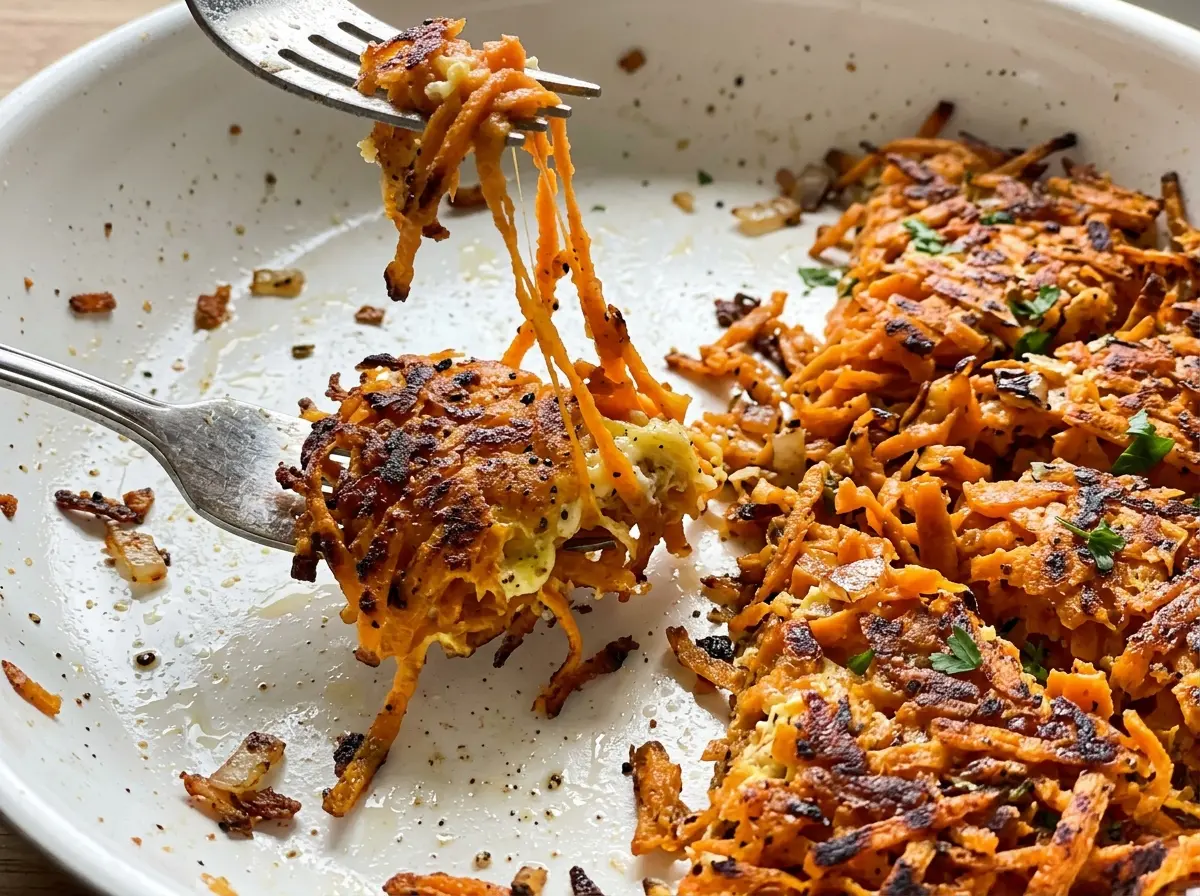
The first side of these hash browns should come out of the skillet with a deep-golden crust, not a soft, damp tangle of shreds. Sweet potatoes brown quickly, so the trick is giving them enough room to crisp without rushing the turn. I cook Sweet Potato Hash Browns in two batches, which keeps the layer even and gives each shred contact with the hot pan.
Coarsely grated sweet potatoes keep their shape, and a thorough squeeze in a kitchen towel gets rid of moisture that would otherwise slow browning. I toss the dry shreds with cornstarch, salt, and pepper, then spread them in a thin layer in the skillet. The cornstarch helps the strands cling together just enough to turn in sections, while the sweet potato stays tender inside.
They’re a little crisp at the edges, soft in the middle, and savory with a gentle sweetness. The first batch stays warm on a rack while the second cooks, so every serving reaches the table with browned edges.
Kitchen Note
Set the first batch on the wire rack in the warm oven, rather than stacking it on a plate. The open rack lets air move around the underside, so those crisp edges don’t soften while the next batch cooks.
Save these Sweet Potato Hash Browns for a crisp, savory breakfast side with tender centers and golden edges.
Why These Hash Browns Need Two Batches, Not One Crowded Skillet
Sweet potato shreds release moisture as they cook. Pile too many into one skillet and the bottom layer browns while the rest steams against itself; the result is softer and harder to turn. Dividing the mixture gives the shreds space to make contact with the pan, and an even layer lets the heat reach them at a similar pace.
The layer’s thickness matters, too. At about one-third inch, the underside has time to form a firm, browned surface before the sweet potato inside turns tender. A thicker pile can look crisp underneath while the center is still firm, and trying to flip it as one piece makes it more likely to break. Turning it in several sections is easier and keeps the browned sides intact.
Those details are especially useful with sweet potatoes because their natural sugars color readily. You want a deep-golden underside, not a blackened one, so medium heat and a little patience do more for the crust than cranking up the burner. The two-batch approach also means you can judge the first round and adjust the heat slightly if your skillet is browning it too fast.
What the Sweet Potatoes, Starch, and Oil Each Bring to the Skillet

- Sweet potatoes — Choose firm potatoes without soft or shriveled spots; there’s no need to seek out an expensive variety. Peeling before grating keeps the texture consistent, and coarse shreds give the finished hash browns distinct strands rather than a fine, compact texture. Sweet potato is the defining ingredient here, so regular potatoes would make a different dish.
- Cornstarch — It coats the shreds and helps them hold together when you turn them, without adding a floury coating. A basic box works perfectly; a specialty brand won’t improve the result. I stick with cornstarch rather than swapping in flour, which can make the outside less crisp and changes the dish’s gluten-free quality.
- Canola oil — Its neutral taste lets the sweet potatoes and pepper come through, and the measured oil is divided between the two batches. Any ordinary canola oil is suitable; there’s no advantage to a premium bottle for skillet frying. Changing to a strongly flavored oil will give the finished hash browns a different taste.
- Kosher salt and black pepper — These season the shreds without competing with the sweet potato. Use the kosher salt listed for an evenly seasoned batch; fine table salt has smaller crystals, so swapping it measure for measure can make the hash browns saltier. Pre-ground black pepper is fine, and you can leave it out if you prefer a milder seasoning.
Grate, Dry, and Fry for a Golden Crust
Get the Shreds Dry and Evenly Coated
Preheat the oven to 200°F and set a wire rack inside a rimmed baking sheet. Coarsely grate the peeled sweet potatoes, then gather them in a clean kitchen towel and squeeze out as much moisture as you can. The shreds should feel less wet and heavy when you open the towel; lingering water makes it harder for them to brown. Toss them with the cornstarch, kosher salt, and black pepper until the coating is distributed throughout.
Let the First Side Turn Deep Golden
Heat 1 1/2 tablespoons of canola oil in a 12-inch skillet over medium heat. Add half the mixture and spread it into an even layer about 1/3 inch thick; an uneven mound will cook at different rates. Leave it undisturbed for 6–8 minutes, until the underside is deep golden and crisp. If it’s coloring too quickly before that point, lower the heat rather than letting the sweet potato darken too far.
Turn in Sections and Finish the Second Batch
Turn the first batch in several sections, then cook it for 4–6 minutes more, until tender and browned. Moving it as a few sturdy sections is more reliable than trying to flip the whole layer at once. Transfer the cooked hash browns to the rack in the warm oven while you heat the remaining 1 1/2 tablespoons of oil. Cook the remaining mixture with the same timing, then serve both batches while the edges are crisp.
Easy Adjustments for a Smaller Batch or Less Salt
Make a Half Batch for Two
Use 3/4 pound sweet potatoes, 1 tablespoon cornstarch, 1/2 teaspoon kosher salt, 1/8 teaspoon black pepper, and 1 1/2 tablespoons canola oil. Keep the same skillet and spread the shreds in the same thin layer; depending on how the mixture sits in your pan, cook it in one round or divide it so it isn’t piled too thickly. The timing and browned-side cues stay the same.
Reduce the Salt Without Changing the Method
For a lower-sodium version, use 1/2 teaspoon kosher salt instead of 1 teaspoon. Keep the black pepper and all the other ingredients and steps the same. The sweet potato will taste a little less seasoned, but the starch and skillet method still give you the same crisp-and-tender texture.
Storage and Reheating
- Refrigerator: Store cooled hash browns in an airtight container for up to 3–4 days. They’ll soften in the refrigerator, even though the flavor holds well.
- Freezer: Freeze cooked hash browns in a single layer until firm, then transfer them to an airtight freezer container for up to 2 months. They may lose some crispness after freezing, but reheating in a skillet brings the edges back.
- Reheating: Warm them in a skillet over medium heat until hot and crisp again, turning once. Avoid crowding the pan or stacking the pieces, which traps steam and softens the crust.
Questions That Come Up While Making Sweet Potato Hash Browns
Sweet Potato Hash Browns
Ingredients
Equipment
Method
- Preheat the oven to 200°F.
- Set a wire rack in a rimmed baking sheet.
- Coarsely grate the sweet potatoes.
- Wrap them in a clean kitchen towel and squeeze out as much moisture as possible.
- Toss the sweet potatoes with the cornstarch, salt, and pepper until evenly coated.
- Heat 1 1/2 tablespoons oil in a 12-inch skillet over medium heat.
- Add half the mixture and spread it into an even 1/3-inch layer.
- Cook for 6–8 minutes, until the underside is deep golden and crisp.
- Turn the mixture in several sections and cook for 4–6 minutes more, until tender and browned.
- Transfer the first batch to the rack in the oven to keep warm.
- Cook the remaining mixture in the skillet with the remaining 1 1/2 tablespoons oil, using the same timing.