The butter and brown sugar turn pale and fluffy in the bowl, then the molasses darkens everything to the color of polished mahogany. That’s the moment this gingerbread Bundt cake starts smelling like ginger, cinnamon, and cloves all at once. I like that the spices are bold without drowning out the deep, rounded sweetness of unsulphured molasses.
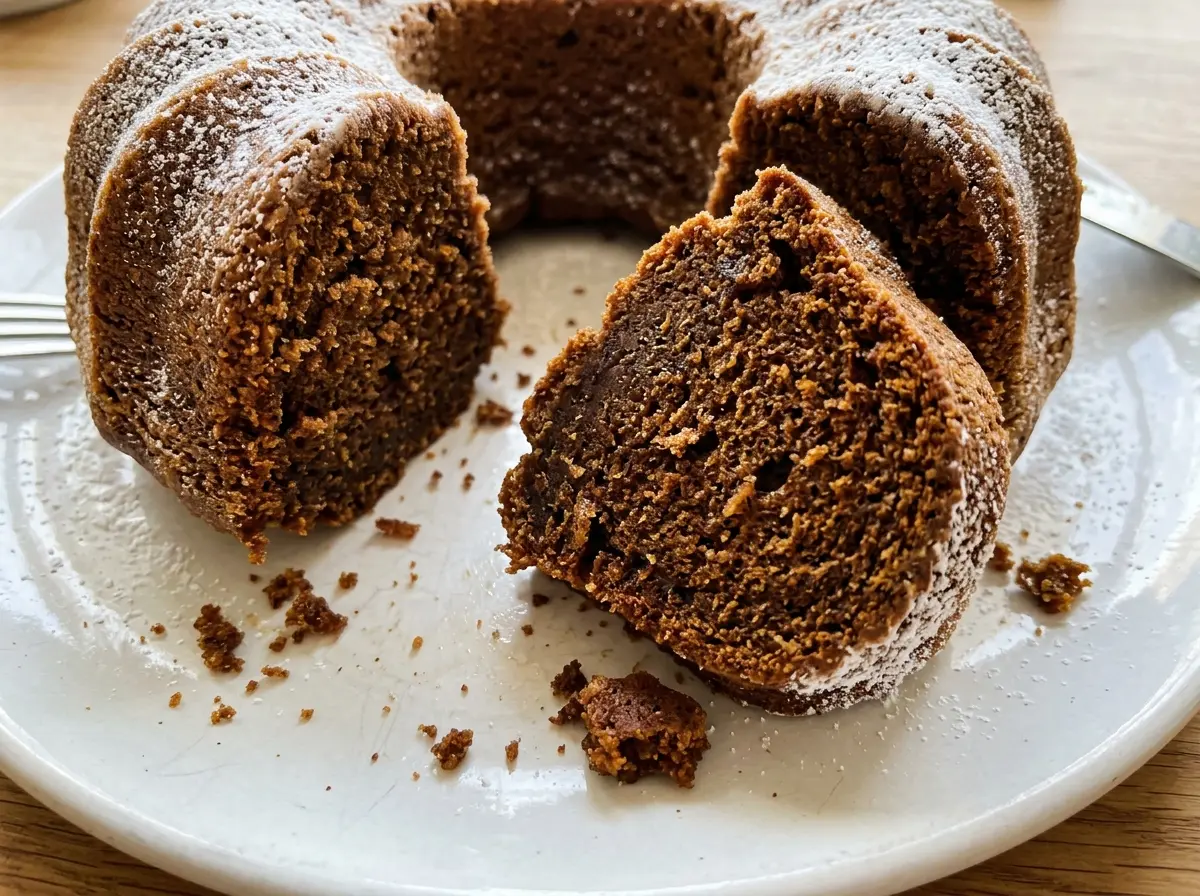
Buttermilk keeps the crumb soft, while the molasses brings enough moisture and character that the cake doesn’t need a glaze to feel complete. The batter is thick, and it’s easy to keep mixing after the flour disappears; stop as soon as it’s combined. Once baked, the cake has a tender center and a gently crisp edge, with spice in every slice.
Kitchen Note
Give the cake 15 minutes in the pan before you invert it. Turn it out too soon and it’s more likely to break; wait until it’s fully cool in the pan and it can cling to the Bundt ridges.
Save this gingerbread Bundt cake for its tender crumb, dark molasses sweetness, and warm spice in every slice.
Why This Gingerbread Cake Can Turn Dense Before It Looks Overmixed
Bundt cake batter gets its structure from flour, eggs, and the air you beat into the butter and sugar. Once the flour is added, long mixing works the gluten more than this cake needs. That can leave the slices tight or slightly chewy instead of soft and even. The batter doesn’t have to look perfectly silky; a few small irregularities are better than beating it until it’s smooth.
Alternating the dry mixture with buttermilk helps the ingredients come together without asking the mixer to do too much at once. Start with flour and finish with flour, and keep the mixer on low for those additions. Scrape the bowl when needed so pockets of butter or flour don’t hide along the sides. You’re aiming for a thick, cohesive batter that’s just combined, not a whipped mixture. The butter-and-sugar stage is where you build air; after that, a light touch protects the crumb.
Molasses and Buttermilk Set the Cake’s Deep, Tender Crumb
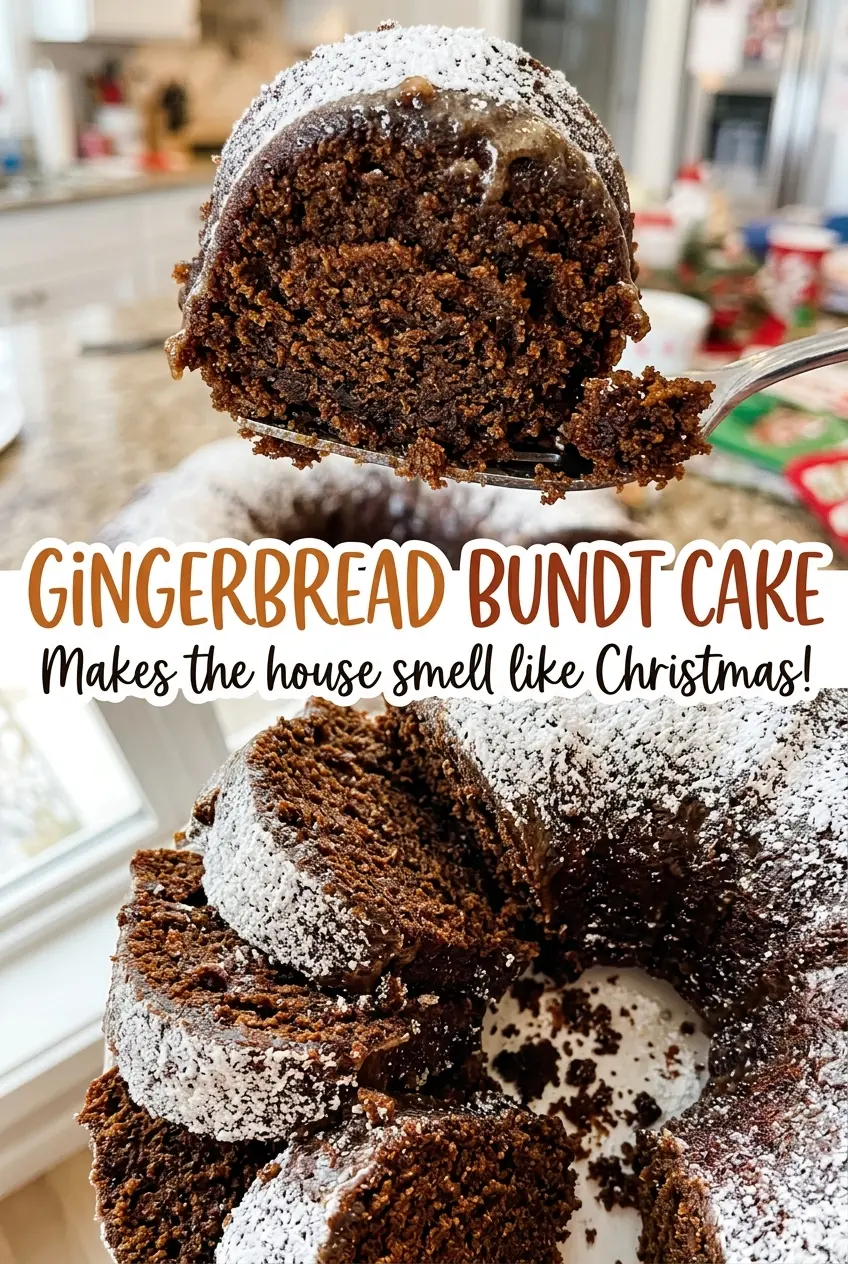
- Unsulphured molasses — This gives the cake its deep sweetness and gingerbread character. Use unsulphured, not blackstrap; blackstrap is more bitter and intense, and it won’t give the same balanced flavor. Check the label before you buy, since both types are sold as molasses.
- Buttermilk — Its tang balances the dark sweetness, and its acidity works with the baking soda to help the batter rise. Room-temperature buttermilk blends more smoothly with the creamed butter. Regular milk isn’t a direct replacement here; it lacks the same acidity and tang.
- Dark brown sugar — The molasses already provides a strong, rounded flavor, and dark brown sugar reinforces it while creaming with the butter. Pack it firmly when measuring so the amount is consistent. Light brown sugar would make the cake less rich in molasses character, so I keep the dark variety for this version.
- Ground spices — Ginger leads, while cinnamon, cloves, and nutmeg fill out the warmth. Since the spice blend is central to the cake, use spices that still smell fragrant when you open the jars. If they smell faint or dusty, the baked cake will taste less vivid.
- All-purpose flour and leaveners — All-purpose flour gives the cake enough structure to hold its Bundt shape. Baking soda and baking powder each contribute to the rise; keep both fresh and measure them carefully. Baking spray with flour coats the detailed pan surface and helps the cake release cleanly.
- Butter and eggs — Softened butter creams properly with the sugar, and room-temperature eggs are easier to incorporate without chilling the mixture. Set both out ahead of mixing so the batter comes together evenly.
Cream, Alternate, and Bake Without Toughening the Crumb
Coat the Bundt pan before mixing
Heat the oven to 350°F and generously coat a 10- to 12-cup Bundt pan with baking spray with flour. Get the spray into the fluted sides and center tube, where batter can catch in the grooves. A light mist that misses the ridges is more likely to leave pieces of cake behind when you turn it out. Prepare the pan before the batter is ready so it can go straight into the oven.
Whisk the dry ingredients evenly
Whisk the flour, baking soda, baking powder, salt, ginger, cinnamon, cloves, and nutmeg together in a medium bowl. Break up any small clumps as you whisk, especially in the leaveners and spices. Even distribution matters because there’s no later step that can correct a pocket of baking soda or a concentrated patch of spice. Set the bowl aside while you cream the butter and sugar.
Cream the butter, then add eggs and molasses
Beat the softened butter and packed dark brown sugar with an electric mixer on medium speed until light and fluffy, about 3 minutes. The mixture should look lighter and feel airy rather than dense and greasy. Beat in the room-temperature eggs one at a time, scraping the bowl as needed, then beat in the molasses. If the mixture looks a little uneven after the eggs, scrape the sides and keep going until the ingredients are incorporated.
Alternate the flour and buttermilk
Add the flour mixture in three additions and the buttermilk in two, beginning and ending with flour. Mix on low just until combined, scraping down the bowl if flour is clinging to the sides. The batter will be thick; don’t turn up the speed to chase every last streak. Stop once the flour has disappeared so the cake stays tender.
Bake until the center tests clean
Scrape the batter into the prepared pan and smooth the top. Bake at 350°F for 50 to 60 minutes, until a toothpick inserted near the center comes out clean or with a few moist crumbs. If wet batter clings to the toothpick, the center needs more time; check again without waiting for the cake to look dry on top. Cool in the pan for 15 minutes, invert onto a wire rack, and let the cake cool completely.
Small Adjustments That Keep the Gingerbread Cake’s Balance
Choose the Bundt pan size you have
A 10- to 12-cup Bundt pan works for this batter, so use one within that capacity range rather than trying to squeeze it into a smaller pan. The pan’s shape changes the finished cake’s ridges and silhouette, but the gingerbread batter stays the same. Keep an eye on the doneness cue within the listed bake-time range.
Keep the spice proportions intact
For a brighter spice aroma without changing the cake’s balance, use fragrant ground spices rather than reducing or increasing individual amounts. I don’t recommend swapping in blackstrap molasses or changing the flour to a different type; those changes affect the cake’s flavor or structure, not just its finish. This batter is designed around the listed ingredients.
Storage and Reheating
- Refrigerator: Keep the cooled cake covered for up to 5 days. The crumb may firm up in the refrigerator, so let a slice come closer to room temperature before serving.
- Freezer: It freezes well. Wrap the completely cooled cake or individual slices tightly, then freeze for up to 2 months; thaw while still wrapped so the surface doesn’t dry out.
- Reheating: This cake is best served at room temperature, but a slice can be warmed briefly in the microwave until just warm. Don’t heat it for too long or the crumb will turn dry and tough.
Questions That Come Up When Baking Gingerbread Bundt Cake
Gingerbread Bundt Cake
Ingredients
Equipment
Method
- Heat the oven to 350°F.
- Coat a 10- to 12-cup Bundt pan generously with baking spray with flour.
- Whisk the flour, baking soda, baking powder, salt, ginger, cinnamon, cloves, and nutmeg together in a medium bowl.
- Beat the butter and brown sugar with an electric mixer on medium speed until light and fluffy, about 3 minutes.
- Beat in the eggs one at a time, scraping down the bowl as needed.
- Beat in the molasses.
- Add the flour mixture in three additions, alternating with the buttermilk in two additions, beginning and ending with the flour mixture; mix on low just until combined.
- Scrape the batter into the prepared pan and smooth the top.
- Bake for 50 to 60 minutes, until a toothpick inserted near the center comes out clean or with a few moist crumbs.
- Cool the cake in the pan for 15 minutes.
- Invert the cake onto a wire rack.
- Cool completely.