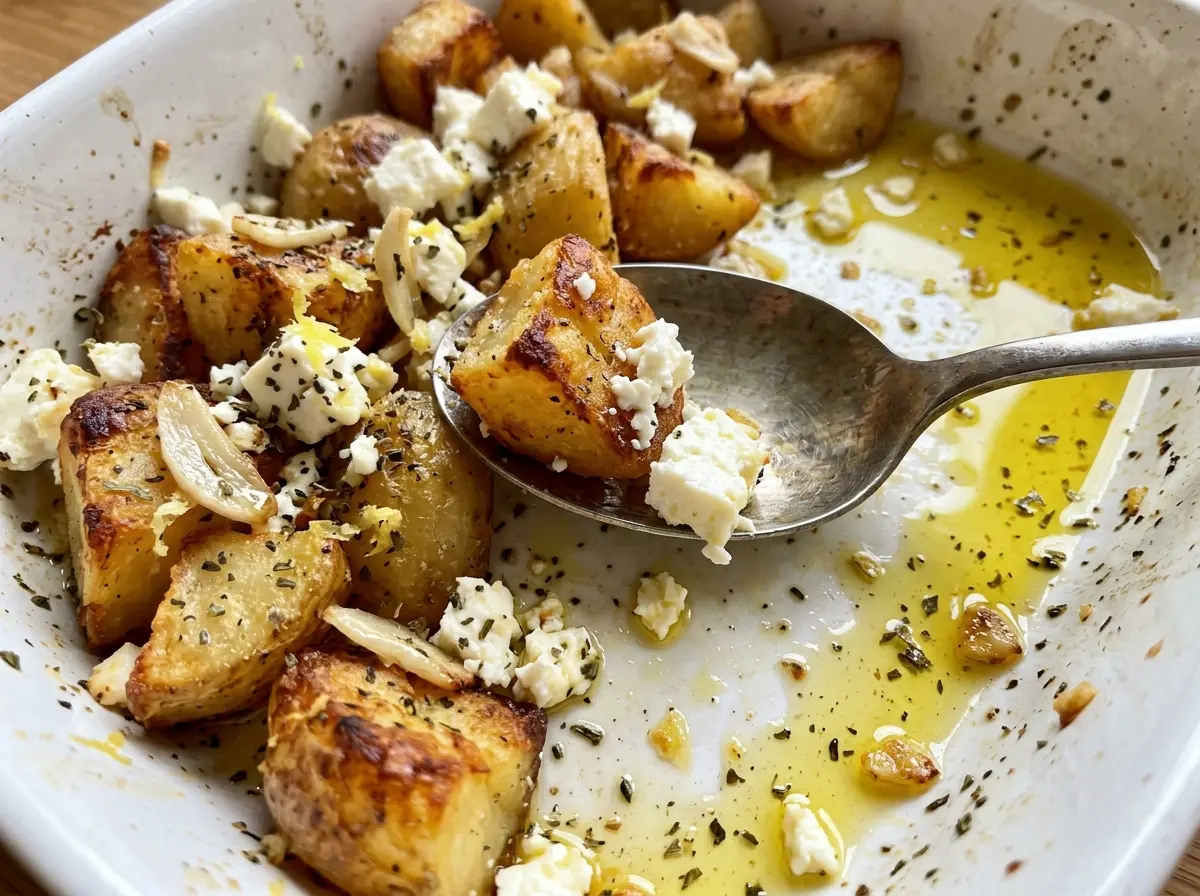
The potatoes go into the oven surrounded by liquid, which can look like the start of a braise instead of a roast. That’s exactly what makes these Greek Feta Roast Potatoes different: the broth and lemon cook down while the wedges soften, leaving golden edges and a savory coating in the pan.
I use Yukon Gold potatoes because they turn tender without falling apart as the liquid reduces. The lemon juice, garlic, and oregano season the potatoes all the way through, while low-sodium chicken broth keeps the finished dish from tasting too salty once the feta goes on.
Give the potatoes the full roasting time to become fork-tender and let most of the liquid evaporate before adding the cheese. A short final bake warms the feta without asking it to carry the whole dish. You’ll get tender wedges, bright lemon, and a salty feta finish.
Kitchen Note
Stir the potatoes once at the halfway point, then leave them alone for the rest of the roast. Repeated stirring can break up the softened wedges before their edges have had time to turn golden.
Save these Greek Feta Roast Potatoes for a dinner side with tender centers, golden edges, and a bright lemon-oregano finish.
Why These Potatoes Roast in Liquid Instead of Drying Out
Most roasted potato recipes start with a dry pan and rely on oil to crisp the outside. These wedges take a different route: broth and lemon juice sit in the baking dish with the oil and seasonings, helping the potatoes cook until their centers are tender. As the oven works, that liquid gradually reduces, and the edges turn golden.
That means a little liquid in the dish early on isn’t a problem to fix. Don’t drain it or raise the heat to force it off; the potatoes need time to soften, and the liquid carries garlic, oregano, and lemon around the pan as they roast. The goal isn’t for every surface to become crisp. Look for fork-tender centers, some golden edges, and most of the liquid gone.
The feta goes on only after that roast. It needs a brief turn in the oven to warm through, not the full cooking time the potatoes need. Adding it at the end keeps the salty cheese distinct against the lemony potatoes instead of letting it disappear into the pan.
What Each Ingredient Brings to the Lemon-Oregano Pan

- Yukon Gold potatoes — Their creamy texture and ability to hold their shape suit this long, liquid-rich roast. Scrub them well and cut them into even 1-inch wedges so they cook at a similar pace. A different potato may finish with a different texture, so Yukon Gold is the dependable choice here.
- Olive oil — It rounds out the broth and lemon and helps the exposed potato edges roast rather than stay pale. A standard olive oil works well; there’s no need to reach for a delicate finishing oil because it spends the whole cook in the oven.
- Low-sodium chicken broth — Broth supplies savory depth and forms part of the cooking liquid. Low-sodium matters because feta and kosher salt both bring seasoning to the finished pan. Regular broth is possible, but the potatoes may taste saltier.
- Lemon juice — The acidity keeps the oil and broth from tasting heavy and gives the potatoes their fresh, tangy edge. Use lemon juice you enjoy the taste of; a dull or stale-tasting juice will be noticeable in a dish with so few ingredients.
- Garlic and dried oregano — Minced garlic disperses through the liquid, while dried oregano brings the familiar earthy, herbal note. Dried oregano is the ingredient listed here, so fresh oregano isn’t a one-for-one swap in this method.
- Feta cheese — Crumbled over the potatoes at the finish, feta adds a salty, tangy contrast to their soft centers. Its flavor is especially noticeable in each bite, so choose feta you like eating on its own; it doesn’t need to be an expensive variety.
Roasting the Wedges Until the Liquid Reduces
Start with an Even Layer
Heat the oven to 400°F. Put the scrubbed, 1-inch potato wedges in a 9×13-inch baking dish, then add the olive oil, chicken broth, lemon juice, minced garlic, dried oregano, kosher salt, and black pepper. Toss until the wedges are coated, then spread them into an even layer. Keeping the pieces similar in size helps them become tender together.
Let the Pan Season the Potatoes
Set the dish in the oven and roast the potatoes. At first, the liquid will be visible around the wedges; that’s expected and gives the potatoes time to cook through. Stir once after 35 minutes, redistributing the pieces so they continue roasting evenly. Avoid stirring again and again, which can damage the wedges as they soften.
Wait for Tender Centers and Golden Edges
Continue roasting for 70–80 minutes total, until a fork slides into the potatoes easily, the edges are golden, and most of the liquid has evaporated. The exact balance of browning and remaining liquid can vary with the oven and the potatoes, so check the visual and texture cues rather than judging by the clock alone. If the centers are still firm, they aren’t ready yet.
Warm the Feta at the Finish
Scatter the crumbled feta over the roasted potatoes and return the dish to the oven for 5–8 minutes. The cheese should be warmed through; it isn’t meant to bake for the entire potato-roasting time. Take the dish out once the feta is warm, while the wedges still hold their shape.
Two Easy Changes for Different Tables
Make the Pan Dairy-Free
Leave off the feta for a dairy-free version. The potatoes will still have the lemon, garlic, and oregano seasoning, but you’ll miss the salty, tangy contrast the cheese brings. Check that the chicken broth you use is also suitable for your dietary needs.
Leave Out the Garlic
Omit the minced garlic if you’re cooking for someone who avoids it. The lemon and oregano will still season the potatoes, though the pan will lose some of its savory depth. Keep the remaining ingredients and method the same.
Storage and Reheating
- Refrigerator: Store leftovers in a covered container for 3–4 days. The potatoes will soften as they sit, and the feta may blend into the coating.
- Freezer: They can be frozen in an airtight container, though the potatoes may turn softer or grainier after thawing. Freeze in portions and thaw in the refrigerator before reheating.
- Reheating: Warm them in a baking dish in a 400°F oven until hot. Don’t leave them in longer than needed; the edges can dry out once the potatoes are already tender.
Questions That Come Up With Greek Feta Roast Potatoes
Greek Feta Roast Potatoes
Ingredients
Equipment
Method
- Heat the oven to 400°F.
- Put the potatoes in a 9x13-inch baking dish.
- Add the olive oil, chicken broth, lemon juice, garlic, oregano, salt, and pepper; toss to coat and spread into an even layer.
- Roast for 70–80 minutes, stirring once after 35 minutes, until the potatoes are fork-tender, golden at the edges, and most of the liquid has evaporated.
- Scatter the feta over the potatoes and bake for 5–8 minutes, until warmed through.