The first boil of chicken soup can look a little alarming: gray foam gathers on top, and a hard boil can leave the broth cloudy. I skim that foam while it’s easy to see, then turn the heat down until the pot barely bubbles. That gentle simmer is the difference between a steady, savory broth and a pot that boils itself dry at the edges.
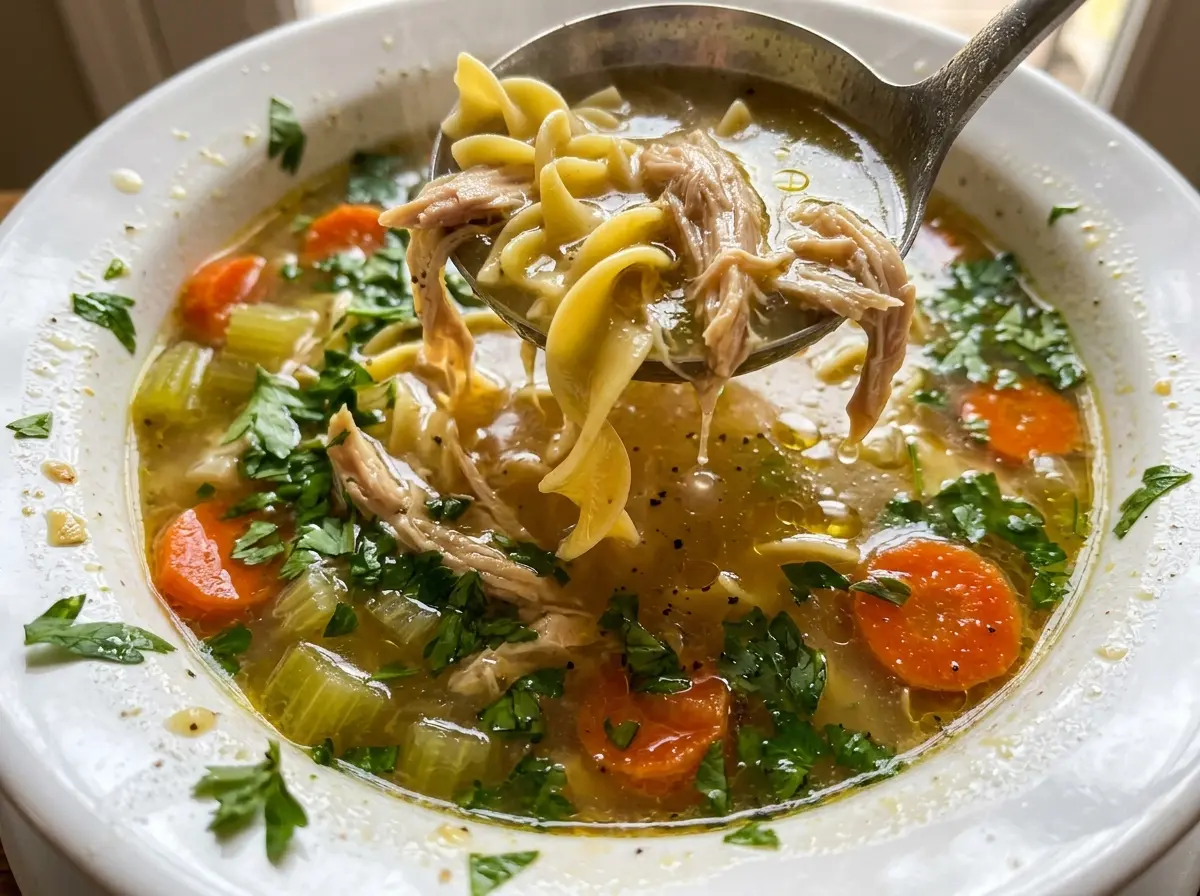
For Paula Deen Chicken Noodle Soup, the whole chicken does double duty. It gives the broth time to pick up flavor while the meat cooks right in the same pot, so there’s no separate stock to make and no cooked chicken to buy. I pull out the onion, garlic, bay leaves, and large celery pieces after they’ve flavored the broth, then add fresh-cut carrots and celery for the finished soup. The wide egg noodles make each spoonful substantial without taking over the broth.
Kitchen Note
Let the chicken cool for the full 15 minutes before you start pulling off the meat. It’s much easier to handle, and you won’t have to rush through separating it from the bones.
Save Paula Deen Chicken Noodle Soup for a pot of tender chicken, wide egg noodles, and broth made from the whole bird.
Why This Soup Starts With a Whole Chicken, Not Ready-Made Broth
A whole chicken is doing two jobs here: it becomes the shredded meat for the bowls, and it flavors the water as it simmers. The onion, large celery pieces, garlic, and bay leaves add their flavor to that cooking liquid, then come out before the carrots and sliced celery go in. That timing keeps the finished vegetables distinct instead of asking them to simmer for the full time it takes the chicken to cook.
Using a whole bird also means the broth develops in the same pot as the chicken. Keep the heat at a gentle simmer after the initial boil; a rolling boil agitates the liquid and can make it look cloudy. The thermometer gives you a clear doneness check, while the simmer gives the chicken time to cook without the broth racing away. It’s a straightforward approach, but each stage has a separate purpose: build the broth, cook the vegetables just tender, then finish with the noodles and shredded meat.
Why Wide Egg Noodles Make This Soup Feel Like a Meal

- Whole chicken — The whole bird supplies both the meat and the base for the broth. Choose a fresh chicken with the giblets removed; boneless meat won’t give the broth the same contribution from the bones, so it isn’t a direct swap for this one-pot method.
- Water and the first-round aromatics — Water gives the chicken and the onion, celery, garlic, and bay leaves room to simmer together. The onion is quartered, the garlic smashed, and two celery ribs are cut into large pieces so they can be lifted out after flavoring the broth. Dried bay leaves are fine here; they’re removed before serving.
- Carrots and sliced celery — These go into the broth after the long chicken simmer, so they retain more shape and texture. Slice the carrots evenly at the specified thickness, and keep the two celery ribs intended for the soup thinly sliced.
- Wide dried egg noodles — Their broad shape gives the soup a hearty bite and catches broth. Use dried wide egg noodles for the closest result; a different noodle has its own package timing and may give the soup a different texture.
- Kosher salt and black pepper — Salt seasons the broth from the start, and a final taste tells you whether it needs more. Kosher salt is less dense by volume than fine table salt, so don’t replace it measure-for-measure with table salt.
- Fresh parsley — Chopped parsley goes in at the end, where its fresh, green flavor stays noticeable. Fresh parsley is the right fit for this finish; dried parsley won’t give the same fresh texture.
Building the Broth Before the Noodles Go In
Start With a Gentle Chicken Simmer
Set the chicken in an 8-quart stockpot with the water, quartered onion, large celery pieces, smashed garlic, bay leaves, salt, and pepper. Bring it to a boil over medium-high heat and skim the foam from the surface. Lower the heat until the liquid holds a gentle simmer, then partially cover the pot. A hard boil is the main thing to avoid here; look for small, steady bubbles rather than vigorous churning.
Cook the Chicken Until It’s Ready to Pull
Simmer the partially covered chicken for 60 to 75 minutes, checking the thickest part of the thigh with a thermometer. It’s ready when that spot registers 165°F. Transfer the bird to a platter and let it cool for 15 minutes; meanwhile, remove and discard the onion, large celery pieces, garlic, and bay leaves from the broth. Don’t leave the bay leaves in the finished soup.
Give the Carrots and Celery Their Own Short Cook
Add the carrots and thinly sliced celery to the broth, bring it back to a simmer, and cook for 10 to 12 minutes. The vegetables should be just tender, not falling apart. Check a carrot with a fork near the end of the cooking window; if it still feels firm in the center, give the vegetables a little more time while keeping the broth at a simmer.
Shred the Chicken and Finish the Pot
Pull the chicken meat from the bones and discard the skin and bones. Return the shredded chicken to the pot with the dried wide egg noodles, then simmer for the time listed on the noodle package. Check a noodle for tenderness before you move on, since package timing varies by brand. Stir in the chopped parsley, taste the broth, and add more salt if it needs it; serve the soup hot.
Two Useful Ways to Adapt This Chicken Noodle Soup
Make It Gluten-Free With Wide Rice Noodles
Replace the dried egg noodles with wide gluten-free rice noodles and cook them according to their package timing. They’ll give the soup a different, slightly less springy bite, and some brands soften faster than wheat noodles, so check them as they cook. This changes the noodle texture, not the chicken-and-vegetable broth.
Give the Parsley a Fresher Finish
For a brighter parsley taste in each bowl, stir part of the chopped parsley into the pot and reserve the rest to scatter over the servings. Keep the total amount the same. The soup will have a more noticeable fresh-herb finish without changing the broth or adding another ingredient.
Storage and Reheating
- Refrigerator: Refrigerate leftovers within 2 hours and keep them covered for 3 to 4 days. The noodles will continue to absorb broth and soften as the soup sits.
- Freezer: The soup can be frozen, though the noodles will be softer after thawing. Freeze in airtight containers for up to 2 to 3 months; leave room for expansion and thaw in the refrigerator.
- Reheating: Warm leftovers gently in a covered pot over medium-low heat, stirring occasionally, until hot throughout. Avoid a hard boil, which can break down the vegetables and make the noodles mushier.
Questions That Come Up With Homemade Chicken Noodle Soup
Paula Deen Chicken Noodle Soup
Ingredients
Equipment
Method
- Put the chicken in an 8-quart stockpot and add the water, onion, celery pieces, garlic, bay leaves, salt, and pepper.
- Bring to a boil over medium-high heat.
- Skim off any foam.
- Reduce the heat to maintain a gentle simmer.
- Partially cover and simmer for 60 to 75 minutes, until a thermometer inserted into the thickest part of the thigh reads 165°F.
- Transfer the chicken to a platter and let it cool for 15 minutes.
- Discard the onion, large celery pieces, garlic, and bay leaves.
- Add the carrots and sliced celery to the broth.
- Bring the broth to a simmer.
- Cook for 10 to 12 minutes, until the vegetables are just tender.
- Remove the chicken meat from the bones and shred it, discarding the skin and bones.
- Add the chicken and noodles to the pot.
- Simmer for the time listed on the noodle package, until the noodles are tender and the soup is hot.
- Stir in the parsley.
- Taste and add more salt if needed.
- Serve hot.