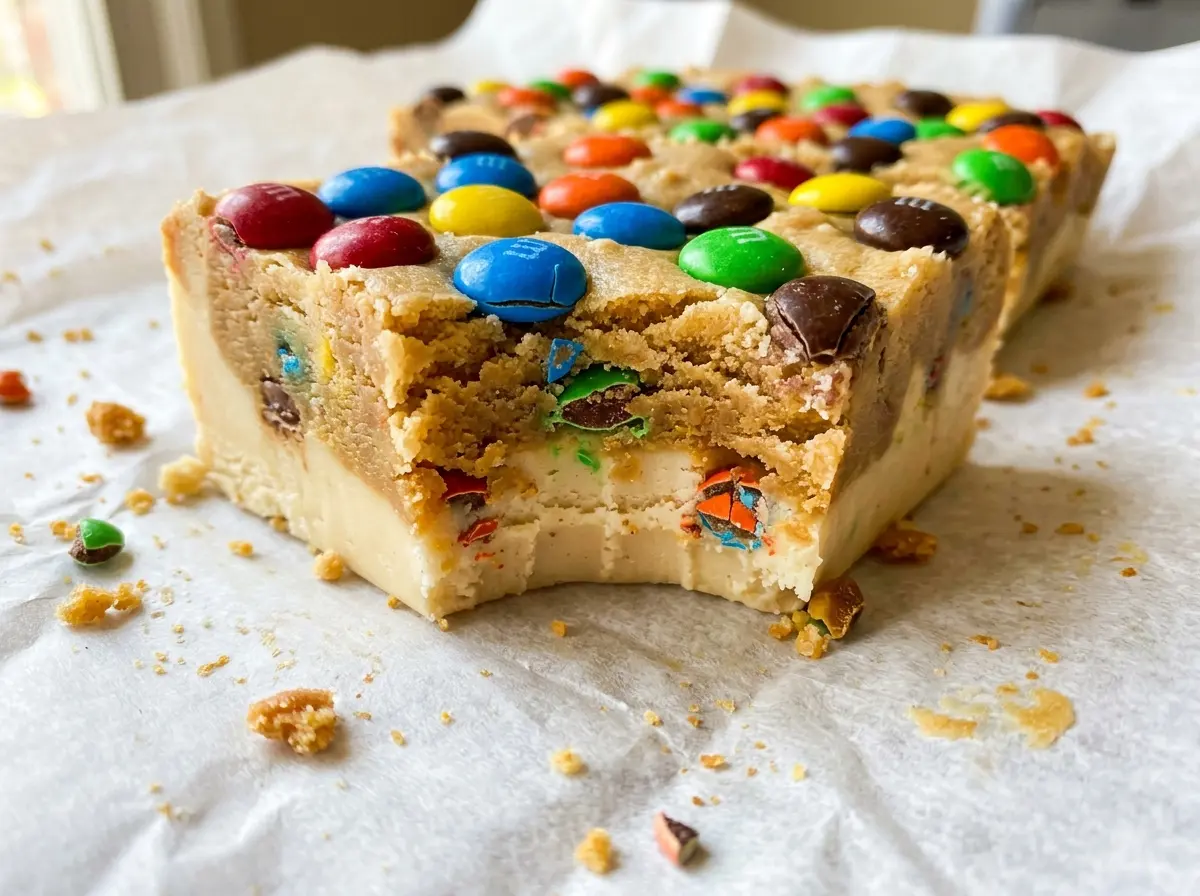
When the white chocolate and sweetened condensed milk melt together, the mixture looks glossy and loose, and it’s hard to imagine it holding little pieces of cookie dough. After a few hours in the refrigerator, though, it cuts into neat squares with creamy fudge around soft, buttery bites. That contrast is what makes M&M Cookie Dough Fudge more fun to eat than a plain piece of fudge.
I make the cookie dough first, using flour that’s been heated and cooled, then pinch it into small pieces and chill them while I melt the fudge. Letting the melted mixture cool for five minutes before folding in the dough gives the pieces a gentler landing; stir too vigorously and the colorful candies can streak. Once everything is in the pan, the refrigerator does the rest, setting up a sweet, sliceable batch of 36 pieces.
Kitchen Note
Give the cookie dough pieces at least 10 minutes in the refrigerator before folding them into the fudge. Cold pieces are easier to handle, and gentle folding keeps them in distinct little bites instead of smearing them through the mixture.
Save M&M Cookie Dough Fudge for a make-ahead treat with creamy white chocolate and little cookie dough bites in every square.
Why the Flour Needs a Thermometer, Not a Color Check
Flour can look exactly the same before and after heating, so browning isn’t a useful cue here. Because this cookie dough won’t be baked after it’s mixed, the flour needs to reach 165°F during the heat-treatment step. An instant-read thermometer gives you a reliable check that a quick glance at the pan can’t.
Spread the flour in a thin layer on the parchment-lined baking sheet and stir it halfway through baking so it heats more evenly. Check several spots with the thermometer; one warm patch doesn’t tell you what’s happening across the pan. Then let the flour cool completely before it goes into the butter mixture. If it’s still warm, it can soften the butter and change the dough’s texture before you’ve even folded in the candies.
This extra step is easy to overlook because the flour is meant to stay pale. Keep the thermometer close, check more than one area, and give the flour time to cool while you set out the rest of the ingredients. The finished dough should come together smoothly rather than feel warm or greasy.
What Makes the Cookie Dough and Fudge Work Together

- All-purpose flour — It gives the dough its familiar cookie-dough body without making the fudge base heavy. Spread it out for heating rather than leaving it in a mound, and let it cool fully before mixing. A measure-for-measure gluten-free flour blend can stand in for the all-purpose flour; the gluten-free variation below explains how to keep the same preparation.
- Softened butter and light brown sugar — Softened butter blends smoothly with the sugar, while light brown sugar brings a gentle molasses note and helps the dough stay soft against the firmer fudge. The butter should yield when pressed but shouldn’t be melted. Dark brown sugar can replace the light brown sugar in the same quantity if you want a deeper molasses flavor.
- Mini M&M’s — The small candies fit naturally into the little dough pieces, so you get candy throughout without oversized chunks. Choose fresh candies with intact shells; there’s no need for a specialty brand. If you only have regular-size M&M’s, chop them before mixing so they’re easier to fold into the dough.
- White chocolate chips and sweetened condensed milk — Together they form the fudge, so both matter to the set and texture. Standard white chocolate chips work well; use chips you enjoy eating, since their flavor comes through clearly. Sweetened condensed milk is thick and sweet, not interchangeable with evaporated milk, which is thinner and unsweetened.
How to Build the Fudge Without Losing the Cookie Dough Bites
Heat and Cool the Flour
Heat the oven to 350°F and line a rimmed baking sheet with parchment paper. Spread the flour evenly across the sheet and bake it for 8–10 minutes, stirring halfway through. Check the temperature in several spots with an instant-read thermometer and look for 165°F; don’t use color as your cue. Cool the flour completely before mixing it into the dough.
Mix, Shape, and Chill the Dough
Beat the softened butter, brown sugar, salt, and vanilla in a medium bowl until smooth. Mix in the cooled flour and milk until a dough forms, then fold in the mini M&M’s without crushing them. Pinch the dough into pieces about 1/2 inch across and set them on a parchment-lined plate. Refrigerate the pieces for at least 10 minutes so they’re chilled when the fudge is ready.
Melt the White Chocolate Gently
Line an 8-inch square pan with parchment paper, leaving an overhang on two sides to lift the set fudge out later. Combine the white chocolate chips and sweetened condensed milk in a 2-quart saucepan over low heat. Stir often for 5–8 minutes, watching for the last chips to melt and the mixture to turn smooth. If the pan gets too hot, the chocolate can scorch; keep the heat low and keep stirring.
Fold, Set, and Slice
Take the saucepan off the heat and let the mixture cool for 5 minutes. Gently fold in the chilled cookie dough pieces, stopping once they’re distributed so the M&M’s don’t streak through the fudge. Spread the mixture evenly in the prepared pan and refrigerate for 3–4 hours, until firm. Let it stand at room temperature for 10 minutes, lift it out using the parchment overhang, and cut it into 36 pieces.
Two Simple Ways to Change the Candy or the Dough
Make a Gluten-Free Batch
Use a measure-for-measure gluten-free all-purpose flour blend in place of the all-purpose flour, following the blend’s direct-replacement guidance. Heat-treat it the same way and cool it completely before mixing. The dough may feel a little different depending on the blend, but the fudge still gets its cookie-dough pieces.
Trade the Candy for Mini Chocolate Chips
Use the same volume of mini chocolate chips instead of the mini M&M’s in the dough. You’ll lose the candy shells and bright color, but the dough pieces will have a more chocolate-forward bite. Fold the chips in just as gently so they stay distributed through the dough.
Storage and Reheating
- Refrigerator: Keep the fudge in an airtight container for up to 1 week. It will be firmer straight from the refrigerator.
- Freezer: Freeze airtight for up to 2 months, separating layers with parchment so the pieces don’t stick together. Thaw in the refrigerator before serving.
- Reheating: This fudge doesn’t need reheating. Let pieces stand at room temperature for 10 minutes before serving; microwaving can soften the fudge unevenly.
Questions That Come Up While Making M&M Cookie Dough Fudge
M&M Cookie Dough Fudge
Ingredients
Equipment
Method
- Heat the oven to 350°F.
- Line a rimmed baking sheet with parchment paper.
- Spread the flour on the baking sheet and bake for 8-10 minutes, stirring halfway through, until an instant-read thermometer inserted in several spots reads 165°F.
- Cool the flour completely.
- In a medium bowl, beat the softened butter, packed light brown sugar, fine salt, and vanilla extract until smooth.
- Mix in the cooled flour and milk until a dough forms.
- Fold in the mini M&M's.
- Pinch the dough into 1/2-inch pieces.
- Refrigerate the cookie dough pieces on a parchment-lined plate for at least 10 minutes.
- Line an 8-inch square pan with parchment paper, leaving overhang on two sides.
- Combine the white chocolate chips and sweetened condensed milk in a 2-quart saucepan.
- Cook over low heat, stirring often, for 5-8 minutes until melted and smooth.
- Remove the saucepan from the heat and let the mixture cool for 5 minutes.
- Gently fold in the chilled cookie dough pieces.
- Spread the mixture evenly in the prepared pan.
- Refrigerate for 3-4 hours, until firm.
- Let the fudge stand at room temperature for 10 minutes.
- Lift it out using the parchment and cut into 36 pieces.