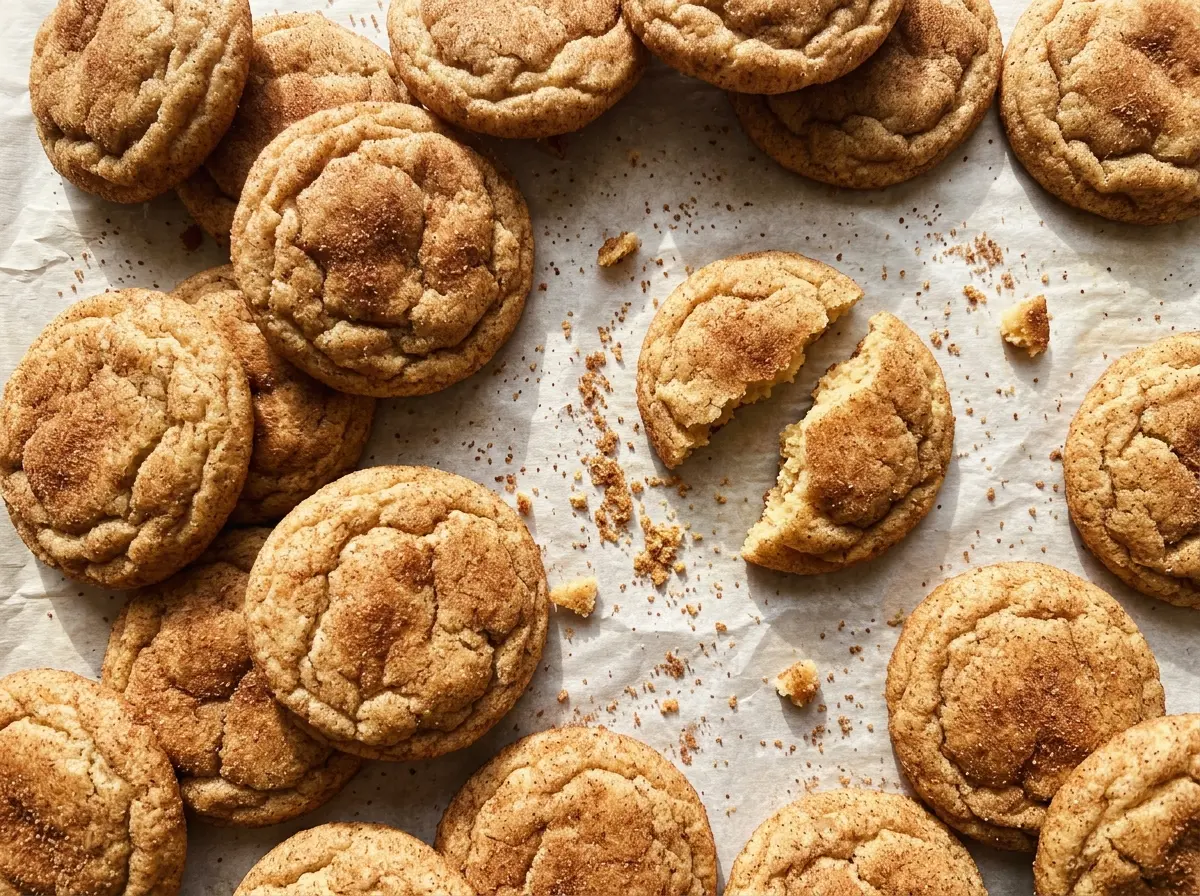
The first tray tells you when these cookies are ready: the edges look set, the tops have split into little cracks, and the centers still seem soft. That last part can make you want to leave them in longer, but they keep setting on the hot baking sheet. Snickerdoodle Cookies should have a tender middle and a delicate cinnamon-sugar crust, not a dry, hard bite.
I mix the dough only until the flour disappears, then roll each portion through cinnamon sugar so every cookie gets that familiar sweet coating. Cream of tartar gives the dough its classic tang and works with the baking soda to make the cookies rise and spread. With a short bake and a five-minute rest on the pan, the batch comes together in stages without asking you to guess at the finish.
The cinnamon smells warm as the cookies bake, and the crackled tops make it easy to spot a finished tray. Let them cool on a rack until the edges hold and the centers stay soft.
Kitchen Note
Arrange 12 dough balls about 2 inches apart on the 18×13-inch baking sheet. Giving them that space helps them spread into separate cookies instead of crowding together.
Save these Snickerdoodle Cookies for a batch with crackled tops, a tender center, and that cinnamon-sugar finish.
Why Cream of Tartar Belongs in a Snickerdoodle
These cookies use both cream of tartar and baking soda, and each has a job. Baking soda helps the dough rise and spread in the oven. Cream of tartar brings the slightly tangy note that separates a snickerdoodle from a plain sugar cookie, while also contributing to the dough’s leavening balance. Leaving it out doesn’t just make the flavor less distinctive; it changes the way the cookie is built.
That’s why I keep the dry ingredients together and whisk them before they go into the butter mixture. It distributes the leaveners through the flour, so one cookie doesn’t end up with a concentrated bite of baking soda. Once the flour goes in, stop mixing as soon as the dry streaks disappear. A smooth, well-combined dough is the goal, not a long beating that keeps developing the flour.
The cinnamon-sugar coating adds another contrast: a lightly crisp, fragrant outside around the softer cookie. It’s a simple dough, so the balance between the tangy interior and the cinnamon-coated surface is what makes each bite taste unmistakably like a snickerdoodle.
What Each Snickerdoodle Ingredient Brings to the Dough

- All-purpose flour — It gives the cookies enough structure to hold their shape while staying tender. A standard store-brand flour works well; weigh or measure it consistently rather than packing it tightly into the cup, which can make the dough too dry. A direct flour swap changes the texture, so I stick with all-purpose here.
- Cream of tartar and baking soda — Together they create the lift and characteristic tang. Keep the cream of tartar in this classic version rather than replacing the pair with baking powder; that swap changes both the flavor and the leavening balance. Whisk these powders thoroughly with the flour so they’re evenly dispersed.
- Unsalted butter — Softened butter creams with the sugar and helps form the cookie’s tender structure. Fresh butter matters more here than an expensive brand; use unsalted so the measured salt stays under your control. Salted butter can work if you leave out the added salt, though the result may taste saltier depending on the butter.
- Granulated sugar — The larger portion sweetens and aerates the dough as it’s beaten with the butter; the reserved portion combines with cinnamon for the outside. Keep those portions separate so the coating doesn’t get mixed into the dough by mistake. Regular granulated sugar is the right choice for both jobs.
- Large eggs — Eggs bind the dough and add moisture. Add them one at a time and mix well after each addition so they blend into the butter mixture rather than sitting in streaks. Use large eggs for the proportions to stay balanced.
- Ground cinnamon — Cinnamon gives the coating its defining warm aroma. A fresh jar makes a more noticeable difference than a premium label; if yours has been open long enough to smell faint, replace it. Stir it evenly into the sugar before rolling the dough.
Mixing, Coating, and Baking Without Dry Cookies
Whisk the Dry Ingredients First
Preheat the oven to 375°F and line an 18×13-inch baking sheet with parchment paper. In a medium bowl, whisk together the flour, cream of tartar, baking soda, and salt until the mixture looks uniform. This quick whisk keeps the leavening from clumping in one part of the dough. Set the bowl aside while you cream the butter and sugar.
Cream the Butter and Sugar Until Fluffy
Beat the softened butter with 1 1/2 cups of the granulated sugar in a large bowl for about 2 minutes. It should look lighter and fluffy, not greasy or melted. Beat in the eggs one at a time, mixing well after each addition. Add the flour mixture on low and stop as soon as no dry streaks remain; continuing to beat at this point can make the cookies less tender.
Roll Each Portion in Cinnamon Sugar
Stir the remaining sugar with the cinnamon in a small bowl. Scoop the dough into 1-tablespoon portions, roll each one into a ball, and coat it in the cinnamon-sugar mixture. Set the coated balls on the prepared sheet, using the spacing in the Kitchen Note. If you see bare patches, roll the ball once more through the coating before placing it on the pan.
Bake Until the Tops Crackle
Bake for 9 to 11 minutes, watching for set edges and crackled tops. The centers can still look soft when you take the sheet out; they’ll firm as they rest. Leave the cookies on the baking sheet for 5 minutes, then move them to a wire rack to cool. Let the baking sheet cool completely before lining it again and baking the remaining dough in batches.
Two Simple Ways to Change the Batch
Make a Half Batch
Halve every ingredient to make about 18 cookies, using one large egg and keeping the dough portions at 1 tablespoon. The smaller batch gives you the same cinnamon-sugar finish without leaving you with three dozen cookies; bake at the same oven temperature and use the same visual cues for doneness.
Skip Cinnamon for a Plain Sugar-Coated Cookie
For a cinnamon-free batch, leave the ground cinnamon out of the coating and roll the dough balls in the reserved granulated sugar alone. The cookies keep their soft texture and lightly crisp sugary outside, but lose the warm spice and classic snickerdoodle character.
Storage and Reheating
- Refrigerator: Refrigeration isn’t needed. Store the cooled cookies in an airtight container at room temperature for up to 5 days; they gradually lose a little softness.
- Freezer: Freeze fully cooled cookies in an airtight freezer-safe container for up to 2 months. Thaw at room temperature before serving.
- Reheating: These cookies don’t need reheating; let them come to room temperature after freezing. Microwaving can make them soft at first and tough as they cool.
Questions That Come Up While Baking Snickerdoodles
Snickerdoodle Cookies
Ingredients
Equipment
Method
- Preheat the oven to 375°F.
- Line an 18x13-inch baking sheet with parchment paper.
- In a medium bowl, whisk together the flour, cream of tartar, baking soda, and salt.
- In a large bowl, beat the butter and 1 1/2 cups of the sugar until light and fluffy, about 2 minutes.
- Beat in the eggs one at a time, mixing well after each addition.
- Add the flour mixture and mix on low just until no dry streaks remain.
- In a small bowl, stir together the remaining 1/4 cup sugar and the cinnamon.
- Scoop the dough into 1-tablespoon portions and roll each portion into a ball.
- Coat each dough ball in the cinnamon-sugar.
- Arrange 12 balls about 2 inches apart on the prepared baking sheet.
- Bake for 9 to 11 minutes, until the edges are set and the tops are crackled.
- Let the cookies rest on the baking sheet for 5 minutes.
- Transfer the cookies to a wire rack to cool.
- Let the baking sheet cool completely before lining it again and baking the remaining dough in batches.


