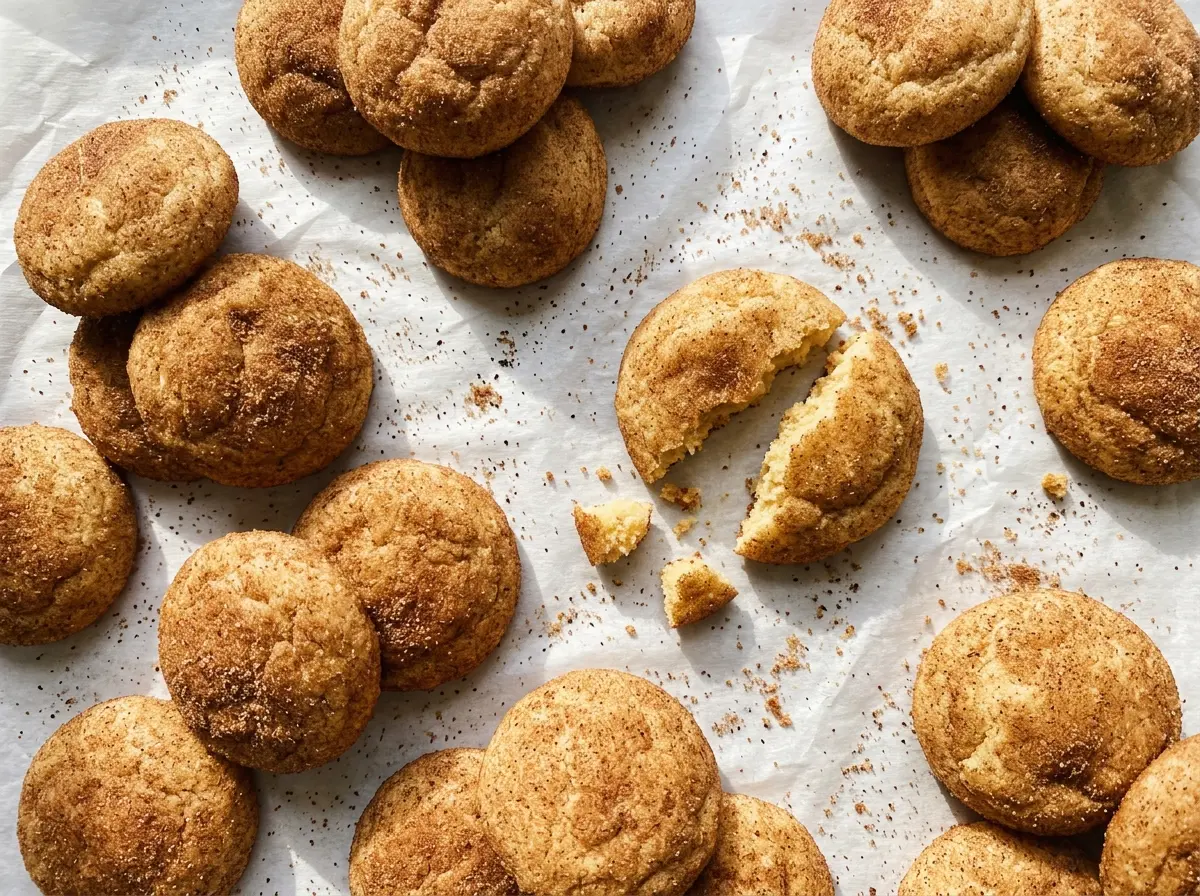
When the baking sheets come out, the edges are set but the centers still look soft and a little puffy. That’s exactly where I want these spiced snickerdoodles. They finish settling on the hot pans, leaving you with a tender middle and a cinnamon-sugar coating that clings to every bite.
I cream the butter and sugar until they look pale and fluffy, then stop mixing the moment the flour disappears. That keeps the cookies from turning dense, and the cream of tartar gives them the gentle tang that makes a snickerdoodle taste like a snickerdoodle. With a quick cinnamon-sugar roll before baking, the tops come out lightly crackled and fragrant.
Kitchen Note
Start checking at 8 minutes. Pull the cookies when the edges have set but the centers still look soft and slightly puffy; they’ll firm up as they cool on the baking sheets.
Save these spiced snickerdoodles for a bake day when you want soft centers and a cinnamon-sugar crust.
Why Cream of Tartar Makes These Snickerdoodles More Than Cinnamon-Sugar Cookies
Without cream of tartar, you’d still have a sweet cookie rolled in cinnamon sugar, but you’d lose the slightly tangy note that sets snickerdoodles apart. It also works alongside the baking soda to help the dough rise in the oven. That pairing is why I don’t treat cream of tartar as an optional extra or swap it out casually.
The difference is subtle, not sharp. It balances the sweetness of the dough and keeps the cookie’s flavor from tasting like plain sugar with cinnamon on top. Baking soda on its own doesn’t bring that tang, and it won’t recreate the same balance. If your jar has been sitting in the pantry for ages, check that it’s still dry and free-flowing; a damp, clumpy powder is harder to mix evenly into the flour.
This is also why the dough needs only a brief mix after the dry ingredients go in. Cream of tartar and baking soda should be distributed through the flour before they meet the wet ingredients, so whisking them together first helps prevent concentrated pockets. Once the flour mixture disappears into the butter mixture, stop. A few extra turns of the mixer won’t improve the cookie.
What Each Ingredient Brings to a Classic Snickerdoodle

- Unsalted butter — Softened butter creams smoothly with the sugar and gives the cookies their rich, tender texture. Unsalted butter also lets you control the salt level. If you only have salted butter, use it and leave out the fine salt; the cookies may taste a little saltier.
- Granulated sugar — Sugar sweetens the dough and helps create the lightly crisp outside. The separate cinnamon-sugar coating sticks best when you roll the dough balls just before baking, rather than leaving them sitting in the bowl.
- Large eggs — Eggs bind the dough and add moisture. Use large eggs for the intended balance; smaller eggs can leave a drier dough, while extra-large eggs can make it looser.
- All-purpose flour — This gives the cookies enough structure to hold their round shape while staying soft inside. Measure without packing it into the cup, since too much flour can make the dough stiff and the baked cookies dry. I don’t recommend swapping in another flour for this version.
- Vanilla extract — Vanilla rounds out the butter and cinnamon. You can leave it out if needed, but the cookies will taste a little less warm and full.
- Ground cinnamon — Fresh, fragrant cinnamon makes the coating taste vivid, but an ordinary grocery-store ground cinnamon works well. If the spice smells faint when you open the jar, the finished coating will taste quieter too.
- Cream of tartar and baking soda — Together they give the dough its characteristic lift and balance. There isn’t a direct one-for-one replacement for cream of tartar here, so keep both leaveners for the classic result.
From Fluffy Butter to Crackled Cinnamon Tops
Cream the Butter and Sugar Until Airy
Heat the oven to 400°F and line two baking sheets with parchment paper before mixing. Beat the softened butter with the larger portion of granulated sugar until the mixture looks pale and fluffy, about 2 minutes. Scrape the bowl if butter is clinging to the sides, so it creams evenly. Beat in the eggs and vanilla until combined; if the mixture looks slightly uneven, it will come together as the flour mixture goes in.
Whisk the Dry Ingredients, Then Stop Mixing Early
In a medium bowl, whisk the flour, cream of tartar, baking soda, and salt so the leaveners are spread throughout. Add this mixture gradually to the butter mixture, mixing just until the flour disappears. If the dough starts to look elastic or sticky from extended mixing, stop rather than trying to beat it smooth. Overmixing after adding flour can make the cookies tougher.
Roll Even Balls in the Cinnamon-Sugar
Stir the remaining granulated sugar and cinnamon together in a small bowl until the color looks even. Shape the dough into 1-inch balls, then roll each one through the coating until the surface is covered. Set them about 2 inches apart on the prepared baking sheets to give them room to spread. Keep the balls similar in size so they bake at the same pace.
Bake Until the Edges Set, Then Let the Pans Finish the Job
Bake at 400°F for 8 to 10 minutes, rotating the sheets between oven racks halfway through. Look for set edges and centers that remain soft and slightly puffy; the tops shouldn’t look fully firm in the oven. Leave the cookies on the baking sheets for 5 minutes, then move them to a wire rack. Transferring them too early can break the tender cookies before they’ve had a chance to set.
Small Changes for a Different Cinnamon-Sugar Cookie
Turn Up the Cinnamon
Use a little more cinnamon in the coating while keeping the sugar in the mix. The spice comes through more strongly, with a slightly less sweet finish on the outside; add it gradually so the coating doesn’t become dusty or bitter.
Make a Less-Sweet Batch
Reduce the granulated sugar in both the dough and the coating a little for a less-sweet cookie. Sugar affects spread and browning, so expect a paler cookie with a softer, less crisp outside rather than exactly the same texture.
Leave Out the Vanilla
If you’re out of vanilla, omit it and keep the other ingredients the same. The cinnamon and cream of tartar still give the cookies their familiar character, though the buttery flavor will come through more plainly.
Storage and Reheating
- Refrigerator: Store cooled cookies in an airtight container for up to 5 days. The cinnamon-sugar coating may soften a little over time.
- Freezer: Freeze fully cooled cookies in an airtight freezer container for up to 2 months. Thaw them at room temperature.
- Reheating: These cookies are best at room temperature, so reheating isn’t necessary. Warming them can soften the coating.
Questions That Come Up While Baking Snickerdoodles
Spiced Snickerdoodles
Ingredients
Equipment
Method
- Heat the oven to 400°F.
- Line two baking sheets with parchment paper.
- Beat the butter and 1 1/2 cups granulated sugar in a large bowl until light and fluffy, about 2 minutes.
- Beat in the eggs and vanilla extract.
- Whisk the flour, cream of tartar, baking soda, and salt in a medium bowl.
- Gradually mix the dry ingredients into the butter mixture just until combined.
- Stir the remaining 1/4 cup granulated sugar and cinnamon together in a small bowl.
- Shape the dough into 1-inch balls.
- Roll each ball in the cinnamon-sugar.
- Place the coated dough balls about 2 inches apart on the prepared baking sheets.
- Bake at 400°F for 8 to 10 minutes, until the edges are set and the centers are still soft and slightly puffy.
- Rotate the sheets between oven racks halfway through baking.
- Let the cookies cool on the baking sheets for 5 minutes.
- Transfer the cookies to a wire rack to cool completely.