A tray of potatoes can look golden at the corners while the broad sides stay pale and soft; what happens before roasting makes the difference. I like how these potatoes get a quick boil, a rough-up in the pot, then enough room on the baking sheet to brown instead of steam. The eggs cook first and wait chilled while the bacon renders and the potatoes take their time.
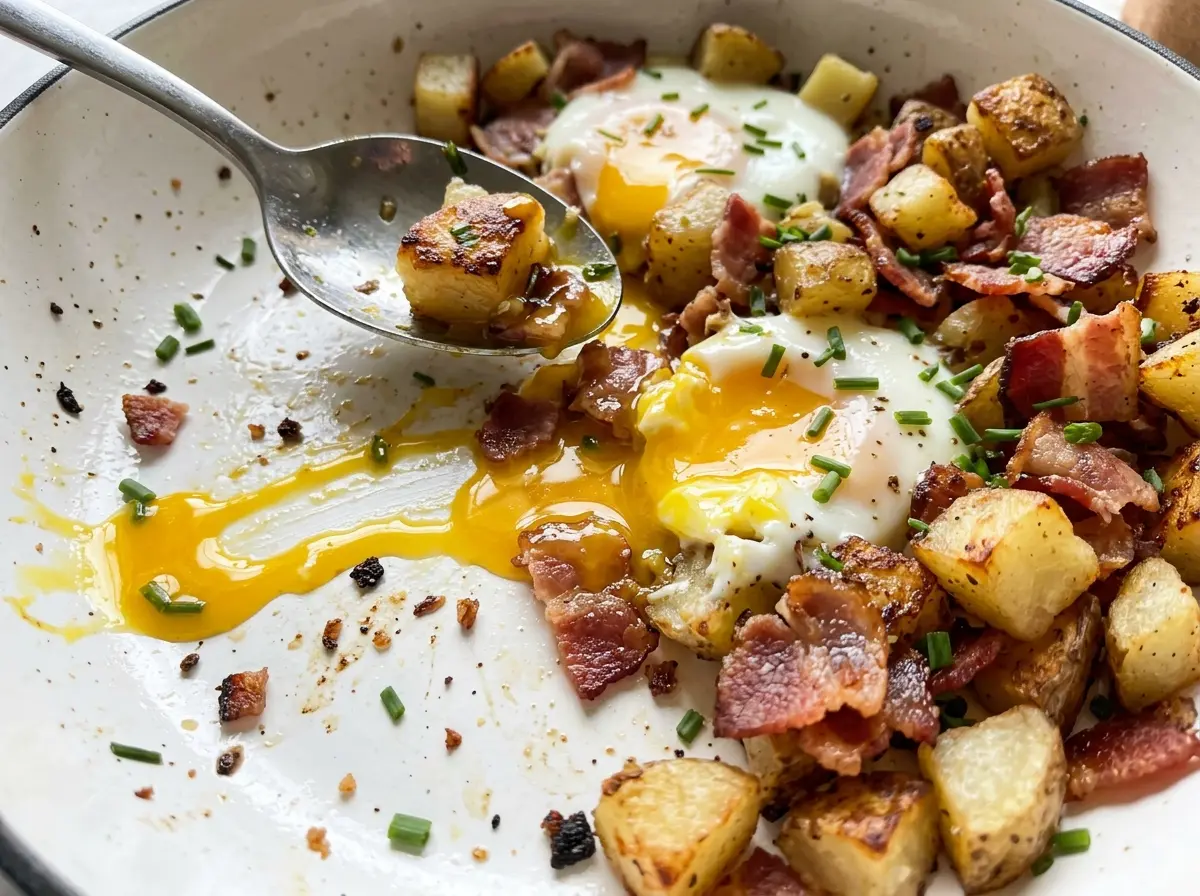
These crispy potatoes with jammy eggs and bacon make a satisfying plate with contrasting textures: a tender middle under crisp potato edges, salty bacon, fresh scallions, and an egg yolk that stays soft. Yukon Gold potatoes are a good fit because they keep their shape through boiling but still develop a rough surface for the oven. Each part has its own job, and the finished plate is warm, crisp, and rich without feeling fussy.
Kitchen Note
Lower the eggs gently into the boiling water rather than dropping them in. A cracked shell can let the white escape before the yolk has a chance to set.
Save these crispy potatoes with jammy eggs and bacon for a brunch plate with crunchy edges, salty bacon, and soft yolks.
Why Baking Soda Gives the Potato Edges Their Crunch
The crisp texture starts in the pot, not the oven. Baking soda changes the cooking water enough to soften the potatoes’ outer layer more quickly. Once the chunks are drained and shaken, that loosened surface turns into a rough, craggy coating instead of a smooth shell. Olive oil catches on those ridges, and they brown beautifully in the high heat.
That rough surface is useful because a smooth potato chunk has less texture to crisp. The goal isn’t to break the potatoes into mash; it’s to rough up the edges while the centers stay firm. Keep the boil to the point where the edges are tender and the middle still holds together. If the chunks are already collapsing in the pot, they’ve gone too far to hold their shape through the shake and roast.
Why Yukon Golds, Thick-Cut Bacon, and Olive Oil Fit This Plate

- Yukon Gold potatoes — Their creamy centers and sturdy shape suit the quick boil and rough handling. Choose firm potatoes without soft spots; there’s no need to seek out unusually large or premium ones. Keeping the chunks even helps them cook at the same pace.
- Baking soda — This small amount helps create the softened outer layer that becomes craggy after shaking. Measure it carefully; it has a specific role in the boiling water, and adding extra won’t improve the potatoes.
- Olive oil — It coats the rough potato edges and helps them brown on the baking sheet. A standard olive oil works well here; save a special finishing oil for another dish, since the potatoes roast at high heat.
- Thick-cut bacon — Thick slices make substantial crumbles that stand out against the potatoes. Look for pieces with a good balance of meat and fat, which crisp without disappearing into tiny bits.
- Large eggs — Use large eggs for the specified simmering time. The yolk is the soft contrast to the crisp potatoes, and changing egg size changes how quickly the center cooks.
- Scallions — Fresh scallions bring a mild onion bite to the rich bacon and potatoes. Slice them thinly so they scatter across the plate rather than landing in large, sharp pieces.
From Jammy Eggs to Crisp Potato Edges: The Order That Works
Set the Eggs in an Ice Bath
Bring the water in a 2-quart saucepan to a boil, gently lower in the eggs, and simmer them for 7 minutes. While they cook, put the ice and cold water in a bowl. Transfer the eggs straight into the ice bath and chill for 5 minutes, then peel and set them aside. The quick chill keeps the yolks from firming up further while you cook the rest of the meal.
Render the Bacon Until Crisp
Cook the thick-cut bacon in a 12-inch skillet over medium heat, turning it occasionally for even browning. It takes 8–12 minutes to become crisp, though the exact time depends on the thickness of the slices. Move the cooked bacon to a paper towel-lined plate. Once it’s cool, crumble it into pieces that will be easy to scatter over the potatoes.
Boil, Drain, and Rough Up the Potatoes
Put the potato chunks in a 5-quart pot with the water, 1 tablespoon of kosher salt, and the baking soda. Bring everything to a boil and cook for 8–10 minutes, until the edges are tender but the centers are still firm. Drain the potatoes and let them steam-dry in the colander for 2 minutes. Return them to the pot and shake until their edges look rough, not until the chunks break apart.
Roast Until Deeply Golden
Heat the oven to 450°F with a rack in the center position. Toss the potatoes with the olive oil, remaining 1 teaspoon of kosher salt, and black pepper, then spread them in a single layer on a large rimmed baking sheet. Roast for 35–45 minutes, turning the potatoes once after 20 minutes. Look for a deep golden color and crisp surfaces before taking them out.
Finish Each Plate
Divide the potatoes among four plates and top them with the crumbled bacon and thinly sliced scallions. Serve the peeled eggs alongside. Keeping the eggs whole until serving preserves the soft yolks, which spill over the potatoes when cut at the table.
Two Small Changes That Shift the Plate
An Ovo-Vegetarian, Bacon-Free Plate
Leave off the bacon and serve the eggs with the potatoes and scallions. The olive oil already coating the potatoes supplies richness, but the plate loses the bacon’s smoky, salty bite; it becomes a simpler potato-and-egg meal rather than a close copy of the original.
A Scallion-Free Finish
Leave the scallions off if you prefer a more straightforward bacon-and-potato flavor. The plate will be richer and less fresh-tasting, but the crisp potatoes, bacon, and jammy eggs still work together as a complete meal.
Storage and Reheating
- Refrigerator: Store the potatoes, bacon, and peeled eggs separately in airtight containers for up to 3 days. The potatoes soften as they chill, and the egg yolks firm up.
- Freezer: I don’t recommend freezing the assembled meal. The eggs become rubbery after thawing, and the potatoes lose their crisp texture.
- Reheating: Spread the potatoes on a baking sheet and warm them in a 450°F oven until hot and crisp again. Serve the eggs chilled; microwaving them with the potatoes can overcook the yolks.
Questions About Keeping the Potatoes Crisp and Yolks Jammy
Crispy Potatoes with Jammy Eggs and Bacon
Ingredients
Equipment
Method
- Heat the oven to 450°F with a rack in the center position.
- Bring 4 cups water to a boil in a 2-quart saucepan.
- Gently lower in the eggs and simmer for 7 minutes.
- Put the ice and 4 cups cold water in a bowl.
- Transfer the eggs to the ice bath and chill for 5 minutes.
- Peel the eggs and set aside.
- Cook the bacon in a 12-inch skillet over medium heat, turning occasionally, for 8–12 minutes until crisp.
- Transfer the bacon to a paper towel-lined plate.
- Crumble the bacon once cool.
- Put the potatoes, 8 cups water, 1 tablespoon kosher salt, and baking soda in a 5-quart pot.
- Bring to a boil and cook for 8–10 minutes until the edges are tender but the centers are still firm.
- Drain the potatoes and let them steam-dry in the colander for 2 minutes.
- Return the potatoes to the pot and shake until the edges are rough.
- Toss the potatoes with the olive oil, remaining 1 teaspoon kosher salt, and black pepper.
- Spread the potatoes in a single layer on a large rimmed baking sheet.
- Roast for 35–45 minutes, turning once after 20 minutes, until deeply golden and crisp.
- Divide the potatoes among plates and top with the crumbled bacon and sliced scallions.
- Serve with the peeled eggs.