At the oven door, the Parmesan topping may look ready while the thick center of the salmon still needs a little more time. That’s the small mismatch to watch with baked salmon with mayo and cheese: the topping browns on its own schedule, and a golden surface can’t tell you whether the fish is cooked through. I use the thermometer reading in the thickest part as my guide, with the color as a second cue.
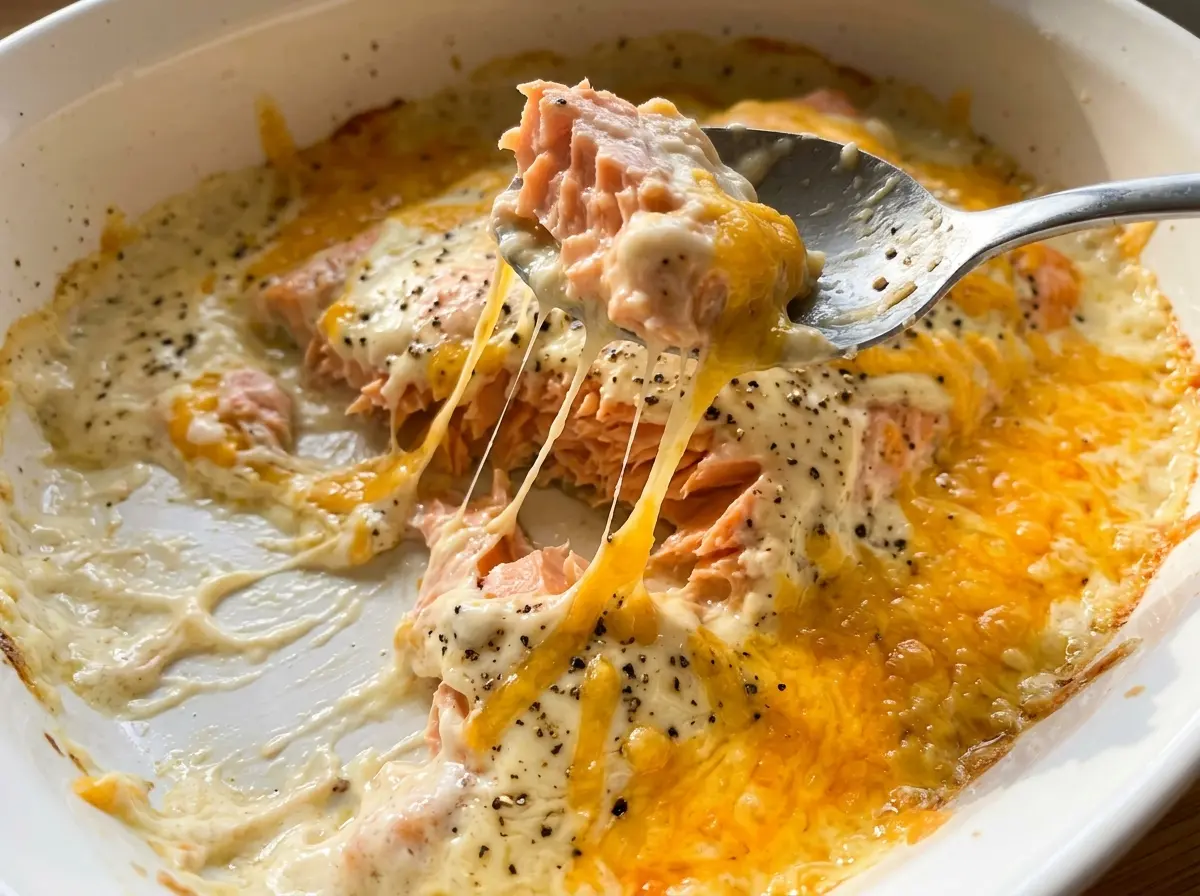
The topping comes together in one bowl, then goes right onto the salmon before baking. Mayonnaise holds the finely shredded cheese in a creamy layer, while lemon juice cuts through its richness. There’s no separate sauce to cook and no need to flip the fillet; the skin stays against the parchment while the Parmesan turns lightly golden on top. After a brief rest, each portion is tender beneath a savory, lemony crust.
Kitchen Note
Give the salmon its full 3-minute rest before serving. The topping settles, and the fish stays together better when you cut into it.
Save this baked salmon with mayo and cheese for a simple Parmesan-topped dinner with a bright hint of lemon.
Why a One-Inch Salmon Fillet Still Needs a Temperature Check
A center-cut fillet gives you a more even shape than a thin tail piece, but even a piece about an inch thick won’t cook at precisely the same pace every time. The exact thickness varies from one end to the other, and the oven and baking sheet affect how quickly heat reaches the center. That’s why the bake time is a window rather than a promise that the fish will be ready at one exact minute.
The topping adds another visual cue, but it isn’t a reliable stand-in for checking the fish. Parmesan can turn lightly golden while the thickest part is still catching up, or the topping may stay pale even as the salmon approaches its endpoint. Use the temperature in the center of the thickest section to judge doneness, and let the topping’s color confirm that the surface has baked as intended. With both cues in view, you’re less likely to pull the salmon too early or leave it in the oven longer than it needs.
What the Mayo, Parmesan, and Lemon Each Bring

- Center-cut salmon: Choose a fillet with a fairly even thickness so the middle and thinner edges finish close together. The recipe is built around a piece about an inch thick; a much thinner fillet will cook sooner, so watch it closely. Freshly cut salmon is convenient, while frozen salmon works once it’s completely thawed and patted dry.
- Mayonnaise: Regular full-fat mayonnaise gives the topping body and keeps it creamy as it bakes. A store brand works well here; there’s no need for a premium jar. Full-fat plain Greek yogurt can stand in for mayonnaise in the same amount, but the topping will taste tangier and be less rich.
- Finely shredded Parmesan: Parmesan gives the topping its salty, savory character and browns at the surface. Finely shredding it helps it blend evenly into the mayonnaise; a block you grate yourself tends to give the smoothest mixture, though packaged finely shredded Parmesan is convenient. Finely shredded Pecorino Romano is a workable swap, but it tastes sharper and saltier.
- Lemon juice: A little acidity keeps the creamy topping from tasting heavy. Freshly squeezed juice has a brighter flavor, but bottled lemon juice is fine when that’s what you have. Stir it into the topping rather than pouring it over the salmon on its own.
- Kosher salt and black pepper: Season the salmon itself before adding the topping so the fish isn’t left bland underneath the cheese. Parmesan already brings saltiness, so keep the added salt measured rather than seasoning the top again.
From Seasoned Fillet to Lightly Golden Topping
Set Up the Salmon on Parchment
Heat the oven to 425°F and line a rimmed baking sheet with parchment paper. Set the salmon skin-side down on the lined pan, then season it evenly with the kosher salt and black pepper. Keeping the skin against the pan gives the topping a flat surface to sit on and makes the fillet easier to handle. Spread the seasoning across the whole piece instead of concentrating it in the center.
Stir Together the Parmesan Topping
In a small bowl, stir the mayonnaise, finely shredded Parmesan, and lemon juice until the mixture looks evenly combined. Break up any clumps of cheese so you don’t end up with bare patches on the salmon. The finished mixture should be thick enough to spread and should hold together rather than run off the fillet. If the cheese is in large shreds, take a moment to chop or grate it finer before mixing.
Spread, Bake, and Check the Thickest Part
Spread the topping evenly over the salmon, covering the surface from end to end without piling it heavily in one spot. Bake for 12 to 16 minutes, until the thickest part reaches 145°F and the topping is lightly golden. Check the temperature at the thickest point; inserting the thermometer into a thin edge can give you a reading that doesn’t represent the center. Rest the salmon for 3 minutes before serving.
Two Useful Ways to Adapt the Parmesan Topping
Use Pecorino for a Sharper, Saltier Crust
Replace the finely shredded Parmesan with the same volume of finely shredded Pecorino Romano. The topping will taste more assertive and saltier, so keep the measured salt on the salmon as it is rather than adding extra.
Make the Topping Dairy-Free
Use dairy-free mayonnaise and finely shredded dairy-free Parmesan-style cheese in place of the regular versions, keeping the same amounts. The topping will still make a creamy layer, though it won’t have quite the same nutty Parmesan flavor. Check the topping as it bakes because dairy-free shreds can brown differently from dairy cheese.
Storage and Reheating
- Refrigerator: Refrigerate leftovers in a covered container for 3 to 4 days. The topping softens after chilling, but the salmon remains good for another meal.
- Freezer: Freeze portions in an airtight freezer container for up to 2 months for best quality. The salmon is safe to freeze, though the mayonnaise-and-cheese topping may separate or turn softer after thawing.
- Reheating: Reheat covered in a 275°F oven until the center reaches 165°F, or heat a portion gently in the microwave. High heat can dry out the salmon before the topping warms through.
Questions That Come Up When Baking Salmon with Mayo and Cheese
Baked Salmon with Mayo and Cheese
Ingredients
Equipment
Method
- Heat the oven to 425°F.
- Line a rimmed baking sheet with parchment paper.
- Place the salmon skin-side down on the baking sheet.
- Season it evenly with the salt and pepper.
- Stir the mayonnaise, Parmesan, and lemon juice together in a small bowl.
- Spread the topping evenly over the salmon.
- Bake for 12 to 16 minutes, until the thickest part reaches 145°F and the topping is lightly golden.
- Rest the salmon for 3 minutes before serving.