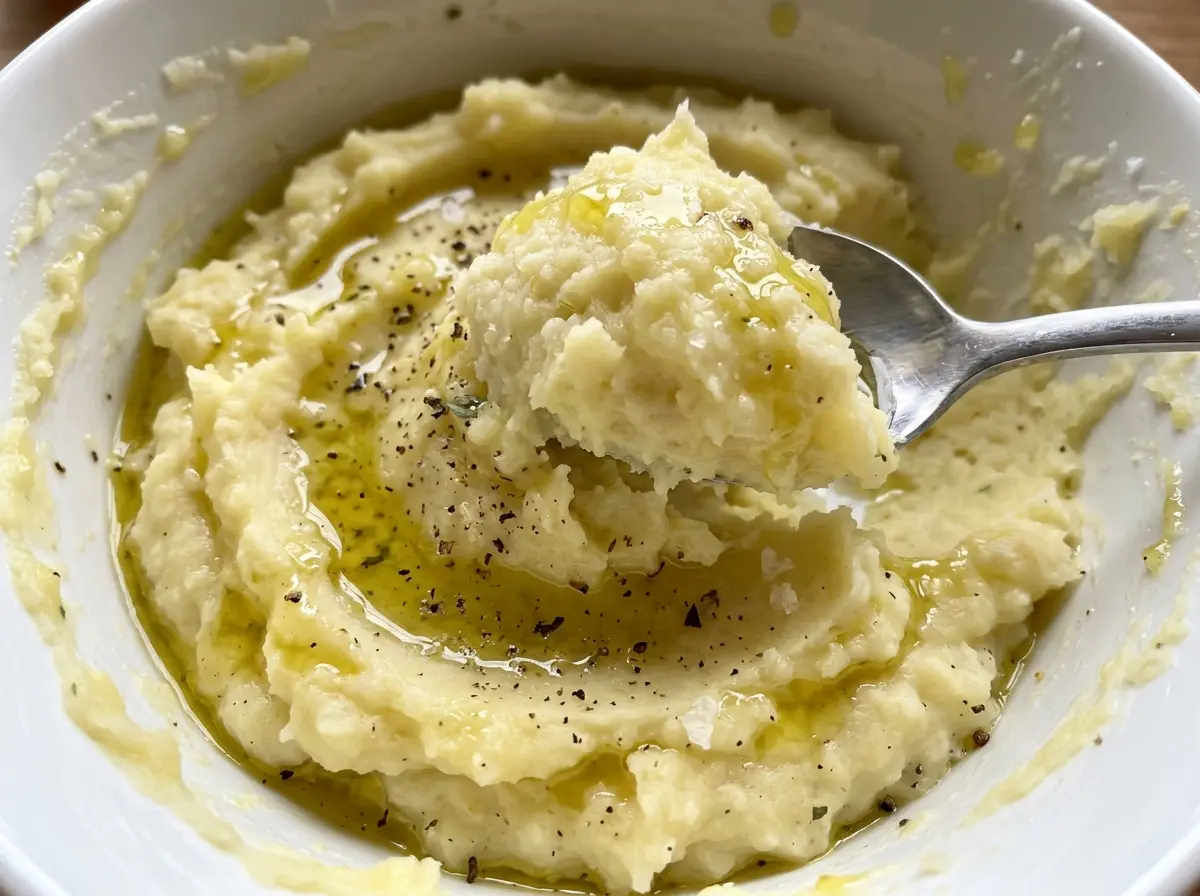
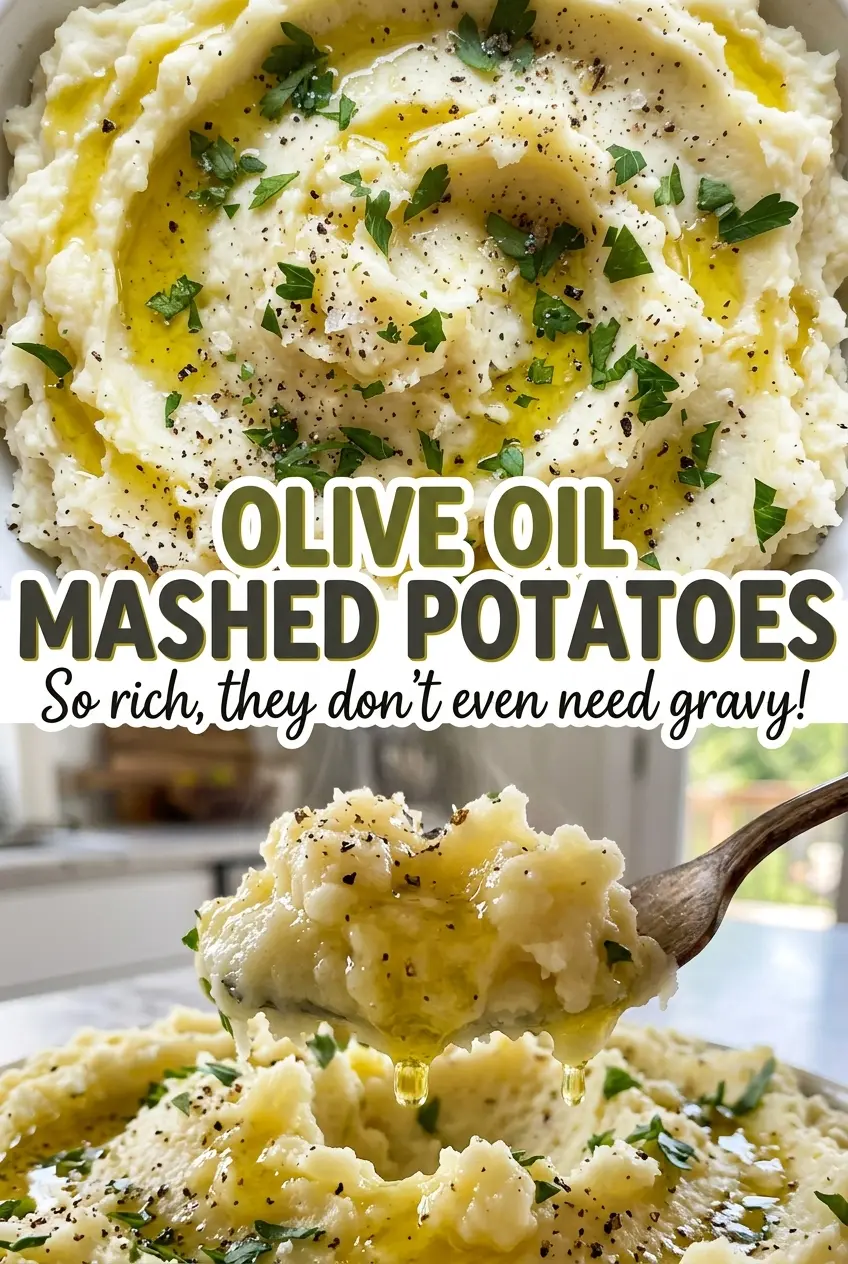
A fork should slide through a Yukon Gold chunk with almost no pressure before you drain the pot. If the centers are still firm, they’ll leave little lumps behind no matter how long you mash. These olive oil mashed potatoes turn creamy without butter or cream, and the extra-virgin olive oil gives them a gentle, fruity richness that doesn’t feel heavy.
I warm the oil before it goes into the potatoes, then work it in gradually with a little of the cooking water. That keeps the mash smooth and lets the olive oil taste round instead of sharp. The result is a soft, golden bowl with just enough black pepper to balance the richness.
Kitchen Note
Keep the potato pieces close to the same 1 1/2-inch size. Smaller pieces can soften before the larger ones, so even chunks make the pot finish cooking together.
Save these olive oil mashed potatoes for a creamy, dairy-free side with a gentle fruity finish and a simple stovetop method.
Why the Reserved Potato Water Beats Adding More Oil
Olive oil adds richness, but pouring in extra oil to loosen a stiff mash can leave it slick. The cooking water gives you a better way to adjust the texture. As the potatoes simmer, a little starch escapes into the water; when you mix that water back into the mash, it helps the oil and potato come together instead of pooling on the surface.
That’s why I save some of the pot water before draining. Add it gradually alongside the warm oil, stopping when the potatoes look creamy and easy to stir. You may not need every drop, since potatoes vary slightly in how much water they absorb. Plain water won’t bring the same starchy quality, and milk would change the clean olive-oil character of this particular mash. The reserved water is already seasoned, too, so it contributes more than just moisture.
What Yukon Golds and Extra-Virgin Olive Oil Bring to the Pot
- Yukon Gold potatoes — Their naturally buttery taste and creamy texture suit a mash made without dairy. Choose firm potatoes without soft spots. Yellow potatoes are the closest swap at the same weight, with a similar texture and a slightly less buttery taste.
- Extra-virgin olive oil — Its fruitiness stays noticeable in the finished potatoes, so use an oil whose flavor you enjoy. A fresh, everyday bottle works; there’s no need to use a special finishing oil. Regular olive oil can stand in at the same amount, though the mash will taste milder and less fruity.
- Black pepper — It gives the rich potatoes a little bite without competing with the olive oil. Ground pepper from a jar works perfectly here; freshly ground pepper will taste sharper, so add it with a light hand if you choose that option.
The Four Stages That Keep the Mash Creamy
Simmer Until a Fork Slides In Easily
Put the peeled potato chunks in a 5-quart pot with 10 cups of water and 1 tablespoon of the kosher salt. Bring the pot to a boil over high heat, then lower the heat and simmer for 15 to 20 minutes. Check a piece with a fork: it should go through easily, with no firm center. If the fork meets resistance, give the potatoes a little longer rather than trying to mash them undercooked.
Save the Water Before You Drain
Drain the potatoes, reserving 1/2 cup of the cooking water. Set that water aside before tipping the pot into the sink; it’s easy to forget once the potatoes are steaming in the colander. Return the drained potatoes to the pot for mashing. Don’t add the reserved water all at once later, because you’ll have more control over the final texture if you pour it in gradually.
Warm the Oil Gently
Pour the extra-virgin olive oil into a small saucepan and warm it over low heat for about 2 minutes. It should feel just warm, not hot, and it must not simmer. A simmering oil won’t help the potatoes; keep the heat low and take the pan off as soon as the oil is warm. This gentle warmth makes it easier to mix into the hot potatoes.
Mash and Add the Liquids Gradually
Mash the potatoes in the pot, then gradually mix in the warm olive oil, reserved cooking water, remaining 1/2 teaspoon of kosher salt, and black pepper. Keep stirring until the potatoes look creamy, pausing as the mixture loosens so you don’t add more water than it needs. If the mash still looks stiff, add a little more of the reserved water. Stop when it’s smooth and holds a soft mound on the spoon.
How to Change the Potato or Olive-Oil Character
Use russets for a fluffier mash
Replace the Yukon Golds with the same weight of russet potatoes, peeled and cut into similarly sized chunks. Russets make a lighter, starchier mash with less of the buttery potato taste, and they may reach fork-tender at a different point, so use the fork test rather than relying only on the clock.
Choose a milder olive oil
A mild, buttery extra-virgin olive oil keeps the mash’s flavor soft, while a more peppery oil makes the finish bolder. Both work with the same method; pick based on whether you want the potato or the oil to stand out more.
Make a lower-sodium batch
Leave out the tablespoon of salt in the cooking water, then add the remaining salt gradually as you mash and taste before adding all of it. The potatoes will be less seasoned throughout, but you’ll have more control over how much salt goes into the finished bowl.
Storage and Reheating
- Refrigerator: Store in an airtight container for 3 to 4 days. The potatoes will firm up as they chill.
- Freezer: Freeze in an airtight container for up to 1 month for the best texture. Thaw in the refrigerator; the mash may look a little looser after thawing.
- Reheating: Warm gently in a saucepan over low heat or in the microwave in short bursts, stirring between intervals. If it’s thick, stir in a small splash of water; high heat can make the oil separate.
Questions That Come Up While Making Olive Oil Mashed Potatoes
Olive Oil Mashed Potatoes
Ingredients
Method
- Put the potatoes, water, and 1 tablespoon of the salt in a 5-quart pot and bring to a boil over high heat.
- Reduce the heat and simmer for 15 to 20 minutes, until the potatoes are fork-tender.
- Drain the potatoes, reserving 1/2 cup of the cooking water.
- Warm the olive oil in a small saucepan over low heat for about 2 minutes, until just warm; do not let it simmer.
- Mash the potatoes in the pot, gradually mixing in the warm olive oil, reserved cooking water, remaining 1/2 teaspoon salt, and black pepper until creamy.