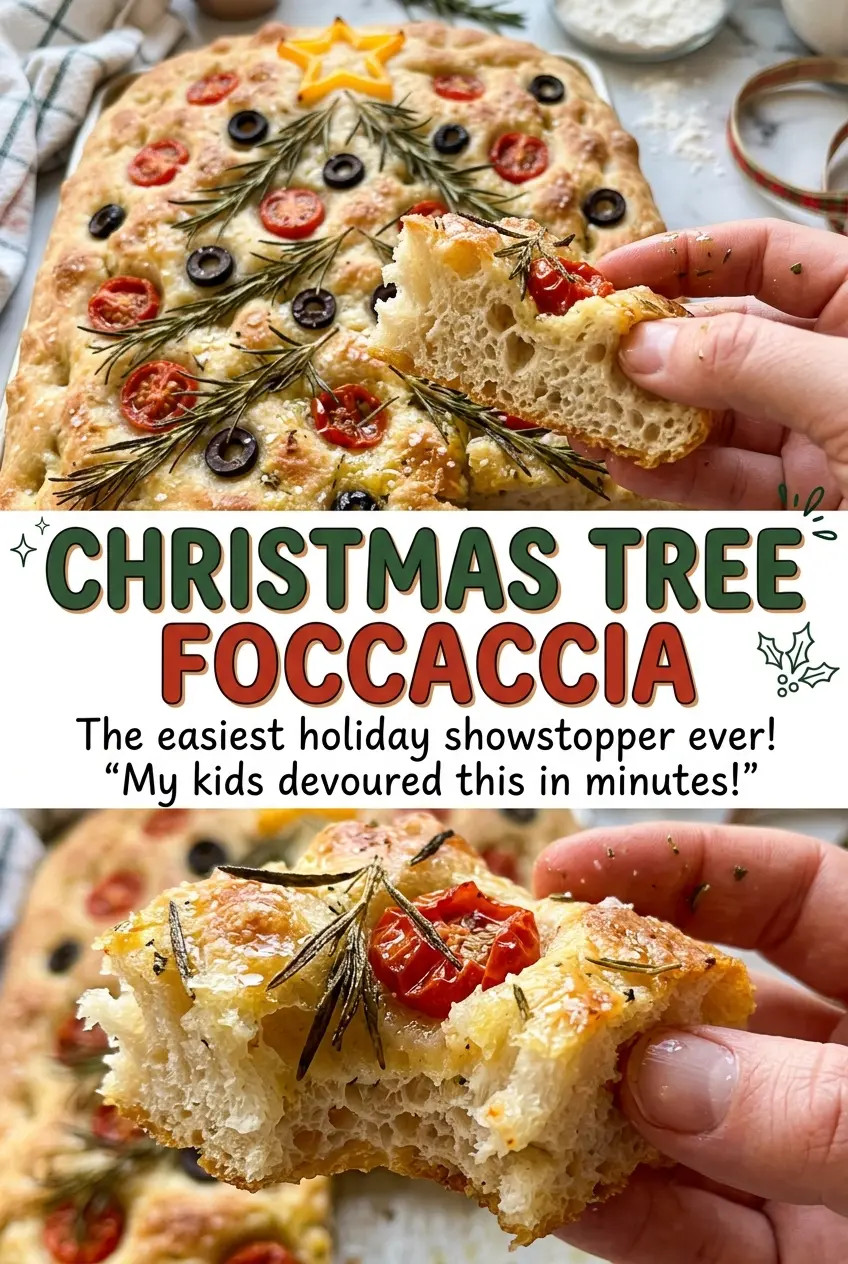
When you press your fingertips into focaccia dough, it should give way softly and hold the little wells instead of snapping back. That puffy surface is the start of the best part of Christmas Tree Focaccia: arranging rosemary branches and bright pepper strips right on top, then watching the whole design turn golden in the oven. It looks special on the table, but the dough is mixed in one bowl and shaped in a regular 9×13-inch pan.
I like this method because it gives the dough time to build strength without asking you to knead a sticky mass on the counter. Three rounds of folds do the work gradually, while the two rises make the crumb airy. Keep the toppings light enough to see the rosemary tree underneath, and the finished focaccia comes out tender, fragrant, and easy to pull apart at the edges.
Kitchen Note
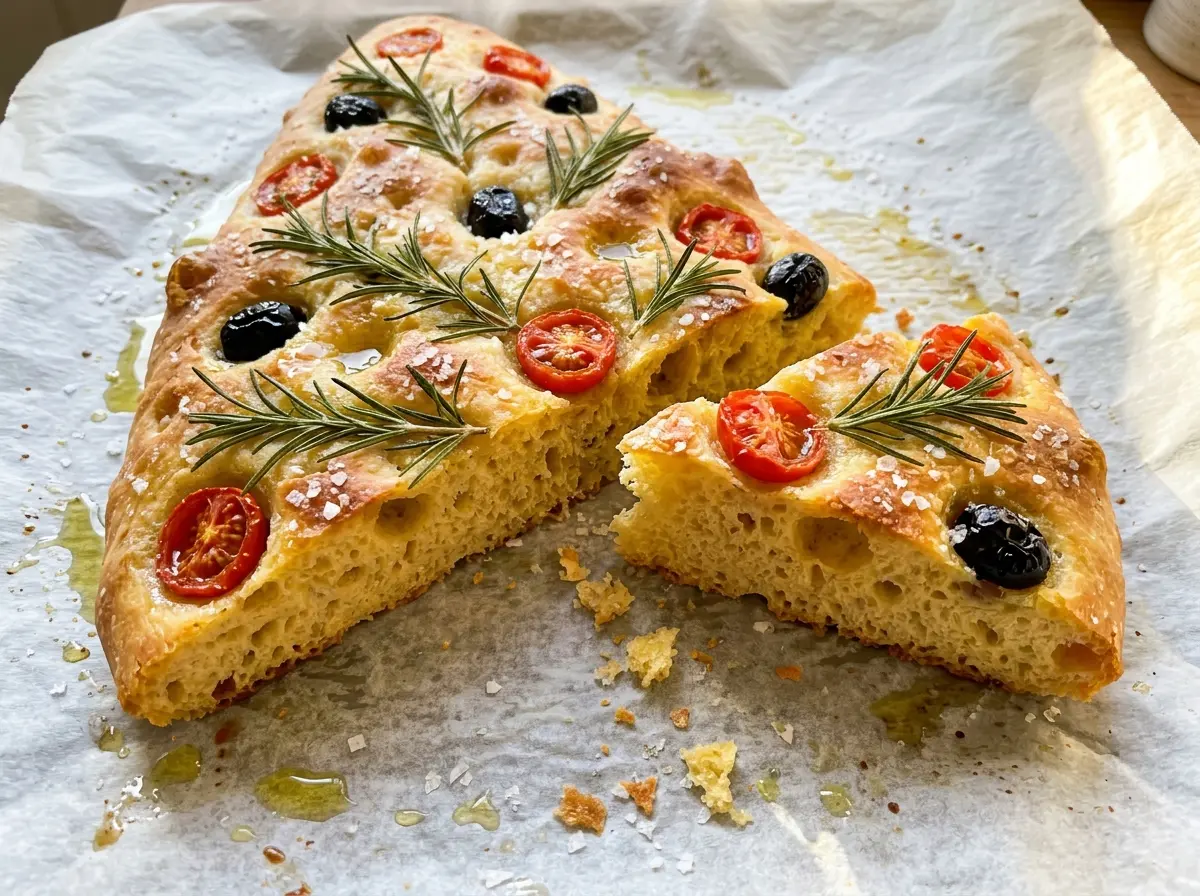
Lay out the rosemary in a stepped triangle before adding the pepper and tomatoes. The widest row belongs at the bottom, and that little bit of planning makes the tree shape read clearly once the toppings are baked in.
Save this Christmas Tree Focaccia for a centerpiece that’s made from rosemary, sweet pepper garland, and tomato ornaments.
Why the Three Sets of Folds Matter More Than Extra Flour
Freshly mixed focaccia dough feels sticky, and that can make your first instinct to add flour. Resist that urge. Extra flour makes the dough firmer, which can leave the baked bread tighter and less tender. Instead, the dough gets a short rest, then a set of folds with wet hands. The rested dough is easier to lift and fold than it was straight out of the bowl.
Each fold stretches one edge up and over the center, then you turn the bowl and work around all four sides. Repeating that set twice more, with rests between, gives the dough structure without flattening it or working it aggressively. It’s a small amount of hands-on time spread across the first rise, and the covered bowl keeps the surface from drying out while the dough rests.
Give the dough room to show you when it’s ready. The first rise ends when it has doubled, not just when the timer sounds. Later, the pan rise should leave it looking puffy. Those visual changes tell you more than trying to fix the dough by dusting it with flour or rushing ahead.
What Makes This Tree Topping Work on Focaccia
- All-purpose flour — Spoon it into the measuring cup and level the top rather than scooping straight from the bag, which can pack in too much. That keeps the dough proportions consistent. A standard all-purpose flour is the right choice here; a direct swap to whole wheat changes how the dough absorbs water.
- Instant yeast — Instant yeast mixes directly into the warm water, so there’s no separate proofing step. Check that the water is warm rather than hot; the specified 105–110°F range helps the yeast get started without overheating it.
- Honey — It adds a little sweetness and gives the yeast something easy to use as the dough begins rising. For a vegan version, swap in the same amount of maple syrup; the dough will still rise, with a faint maple note.
- Olive oil — Oil in the dough helps keep the crumb supple, while the generous coating in the pan helps the bottom and sides brown and release. Use an olive oil you like the taste of, since its aroma comes through in the finished bread.
- Fresh rosemary sprigs — These are both the tree’s branches and a savory topping, so choose sprigs with intact needles and sturdy stems. Dried rosemary can season bread, but it can’t make the same recognizable branch shape.
- Red and yellow bell peppers — The red pepper makes the garland, while the yellow pepper gives you a contrasting star and trunk. Use peppers that feel firm so the thin strips and small shapes are easier to cut and arrange.
- Cherry tomatoes — Halved tomatoes make bright ornaments and sit neatly among the rosemary. Cut them in half so they’re easy to place and their cut sides rest against the dough.
From Sticky Dough to a Golden Tree
Mix, Rest, and Fold the Dough
Stir the warm water, instant yeast, and honey together in a large bowl. Add the flour, salt, and two tablespoons of olive oil, then stir with a wooden spoon until no dry flour remains. Cover the bowl and let the dough rest for 15 minutes before using wet hands to lift and fold each side toward the center. Turn the bowl as you go, repeat the full set twice more, and keep it covered during the rests between sets.
Let the Dough Double
Cover the bowl and leave the dough to rise until it has doubled in size; this takes 45–75 minutes. The timing depends on how warm your kitchen is, so use the volume of the dough as your cue. If it’s not doubled yet, give it more time rather than moving on because the clock has reached the shorter end of the range. The dough should look fuller and aerated before it goes into the pan.
Stretch It into the Pan and Let It Puff
Coat the bottom and sides of a 9×13-inch pan with two tablespoons of olive oil, then transfer the dough into it. Gently stretch the dough toward the corners; if it pulls back, stop and let it rest for 10 minutes before trying again. Forcing it can tear the dough, while a short pause gives it time to relax. Cover the pan and let the dough rise until puffy, another 45–75 minutes.
Dimple, Decorate, and Bake
Heat the oven to 425°F. Press oiled fingertips into the dough to make dimples, then drizzle the remaining olive oil across the top. Arrange the rosemary in a stepped triangle, with the broadest row at the bottom; lay the red pepper strips across it and add the halved tomatoes. Cut a small star and a 1-inch rectangle from the yellow pepper for the top and base. Bake for 22–28 minutes, until golden brown and the edges pull away from the pan, then cool in the pan for 10 minutes before serving.
Two Ways to Change the Tree Without Losing the Focaccia
Make It Vegan with Maple Syrup
Replace the honey with an equal amount of maple syrup. The dough still has a little sweetness to balance the savory rosemary, though you’ll notice a light maple aroma; the bread itself is otherwise made without dairy or eggs.
Give the Toppings a Pepper-Forward Look
For a milder herbal finish, leave off the rosemary and use the red pepper strips to outline the stepped tree, with tomato halves tucked between the rows and the yellow pepper star and trunk in place. You’ll lose the fragrant rosemary branches, but the colorful vegetable design still gives the focaccia a festive look.
Storage and Reheating
- Refrigerator: Store covered for up to 3 days. The crumb will firm up in the refrigerator, so the focaccia is best warmed before serving.
- Freezer: Freeze cooled pieces in an airtight container or freezer bag for up to 2 months. Separate pieces with parchment so you can take out only what you need.
- Reheating: Warm pieces in a 350°F oven for 5–8 minutes, until heated through. Avoid the microwave if you want the edges to stay crisp rather than turning soft and chewy.
Questions That Come Up While Making Christmas Tree Focaccia
Christmas Tree Focaccia
Ingredients
Equipment
Method
- In a large bowl, stir together the warm water (105–110°F), instant yeast, and honey.
- Add the all-purpose flour, fine salt, and 2 tablespoons of the olive oil; stir with a wooden spoon until no dry flour remains.
- Cover and let the dough rest for 15 minutes, then use wet hands to stretch one edge up and fold it over the center; turn the bowl and repeat on all four sides. Repeat this set twice more, with 15 minutes between sets, keeping the bowl covered between folds.
- Cover the bowl and let the dough rise for 45–75 minutes, until doubled in size.
- Coat the bottom and sides of a 9x13-inch baking pan with 2 tablespoons of the olive oil, then transfer the dough to the pan and gently stretch it toward the corners. If it springs back, let it rest for 10 minutes before stretching again.
- Cover the pan and let the dough rise for 45–75 minutes, until puffy.
- Heat the oven to 425°F.
- Press oiled fingertips into the dough to make dimples, then drizzle the remaining 1 tablespoon olive oil over the surface.
- Arrange the rosemary sprigs in a stepped triangle, with the widest row at the bottom; lay the red pepper strips across the branches as garland and add the tomato halves as ornaments. Cut a small star and a 1-inch rectangle from the yellow bell pepper and place them at the top and base of the tree.
- Bake for 22–28 minutes, until the focaccia is golden brown and the edges pull away from the pan.
- Let the focaccia cool in the pan for 10 minutes before serving.