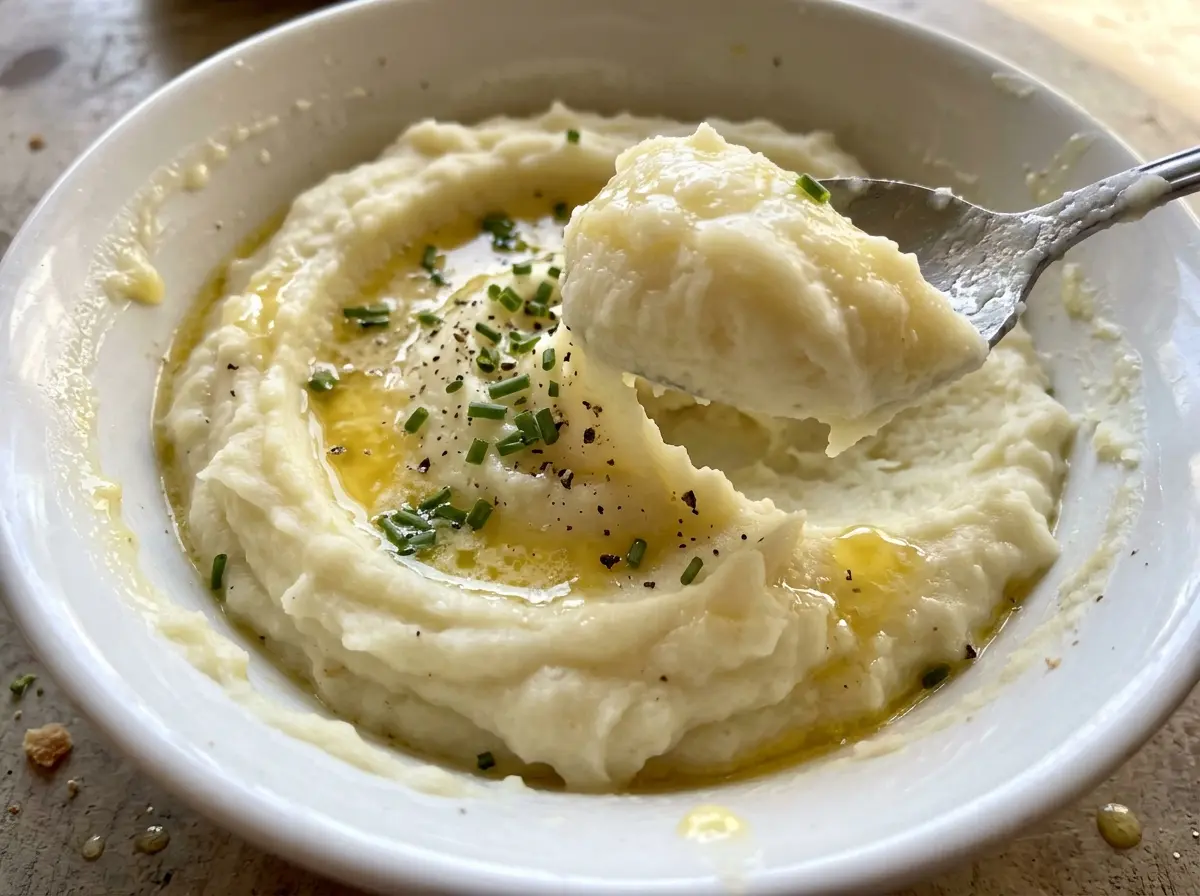
When the masher meets a pot of potatoes, you can feel the difference between tender chunks and ones that still have a firm center. The undercooked pieces push back and leave stubborn lumps behind, so I wait until a fork slips through easily before draining. That small timing check gives these creamy mashed potatoes the soft, even texture I want.
Russets make a fluffy mash, and the order you add the butter and milk matters: mash the butter in first, then work in the warm milk gradually. That gives you control over the final texture instead of making the potatoes loose all at once. A little black pepper rounds out the buttery flavor, and the bowl comes together with familiar ingredients and a pot you already have on hand.
Kitchen Note
Warm the milk before it meets the potatoes. Cold milk can cool the mash as you work it in, while warm milk blends in smoothly; 30 to 45 seconds in the microwave is enough to take the chill off.
Save these creamy mashed potatoes for a soft, buttery side with fluffy russets and a smooth finish.
Why a Rolling Boil Can Leave Russets Unevenly Cooked
Russet potatoes soften quickly once their centers heat through, but a hard, vigorous boil can batter the outside of each chunk while the middle is still firm. Keeping the water at a gentle boil gives the potatoes a steadier cook, so the pieces become tender without falling apart at the edges. It’s a small adjustment in heat, but it makes the next step easier: the chunks mash without a mix of mushy outsides and resistant centers.
Starting the potatoes in cold water also gives the heat time to move inward as the water comes up to a boil. Cut them into pieces close to the same size, about 1 1/2 inches, and cover them with water by an inch. If the pieces are wildly different in size, the small ones can overcook before the larger ones are ready. Keep the pot at a gentle boil and use the fork test rather than relying on the clock alone; the listed 15 to 20 minutes is a useful window, not a substitute for checking the centers.
Why Russets, Butter, and Whole Milk Make This Mash Creamy

- Russet potatoes — Their high-starch flesh breaks down into a soft, fluffy mash. Pick firm potatoes without green patches or shriveled spots. Peeling and cutting them into even chunks gives them a consistent start; a different potato will change the texture, so russets are the best choice for this particular result.
- Unsalted butter — Butter brings richness and helps the mash feel smooth without adding extra salt behind your back. A standard grocery-store butter works well; there’s no need for a specialty brand. Mash it into the hot potatoes before adding the milk so it melts through the whole pot.
- Whole milk — Whole milk adds creaminess and a rounded dairy flavor. Fresh, ordinary whole milk is all you need; its fat content matters more here than a premium label. Warming it first helps it incorporate without chilling the potatoes.
- Ground black pepper — Pepper adds a mild savory bite that keeps the buttery potatoes from tasting flat. Use the measured ground pepper for an even, gentle seasoning throughout the mash.
From Fork-Tender Potatoes to a Smooth, Creamy Mash
Bring the Potatoes Up to a Gentle Boil
Put the peeled, 1 1/2-inch potato chunks in a 5-quart pot and cover them with cold water by about an inch. Stir in 2 teaspoons of the kosher salt, then bring the pot to a boil over high heat. Reduce the heat so the water keeps a gentle boil rather than bouncing the potatoes around. Cook for 15 to 20 minutes, checking until a fork slides into the center without resistance.
Warm the Milk While the Potatoes Cook
While the potatoes are boiling, measure the whole milk into a microwave-safe measuring cup. Microwave it for 30 to 45 seconds, until warm. Keep an eye on it at the end of that short window; you want warm milk ready to add, not a cup that’s boiled over. This step fits neatly into the potato cooking time.
Drain Well and Let the Steam Escape
When the potatoes are fork-tender, drain them well and return them to the pot. Let them steam-dry for 1 to 2 minutes before mashing. Don’t skip the drain: water left in the pot can dilute the butter and milk and leave the finished potatoes looser than intended. The pieces should still be hot when you return them to the pot.
Mash in the Butter, Then Add Milk Gradually
Add the unsalted butter and mash until it has melted into the potatoes. Pour in the warm milk a little at a time, mashing as you go, then add the remaining kosher salt and the black pepper. Stop when the potatoes are creamy; working them far beyond that point can make the texture pasty. Taste a small spoonful before serving, since the potatoes should be seasoned evenly from edge to center.
Two Ways to Adjust the Batch and Texture
Make a Smaller Pot for a Few People
Halve each ingredient proportionally for a smaller batch, and use the same cooking cues rather than assuming the potatoes will finish in exactly half the time. Keep the chunks around the same size so they cook evenly. The result is the same creamy mash without as many leftovers.
Leave a Little More Texture
For a more rustic spoonful, mash the tender potatoes until creamy but stop while a few soft pieces remain. Add the milk gradually just as you would for a smoother batch, so the potatoes don’t turn loose while you’re adjusting the texture. This keeps the same buttery flavor with a less uniform finish.
Storage and Reheating
- Refrigerator: Refrigerate leftovers in a covered container within 2 hours and use them within 3 to 4 days. The potatoes will firm up as they chill.
- Freezer: Freeze in an airtight container for up to 1 month for the best texture. Thaw overnight in the refrigerator; the potatoes may be a little less smooth after freezing.
- Reheating: Warm them gently in a saucepan over low heat, stirring often until hot throughout. Avoid high heat, which can scorch the bottom before the center is warm.
Questions That Come Up When Mashing Russet Potatoes
Creamy Mashed Potatoes
Ingredients
Equipment
Method
- Place the potatoes and water in a 5-quart pot and stir in 2 teaspoons of the salt.
- Bring to a boil over high heat.
- Reduce the heat to maintain a gentle boil and cook for 15 to 20 minutes, until the potatoes are fork-tender.
- While the potatoes cook, microwave the milk in a microwave-safe measuring cup for 30 to 45 seconds, until warm.
- Drain the potatoes well and return them to the pot.
- Let the potatoes steam-dry for 1 to 2 minutes.
- Add the butter and mash until melted.
- Gradually mash in the warm milk, remaining 1/2 teaspoon salt, and pepper until creamy.