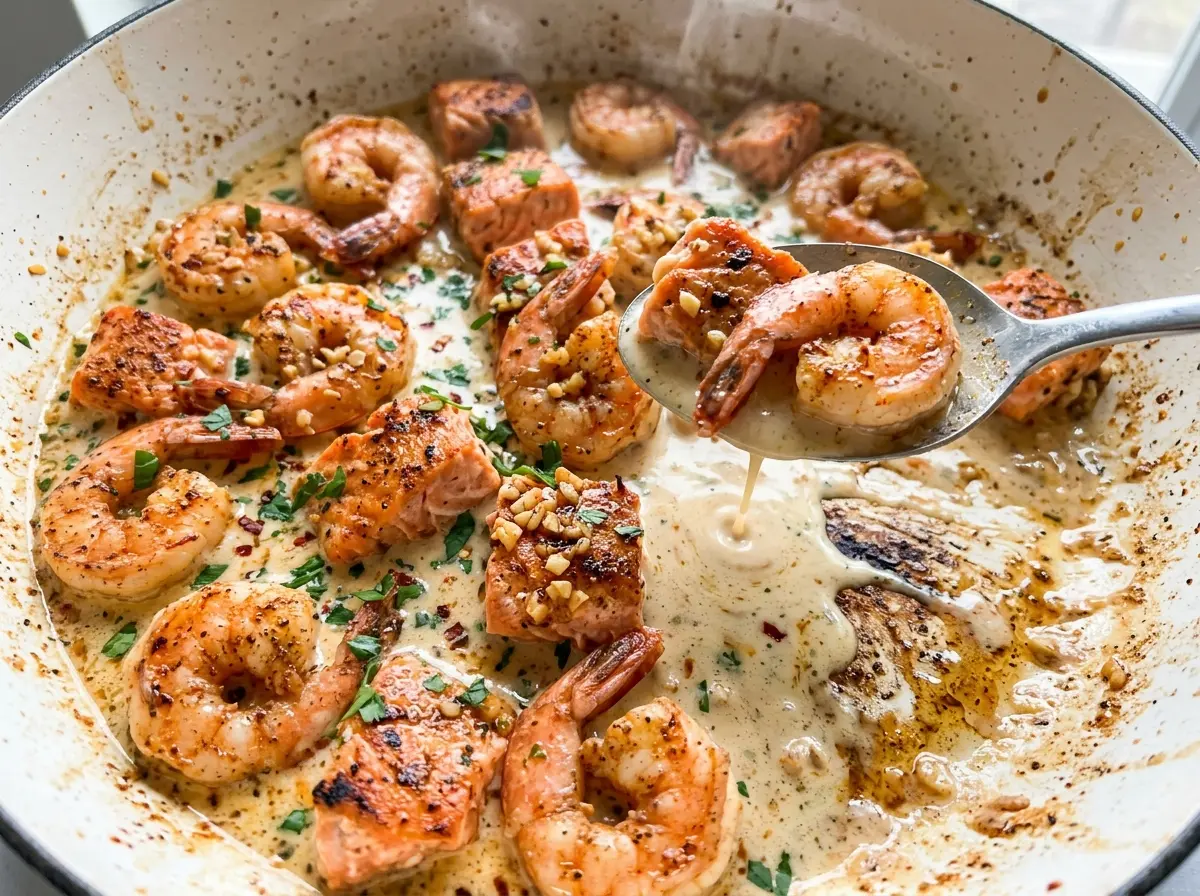
The salmon skin should sizzle as soon as it hits the skillet, and the Cajun seasoning leaves little browned bits behind when you turn each fillet. I cook the salmon first, then the shrimp, so neither has to share the pan or sit through the other’s cooking time. That order makes this Cajun shrimp and salmon with garlic cream sauce feel manageable, even though it looks like a special-occasion dinner.
The sauce starts in that same skillet, where butter and garlic meet the browned seafood bits. Chicken broth loosens them from the pan, and heavy cream turns them into a smooth base for Parmesan. I finish with lemon juice and parsley after taking the pan off the heat; the sauce comes out rich but not heavy, with a little brightness over the seared seafood.
Kitchen Note
I add the lemon juice only after the skillet is off the heat. That keeps the cream sauce smoother, and the parsley stays fresh and green instead of cooking dull.
Save this Cajun shrimp and salmon with garlic cream sauce for a seafood dinner with a quick skillet sauce and plenty of Cajun flavor.
Why the Brown Bits Make This Garlic Cream Sauce Taste Complete
The flavor in this sauce doesn’t come from piling on more garlic. It starts with what the salmon and shrimp leave in the skillet: the browned bits formed as the seasoned seafood sears. Those bits carry the toasted, savory side of the Cajun seasoning, and the broth lifts them into the sauce instead of leaving them stuck to the pan.
That’s why I don’t wipe out the skillet between cooking the seafood and starting the sauce. The butter softens the garlic, then the broth loosens the fond and brings that seafood flavor along. Cream rounds it out, Parmesan adds salty depth, and lemon gives the finished sauce a brighter edge. Each ingredient has a job, but the pan itself is doing some of the work.
If the skillet looks a little messy after the seafood comes out, that’s useful flavor, not something to scrub away. Keep the heat controlled while the garlic cooks, then scrape the bottom as the broth simmers. You’ll get a sauce that tastes connected to the salmon and shrimp rather than like cream poured over the top.
What the Salmon, Shrimp, and Cream Each Bring to the Skillet
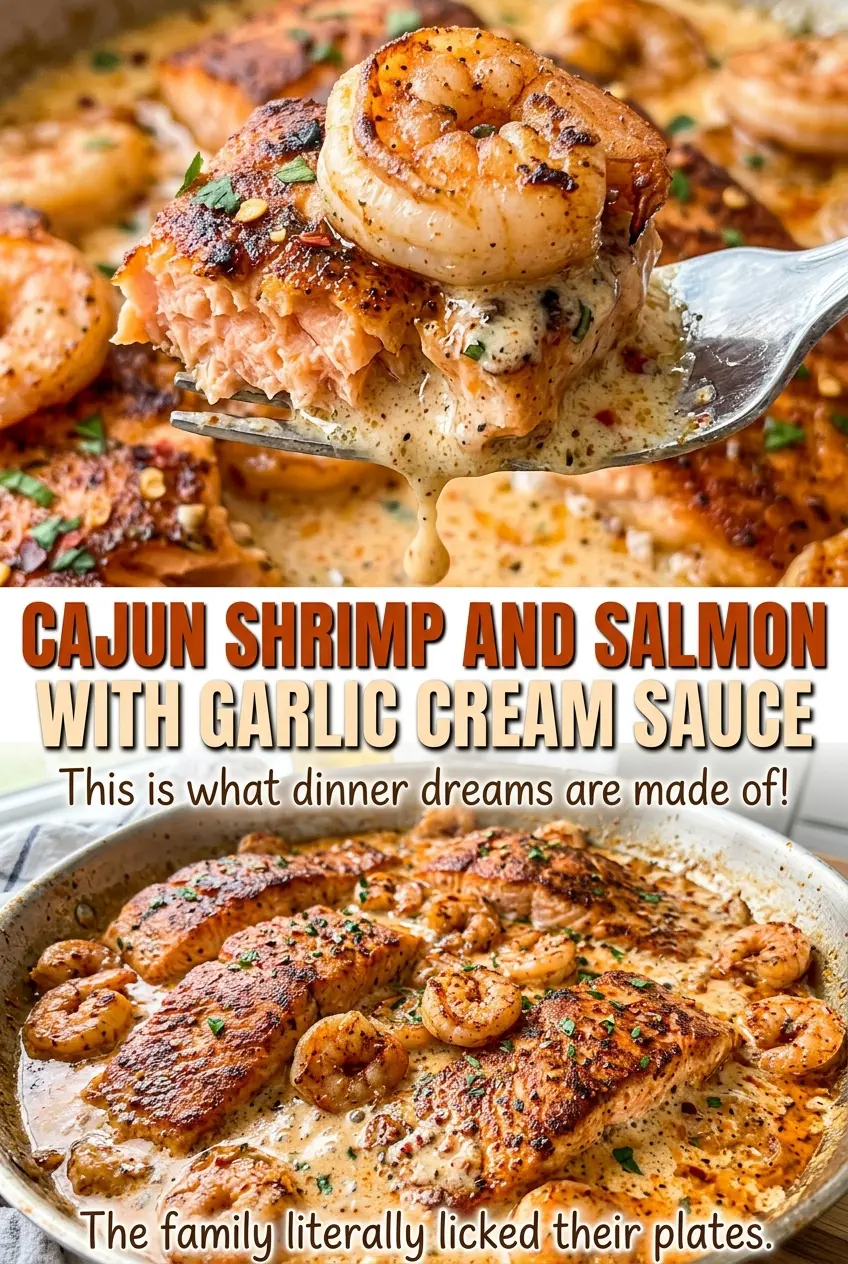
- Skin-on salmon — The skin helps the fillets hold together while they sear, and cooking skin-side down gives that side time in direct contact with the skillet. Pat the fillets dry before seasoning; a wet surface is more likely to steam than brown.
- Large shrimp — Large shrimp are easier to turn individually and give you a little more room between perfectly cooked and overcooked. Peeled and deveined shrimp keep prep simple; if yours still have shells, peel and devein them before seasoning.
- Cajun seasoning — This is the main source of heat and spice, and blends vary in saltiness and intensity. Choose a blend you already enjoy, since its character comes through on both kinds of seafood.
- Heavy cream and Parmesan — Heavy cream gives the sauce its body, while finely grated Parmesan melts into it more evenly than coarse shreds. Freshly grated cheese is the safer choice for a smooth finish; pre-grated cheese may not melt as seamlessly.
- Chicken broth, lemon, and parsley — Low-sodium broth lets the browned bits shine without making the sauce too salty. Fresh lemon juice brightens the richness, and fresh parsley brings a clean finish; dried parsley won’t give quite the same fresh lift.
How to Sear Both Seafood Pieces and Finish the Sauce in One Skillet
Dry and season every piece
Pat the salmon and shrimp dry, then set them on a plate. Sprinkle the Cajun seasoning, kosher salt, and black pepper evenly over both sides of the salmon and the shrimp. Dry surfaces help the seafood sear instead of releasing moisture into the pan. Keep the salmon skin-side down for its first turn in the skillet.
Sear the salmon without crowding it
Heat 2 teaspoons of neutral oil in a 12-inch skillet over medium-high heat. Cook the salmon skin-side down in two batches for 4 to 5 minutes, then turn and cook for 2 to 4 minutes, until the thickest part reaches 145°F. Move the cooked fillets to a plate. Working in batches gives each fillet contact with the hot pan rather than crowding them together.
Give the shrimp its shorter cooking window
Add the remaining 1 teaspoon of oil to the skillet and lay in the shrimp. Cook for 1 to 2 minutes per side, until they look opaque and pearly, then transfer them to the plate with the salmon. Shrimp turn tough when they stay over the heat too long, so watch their color rather than waiting for them to match the salmon’s longer cook time.
Simmer the sauce until it lightly coats a spoon
Reduce the heat to medium and melt the butter in the same skillet. Stir in the minced garlic for about 30 seconds, just until fragrant, then add the chicken broth and scrape up the browned bits as it simmers for 1 to 2 minutes. Stir in the heavy cream, bring it to a gentle simmer, and cook for 3 to 4 minutes until slightly thickened. Turn the heat to low, stir in the Parmesan until smooth, then take the skillet off the heat and stir in the lemon juice and parsley.
Two Simple Ways to Change Which Seafood Leads the Plate
Make it salmon-forward
Leave out the shrimp and serve the seared salmon with the garlic cream sauce. You’ll keep the full Cajun-seared flavor and creamy finish, with fewer seafood textures on the plate.
Let the shrimp take center stage
Skip the salmon and serve the Cajun shrimp with the same garlic cream sauce. The meal cooks faster without the salmon’s longer sear, and the shrimp’s mild sweetness comes through more clearly against the Parmesan.
Storage and Reheating
- Refrigerator: Store leftovers in an airtight container for up to 3 days. The cream sauce will thicken as it chills.
- Freezer: I don’t recommend freezing the assembled dish. The cream sauce can separate, and the seafood texture is less pleasant after thawing.
- Reheating: Warm gently in a covered skillet over low heat, stirring the sauce, until the leftovers reach 165°F. Avoid a hard boil, which can make the shrimp rubbery and the salmon dry.
Questions That Come Up Before the First Sear
Cajun Shrimp and Salmon with Garlic Cream Sauce
Ingredients
Equipment
Method
- Pat the salmon and shrimp dry, then place them on a plate.
- Sprinkle the Cajun seasoning, salt, and pepper evenly over both sides of the salmon and the shrimp.
- Heat 2 teaspoons of the oil in a 12-inch skillet over medium-high heat.
- Cook the salmon skin-side down in two batches for 4 to 5 minutes, then turn and cook for 2 to 4 minutes, until the thickest part reaches 145°F.
- Transfer the salmon to a plate.
- Add the remaining 1 teaspoon oil to the skillet and cook the shrimp for 1 to 2 minutes per side, until opaque and pearly.
- Transfer the shrimp to the plate with the salmon.
- Reduce the heat to medium and melt the butter in the same skillet.
- Add the garlic and cook for about 30 seconds, stirring, until fragrant.
- Stir in the chicken broth, scraping up browned bits from the skillet, and simmer for 1 to 2 minutes.
- Add the heavy cream, bring to a gentle simmer, and cook for 3 to 4 minutes, stirring, until slightly thickened.
- Reduce the heat to low and stir in the Parmesan until smooth.
- Remove the skillet from the heat and stir in the lemon juice and parsley.
- Arrange the salmon and shrimp on plates and spoon the garlic cream sauce over them.