Clear broth, tender noodles, and little bites of chicken that stay distinct instead of falling apart into strings — that’s what makes this copycat Chick-fil-A chicken noodle soup worth keeping on repeat. It tastes clean and comforting, but it still has enough body from the vegetables, pasta, and diced chicken to eat like a real meal.
The small details matter here. Finely diced chicken gives you the same texture you get in the restaurant version, where every spoonful has a little bit of everything without turning the soup cloudy or heavy. The broth stays simple on purpose: chicken broth, a little water to lighten it up, and just enough dried herbs and garlic to round it out without taking over.
Below, I’ll walk you through the one step that keeps the vegetables tender instead of mushy, plus the best way to keep the noodles from going soft if you want leftovers.
The broth stayed clear and the chicken stayed in little bites instead of shredding apart. I loved that the noodles didn’t get mushy, even after sitting on the stove for a bit.
Save this Chick-fil-A chicken noodle soup for the nights when you want a clear, comforting broth with tender noodles and those tiny diced vegetables that make every spoonful feel right.
The Secret to Keeping This Broth Clear Instead of Muddy
The biggest mistake with chicken noodle soup is letting it turn into a pot of cloudy, overcooked mush. That usually happens when the vegetables cook too long or the chicken gets added too early and boils hard. Here, the broth stays clean because the carrots, celery, onion, and garlic soften first, then the chicken and corn go in for just a short simmer before the noodles finish the job.
Finely diced chicken matters too. Shredded chicken breaks down faster and makes the soup feel stringy. Small dice gives you the same spoonful every time: broth, vegetable, noodle, chicken, repeat. It’s the difference between a soup that tastes homemade and one that just tastes busy.
What Each Ingredient Is Actually Doing in This Bowl
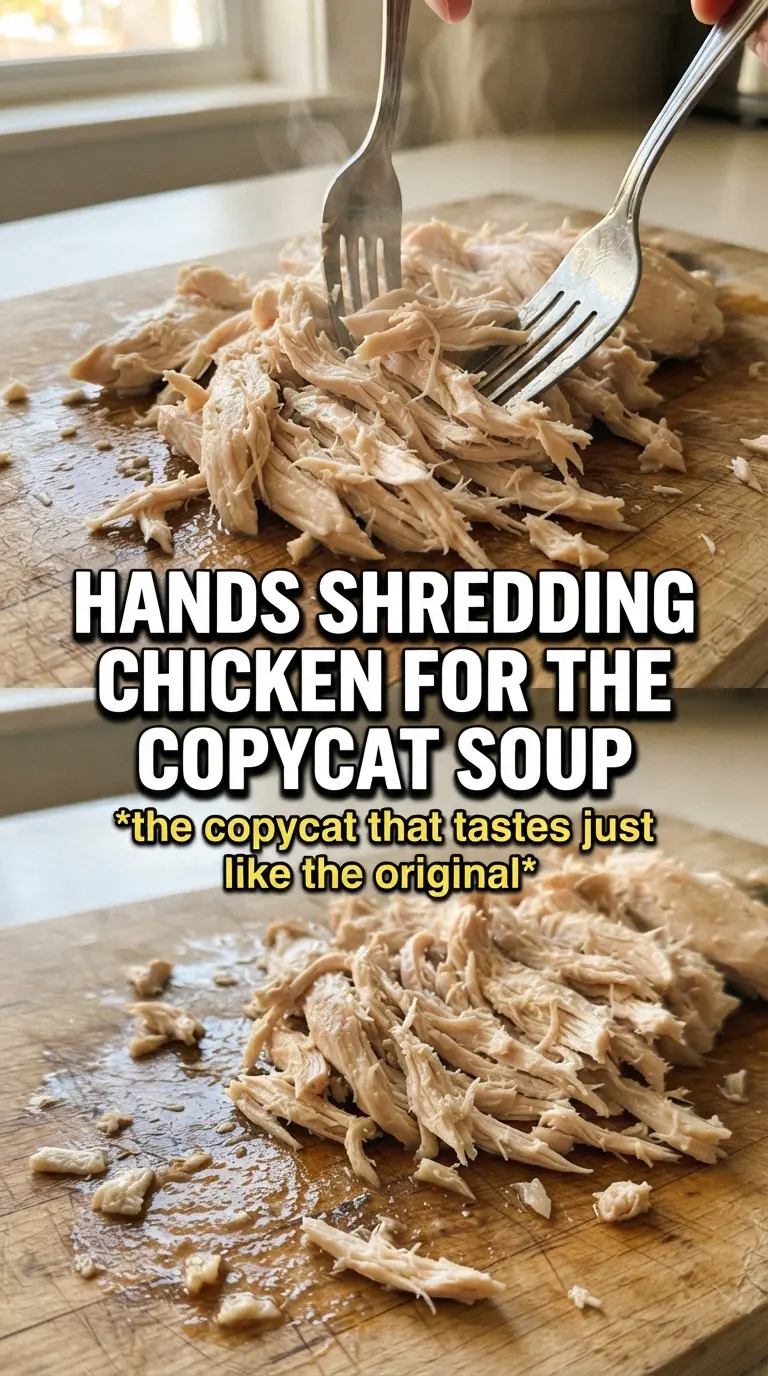
- Cooked chicken breast — Use chicken that’s already cooked and dice it finely so it warms through without falling apart. Rotisserie chicken works if you need a shortcut, but the texture should still be in small cubes, not shreds.
- Chicken broth plus water — The broth gives the soup body, and the water keeps it from tasting too salty or heavy. If your broth is already low-sodium, you can lean a little harder on the salt at the end.
- Carrots, celery, and onion — These build the base and give the soup that familiar chicken noodle flavor. Dice them small so they soften in the time it takes the broth to come together; big chunks need longer and can throw off the timing.
- Corn — It adds little bursts of sweetness that make this copycat taste closer to the fast-food version. Frozen corn is perfect here because it holds its shape and goes straight into the pot.
- Egg noodles or small pasta — These soak up the broth fast, so they need to go in near the end. If you’re planning leftovers, cook them just until tender and don’t let the soup sit at a hard simmer afterward.
- Dried parsley, thyme, and garlic powder — These are the quiet seasonings that keep the broth tasting round without turning it into herb soup. Fresh herbs aren’t necessary here; the dried versions give the clean, familiar flavor you want.
The 20 Minutes That Actually Matter
Softening the Vegetables First
Bring the broth and water to a boil, then add the carrots, celery, onion, garlic, parsley, thyme, and garlic powder. Drop the heat to a steady simmer and cook until the vegetables are just tender, about 10 minutes. If the boil is too aggressive, the garlic can turn harsh and the onion can lose its sweetness before the rest of the soup is ready.
Warming the Chicken Without Overcooking It
Stir in the diced chicken and corn, then simmer for about 5 minutes. You’re not trying to cook the chicken from raw here; you’re just heating it through and letting the corn sweeten the broth. If the chicken goes in too early, it dries out and the pieces start to shred instead of holding their shape.
Cooking the Noodles at the End
Add the egg noodles last and cook until they’re tender, usually 6 to 8 minutes. Keep an eye on the pot because noodles can go from firm to bloated fast, especially in hot broth. The soup is done when the noodles are supple and the broth still looks clear around the edges.
Seasoning for the Final Spoonful
Turn off the heat and season with salt and pepper to taste. The broth should taste clean, savory, and lightly herbaceous, not overly salted or crowded with spices. If it tastes flat, it usually needs a pinch more salt, not more herbs.
How to Adapt This for What You Have on Hand
Gluten-Free Version With the Same Brothy Feel
Swap the egg noodles for a gluten-free small pasta that holds its shape, and cook it just to tender. Gluten-free pasta can soften quickly in hot broth, so it’s best if you plan to serve the soup right away. The broth and vegetables stay the same, so the soup still tastes like the original.
Dairy-Free and Naturally Light
This soup already fits a dairy-free table without any changes, which is part of why it works so well. Don’t try to “creamy” it with milk or half-and-half if you’re chasing the Chick-fil-A style; the clean broth is the point.
Using Rotisserie Chicken Instead of Cooked Breast
Rotisserie chicken is the fastest shortcut if you don’t already have cooked chicken on hand. Pull it into very small pieces and remove any skin before adding it, or the soup can start to taste richer and less like the restaurant version.
Storage and Reheating
- Refrigerator: Store for up to 4 days. The noodles will keep absorbing broth, so expect the soup to thicken as it sits.
- Freezer: Freeze the soup without the noodles if you can. Pasta turns soft after freezing, so add fresh noodles when you reheat for the best texture.
- Reheating: Warm gently on the stove over medium-low heat until steaming. If the soup is too thick, add a splash of broth or water before heating so the noodles don’t overcook in the pot.
Answers to the Questions Worth Asking
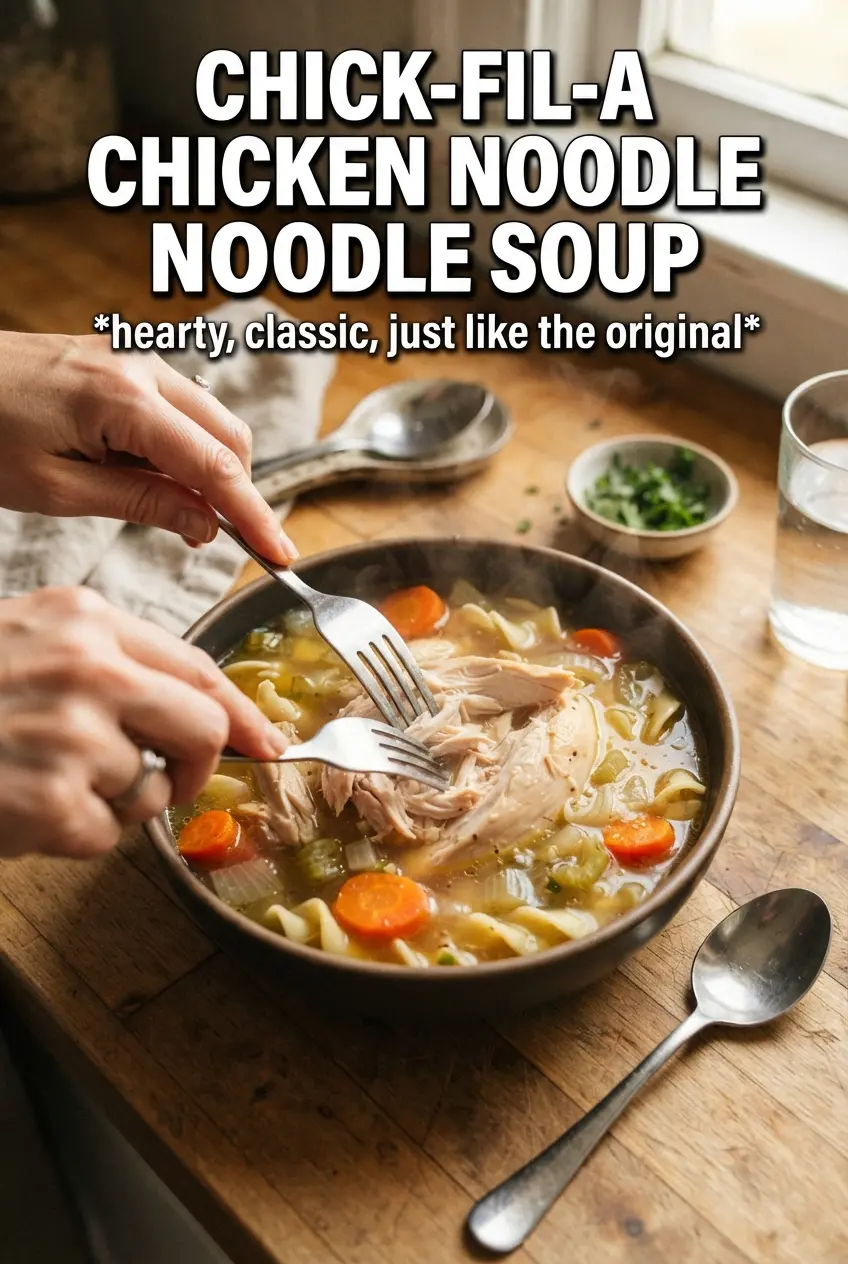
Chick-Fil-A Chicken Noodle Soup
Ingredients
Equipment
Method
- Bring the chicken broth and water to a boil in a large Dutch oven over high heat. Look for a steady rolling boil where bubbles break across the surface.
- Add the diced carrots, celery, onion, minced garlic, dried parsley, dried thyme, and garlic powder to the boiling liquid. Stir to combine, then reduce to a gentle simmer and cook 10 minutes, until the vegetables are just tender.
- Add the finely diced cooked chicken breast and corn kernels to the pot. Simmer 5 minutes, until the chicken is heated through and the broth looks clear and lightly golden.
- Add the egg noodles (or small pasta) and cook 6 to 8 minutes, stirring occasionally, until tender. Watch for the noodles to soften without turning mushy.
- Season the soup with salt and pepper to taste. Finish with a final stir and taste for balance—finely diced (not shredded) chicken and a simple broth are the key.