Clear, fragrant broth and tender noodles are what make Chinese chicken noodle soup worth putting on repeat. The best bowls don’t taste heavy or muddy; they taste clean and layered, with ginger and garlic running through the broth, soft slices of chicken, and bok choy that still has a little snap at the stem. A final hit of white pepper and sesame oil pulls everything together without covering up the chicken.
What makes this version work is the order of the cooking. The broth gets infused first, then the chicken simmers gently so it stays juicy instead of stringy, and the noodles are cooked separately so they don’t steal all the liquid or turn gummy in the pot. That small extra step gives you a better texture in the bowl and a broth that still tastes like broth, not noodle water.
Below, I’ll show you the part that matters most: how to keep the chicken tender and the broth clear, plus the one noodle habit that saves the whole soup from going soft before dinner is even served.
The broth stayed clear and the white pepper gave it that restaurant-style finish. I cooked the noodles separately like you said and they were perfect even after reheating the next day.
Save this Chinese chicken noodle soup for the nights you want a clear, ginger-scented broth with tender chicken and separate noodles that never go mushy.
The Broth Stays Clear When You Don’t Boil the Chicken Hard
The biggest mistake in noodle soup is letting the pot rage after the chicken goes in. A hard boil tightens the meat and turns the broth cloudy fast. A gentle simmer keeps the chicken tender and gives the aromatics time to season the liquid without making it taste harsh.
Thinly sliced chicken breast cooks quickly here, which is exactly what you want. It stays soft if you pull it as soon as it’s opaque and cooked through. If your broth looks busy or cloudy, the heat was too high or the chicken was stirred around too aggressively.
What Each Ingredient Is Actually Doing in This Bowl
- Chicken breast — Thin slicing matters more than the cut itself. It lets the chicken cook quickly and stay tender in the broth. Thigh meat works too if you want a richer bowl, and it gives you a little more forgiveness if you simmer a minute too long.
- Thin Chinese wheat noodles or rice noodles — These keep the soup light and slurpable. Cook them separately so they don’t drink up the broth or keep cooking in the bowl. If you swap in ramen or another noodle, watch the package timing closely and stop before they get soft.
- Ginger, garlic, and white pepper — This is the backbone of the soup. Fresh ginger gives warmth, garlic adds depth, and white pepper brings that classic takeout-style finish. Ground white pepper is worth using here because black pepper changes the look and the flavor.
- Sesame oil and soy sauce — Sesame oil adds roundness at the end, while soy sauce seasons the broth without making it heavy. Use a good, standard soy sauce, not low-sodium only if you plan to taste and adjust carefully at the end, since broth brands vary a lot.
- Bok choy and shiitake mushrooms — Bok choy keeps the soup fresh and the stems add a little crunch. Shiitakes bring a deeper, savory note that makes the broth taste more finished. Baby bok choy can be used if that’s what you have, but add it toward the very end so it stays crisp.
Building the Broth, Chicken, and Noodles in the Right Order
Infusing the Broth First
Start by bringing the broth to a simmer, then add the garlic and ginger and let them cook for a few minutes before anything else goes in. You’re not trying to brown them; you’re softening the bite and drawing the flavor into the liquid. If the garlic starts to sizzle hard or brown, the heat is too high and the broth will taste sharp instead of clean.
Cooking the Chicken Without Toughening It
Add the sliced chicken and mushrooms and keep the broth at a gentle simmer. The chicken should turn opaque and just lose its pink color, not bounce around in a rolling boil. Pulling it at the right moment matters here, because overcooked breast meat turns dry fast even in soup.
Finishing With Bok Choy and Noodles
Cook the noodles separately, drain them, and divide them into bowls before ladling the soup on top. That keeps them springy and stops them from soaking up too much broth while the soup sits. Stir the bok choy into the pot during the last few minutes so the leaves wilt and the stems stay bright and tender.
The Last Seasoning Pass
Taste the broth before serving and adjust with salt, white pepper, or a small splash more rice vinegar if it needs lift. The vinegar should stay subtle; it sharpens the broth without turning it sour. Finish with green onions, cilantro, and a little chili oil for heat if you want that extra edge.
How to Adapt This for a Different Bowl or a Fuller Fridge
Use chicken thighs for a richer, more forgiving soup
Thighs stay juicy longer than breast meat and give the broth a deeper chicken flavor. Slice them thin and cook until just done; the soup will taste a little fuller and more restaurant-style.
Make it gluten-free with rice noodles and tamari
Rice noodles keep the texture light, and tamari can stand in for soy sauce without losing that savory backbone. Check your broth label too, since some store-bought versions contain wheat even when the noodles don’t.
Add more vegetables without muddying the broth
Snow peas, napa cabbage, or thin carrot slices all work well if you add them near the end so they stay bright. Avoid dumping in a heavy mix of vegetables at the start, or the broth starts to taste like a stew.
Store the broth and noodles separately
This soup keeps its texture best when the noodles live in their own container. The broth, chicken, and vegetables can be chilled together, but once noodles sit in the liquid overnight they swell and soften. Reheat the broth first, then add fresh or separately stored noodles to the bowl.
Storage and Reheating
- Refrigerator: 3 to 4 days. The noodles soften as they sit, so they’re best stored separately if possible.
- Freezer: The broth and chicken freeze well for up to 2 months, but freeze the noodles separately or make them fresh after thawing. Bok choy softens a bit after freezing, so add a fresh handful when reheating if you want better texture.
- Reheating: Warm the broth gently on the stove until steaming, not boiling. Add the noodles at the end or place them in bowls and ladle the hot broth over them so they don’t turn bloated and mushy.
Questions I Get Asked About This Recipe
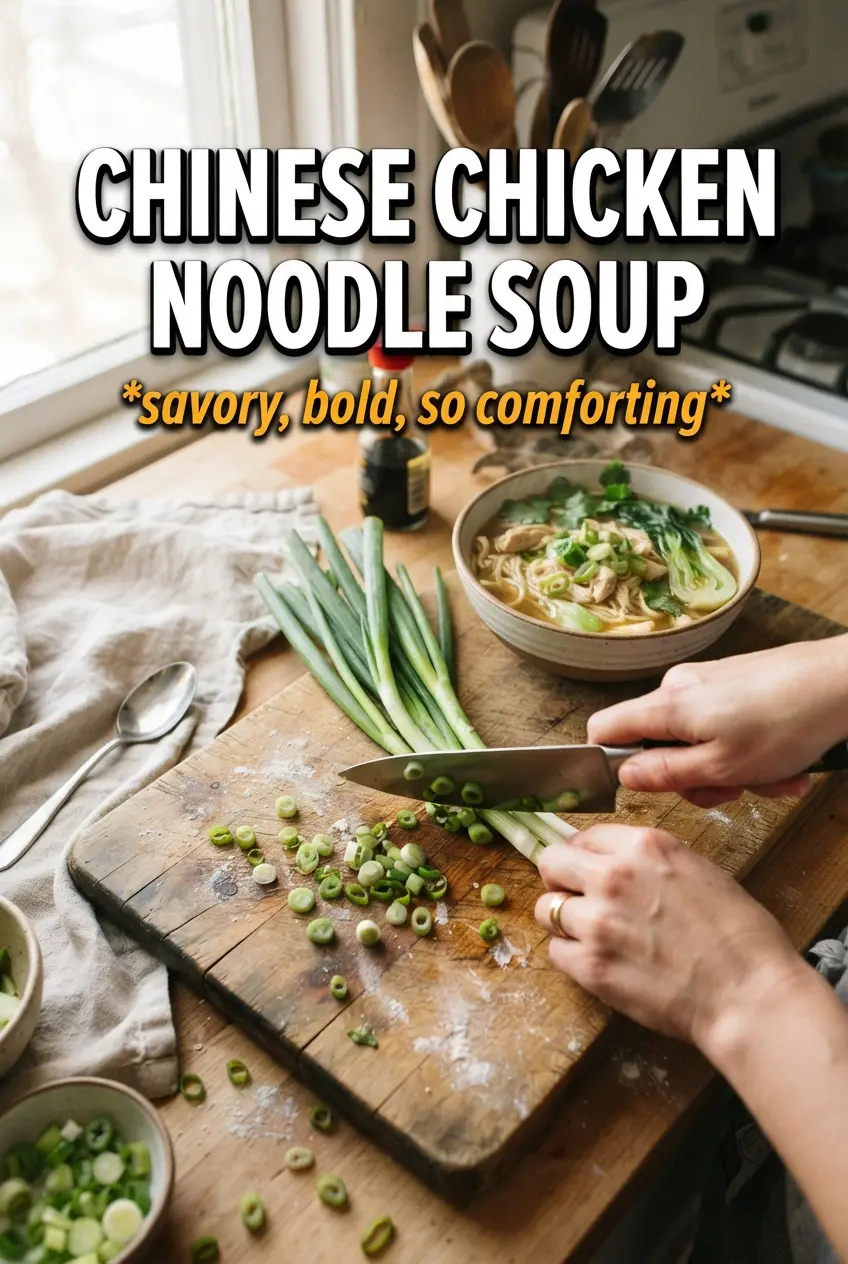
Chinese Chicken Noodle Soup
Ingredients
Equipment
Method
- Bring the chicken broth to a simmer in a large pot, then add the garlic and ginger and cook for 5 minutes. Keep it at a gentle simmer so the aromatics infuse without boiling hard.
- Stir in the soy sauce, sesame oil, and rice vinegar, then adjust to taste. Taste the broth and fine-tune the balance before adding the chicken.
- Add the sliced chicken and mushrooms to the simmering broth. Maintain a steady simmer and cook for 10-12 minutes until the chicken is cooked through.
- Cook the noodles separately according to package directions, then drain and divide into bowls. This keeps the noodles springy instead of softening in the broth.
- Add the chopped bok choy to the broth and cook for 3 minutes until wilted. The stems should turn tender while the leaves remain bright green.
- Ladle the hot soup over the noodles and season with white pepper and salt. Adjust salt at the end so every bowl tastes right.
- Garnish with the sliced green onions, cilantro, and a drizzle of chili oil. Serve immediately while the broth is steaming and the bok choy is just wilted.