Deeply golden chicken noodle soup has a way of settling everything down the second it hits the bowl. This version leans into the kind of broth that tastes bright, savory, and clean at the same time, with ginger, garlic, turmeric, and lemon working together instead of competing. The noodles stay tender, the chicken turns shreddable, and the broth finishes with enough zip to keep every spoonful tasting fresh.
The trick is building the flavor in one pot from the start. Bone-in chicken gives the broth body, while the onion, celery, carrots, garlic, and ginger soften into the base as the soup simmers. Turmeric adds that warm color and earthy depth, but it’s the lemon juice and apple cider vinegar at the end that wake the whole pot up. Add them after the noodles are cooked so the broth stays bright instead of dulling down as it simmers.
Below you’ll find the exact timing that keeps the chicken tender, plus a few smart swaps if you need to work with what’s already in your kitchen. The method is simple, but the order matters here.
The broth turned out so clear and flavorful, and the ginger-lemon finish made it taste fresh without being sharp. The chicken shredded easily and the noodles stayed perfect even after reheating the next day.
Save this turmeric-ginger chicken noodle soup for the next time you need a broth that tastes bright, soothing, and deeply homemade.
The Broth Needs Time to Turn Golden, Not Just Hot
If the broth tastes flat, it usually means the aromatics didn’t get enough time to steep in the liquid. The chicken bones are doing the heavy lifting here, but the carrots, celery, onion, garlic, ginger, turmeric, and thyme all need a steady simmer to turn that broth into something that tastes layered instead of boiled. Once it reaches a boil, drop the heat right away. A hard boil makes the chicken stringy and muddies the broth.
The other mistake is adding the acid too early. Lemon juice and apple cider vinegar belong at the end, after the noodles are tender and the chicken is back in the pot. Acid can make the broth taste sharper, but if you cook it too long it fades and loses the bright finish that makes this soup taste restorative.
What Each Ingredient Is Actually Doing in This Bowl
- Bone-in chicken pieces — These give the broth body and a fuller chicken flavor than boneless pieces. The bones simmer into the liquid while the meat turns tender enough to shred back in. If you only have boneless chicken thighs, the soup will still work, but the broth won’t have quite the same depth.
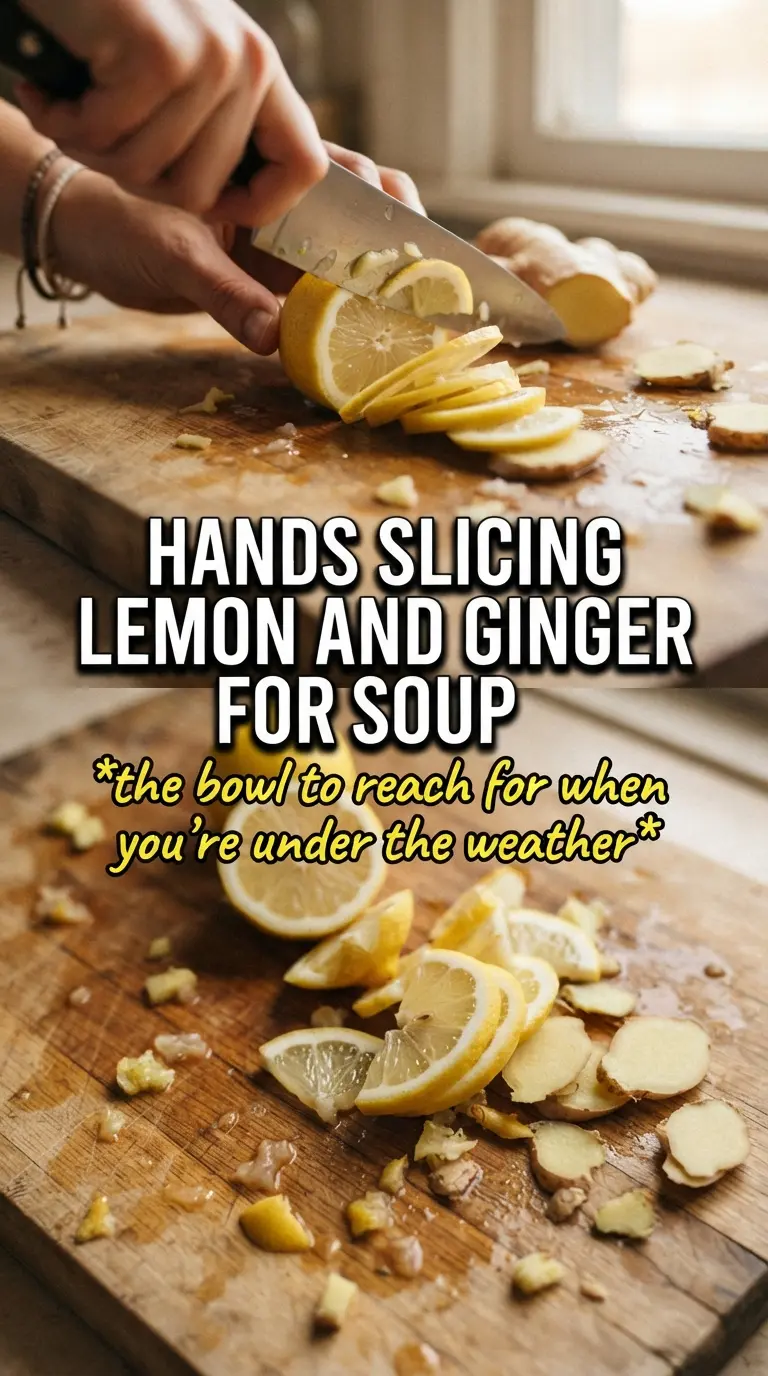
- Ginger and garlic — This is the part that makes the soup taste lively instead of generic. Fresh ginger brings heat and brightness, and garlic rounds it out with a savory base. Powdered versions can work in a pinch, but they won’t give the same fresh, clean finish.
- Turmeric — This adds color, a little earthiness, and that warm golden look people expect from a soothing chicken soup. It’s not there to make the soup taste like curry. If you want the broth more vivid, bloom the turmeric in the hot liquid for a minute before the simmer settles in.
- Lemon juice and apple cider vinegar — These are the finish. The lemon brings freshness, and the vinegar sharpens the broth just enough to make the chicken and noodles taste brighter. Don’t swap both for more lemon unless that’s all you have; the vinegar gives a quieter tang that keeps the soup balanced.
- Egg noodles — These soak up the broth and make the soup feel complete. Wide egg noodles hold up best here, but any sturdy noodle will work if you watch the timing and pull them as soon as they’re tender.
Building the Soup So the Chicken Stays Tender and the Noodles Don’t Go Soft
Starting the Pot
Combine the chicken, vegetables, garlic, ginger, broth, turmeric, and thyme in a large pot, then bring everything up to a boil together. That first boil pulls flavor quickly from the aromatics and gets the broth moving, but don’t leave it there. As soon as it boils, reduce the heat so the liquid settles into a gentle simmer with only a few lazy bubbles breaking the surface.
Simmering Until the Chicken Falls Apart
Let the soup simmer for about 25 minutes, or until the chicken is fully cooked and pulling away from the bone without resistance. If the bubbles are too aggressive, the broth will turn cloudy and the meat can dry out at the edges before the center is done. The vegetables should be soft but still intact, not collapsing into the broth.
Shredding and Returning the Meat
Lift the chicken out and let it cool just enough to handle, then discard the skin and bones and shred the meat into bite-size pieces. Return it to the pot while the broth is still hot so it picks up flavor again. If you leave any large chunks, they’ll stand out in the bowl, so pull the meat apart a little more finely than you think you need to.
Cooking the Noodles at the End
Add the egg noodles and cook them for 6 to 8 minutes, just until tender. This is where a lot of soup goes wrong: noodles left in too long drink up the broth and turn heavy. Keep the heat at a steady simmer and taste one noodle early, because the last minute makes the difference between supple and mushy.
Finishing With Brightness
Stir in the lemon juice and apple cider vinegar, then season with salt and pepper until the broth tastes awake. That final acid should make the soup taste cleaner, not sour. Serve it right away with parsley and lemon wedges so each bowl can get a little extra freshness at the table.
How to Adapt This for What You’ve Got in the Kitchen
Gluten-Free Version
Swap the egg noodles for a gluten-free noodle that can hold simmering, such as brown rice noodles or a sturdy gluten-free egg noodle. Add them near the end and watch the texture closely, since many gluten-free noodles soften faster and can start breaking apart if they sit in the broth too long.
Dairy-Free and Naturally Light
This soup is already dairy-free, which makes it easy to serve without any extra changes. Keep the broth clear and finish with extra parsley and lemon if you want it to taste brighter and fresher rather than richer.
Using Boneless Chicken Instead
Boneless thighs or breasts work if that’s what you have, but the broth won’t have quite the same body. Cut the simmer time back a little and pull the chicken as soon as it’s cooked through so the meat stays tender instead of stringy.
Making It Ahead
If you know you’ll have leftovers, cook the noodles separately and add them to each bowl instead of the whole pot. That keeps the broth from disappearing into the pasta overnight and gives you a better texture when you reheat it.
Storage and Reheating
- Refrigerator: Store in an airtight container for up to 4 days. The noodles will keep soaking up broth, so expect the soup to thicken.
- Freezer: Freeze the soup without the noodles for the best texture, up to 3 months. Cook fresh noodles when you reheat it.
- Reheating: Warm it slowly over medium-low heat on the stove, adding a splash of broth or water if needed. A hard boil will overcook the noodles and make the chicken stringy.
Answers to the Questions Worth Asking
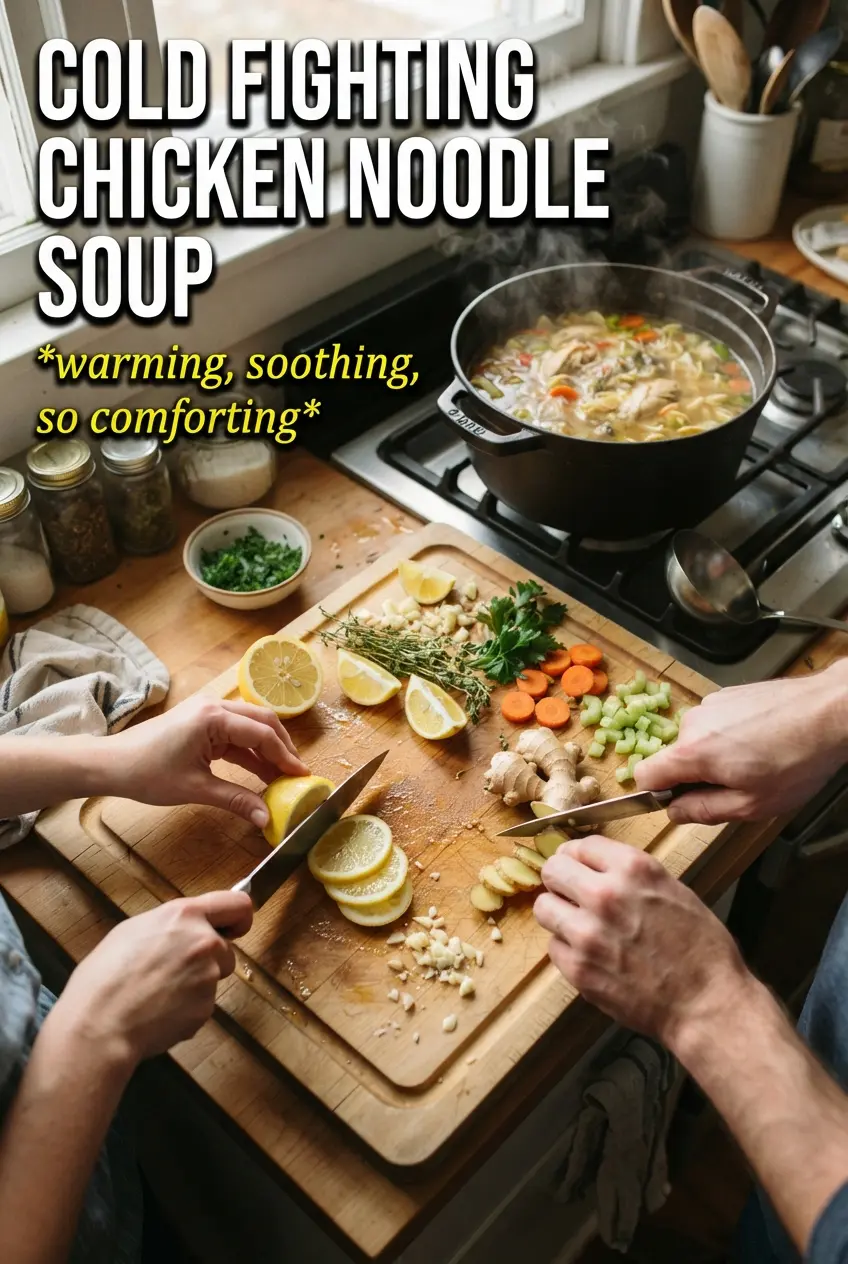
Cold Fighting Chicken Noodle Soup
Ingredients
Equipment
Method
- Combine bone-in chicken pieces, carrots, celery, onion, garlic, fresh ginger, chicken broth, turmeric, and dried thyme in a large pot.
- Bring to a boil, then reduce heat to maintain a gentle simmer and cook for 25 minutes, until chicken is falling off the bone.
- Remove the chicken, shred it, and return the shredded chicken to the pot, discarding skin and bones.
- Add egg noodles and simmer for 6-8 minutes, until tender.
- Stir in lemon juice and apple cider vinegar, then season with salt and pepper to taste.
- Ladle into bowls and serve with fresh parsley and lemon wedges.