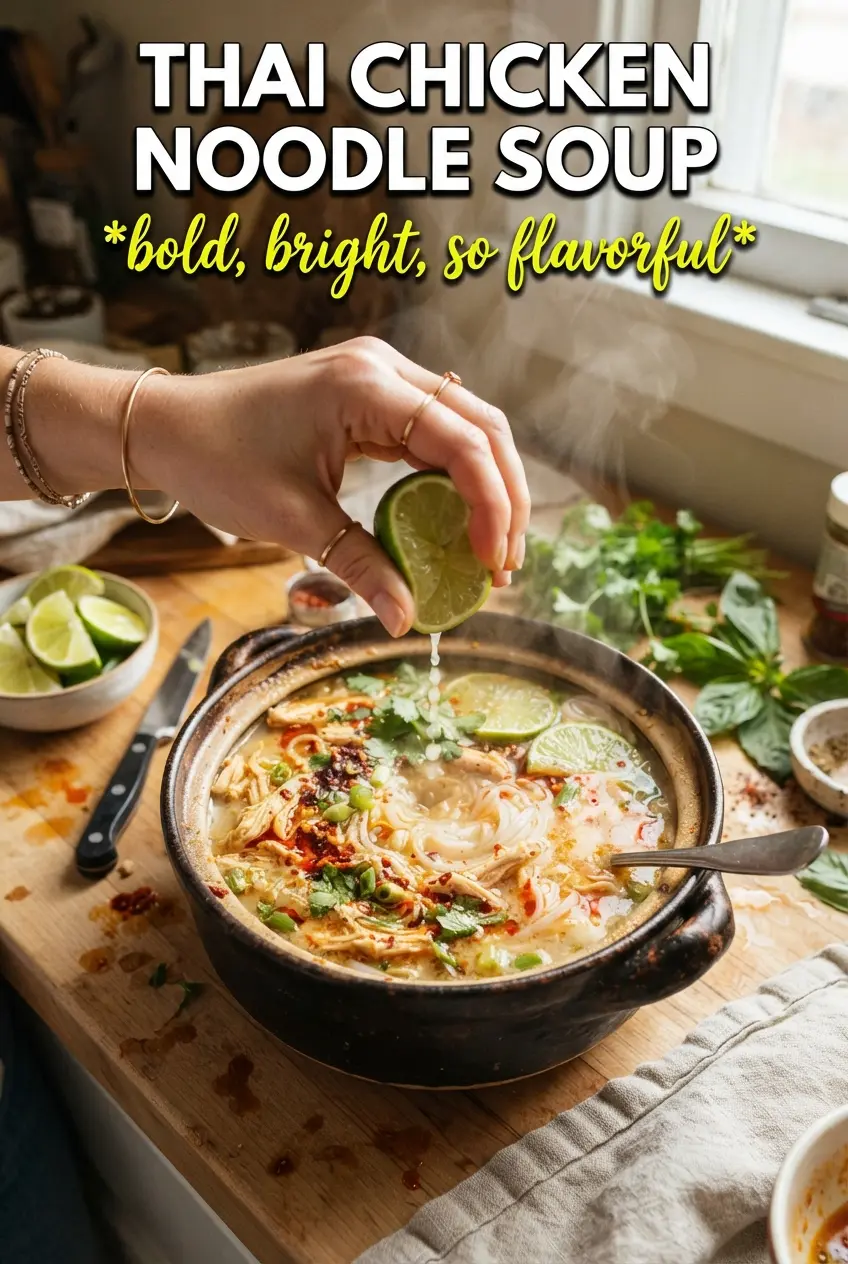
Silky coconut broth, fragrant curry paste, and tender chicken make this Thai chicken noodle soup the kind of bowl that disappears fast. The rice noodles soak up just enough of the broth to stay slurpable without turning gummy, and the finish of lime, basil, and chili keeps every spoonful bright instead of heavy.
What makes this version work is balance. Red curry paste gets a minute in the pot before the liquid goes in, which wakes up the spices and cooks off that raw edge. Coconut milk gives the soup body, but broth keeps it light enough to eat like a proper noodle soup. The fish sauce, lime juice, and brown sugar do what they’re supposed to do here: salt, sharpen, and round everything out so the broth tastes complete, not flat.
Below, I’ve laid out the parts that matter most — how to keep the noodles tender, why the aromatics should simmer before the chicken goes in, and what to swap if you need a dairy-free or gluten-free version that still tastes like the real thing.
The broth was layered and the noodles stayed springy instead of mushy. I added extra lime at the table and my husband said it tasted like something from our favorite Thai spot.
Save this Thai Chicken Noodle Soup for the nights when you want a coconut-curry broth that’s fast, fragrant, and loaded with tender noodles.
The Step That Keeps the Curry From Tasting Flat
Red curry paste needs heat before it gets liquid. If you dump it straight into broth, it never fully blooms and the soup can taste one-note, almost blunt. A minute or two in oil changes that. The paste darkens slightly, the aroma opens up, and the spices start tasting rounded instead of sharp.
The other mistake is crowding everything in too early. Chicken cooks tender in a simmering broth, but rice noodles don’t like hanging around in hot liquid for long. Add them at the end, after the chicken is done and the lemongrass has done its work, so they stay supple and the soup keeps its clean texture.
What Each Ingredient Is Actually Doing in This Bowl

- Chicken breast or thighs — Thighs give you a little more forgiveness and stay juicy if they simmer a minute longer. Breast works fine too, but slice it thin so it cooks quickly and doesn’t tighten up. Either way, cut it before cooking instead of shredding after; thinner pieces stay tender and eat more like restaurant soup.
- Rice noodles — These are the backbone of the bowl, but they keep cooking after you add them to the pot. Soak them first in warm water, then drain them well. That keeps them from turning soft and sticky when they hit the hot broth.
- Coconut milk — This is what gives the soup its silky body and softens the edges of the curry paste. Full-fat coconut milk makes the broth taste richer and more stable. Light coconut milk will work, but the soup will be thinner and less rounded.
- Red curry paste — This is where most of the flavor lives. Brands vary a lot, so if yours is mild, you may want a touch more. The goal is a broth that tastes aromatic and warm, not aggressively spicy.
- Lemongrass and galangal or ginger — These are the bright, high notes that keep the soup from tasting heavy. Bruise the lemongrass so it can flavor the broth, then remove it before serving. Ginger works well in place of galangal if that’s what you can find, and it still gives the soup the clean bite it needs.
- Fish sauce, lime juice, and brown sugar — This trio finishes the broth. Fish sauce adds salt and depth, lime adds lift, and sugar smooths out the edges. If the soup tastes good but not memorable, it usually needs a little more lime or fish sauce, not more curry paste.
Building the Broth Without Overcooking the Noodles
Blooming the Curry Paste
Heat the oil first, then stir in the red curry paste and let it cook until it smells fragrant and looks a shade darker. That short bloom pulls the spice fat-soluble flavors into the oil, which carries them through the whole pot. If the paste sticks a little, lower the heat rather than adding broth too soon.
Layering the Aromatics
Add the garlic, bruised lemongrass, and galangal or ginger and cook just until the garlic loses its raw smell. You want the aromatics to perfume the oil, not brown. If the garlic starts to color hard, the broth can turn bitter, so keep the heat moderate and keep things moving.
Simmering the Chicken in the Curry Broth
Pour in the coconut milk and broth, then add the fish sauce, lime juice, and brown sugar before the chicken goes in. Let the pot come to a gentle simmer, not a hard boil, so the coconut milk stays smooth. Add the chicken and cook just until it turns opaque and firm at the edges; overcooked chicken breast gets stringy fast.
Finishing With the Noodles and Herbs
Remove the lemongrass and galangal before adding the noodles. Let them heat through for just a couple of minutes until they’re tender but still springy. Serve right away with bean sprouts, green onions, Thai basil, cilantro, lime wedges, and sliced chili so the fresh toppings stay crisp against the warm broth.
How to Adapt This for Different Pantries and Preferences
Gluten-Free Thai Chicken Noodle Soup
This soup is naturally close to gluten-free already, but you still need to check the curry paste and fish sauce labels. Some brands include soy sauce or other wheat-based ingredients. Use a certified gluten-free version of both and the bowl stays just as flavorful.
Dairy-Free by Default
This recipe already skips dairy, which is part of why the coconut milk matters so much. If you’re tempted to swap in a lighter milk, don’t — you’ll lose the creamy broth that makes the soup feel complete. Coconut milk is doing a job nothing else here can quite replace.
Make It With Shrimp Instead of Chicken
Shrimp works if you want a faster version, but add it only at the very end because it cooks in a few minutes. The broth will taste a little lighter and sweeter than the chicken version. It’s a good move when you want the same curry-coconut base with less simmer time.
Storage and Reheating
- Refrigerator: Store the broth and noodles separately if you can. The soup keeps for 3 days, but the noodles soften as they sit in the liquid.
- Freezer: The broth and chicken freeze well for up to 2 months. Freeze without the noodles and fresh herbs, then add those after reheating.
- Reheating: Warm the broth gently on the stove until steaming, then add fresh or leftover noodles just long enough to heat through. Boiling hard will make the chicken dry and the coconut milk can separate a bit.
Answers to the Questions Worth Asking
Thai Chicken Noodle Soup
Ingredients
Equipment
Method
- Soak rice noodles in warm water for 15 minutes, then drain and set aside.
- Heat 1 tablespoon oil in a large pot over medium heat, then cook red curry paste for 1-2 minutes until fragrant.
- Add garlic, lemongrass, and galangal, then cook for 1 minute to bloom the aromatics.
- Pour in coconut milk and chicken broth, then add fish sauce, lime juice, and brown sugar.
- Simmer the soup for 10 minutes, stirring occasionally so the flavors meld.
- Add the sliced chicken to the simmering broth, then cook for 8-10 minutes until cooked through.
- Remove lemongrass and galangal, then add the drained rice noodles and heat through for 2-3 minutes.
- Ladle into bowls and top with bean sprouts, green onions, Thai basil, cilantro, lime wedges, and sliced chili.