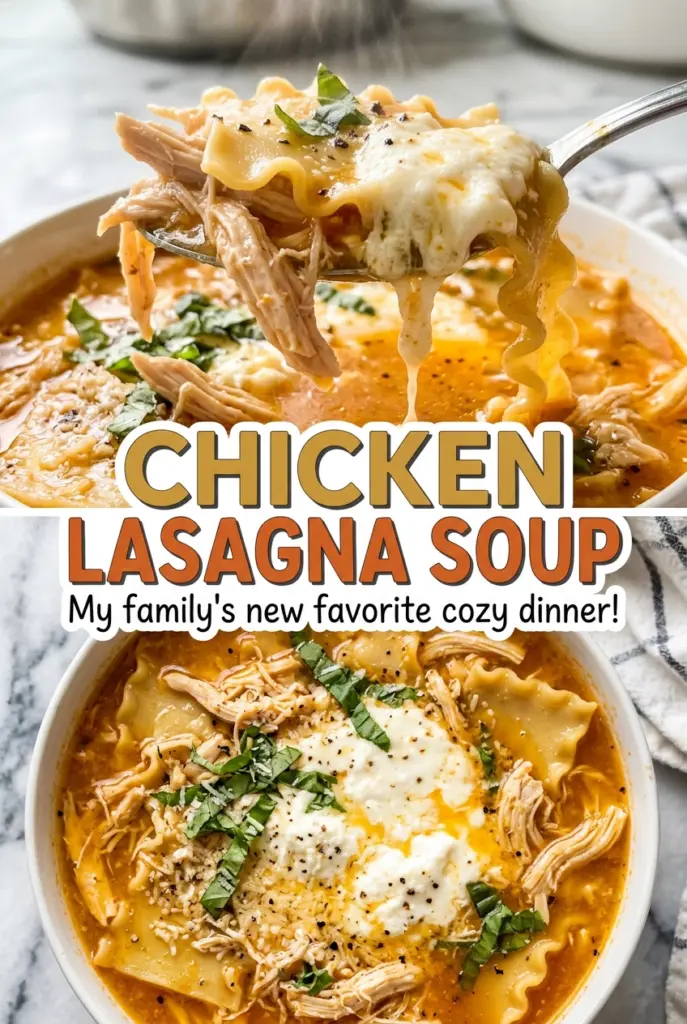

Chicken lasagna soup hits the same comfort note as a baked lasagna, but it gets there in a fraction of the time and with a lot less cleanup. You get a rich tomato broth, tender pieces of chicken, and those soft ribbon-like noodles that soak up just enough flavor without turning heavy. The best part is the cheese dollop on top — it melts into the soup in streaks instead of disappearing, so every spoonful tastes layered and complete.
What makes this version work is the order. Browning the chicken first leaves flavor in the pot, and the tomato paste gets cooked before the broth goes in, which takes the sharp edge off and gives the soup a deeper, sweeter base. Broken lasagna noodles go in near the end so they stay pleasantly tender instead of bloating into mush. I also like using both crushed and diced tomatoes here: one builds body, the other gives you little bursts of tomato in the spoon.
Below, I’ll walk you through the timing that keeps the noodles from overcooking, the cheese mixture that gives you that lasagna finish, and a few smart swaps if you need to work with what’s in the pantry.
The broth had so much flavor, and the noodles stayed perfectly tender instead of falling apart. I added a little extra parmesan on top and my kids asked if we could have it again the next night.
Love the creamy ricotta topping and tomato broth? Save this Chicken Lasagna Soup for the night you want lasagna comfort without layering a pan.
The Trick to Keeping the Noodles Tender, Not Bloated
The noodles are the part that can push this soup from great to gummy if they’re handled carelessly. Once they go into the pot, they keep absorbing liquid as the soup sits. That means the difference between silky and swollen is all about timing. Cook them until they’re just tender, then serve right away.
The other thing that helps is keeping the broth at a steady simmer instead of a hard boil. A rolling boil tears the noodles apart and can make the chicken stringy. Gentle heat gives the pasta time to cook evenly while the tomato base thickens naturally around it.
- Chicken breast or thighs — Breasts stay lean and clean-tasting, while thighs give you a richer, softer result. Thighs are more forgiving if the soup simmers a minute longer, so they’re my pick when I know I’ll be distracted.
- Tomato paste — This is not just there for color. Cooking it with the onion and garlic deepens the broth and keeps the tomato flavor from tasting thin or raw.
- Lasagna noodles — Break them into rough pieces, not tiny shards. Bigger pieces hold their shape better and give you that true lasagna feel in the spoon.
- Ricotta, mozzarella, and parmesan — This is the finish that makes the soup read like lasagna instead of tomato chicken noodle soup. Whole-milk ricotta gives you the creamiest result, but part-skim works if that’s what you have.
What Each Ingredient Is Actually Doing in This Bowl
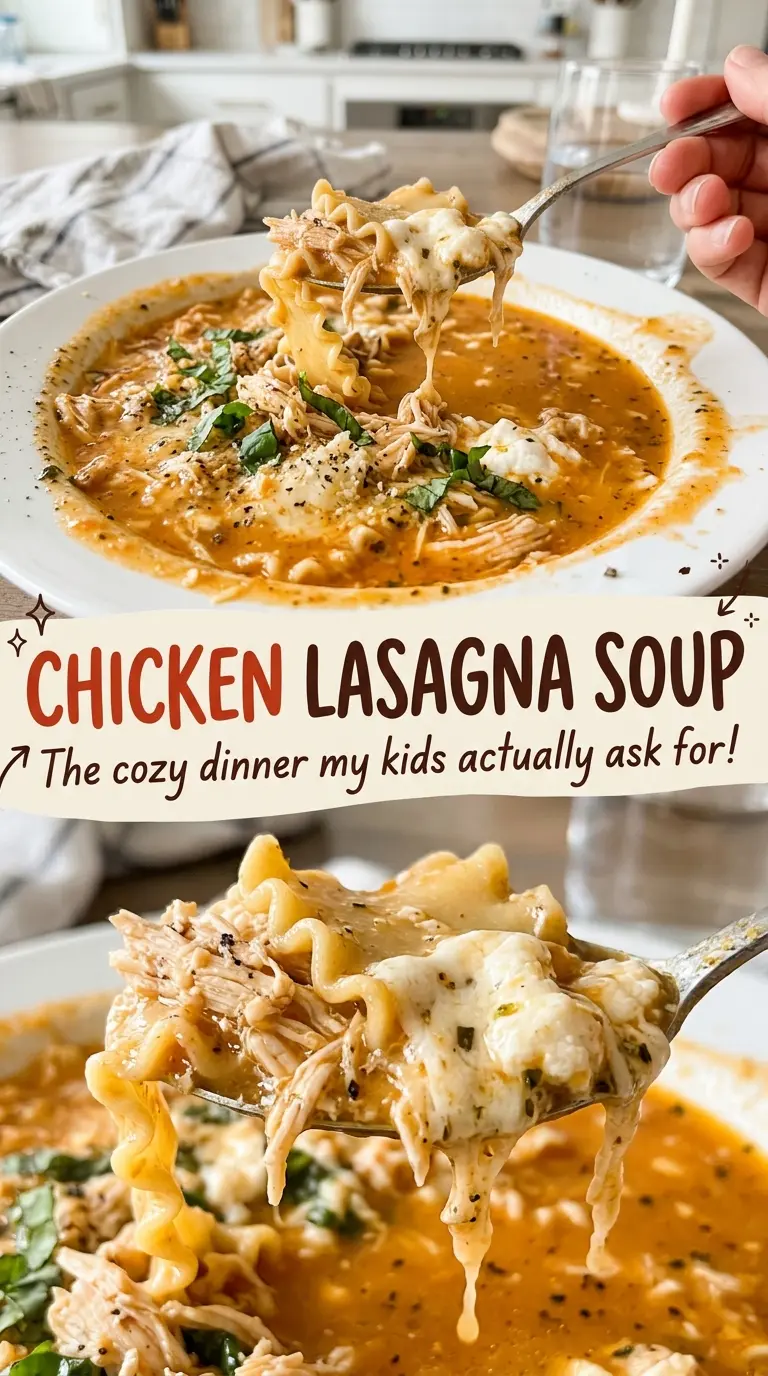
- Diced chicken — Cutting it into small pieces gives you more browned surface area and faster cooking. Breast works well, but thighs stay juicier if you prefer a softer bite.
- Onion and garlic — These build the savory base before the tomatoes go in. If the garlic browns hard, it turns bitter, so add it after the onion has softened and stir it only until fragrant.
- Crushed tomatoes and diced tomatoes — The crushed tomatoes make the broth thick and spoonable, while the diced tomatoes leave little chunks that keep the soup from feeling one-note.
- Chicken broth — Use a broth you’d actually drink. A bland broth stays bland after all the noodles and cheese go in, so this is one place where the quality matters.
- Italian seasoning, basil, oregano, and red pepper flakes — These give the soup its lasagna-like backbone and just enough warmth. The red pepper flakes won’t make it spicy; they just keep the tomato base from tasting flat.
- Ricotta, mozzarella, parmesan, and basil — Mix these right before serving so the cheese stays fluffy and fresh. If you let the mixture sit too long, the mozzarella can clump and the basil can darken.
Building the Soup in the Right Order
Brown the Chicken First
Cook the diced chicken in a little olive oil over medium-high heat until it has color on the outside and is just cooked through. You’re not trying to fully finish it here; the goal is a little browning on the pot and a head start on the protein. If the pan looks crowded, the chicken will steam instead of sear, so work in batches if needed. Pull it out once it’s lightly golden so it doesn’t dry out while the soup base comes together.
Cook Down the Aromatics and Tomato Paste
Use the same pot for the onion, then add the garlic and tomato paste once the onion softens. The tomato paste should darken a shade or two and smell sweet, not raw. That short cook time takes the edge off the paste and builds a richer broth. If you add the broth too early, you lose that concentrated flavor.
Simmer the Broth and Add the Pasta
Stir in the tomatoes, broth, herbs, and pepper flakes, then bring everything to a boil before lowering it to a steady simmer. Return the chicken to the pot and add the broken noodles. Stir once or twice as they cook so they don’t stick together at the bottom. The noodles are done when they’re tender at the center but still hold their shape — usually 10 to 12 minutes, depending on the brand.
Finish with the Cheese Dollop
Mix the ricotta, mozzarella, parmesan, and basil in a bowl until combined. Spoon a generous dollop into each bowl, then ladle the hot soup around it so it starts to melt at the edges. If you stir the cheese straight into the pot, the soup gets cloudy and the texture turns less distinct. Serving it on top gives you that lasagna finish in the bowl.
What to Change When You Need a Different Version
Dairy-Free Version
Skip the ricotta-mozzarella topping and use a dairy-free ricotta or a spoonful of plain unsweetened cashew cream. You’ll lose a little of the classic lasagna feel, but the tomato broth and chicken still carry the dish well. Add fresh basil at the end for brightness, since you won’t have the parmesan to sharpen the flavor.
Gluten-Free Swap
Use a sturdy gluten-free lasagna noodle or broken gluten-free pasta shaped like mafalda or bowties. Gluten-free pasta can soften fast, so start checking it a minute or two early. The texture won’t be identical, but the soup still eats like a proper comfort bowl.
Sausage Swap for More Depth
Replace some or all of the chicken with mild Italian sausage if you want a deeper, porkier broth. Brown it well and drain off excess fat if needed, then continue with the onion in the same pot. The soup becomes more like a hybrid between lasagna soup and a hearty sausage stew.
Make-Ahead for Busy Nights
Cook the soup base through the tomato and broth stage, then cool and refrigerate it without the noodles. When you’re ready to serve, bring it back to a simmer, add the noodles, and cook until tender. That keeps the pasta from soaking up too much liquid and turning soft before dinner.
Storage and Reheating
- Refrigerator: Store for up to 4 days. The noodles will continue to absorb broth, so expect the soup to thicken a bit.
- Freezer: The soup base freezes well, but the noodles turn soft after thawing. For best results, freeze the broth and chicken without pasta, then cook fresh noodles when reheating.
- Reheating: Warm gently on the stove over medium-low heat with a splash of broth or water if needed. A hard boil will break up the noodles and tighten the chicken.
Answers to the Questions Worth Asking
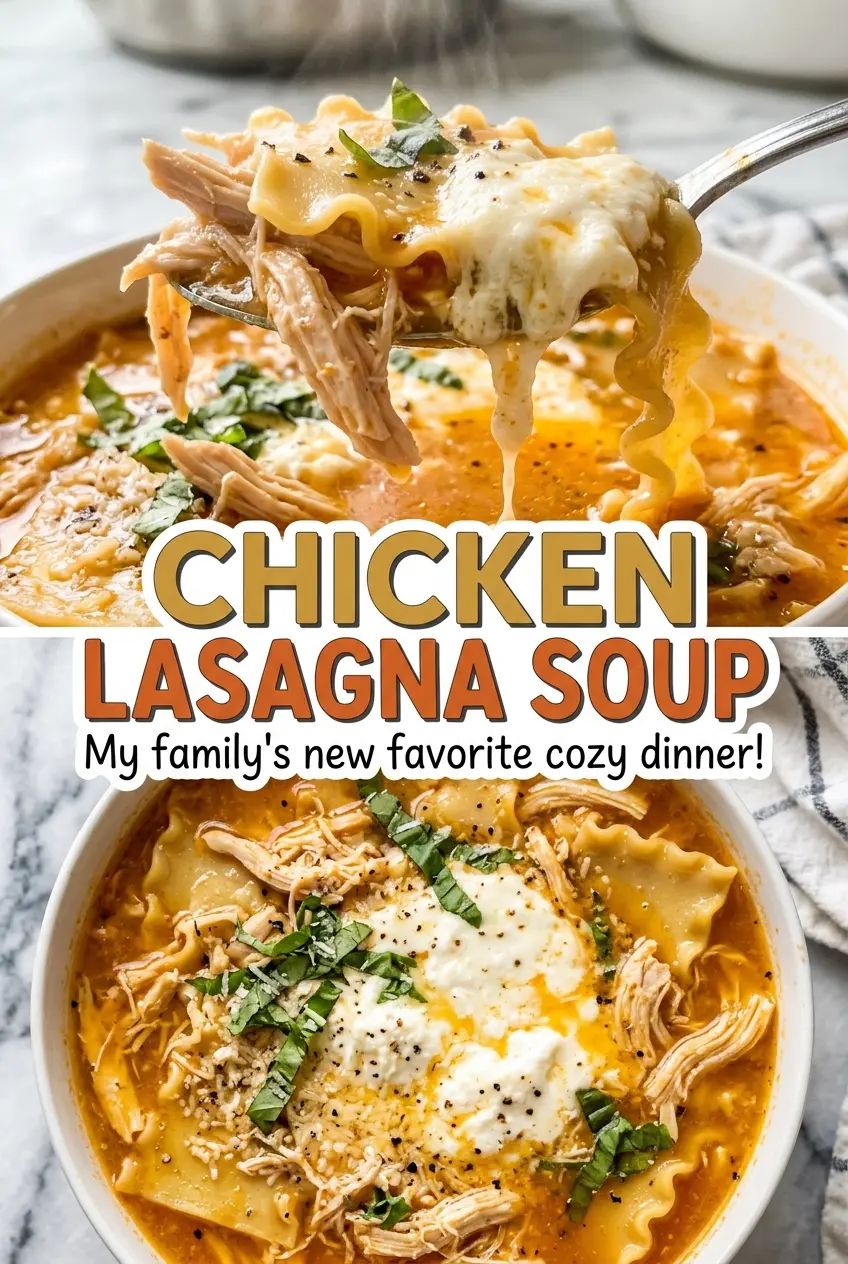
Chicken Lasagna Soup
Ingredients
Equipment
Method
- Heat olive oil in a large pot over medium-high heat, then add the diced chicken. Cook until browned, then remove and set aside.
- In the same pot, sauté diced onion for 4 minutes. Add minced garlic and tomato paste and cook for 2 minutes, stirring until fragrant.
- Add crushed tomatoes, diced tomatoes, chicken broth, Italian seasoning, dried basil, dried oregano, and red pepper flakes. Bring the mixture to a boil.
- Return the browned chicken to the pot, then add the broken lasagna noodles. Keep the soup at a gentle simmer until noodles are tender and chicken is cooked through, about 10-12 minutes.
- Season the soup with salt and pepper. Stir well and taste to adjust.
- Mix ricotta, shredded mozzarella, and parmesan to make the cheese dollop. Serve in each bowl with a generous spoonful, topped with fresh basil.