

Golden broth, tender shredded chicken, and wide egg noodles give this Southern style chicken noodle soup the kind of comfort that feels like it came from a cast-iron pot on a back burner somewhere. The butter changes the whole soup. It gives the broth a round, rich base that tastes fuller than a plain chicken noodle soup without turning heavy.
The key here is building flavor in stages. Sautéing the onions, carrots, and celery in butter first softens their edges and pulls sweetness into the pot before the broth goes in. Then the poultry seasoning, thyme, and sage bloom in the fat for a minute, which wakes them up and keeps the soup from tasting flat or watery.
Below, I’ll walk you through the part that matters most: how to keep the noodles tender instead of mushy and how to finish the soup so the broth stays silky after the cream goes in. That little bit of timing makes a bigger difference than people expect.
The broth had that rich, buttery Southern taste and the noodles stayed perfect instead of getting gummy. I used the heavy cream at the end and it made the soup taste like it had been simmering all afternoon.
Save this Southern Style One Pot Chicken Noodle Soup for the nights when you want buttery broth, tender chicken, and noodles cooked right in one pot.
The Secret to Rich Southern Soup Without a Heavy Roux
A lot of chicken noodle soups taste thin because the broth and the aromatics never get a chance to build a base before everything else goes in. This one starts with butter and vegetables, then seasonings bloom in that fat before the broth arrives. That order matters. It gives the soup a fuller, rounder taste without turning it into gravy.
The chicken thighs pull their weight here, too. Bone-in thighs stay juicy through the simmer and give the broth more depth than lean chicken breast. If you swap in breast meat, the soup will still work, but it won’t have the same body or the same forgiving texture after simmering.
- Chicken thighs — Bone-in thighs are the best choice because they stay tender and enrich the broth as they cook. Boneless thighs work in a pinch, but reduce the simmer a little so they don’t dry out.
- Butter — This is what gives the soup its Southern backbone. You can use salted butter if that’s what you have, but unsalted keeps the seasoning easier to control.
- Poultry seasoning, thyme, and sage — This combination gives the soup that familiar old-school poultry flavor. Sage is easy to overdo, so the half teaspoon is enough; more starts to taste dusty instead of cozy.
- Wide egg noodles — Wide noodles hold up better in a soup this rich. Thin noodles soften too fast and disappear into the broth.
- Half-and-half or heavy cream — Half-and-half gives a lighter finish, while heavy cream makes the broth silkier. Stir it in at the end over low heat so it blends instead of separating.
What Each Ingredient Is Actually Doing in This Recipe

- Primary ingredient (the star) — Quality matters most. Choose the best you can find.
- Cooking medium (oil, butter, or broth) — This carries flavors and prevents dryness.
- Seasonings (salt, pepper, spices, herbs) — Layer flavors so nothing overpowers. Build depth gradually.
- Aromatics (garlic, onion, herbs) — Cook with fat to bloom flavors. Become the foundation.
- Supporting ingredients — Complement the main ingredient without overpowering it.
- Sauce or liquid (if applicable) — Brings flavors together. Balance richness with acid.
- Acid (lemon, vinegar, wine, or other) — Brightens and prevents flat-tasting results.
- Final finish (garnish, glaze, or sauce) — Prevents one-dimensional taste and adds visual appeal.
Why the Noodles Go in Last and the Cream Goes in Even Later
Building the Butter Base
Melt the butter in a large Dutch oven and cook the onion, carrots, and celery until the onion turns translucent and the carrots just begin to soften. You’re not looking for browning here. You want the vegetables to release some moisture and lose their raw edge so the broth tastes rounded instead of sharp. If the pot starts to brown on the bottom, lower the heat; butter can go from fragrant to scorched fast.
Blooming the Seasonings
Add the garlic, poultry seasoning, thyme, and sage and cook for about a minute, just until the garlic smells sweet and the herbs smell stronger. This step wakes up the dried herbs and keeps them from tasting like they floated into the soup at the last second. Don’t let the garlic sit too long in the hot butter or it can turn bitter and take the whole pot with it.
Simmering the Chicken Until It Shreds Easily
Add the broth and chicken thighs, bring everything to a boil, then drop it down to a steady simmer for about 25 minutes. The chicken is ready when it pulls apart easily with two forks and the broth looks lightly golden and fragrant. If you boil it hard the whole time, the chicken gets stringy and the broth can turn cloudy and harsh.
Finishing the Soup Without Mushy Noodles
Take the chicken out, shred it, and return it to the pot before adding the egg noodles. Cook the noodles just until tender, usually 6 to 8 minutes, because they’ll keep softening in the hot broth after the heat is off. Stir in the half-and-half at the end and keep the heat low so the soup stays smooth. Season generously with salt and pepper, then finish with parsley for a clean, fresh note.
How to Adapt This for Different Needs Without Losing the Soul of It
Dairy-Free Version That Still Tastes Rich
Skip the butter and use a good dairy-free butter substitute or olive oil. The soup will lose a little of that classic Southern richness, but the broth will still have plenty of flavor from the chicken and herbs. Leave out the cream or replace it with unsweetened oat milk or cashew cream for a softer finish.
Using Chicken Breast Instead of Thighs
You can use bone-in or boneless chicken breasts, but start checking earlier because breast meat dries out faster than thighs. Pull it as soon as it shreds easily, then return it to the pot right before the noodles. The broth will be a little lighter and less savory, so an extra pinch of salt helps.
Gluten-Free Swaps That Actually Hold Up
Use certified gluten-free egg noodles if you can find them, or swap in rice noodles and cook them just until tender. Rice noodles soften faster than egg noodles, so add them near the end and watch them closely. The soup still feels comforting and hearty, just a little lighter in texture.
Making It Ahead for Easy Leftovers
If you know you’ll have leftovers, cook the noodles separately and add them to each bowl instead of the whole pot. That keeps them from soaking up all the broth overnight. It’s the best way to keep the soup tasting fresh for a second meal.
Storage and Reheating
- Refrigerator: Store in an airtight container for up to 4 days. The noodles will absorb more broth as it sits, so the soup thickens a bit.
- Freezer: Freeze the soup without the noodles for the best texture. Noodles tend to turn soft and break apart after thawing, so add a fresh batch when you reheat.
- Reheating: Warm gently on the stove over medium-low heat, stirring often. If the broth has thickened in the fridge, add a splash of chicken broth before heating fully; boiling hard is what makes the noodles fall apart and the cream separate.
Questions I Get Asked About This Recipe
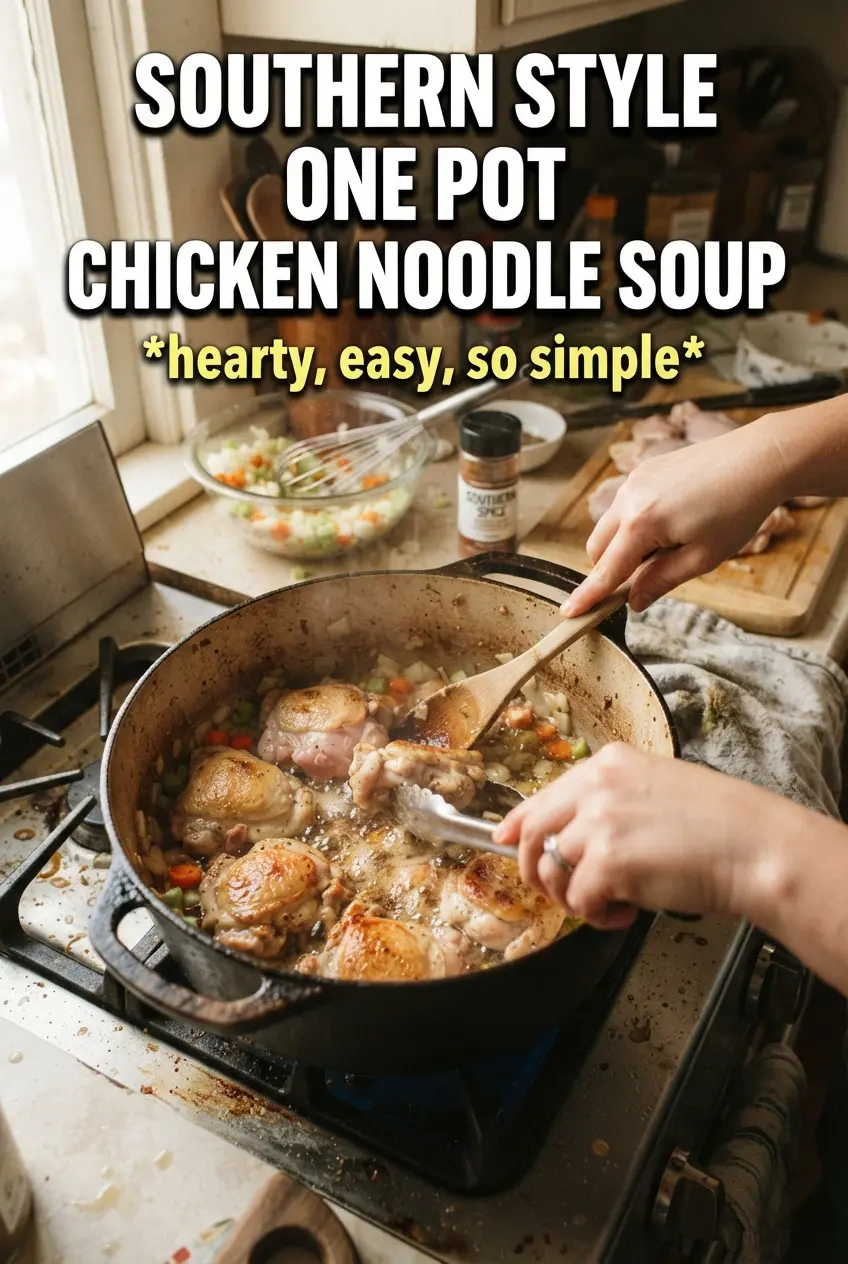
Southern Style One Pot Chicken Noodle Soup
Ingredients
Equipment
Method
- Melt the unsalted butter in a large Dutch oven over medium heat. Sauté the onion, carrots, and celery for 5 minutes until they begin to soften and look slightly glossy.
- Add the garlic, poultry seasoning, dried thyme, and dried sage to the Dutch oven. Cook for 1 minute until fragrant, stirring so the spices don’t darken.
- Add the chicken broth and the chicken thighs, bone-in to the pot. Bring to a boil, then simmer for 25 minutes until the chicken is tender.
- Remove the chicken thighs from the pot and shred the meat. Discard the bones and skin, then return the shredded chicken to the Dutch oven.
- Add the wide egg noodles to the pot and simmer until tender, stirring occasionally. Cook for 6-8 minutes, then stir in the half-and-half or heavy cream.
- Season the soup generously with salt and pepper to taste. Garnish with fresh parsley for garnish and serve hot.