

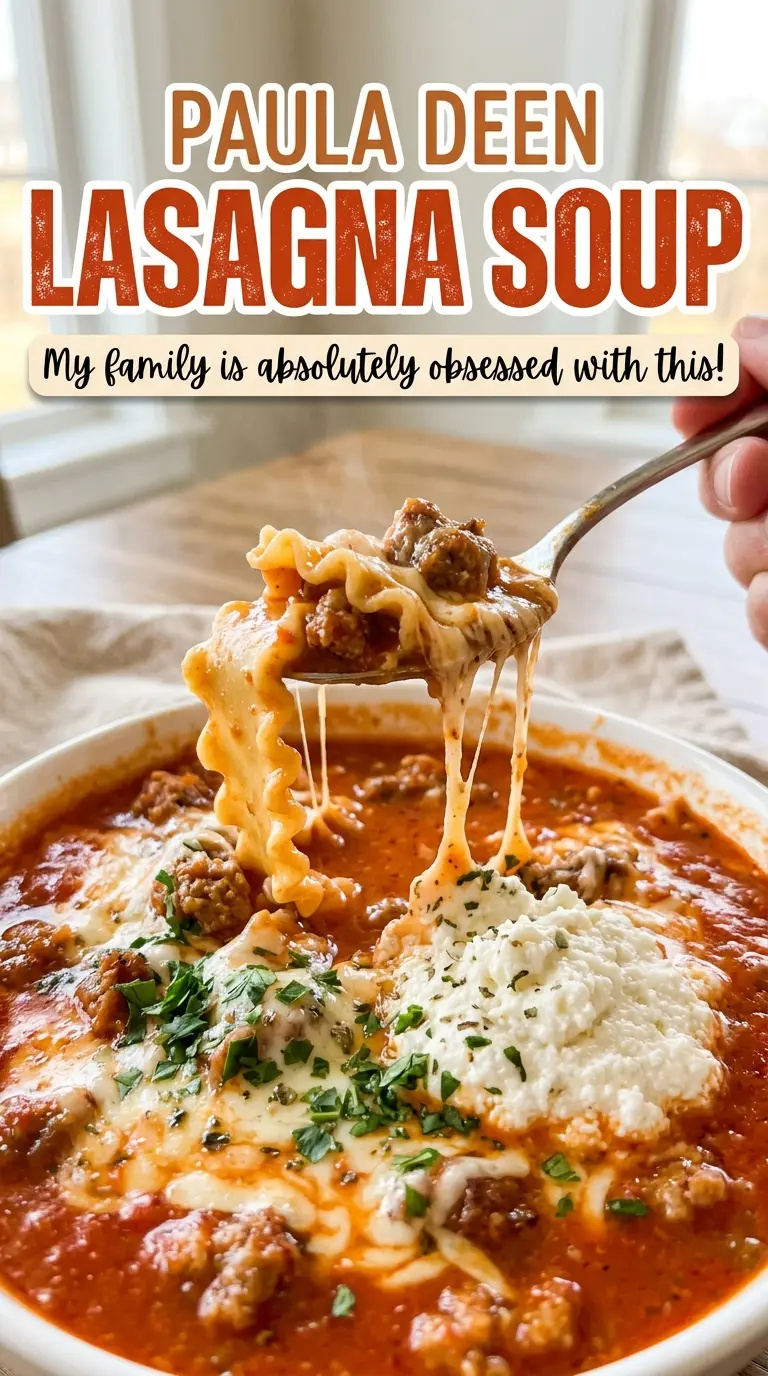
Paula Deen lasagna soup brings all the comfort of a baked lasagna into one pot, with a tomato-rich broth, browned sausage, tender noodles, and a thick blanket of ricotta and mozzarella on top. What makes it special is how it eats like a full pasta dinner but lands on the spoon with a broth that stays bold and spoonable instead of turning heavy or gluey.
The butter and tomato paste do more than add richness. They give the broth a round, savory base that tastes like it simmered longer than it did. Browning the sausage and beef together builds a deep, meaty foundation, and adding the noodles straight into the soup lets them soak up flavor instead of tasting like plain boiled pasta. The cheese topping matters just as much as the soup itself, because a big spoonful melting into the bowl is what turns this from tomato soup with pasta into lasagna in soup form.
Below, I’ll walk through the little details that keep the noodles tender, the broth balanced, and the cheese topping luxuriously thick instead of watery. There’s also a few smart swaps if you want to lighten it up or stretch it for a bigger crowd.
The broth had that rich, buttery tomato taste I was hoping for, and the noodles stayed tender without getting mushy. My husband kept going back for “just one more bowl” because the ricotta topping melted into the soup so nicely.
Save this Paula Deen lasagna soup for the nights when you want a buttery tomato broth, hearty meat, and a giant cheese topping in one pot.
The Secret to Lasagna Soup That Tastes Rich, Not Thin
Lasagna soup can go wrong in two directions: too watery or too heavy. The fix is building flavor in stages. First, brown the sausage and beef until you get real color, not just gray meat. Those browned bits are what give the broth depth once the tomatoes and broth go in.
The second piece is the tomato paste. Cooking it with the onion and garlic for a couple of minutes takes away the raw edge and concentrates the tomato flavor, which is what keeps the soup tasting full-bodied. If you skip that step, the broth can taste flat even when the seasoning is right.
The noodles also matter more than people think. Broken lasagna noodles give you that classic shape, but they need only enough simmering to turn tender. Overcook them and they’ll swell, soak up too much broth, and make the soup thick in the wrong way.
What Each Ingredient Is Actually Doing in This Dish
- Italian sausage — This is where most of the seasoning and richness comes from. If you use mild sausage, the soup stays family-friendly; hot sausage gives it more bite. A good-quality sausage makes a difference here because it seasons the broth as it cooks.
- Ground beef — The beef rounds out the sausage and gives the soup that lasagna-like meaty backbone. Using both meats is what makes the flavor taste layered instead of one-note. If you only have one, use all sausage for a more seasoned broth or all beef for a milder bowl.
- Butter — This is part of the Paula Deen style of the dish, and it softens the edges of the tomato and sausage. Don’t cut it to zero if you want the same plush mouthfeel. You can reduce it slightly, but the soup will taste leaner.
- Crushed tomatoes and diced tomatoes — The crushed tomatoes build the body of the broth, while the diced tomatoes leave little pops of texture. Canned tomatoes work best here because they have consistent acidity and sweetness. If your tomatoes taste sharp, a pinch of sugar can help, but only after the soup simmers.
- Ricotta, mozzarella, and parmesan — This topping is the whole lasagna illusion. Whole milk ricotta gives creaminess, mozzarella gives the melt, and parmesan adds salty edge. Don’t use pre-shredded cheese if you want the smoothest melt; it can turn grainy.
- Lasagna noodles — Broken into pieces, they give the soup its signature feel. Cook them just until tender because they keep softening in the hot broth. If you’re planning leftovers, undercook them slightly so they don’t go mushy the next day.
Building the Pot in the Right Order
Browning the Meat First
Start with the sausage and beef in a large pot and let them brown instead of steaming. You want some caramelized spots on the bottom and around the edges, because that’s where the flavor lives. Drain off excess fat after browning so the soup stays rich without turning greasy. If you leave too much fat behind, the broth can feel slick instead of balanced.
Softening the Onion and Garlic
Add the diced onion to the meat and cook it until it turns translucent and soft, about 4 minutes. The onion should lose its raw crunch and start smelling sweet. Then stir in the garlic and tomato paste and cook them just long enough for the paste to darken a shade and smell less sharp. If the garlic browns hard, it can turn bitter, so keep the heat moderate.
Simmering the Broth
Pour in the crushed tomatoes, diced tomatoes, broth, Italian seasoning, and basil, then bring everything to a boil before dropping the heat to a steady simmer. This is where the broth turns from meat sauce into soup. Let it bubble gently so the flavors marry without reducing too fast. A hard boil can make the broth taste harsh and can reduce it before the noodles even go in.
Cooking the Noodles Without Overdoing It
Add the broken lasagna noodles and simmer until they’re tender, usually 10 to 12 minutes. Stir now and then so they don’t stick to the bottom or clump together. The noodles should be pliable but still have a little bite, because they’ll continue softening in the hot soup after the heat is off. If the pot looks too thick, add a splash of broth while the noodles cook.
Finishing with the Cheese Topping
Mix the ricotta, mozzarella, parmesan, and basil in a bowl, then ladle the soup into bowls and top each one generously. The cheese mixture should land in soft mounds and start melting into the hot broth at the edges. If you stir it directly into the pot, it disappears and you lose that lasagna-style finish. Serving it on top keeps the texture distinct and gives each bowl that heavy, comforting look and taste.
Three Ways to Make This Recipe Your Own
Make It a Little Lighter
Use half the butter and choose lean ground beef or turkey sausage. The soup will still be satisfying, but the broth will taste a little less plush. If you go lean, keep the parmesan in the topping because it helps replace some of the missing savoriness.
Gluten-Free Version
Swap in your favorite gluten-free lasagna noodles and cook them just to tender, since many GF pastas soften faster than wheat noodles. The texture will be a little more delicate, but the soup still works well. Don’t use noodles that fall apart easily unless you’re serving the soup right away.
Stretch It for a Bigger Crowd
Add an extra cup of broth and another handful of broken noodles if you need to feed more people, but keep the cheese topping generous. The broth should still taste concentrated, so don’t dilute it too far. If you’re serving buffet-style, keep the cheese mixture separate and top each bowl as it’s served.
Storage and Reheating
- Refrigerator: Store in an airtight container for up to 4 days. The noodles will absorb more broth as it sits, so the soup thickens overnight.
- Freezer: The soup base freezes well for up to 3 months, but the noodles turn softer after thawing. For the best texture, freeze the soup without noodles and cook fresh noodles when you reheat it.
- Reheating: Warm gently on the stove over medium-low heat, adding a splash of broth if needed. Don’t boil it hard, or the noodles can break down and the dairy topping can lose its texture when added.
Answers to the Questions Worth Asking

Paula Deen Lasagna Soup
Ingredients
Equipment
Method
- Brown the Italian sausage and ground beef together in a large Dutch oven with the unsalted butter, then drain excess fat.
- Sauté the diced onion with the browned meats for 4 minutes.
- Add the minced garlic and tomato paste, then cook for 2 minutes.
- Add the crushed tomatoes, diced tomatoes, chicken broth, Italian seasoning, and dried basil, then bring the mixture to a boil.
- Add the broken lasagna noodles and simmer for 10-12 minutes, until tender, keeping the soup gently bubbling.
- Season the soup generously with salt and black pepper to taste.
- Mix the whole milk ricotta, shredded mozzarella, parmesan, and fresh basil to form the cheese topping mixture.
- Ladle the soup into bowls and top each bowl with a very large, heaping spoonful of the cheese mixture.