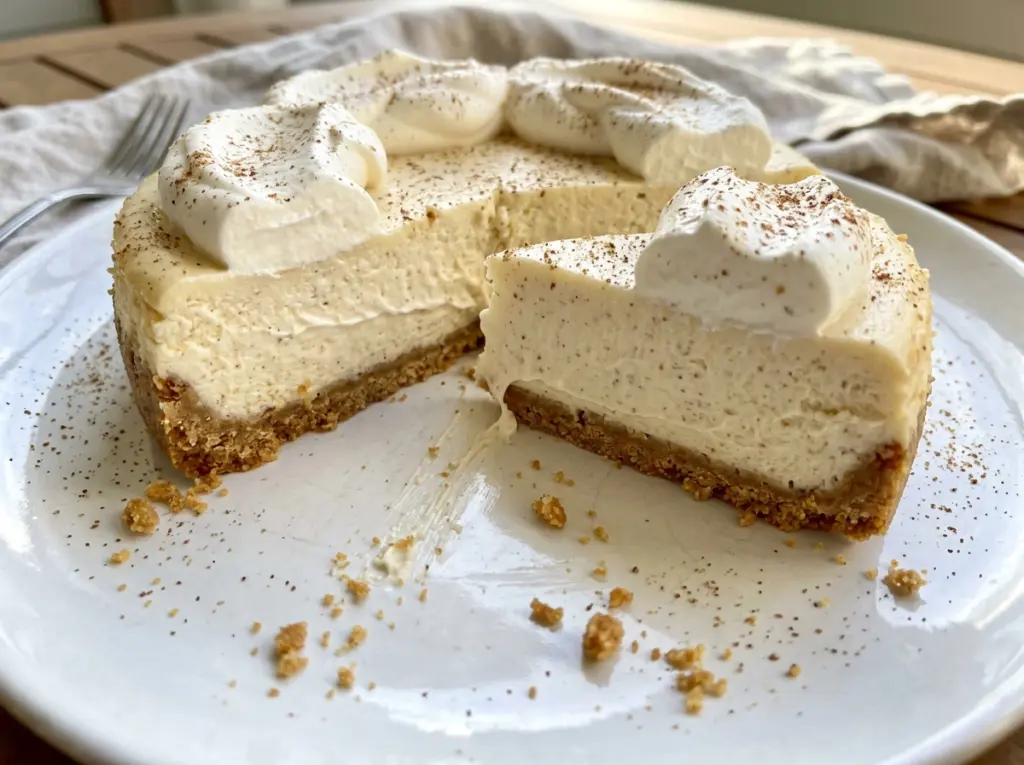

When the crust comes out of the oven, the butter has pulled the graham cracker crumbs into a firm, fragrant layer that’s ready for a cool, creamy filling. That contrast is what I want in eggnog cheesecake: a crisp base under a smooth center that tastes warmly spiced without turning heavy on the nutmeg.
I take a little extra care with the bake because a cheesecake can look finished at the edges while the middle still needs time. A water bath gives the filling gentler, more even heat, and letting the cake cool slowly in the turned-off oven helps it settle before the long chill. The eggnog, vanilla, and rum extract bring the holiday flavor, while the cream cheese keeps every slice rich and tangy.
Kitchen Note
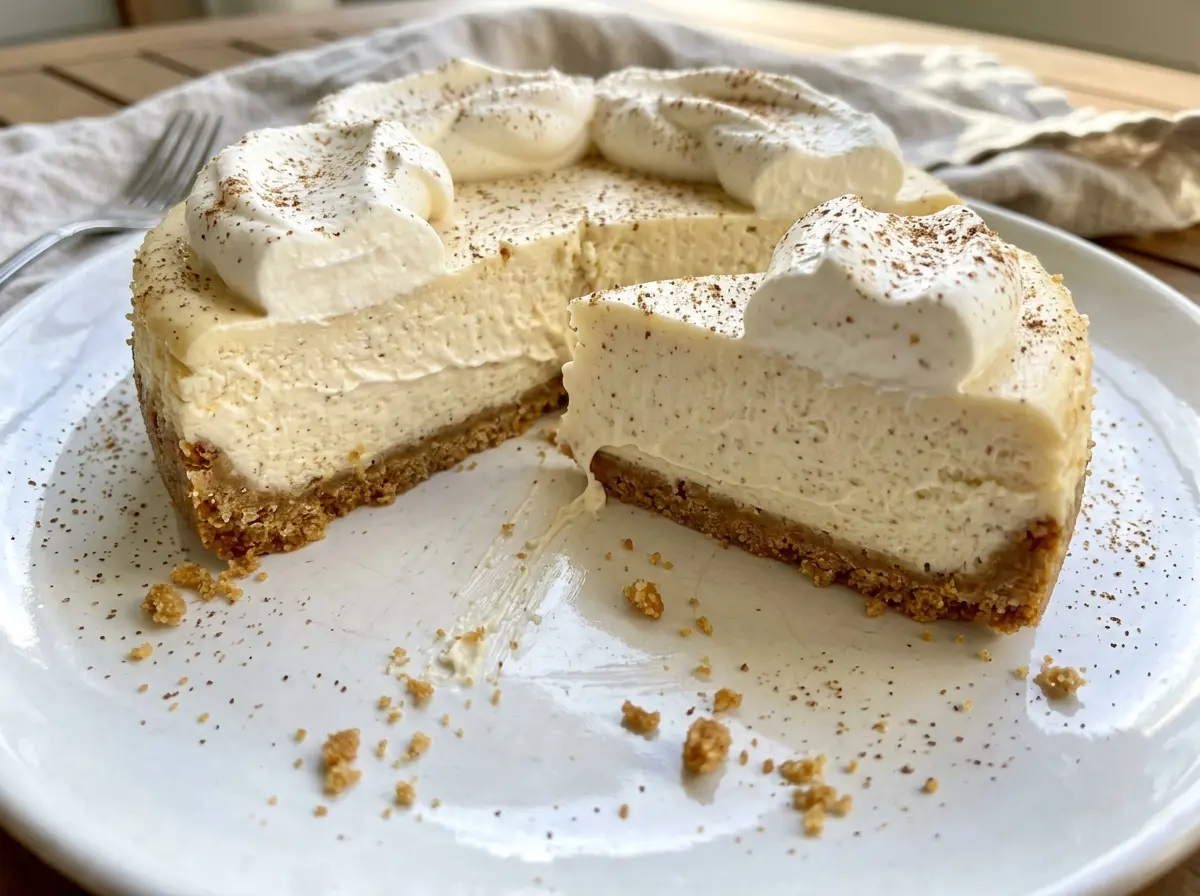
Add the eggs one at a time on low speed, and stop as soon as each one disappears into the filling. Extra beating adds air that can leave the cheesecake puffed before it settles.
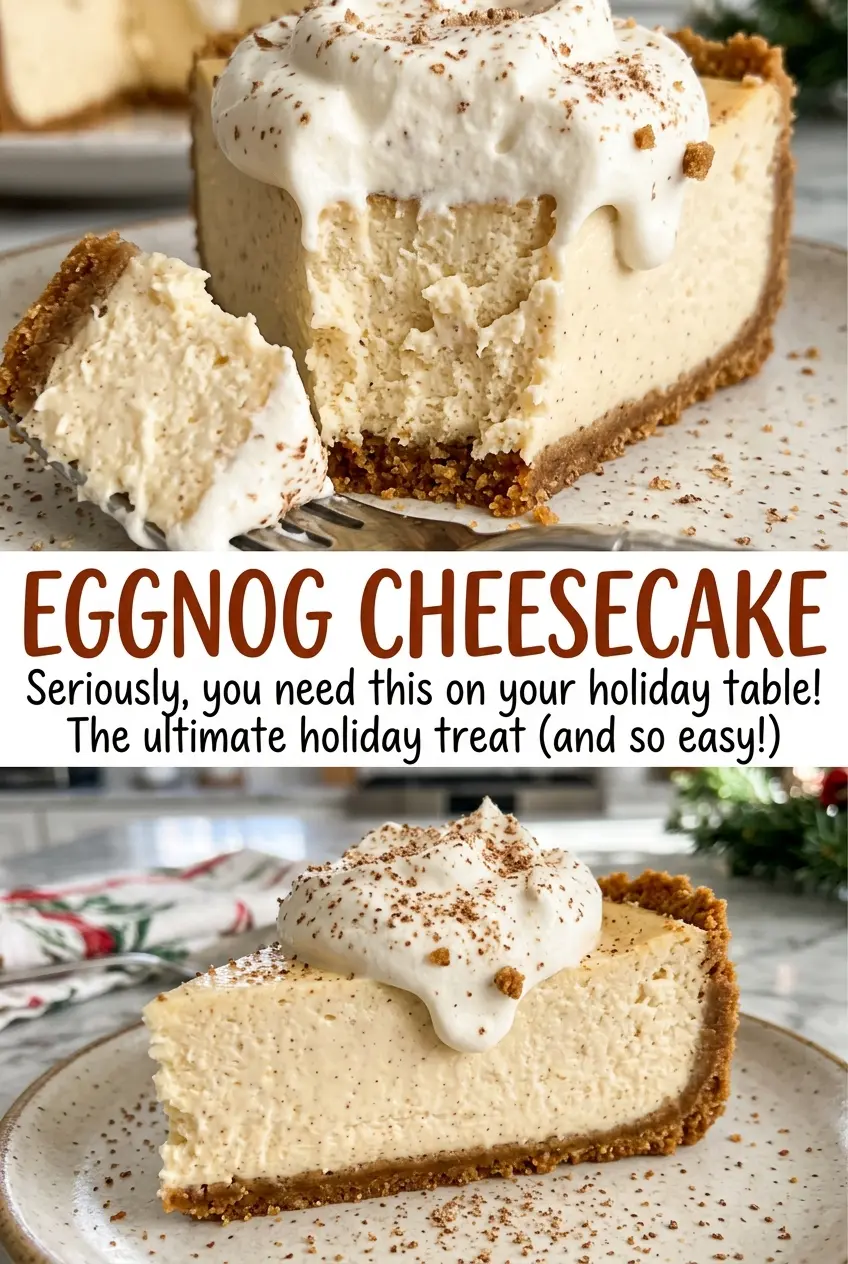
Save this eggnog cheesecake for a holiday dessert with a crisp graham crust and a creamy, nutmeg-scented center.
Why a Water Bath Gives Eggnog Cheesecake a More Even Set
Cheesecake filling is mostly cream cheese and eggs, so the center needs time to warm and set without the outer ring getting pushed too far. In a water bath, hot water surrounds the springform pan and softens the oven’s direct heat. That helps the edges and middle bake at a steadier pace instead of leaving you with firm, dry edges and a center that hasn’t caught up.
The foil is part of that setup, not a decorative precaution. Springform pans have a removable base, and water that slips through the seam can soak the graham crust. Two sheets of heavy-duty foil, brought up the sides, create a protective layer between the pan and the water. The water should come halfway up the springform pan, which gives the cheesecake that gentle, buffered bake without submerging the top. It takes a little care to arrange, but it’s the difference between a reliably creamy filling and a crust that’s been sitting in water.
Eggnog, Cream Cheese, and the Ingredients That Shape Each Bite
- Cream cheese — This gives the filling its structure and familiar tang. Let it soften before mixing; cold cream cheese tends to break into small lumps that are hard to smooth out once the other ingredients are in. Block-style cream cheese is a better fit than whipped cream cheese, which brings extra air and a different texture.
- Eggnog — Eggnog supplies the sweet, spiced dairy flavor that makes this more than a plain cheesecake with nutmeg on top. A familiar grocery-store eggnog works well; choose one with a flavor you enjoy drinking. Because it adds liquid to the filling, keep the amount steady rather than pouring in extra for a stronger taste.
- Nutmeg, vanilla, and rum extract — Ground nutmeg gives the filling its warm aroma, while vanilla rounds out the dairy and rum extract adds a deeper eggnog note. Freshly ground nutmeg has a brighter fragrance if you already have whole nutmeg, but the ground spice from the pantry is convenient and works. If rum extract isn’t your preference, leave it out; the cheesecake will have a gentler, less rum-like flavor.
- Graham cracker crumbs and butter — The crumbs make a sturdy, slightly crisp base, and melted butter binds them so the crust holds together when sliced. Evenly moistened crumbs press into a more cohesive layer; dry patches tend to crumble when you cut the chilled cake. Standard packaged crumbs are fine here.
- Flour — A small amount helps the egg-and-cream-cheese filling hold together as it bakes. All-purpose flour blends in easily when mixed with the sugar and spices, so you don’t end up with a floury pocket in the finished slice.
Build the Crust, Fill the Pan, and Bake Without Rushing
Press a Firm Graham Cracker Base
Heat the oven to 325°F, grease the bottom and sides of a 9-inch springform pan with cooking spray, and stir the crumbs with the sugar and salt. Mix in the melted butter until the crumbs look evenly damp, then press them firmly over the pan bottom. A flat-bottomed measuring cup helps make the layer even, especially around the edge. Bake the crust for 10 minutes, then set it aside to cool while you prepare the filling.
Mix the Filling Until Smooth, Not Airy
Beat the softened cream cheese with an electric mixer on medium speed until smooth. Add the sugar, flour, nutmeg, and salt, and beat just until they’re combined; scrape down the bowl if a patch of cream cheese is clinging to the side. With the mixer on low, add the room-temperature eggs one at a time, mixing only until each is incorporated. Mix in the eggnog, vanilla, and rum extract on low just until smooth, then pour the filling over the cooled crust.
Wrap the Pan and Set Up the Water Bath
Wrap the outside of the cooled springform pan with two large sheets of heavy-duty foil, bringing the foil up the sides. Check for gaps or tears before the pan goes into the roasting pan, since the foil needs to keep the water away from the crust. Set the springform pan in a 12×16-inch roasting pan and pour very hot water into the roasting pan until it reaches halfway up the springform pan sides. Pour carefully so water doesn’t splash over the foil.
Bake to the Temperature Cue
Bake for 75 to 90 minutes, checking the center with an instant-read thermometer toward the end of the range. The edges should look set, and the center should reach 160°F. Time varies with ovens, so use the temperature and visual cues together instead of waiting for the top to brown. If the edges are already firm but the center hasn’t reached temperature, keep baking and check again rather than taking it out early.
Cool Slowly, Then Chill Until Firm
Turn off the oven, prop the door open, and leave the cheesecake inside for 1 hour. This gradual cooldown gives the filling time to settle before it meets the cooler kitchen air. Carefully remove the springform pan from the water bath, take off the foil, and refrigerate the cheesecake uncovered for at least 6 hours, until completely chilled. Run a thin knife around the edge, release the springform sides, and cover the cheesecake until serving.
Two Small Changes for a Different Eggnog Cheesecake
Make the Crust and Filling Gluten-Free
Use gluten-free graham-style crumbs in place of the regular crumbs and a gluten-free measure-for-measure flour blend in place of the all-purpose flour. Keep the same quantities and method. The crust may be a little more delicate, so press it firmly and let the cheesecake chill completely before releasing the pan.
Leave Out the Rum Extract
Omit the rum extract if you want the eggnog and vanilla to lead. The filling will still bake and set the same way, with a softer spice impression and none of the rum-like note.
Storage and Reheating
- Refrigerator: Keep the covered cheesecake refrigerated and use it within 3 to 4 days. The crust softens gradually as it sits.
- Freezer: It freezes well. Wrap individual slices or the whole chilled cheesecake tightly, then freeze for up to 2 months; thaw in the refrigerator overnight.
- Reheating: Serve chilled; this cheesecake doesn’t need reheating. Avoid microwaving it, which can soften the filling unevenly and melt the butter in the crust.
Questions That Come Up When Baking Eggnog Cheesecake
Eggnog Cheesecake
Ingredients
Equipment
Method
- Heat the oven to 325°F. Grease the bottom and sides of a 9-inch springform pan with the nonstick cooking spray.
- Stir the graham cracker crumbs, granulated sugar, and salt together.
- Mix in the melted unsalted butter until evenly moistened.
- Press the crumb mixture firmly over the pan bottom.
- Bake the crust for 10 minutes, then set it aside to cool while you prepare the filling.
- Wrap the outside of the cooled pan with two large sheets of heavy-duty foil, bringing the foil up the sides to keep water out.
- Beat the softened cream cheese in a large bowl with an electric mixer on medium speed until smooth.
- Beat in the granulated sugar, all-purpose flour, ground nutmeg, and salt until combined.
- Beat in the eggs one at a time on low speed, mixing just until each is incorporated.
- Mix in the eggnog, vanilla extract, and rum extract on low speed just until smooth.
- Pour the filling over the crust.
- Set the springform pan in a 12x16-inch roasting pan.
- Pour the very hot water into the roasting pan to reach halfway up the springform pan sides.
- Bake for 75 to 90 minutes, until the edges are set and the center reaches 160°F on an instant-read thermometer.
- Turn off the oven and prop the door open.
- Leave the cheesecake inside for 1 hour.
- Carefully remove the cheesecake from the water bath and take off the foil.
- Refrigerate the cheesecake uncovered for at least 6 hours, until completely chilled.
- Run a thin knife around the edge and release the springform sides.
- Cover the cheesecake until serving.