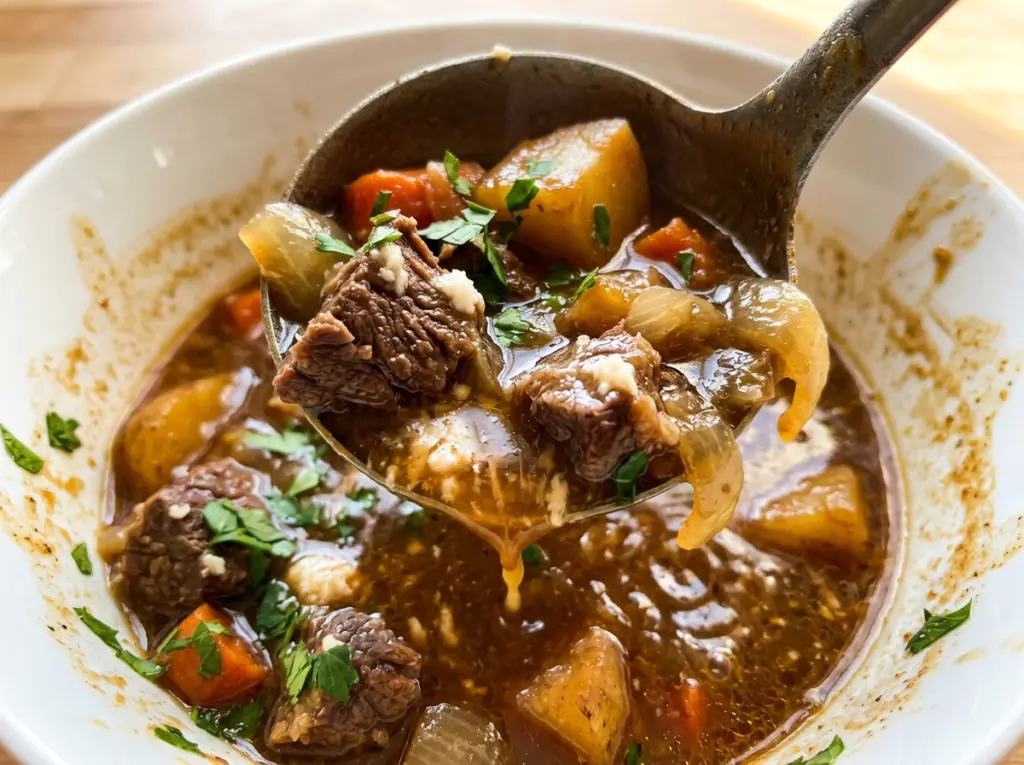

When the beer hits the hot Dutch oven, it loosens the browned bits from the bottom and turns the kitchen smell from seared beef to something malty and savory. That’s the moment this stew starts tasting like more than beef and broth. I brown the chuck in batches, then let it simmer until a fork slips into the meat without a tug.
The timing matters because the beef needs a long head start, while potatoes don’t. Adding them later lets them turn tender without falling apart in the pot. Prepared horseradish goes in after the stew comes off the heat, so its bright bite stays distinct against the rich broth. Each spoonful has tender beef, soft potatoes, and a sharp finish.
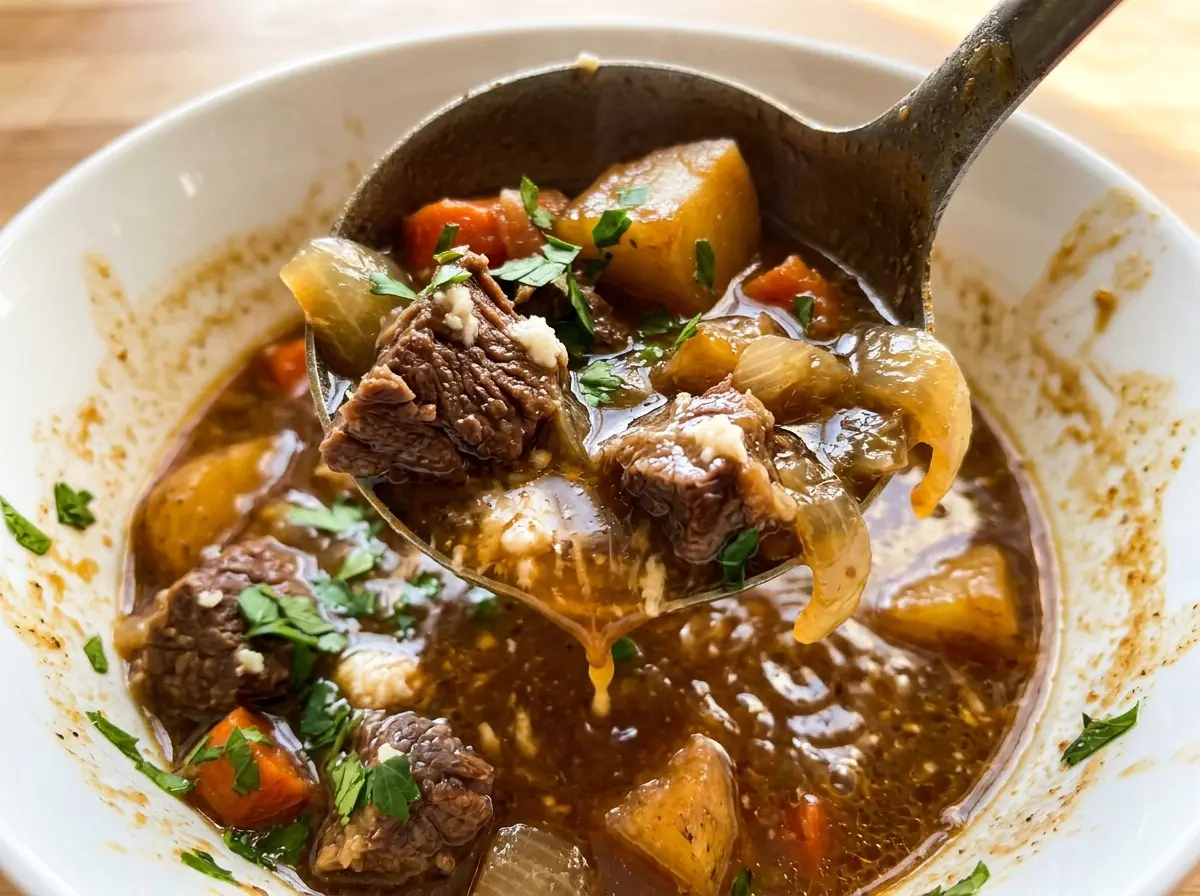
Kitchen Note
Stir the prepared horseradish in only after the pot is off the heat, then give the stew its full five-minute rest. That keeps its clean, nose-tingling edge distinct in the rich broth.
Save this Beer and Horseradish Beef Stew for a cold evening: tender chuck, malty broth, and a sharp horseradish finish.
Why the Potatoes Wait Until the Beef Is Nearly Tender
Chuck needs time in the pot before it gives up its toughness and turns fork-tender. Yukon Gold potatoes don’t need that same long stretch. If they go in at the beginning, they’ll spend the beef’s entire simmer softening; by the time the meat is ready, the potato edges can break down into the broth.
Adding the potatoes after the beef has had its first simmer gives both ingredients the time they need, without asking one to endure the other’s cooking time. Cut them into similarly sized pieces so they soften at about the same pace. Check for tenderness with a fork near the end of their simmer: it should pass through easily, while the pieces still hold their shape when stirred. That contrast is what makes the finished bowl feel like stew, not mashed potatoes in beef broth.
What Gives This Stew Its Malty Broth and Clean Horseradish Bite
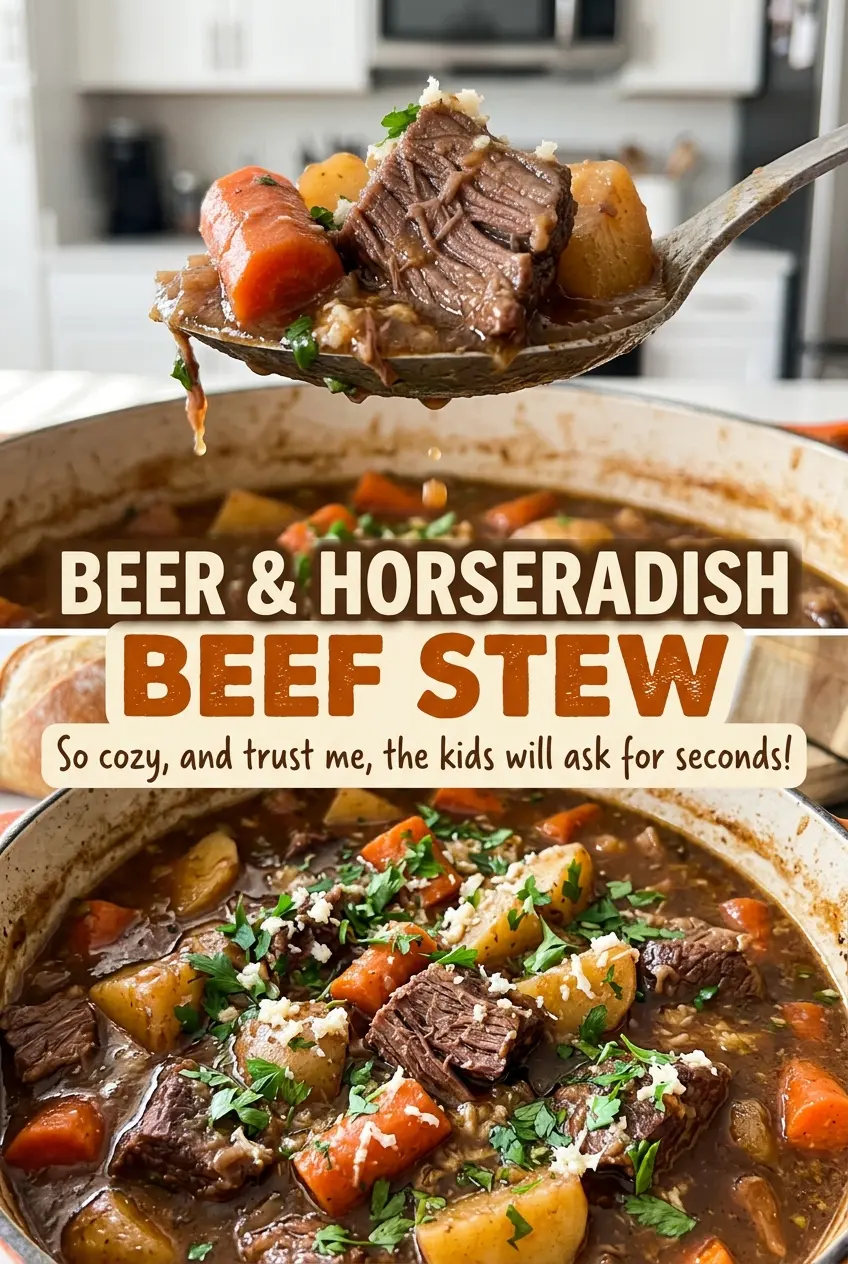
- Beef chuck — Its marbling and connective tissue suit a long, gentle simmer, which is how the cubes become tender and enrich the broth. Cut the pieces evenly so they cook at a similar pace; leaner cuts won’t give the same silky, beefy result.
- Lager or amber beer — Either brings malty depth without overwhelming the beef broth. Use a beer you’d be happy to drink; a familiar, straightforward bottle is all this pot needs.
- All-purpose flour — Tossing it with the seasoned beef gives the cubes a light coating that helps the stew develop body as it simmers. A gluten-free all-purpose blend works for the coating, though the finished broth may be a little less thick.
- Yukon Gold potatoes — Their creamy texture suits the broth, and they hold together well when added for the shorter final simmer. Red potatoes are a useful swap if that’s what you have, with a firmer, less buttery bite.
- Prepared horseradish — Choose the refrigerated, grated root rather than creamy horseradish sauce; the sauce has a different texture and a milder, diluted bite. Prepared horseradish brings the lively finish that balances the stew’s deep, savory base.
- Tomato paste and Worcestershire sauce — Tomato paste rounds out the beer and broth, while Worcestershire adds savory depth. You don’t need a premium brand for either; use fresh tomato paste and a Worcestershire sauce you already like.
Build the Beer Base Before the Long Simmer
Coat and Brown the Chuck
Pat the beef dry, season it with kosher salt and black pepper, then toss it with the flour until the cubes are lightly coated. Heat 1 tablespoon of vegetable oil in a 6-quart Dutch oven over medium-high heat. Brown the beef in 3 batches, turning each piece to color several sides, about 6–8 minutes per batch; transfer each batch to a plate as it’s done. Keeping the pieces in separate batches gives the surfaces room to brown instead of crowding together.
Soften the Vegetables and Deglaze
Add the remaining tablespoon of oil, then cook the diced onion, carrots, and celery over medium heat until softened, about 6–8 minutes. Stir in the minced garlic and tomato paste and cook for 1 minute. Pour in the beer and scrape the browned bits from the bottom of the pot as the liquid loosens them. Don’t leave those bits behind; they’re part of the stew’s savory base.
Simmer the Beef Until It Starts to Give
Add the beef broth, Worcestershire sauce, dried thyme, bay leaves, browned beef, and any juices on the plate. Bring the liquid to a gentle simmer, then cover the pot and cook over low heat for 1 1/2 hours. Adjust the burner as needed to keep the surface quietly bubbling rather than boiling hard. A rolling boil can make the beef cook unevenly and the broth cloudy.
Cook the Potatoes and Finish the Stew
Stir in the Yukon Gold potatoes, cover, and simmer for 35–45 minutes, until the beef is fork-tender and the potatoes are tender. Take the pot off the heat and discard the bay leaves. Stir in the prepared horseradish, then let the stew stand for 5 minutes before serving. The beef should yield easily to a fork, and the potatoes should be tender without crumbling.
Easy Ways to Change the Beer and Horseradish Beef Stew
Make It Gluten-Free
Use a gluten-free all-purpose flour blend to coat the beef, plus gluten-free beer, beef broth, and Worcestershire sauce. The stew keeps its hearty character, though the flour blend may give the broth a slightly lighter body.
Use Red Potatoes for a Firmer Bite
Replace the Yukon Golds with red potatoes cut into the same-size pieces. They hold their shape nicely in the stew, but the potato texture will be firmer and less creamy.
Turn Up the Horseradish
For a sharper finish, stir additional prepared horseradish into the finished stew a little at a time. The beef and beer remain the backbone, but the horseradish becomes a more pronounced part of each bite.
Storage and Reheating
- Refrigerator: Store in an airtight container for 3–4 days. The potatoes soften a little as they sit in the broth.
- Freezer: Freeze in airtight containers for up to 3 months for best quality. The potatoes may be softer after thawing.
- Reheating: Warm on the stovetop over medium-low heat, stirring occasionally, until the stew reaches 165°F. Avoid a hard boil, which can break up the potatoes and toughen the beef.
Questions That Come Up When Making This Beef Stew
Beer and Horseradish Beef Stew
Ingredients
Equipment
Method
- Pat the beef dry.
- Season the beef with the salt and pepper, then toss it with the flour to coat.
- Heat 1 tablespoon oil in a 6-quart Dutch oven over medium-high heat.
- Brown the beef in 3 batches, turning to brown several sides, about 6–8 minutes per batch, then transfer it to a plate.
- Add the remaining 1 tablespoon oil to the pot, then add the onion, carrots, and celery and cook over medium heat until softened, about 6–8 minutes.
- Stir in the garlic and tomato paste and cook for 1 minute.
- Pour in the beer and scrape up the browned bits from the bottom of the pot.
- Add the broth, Worcestershire sauce, thyme, bay leaves, beef, and any accumulated juices, then bring the liquid to a gentle simmer.
- Cover the pot and simmer over low heat for 1 1/2 hours, adjusting the heat as needed to maintain a gentle simmer.
- Stir in the potatoes, cover, and simmer until the beef is fork-tender and the potatoes are tender, 35–45 minutes.
- Remove the pot from the heat and discard the bay leaves.
- Stir in the prepared horseradish.
- Let the stew stand for 5 minutes before serving.