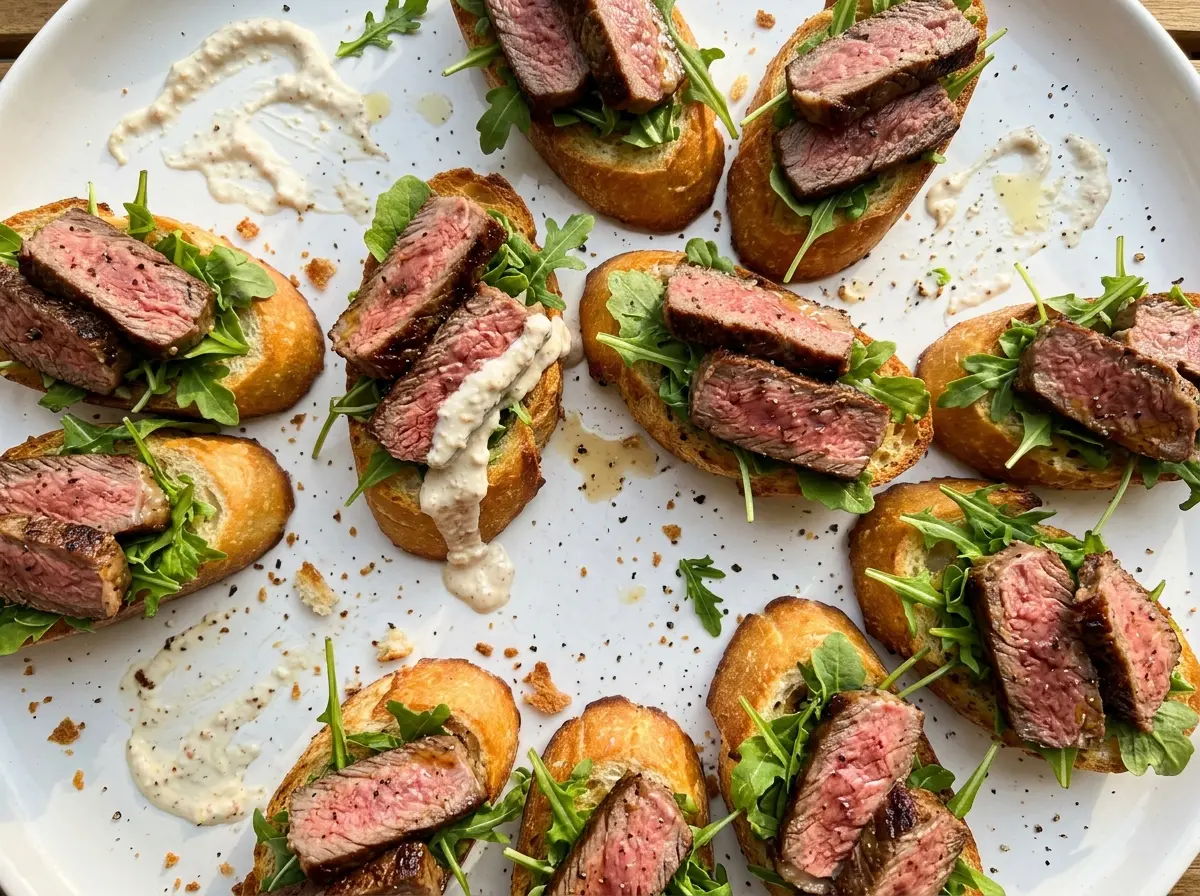
The bread tells you when it’s ready: the edges turn golden, and the slices feel crisp instead of bendy when you lift one from the pan. I used to pull crostini too early, then watch the horseradish cream soften them before the steak even made it on top. These steak crostini start with a properly toasted baguette, so each bite can hold its toppings.
The thin steak slices are the part that makes these easy to eat. I cut across the grain rather than following the long muscle fibers, which shortens them and gives you a more tender bite on a small piece of toast. A cool, tangy mix of sour cream, prepared horseradish, and Dijon brings a little bite without hiding the beef.
Keep the components distinct until you’re ready to assemble: crisp bread, a thin swipe of cream, dry arugula, and warm slices of sirloin. The result is a savory little bite with crunch underneath and a bright, peppery finish.
Kitchen Note
Look for golden edges and a crisp surface before you take the baguette slices out of the oven. If they still bend easily, give them the full bake rather than topping soft bread that will lose its crunch.
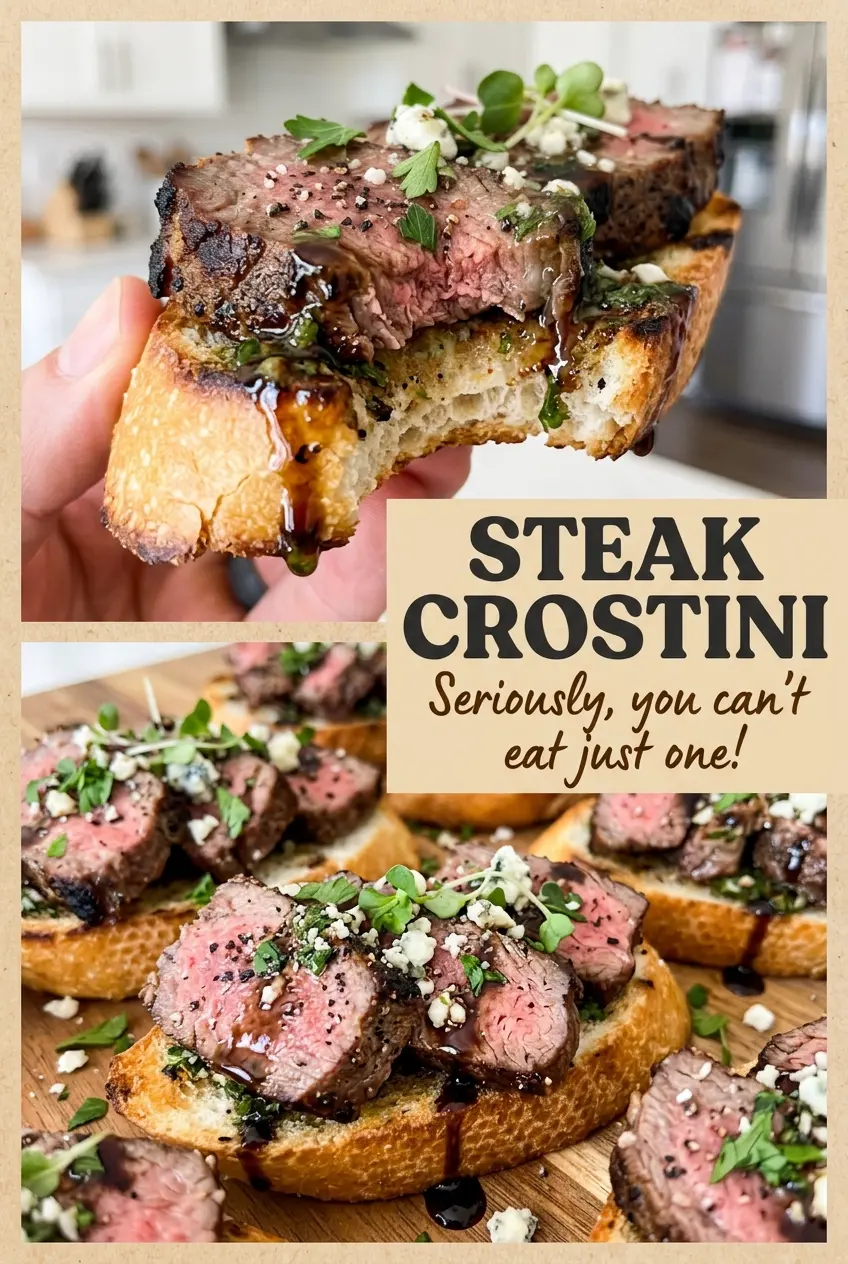
Save these steak crostini for your next appetizer spread—the crisp baguette, peppery arugula, and horseradish cream make each bite count.
Why Cutting Across the Steak’s Grain Matters on a Small Toast
A steak crostini is only a couple of bites, so a long, chewy strand of meat can take over the whole thing. Look closely at the sirloin before slicing and you’ll see fine lines running in one direction. Those are the muscle fibers. Cutting across them shortens the fibers, which makes each thin slice easier to bite through.
This matters more here than it might with a full steak dinner. You don’t have a knife and fork to help, and the baguette gives the bite a firm base rather than a soft cushion. Aim for thin slices that sit neatly on the toast without hanging far over the edges. If a slice is wider than a crostini, cut it into a smaller piece instead of piling on folded steak; a lower, even layer is easier to pick up and eat.
Sirloin about an inch thick gives you enough depth to get a good sear while keeping the steak manageable to slice. Let the grain guide your knife, not the shape of the steak. Once you spot the direction of the fibers, the right cutting angle becomes clear.
What the Baguette, Sirloin, and Horseradish Each Bring
- Baguette — Its narrow shape makes bite-size pieces with a sturdy center. A baguette with a firm crust holds its shape after toasting; slice it on a slight diagonal for a broader surface to build on.
- Extra-virgin olive oil — Brushing it over the tops helps the bread toast and brown. Use an oil you enjoy the taste of, since its flavor is noticeable on such a simple base.
- Boneless sirloin — This cut sears well and is easy to slice thinly. A steak close to the listed thickness works with the cooking window here; a much thinner or thicker piece won’t cook at the same rate.
- Canola oil — Its neutral flavor lets the beef stay in the foreground while the pan heats for a sear. It’s the practical choice here rather than adding another strong flavor.
- Sour cream — This gives the horseradish mixture its cool, creamy body. A full-fat version tends to make a thicker spread; a thinner sour cream can make the topping looser.
- Prepared horseradish — It brings the sharp, familiar heat. Use prepared horseradish rather than a creamy horseradish sauce, which has a different consistency and would change the balance of the mixture.
- Dijon mustard — A small amount rounds out the cream with a gentle tang. Use a smooth Dijon so the spread stays easy to spoon and spread.
- Baby arugula — Its peppery leaves cut through the rich cream and beef. Washed, thoroughly dried leaves sit neatly on the toast; wet leaves can make the bread lose its crispness.
The Sear, Rest, and Assembly That Keep Each Bite Balanced
Toast the Baguette Until the Edges Turn Gold
Heat the oven to 400°F, then cut the baguette on a slight diagonal into 1/2-inch slices. Arrange them in a single layer on a rimmed baking sheet and brush the tops with olive oil. Bake for 8–10 minutes, watching for golden edges and a crisp surface. Crowding or overlapping the slices keeps them from toasting evenly.
Get the Sirloin Dry Before It Hits the Skillet
Pat the steak dry, then season both sides with kosher salt and black pepper. Heat the canola oil in a 12-inch skillet over medium-high heat until it shimmers. Add the steak and sear for 4–6 minutes per side, turning it once. Check the thickest part with an instant-read thermometer; the target is 145°F.
Rest the Steak, Then Slice Against the Fibers
Move the steak to a cutting board and let it rest for at least 3 minutes before cutting. This pause lets the juices settle instead of running straight onto the board as soon as you slice. Find the direction of the muscle fibers and cut thinly across them. Keep the slices slim enough to sit comfortably on the toasted bread.
Stir the Cream and Build the Crostini
Stir the sour cream, prepared horseradish, and Dijon mustard together in a small bowl until smooth. Spread each crostini with the cream, then add arugula and sliced steak. Use a light layer of the spread so it anchors the toppings without overwhelming the bread. Assemble close to serving so the toast stays crisp.
Easy Ways to Adapt These Steak Crostini
Make the Horseradish Cream Milder
Use less prepared horseradish in the sour cream and Dijon mixture if you prefer a gentler bite. The spread will taste creamier and less sharp, while still bringing enough tang to balance the steak.
Leave Off the Arugula for a Simpler Bite
Skip the arugula and layer the steak directly over the horseradish cream. You’ll lose the peppery, leafy contrast, but the beef and tangy spread come through more clearly.
Make a Bread-Free, Gluten-Free Plate
Leave out the baguette and arrange the arugula, sliced steak, and horseradish cream as small forkfuls instead. You’ll keep the same savory, peppery combination without the crunchy toast; this version is less like a crostini and more like a composed appetizer plate.
Storage and Reheating
- Refrigerator: Store cooked steak and horseradish cream separately in covered containers for 3–4 days. Keep the arugula separate, and store toasted bread airtight at room temperature; it may soften as it sits.
- Freezer: Freeze the cooked steak by itself in an airtight container for up to 2–3 months. Thaw it in the refrigerator; the sour cream mixture and assembled crostini don’t freeze well.
- Reheating: Warm steak slices gently in a skillet until steaming hot, then assemble on fresh or crisped bread. Don’t reheat the assembled crostini, since the cream can loosen and the toast will soften.
Questions That Come Up While Making Steak Crostini
Steak Crostini
Ingredients
Equipment
Method
- Heat the oven to 400°F.
- Cut the baguette on a slight diagonal into 1/2-inch slices.
- Arrange the slices in a single layer on a rimmed baking sheet.
- Brush the tops with olive oil.
- Bake for 8–10 minutes, until golden at the edges and crisp.
- Pat the steak dry.
- Season both sides with the salt and pepper.
- Heat the canola oil in a 12-inch skillet over medium-high heat until shimmering.
- Sear the steak for 4–6 minutes per side, turning once, until an instant-read thermometer inserted into the thickest part reads 145°F.
- Transfer the steak to a cutting board and rest for at least 3 minutes.
- Slice thinly across the grain.
- Stir the sour cream, prepared horseradish, and Dijon mustard together in a small bowl.
- Spread each crostini with horseradish cream.
- Top with arugula and sliced steak.